ART
BEAUTY & WELLNESS
CRAFT
CULTURE & HISTORY
ENTERTAINMENT
ENVIRONMENT
FOOD & DRINKS
REVERSE ENGINEERING
SCIENCES
SPORTS
TECHNOLOGY
WEARABLES


Wool Flock: Raw Wool Scoured in Soda Suds and Hand-Carded for Stuffing (USDA, 1933)
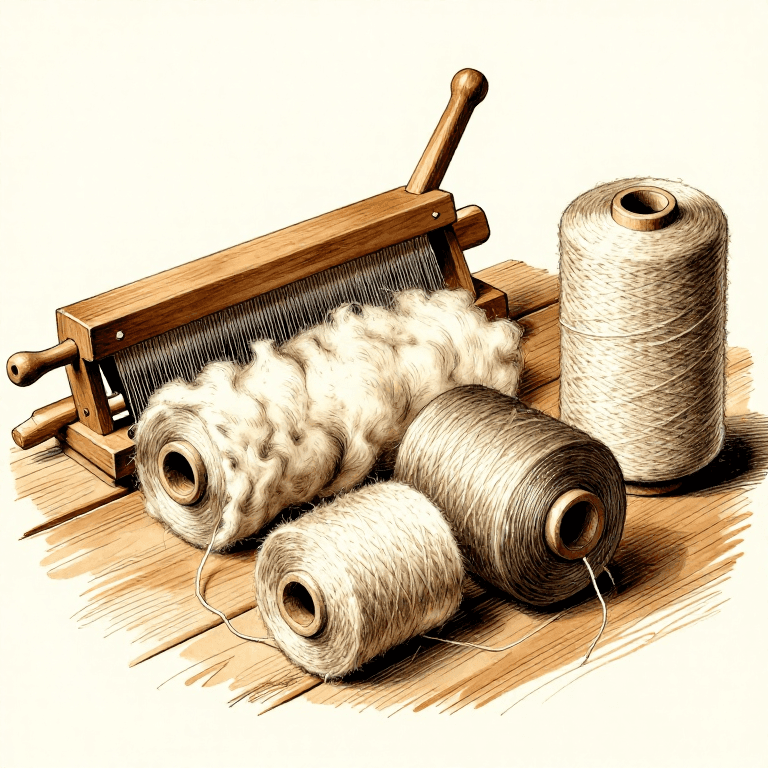
Loose wool stuffing for saddle panels, collars and pads from your own raw fleece: picked over, scoured in warm soap and sal-soda suds without stirring, rinsed, dried in the sun and carded open. The method is the U.S. Bureau of Home Economics leaflet of 1933 for preparing raw wool at home.
Beginner
One day, plus drying
Instructions
1
1
Scouring a raw fleece
Scouring a raw fleece
A raw fleece washed by hand (Marina Skua). The USDA method below uses three soap suds and three rinses.
2
2
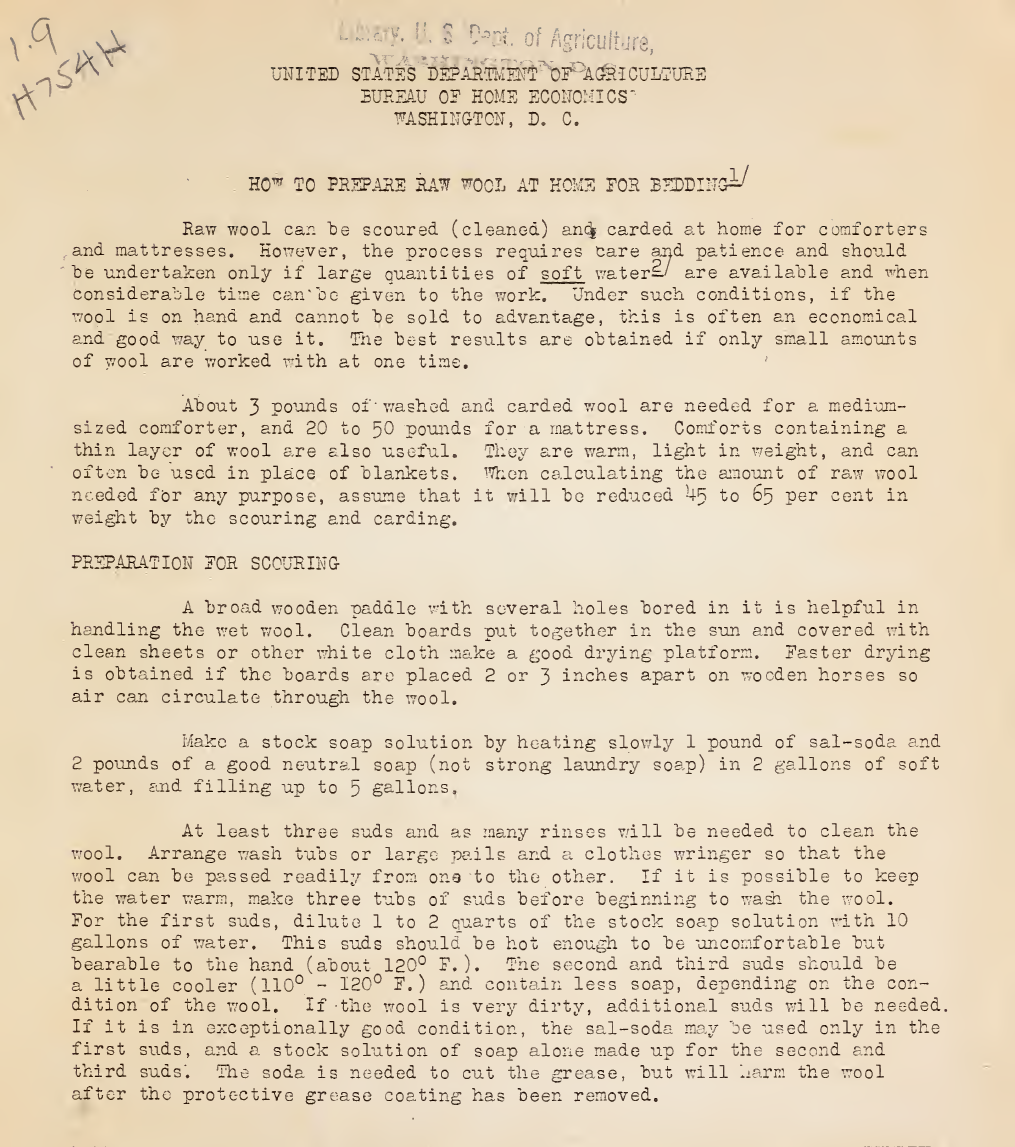
The 1933 leaflet
The 1933 leaflet
USDA Bureau of Home Economics, "How to Prepare Raw Wool at Home for Bedding" (1933): scour small lots in soft water, never stir or squeeze, rinse three times, dry thoroughly and card. Expect the wool to lose 45 to 65 per cent of its weight.
3
3
Read the leaflet
4
4
Pick the fleece over
Pick the fleece over
Take only the cleanest of the fleece. Pick it apart, shaking out all the dirt you can, and remove all tags and dung locks; stained wool will not scour white.
Materials for this step:
 Raw Wool Fleece1 kg
5
5
Make the stock soap
Make the stock soap
Heat slowly 1 lb (450 g) sal-soda and 2 lb (900 g) of a good neutral soap, not strong laundry soap, in 2 gallons (7.6 l) of soft water, then fill up to 5 gallons (19 l).
Materials for this step:
 Washing Soda450 g
 Soap900 g
 Water19 l
Tools needed:
 Bucket
6
6
Scour in three suds
Scour in three suds
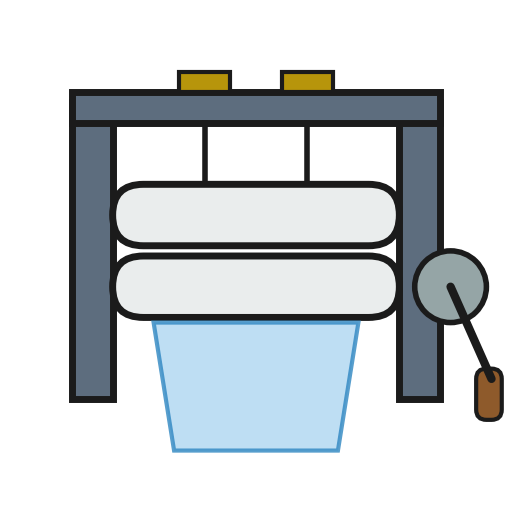
First suds: 1 to 2 quarts (1-2 l) of stock soap in 10 gallons (38 l) of water at about 120 F (49 C), uncomfortable but bearable. Second and third: a little cooler, 110-120 F (43-49 C), with less soap; if the wool is very clean, soda in the first only. Use about 6 gallons of suds per pound of wool (50 l per kg) and never crowd it. Push the wool under with the paddle, let it stand about 10 minutes without stirring or squeezing, lift small amounts, drain and pass them through the wringer.
Materials for this step:
Water150 lTools needed:
Bucket Wooden Paddle
 Clothes Wringer
 Kitchen Thermometer
7
7
Rinse and dry
Rinse and dry
Rinse at least three times in soft water at the temperature of the last suds, handled the same way; add 1 to 2 pints (0.5-1 l) of vinegar to the last rinse. Spread it thinly on boards covered with clean sheets in the sun, raised on horses with gaps for air, and dry it thoroughly.
Materials for this step:
Water120 l Vinegar1 l
Tools needed:
BucketWooden PaddleClothes Wringer Drying Rack
8
8
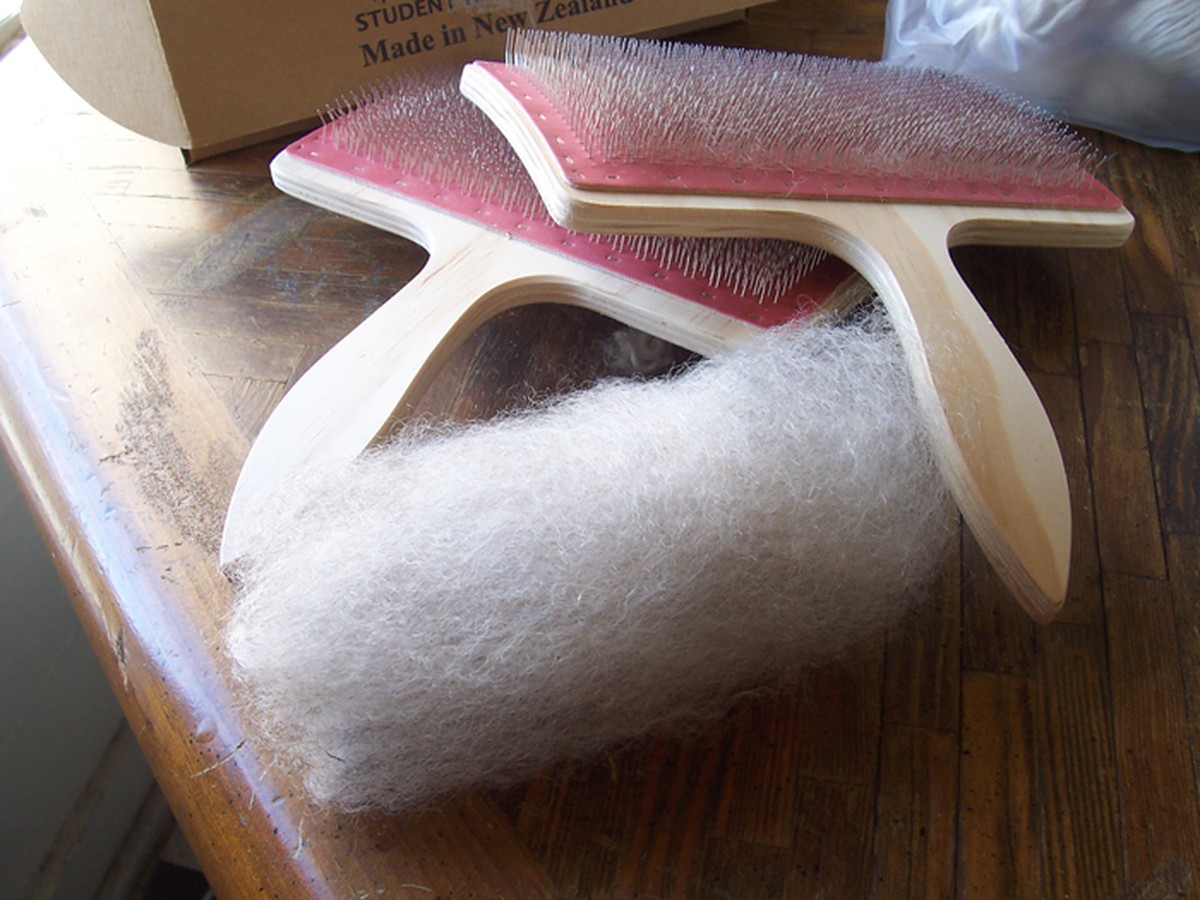
Card it open
Card it open
Card the dry wool with hand cards to straighten the fibres and take out the small bits of chaff. Store it loose, protected from moths, and use it as stuffing.
Tools needed:
 Hand Carders
9
9
Troubleshooting
Troubleshooting
Wool problems and fixes.
Flow
Loading...
10
10
History and honest limits
History and honest limits
From the U.S. Department of Agriculture, Bureau of Home Economics leaflet 478R, "How to Prepare Raw Wool at Home for Bedding" (21 October 1933), written for comforters and mattresses; the same clean carded wool is the flock harness makers stuff panels with. Ours: the metric figures. Photo: Wikipedista:Ryj, public domain. Not made by us yet.
Materials
5- 1 kgPlaceholder
- 450 gPlaceholder
- 900 gPlaceholder
- 289 lPlaceholder
- 1 lPlaceholder
Tools Required
6- Placeholder
- Placeholder
- Placeholder
- Placeholder
- Placeholder
- Placeholder
Design Files
1This blueprint makes

Related Blueprints
These blueprints share knowledge with this one — techniques, materials, or principles that connect them in the learning graph.
CC0 Public Domain
This blueprint is released under CC0. You are free to copy, modify, distribute, and use this work for any purpose, without asking permission.
Support the Maker by purchasing products through their Blueprint where they earn a Maker Commission set by Vendors, or create a new iteration of this Blueprint and include it as a connection in your own Blueprint to share revenue.