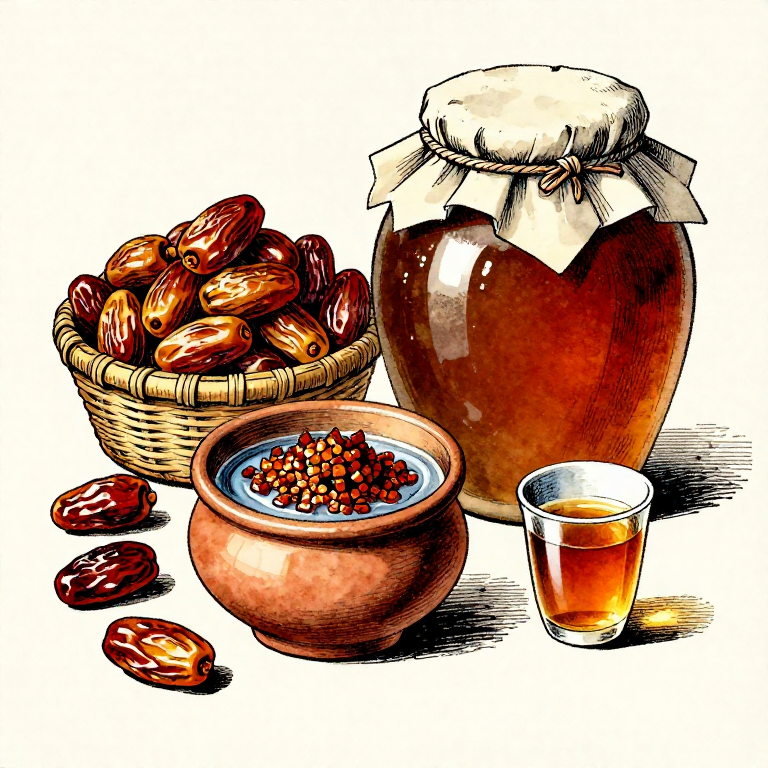


Fermenting Date Palm Wine — Mesopotamian Date Beer
Hướng dẫn
Select and Prepare the Dates
Select and Prepare the Dates
Choose fully ripe, soft dates — the softer the date, the higher the sugar content and the easier it is to extract fermentable sugars. Remove the pits by squeezing each date or splitting it open. Soft varieties like Medjool, Halawi, or Khadrawy are ideal, but any ripe date works. You need 2-3 kg of pitted dates for 5-8 litres of finished wine. Dates contain approximately 60-70 percent sugar by dry weight — primarily glucose and fructose, both of which are directly fermentable by yeast without enzymatic conversion. This makes date wine simpler to produce than grain-based beer.
Vật liệu cho bước này:
 Chà là (khô)2-3 kg cái
Crush and Dissolve
Crush and Dissolve
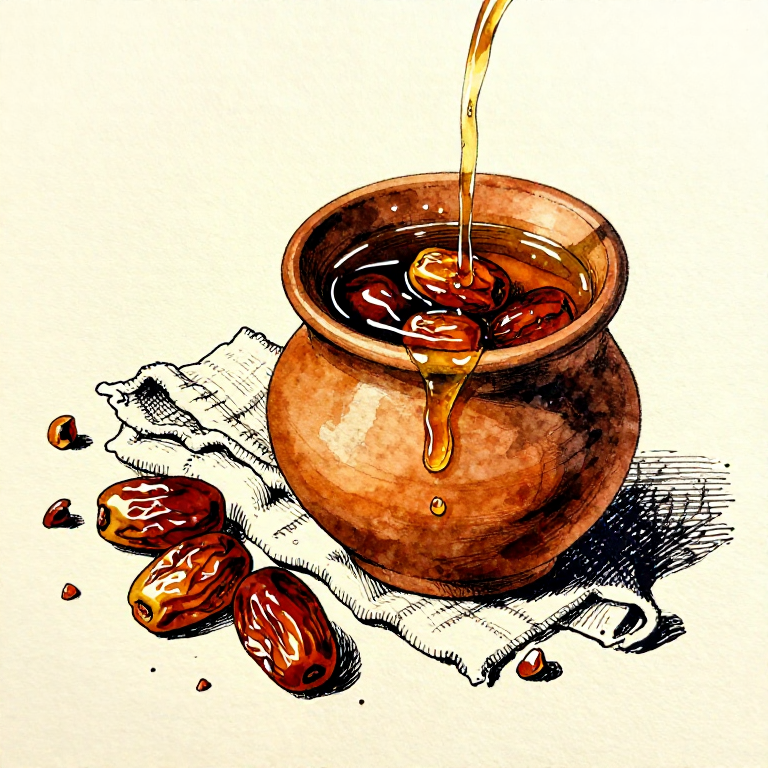
Crush the pitted dates thoroughly in a clean clay pot using a wooden pestle. The goal is to break down the fruit flesh completely to release the sugars into solution. Add warm water (not boiling — approximately 40-50 degrees C) and stir vigorously to dissolve the date sugars into the water. Allow the mixture to steep for 12-24 hours, stirring occasionally. After steeping, strain the liquid through a woven cloth or basket to remove the fibrous date pulp. The resulting liquid should be thick, sweet, and amber-brown — the higher the sugar concentration, the higher the potential alcohol content of the finished wine.
Vật liệu cho bước này:
 Nước5-8 litres cái
Công cụ cần thiết:
 Đất sét
 Cối và chày
 Vải (để lọc)
Initiate Fermentation
Initiate Fermentation
Transfer the strained date liquid to a clean fermentation vessel — a large clay jar with a wide mouth. Wild yeasts naturally present on the date skins and in the environment will spontaneously inoculate the liquid. To accelerate the start, add a small amount of actively fermenting liquid from a previous batch (a practice common in ancient brewing) or leave the vessel uncovered in a warm area for the first 12-24 hours to allow airborne yeasts to colonise the must. Cover the vessel loosely with a cloth to keep insects out while allowing carbon dioxide to escape. Fermentation should begin within 24-48 hours, signalled by bubbling and a yeasty aroma.
Vật liệu cho bước này:
 Mật ongsmall amount cái
Công cụ cần thiết:
Đất sétMonitor Fermentation
Monitor Fermentation
Keep the fermenting vessel in a warm place (25-35 degrees C) for 7-14 days. Active fermentation is vigorous for the first 3-5 days — the liquid bubbles energetically and may foam over. Stir daily to prevent a crust of dead yeast and date fiber from forming on the surface. As fermentation progresses, the sweetness decreases and the alcohol content rises. Taste periodically — when the sweetness has reduced to your preference and the liquid has a mildly alcoholic, slightly tart flavour, fermentation can be stopped by straining and moving the wine to a cool location. Leaving it longer produces a drier, more alcoholic wine.
Công cụ cần thiết:
 Bộ thìa gỗ
Strain and Serve
Strain and Serve
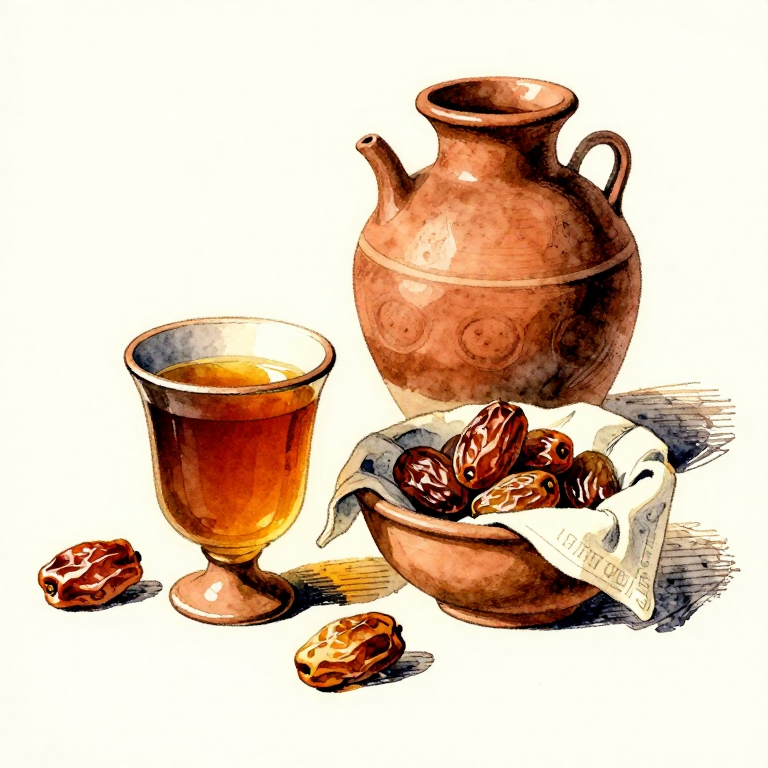
Strain the finished wine through a fine cloth to remove yeast sediment and any remaining date particles. The resulting date wine is amber to brown, mildly alcoholic (typically 5-8 percent ABV, though strong date wine can reach 12-14 percent), with a flavour profile combining caramel sweetness, mild acidity, and fruity complexity. Serve fresh — date wine does not store as well as grape wine due to its tendency to continue fermenting and eventually sour to vinegar. Ancient Mesopotamian texts distinguish between fresh sweet date wine (consumed within days) and aged date wine (which was more alcoholic but required careful storage in sealed vessels). Date wine was mixed with spices, honey, or sesame in various ancient recipes.
Công cụ cần thiết:
Vải (để lọc) Bát uống
Vật liệu
4- 2-3 kg cáiTạm thời
- 5-8 litres cáiTạm thời
- small amount cáiTạm thời
- 2-3 kg cáiTạm thời
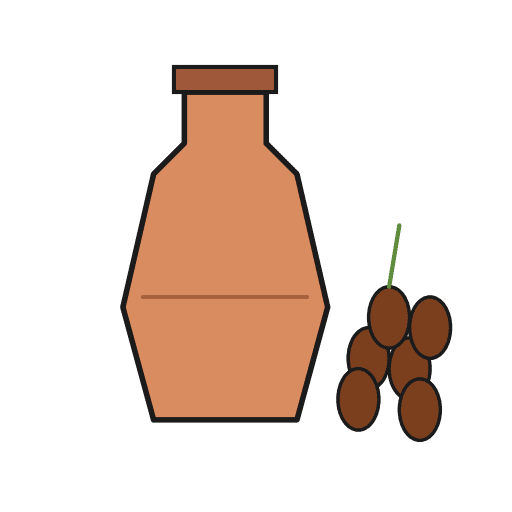
Bản thiết kế này làm ra
CC0 Phạm vi công cộng
Bản thiết kế này được phát hành theo CC0. Bạn tự do sao chép, sửa đổi, phân phối và sử dụng cho bất kỳ mục đích nào mà không cần xin phép.
Hỗ trợ nhà sáng tạo bằng cách mua sản phẩm qua bản thiết kế, nơi họ nhận Hoa hồng nhà sáng tạo do nhà bán hàng đặt, hoặc tạo phiên bản mới và kết nối trong bản thiết kế riêng để chia sẻ doanh thu.