

Extracting Tyrian Purple from Murex Shells — The Royal Dye
Hướng dẫn
Collect and Extract the Glands
Collect and Extract the Glands
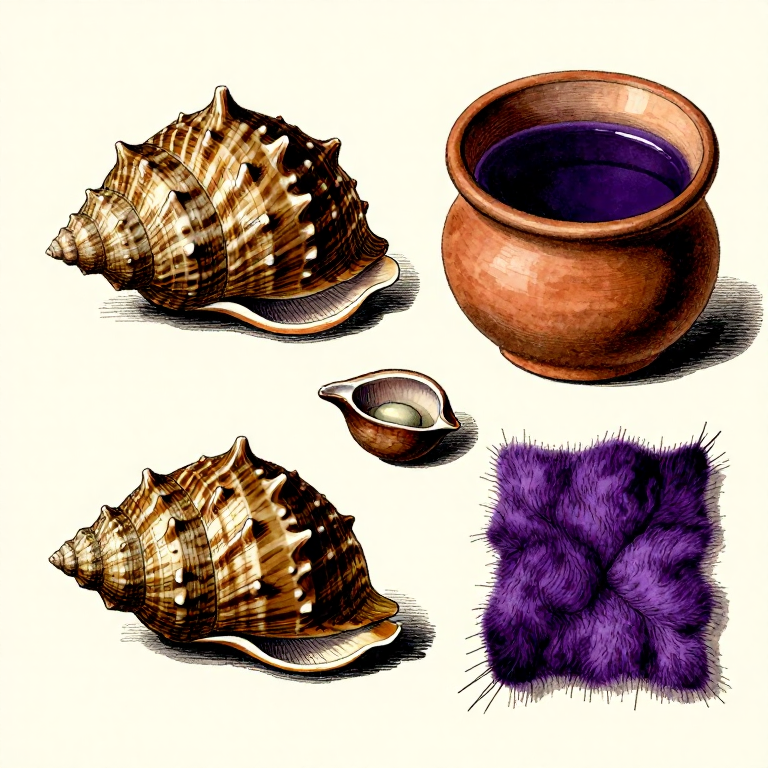
Collect murex snails from rocky coastal waters — Bolinus brandaris and Hexaplex trunculus were the two primary species used commercially. Break the shell and locate the small hypobranchial gland (also called the mucus gland), a pale, yellowish-white organ in the mantle cavity. Extract this gland carefully — it contains the dye precursors, primarily the compound tyrindoxyl sulphate. Each snail yields only a tiny amount of secretion, which is why the dye was so phenomenally expensive. Pliny the Elder recorded that approximately 12,000 Bolinus brandaris were needed to produce 1.5 grams of dye — enough for a single garment's trim. Archaeological shell middens at Sidon contain millions of crushed murex shells from centuries of production.
Vật liệu cho bước này:
 Ốc murexmany hundreds (approx 10,000 per gram of dye) cái
 Muối biển mịnseveral handfuls cái
 Nướcenough for the dye vat cái
 Con sợi lenfor dyeing cái
Công cụ cần thiết:
 Búa đá (đập quặng)
 Đất sét
Prepare the Dye Vat
Prepare the Dye Vat
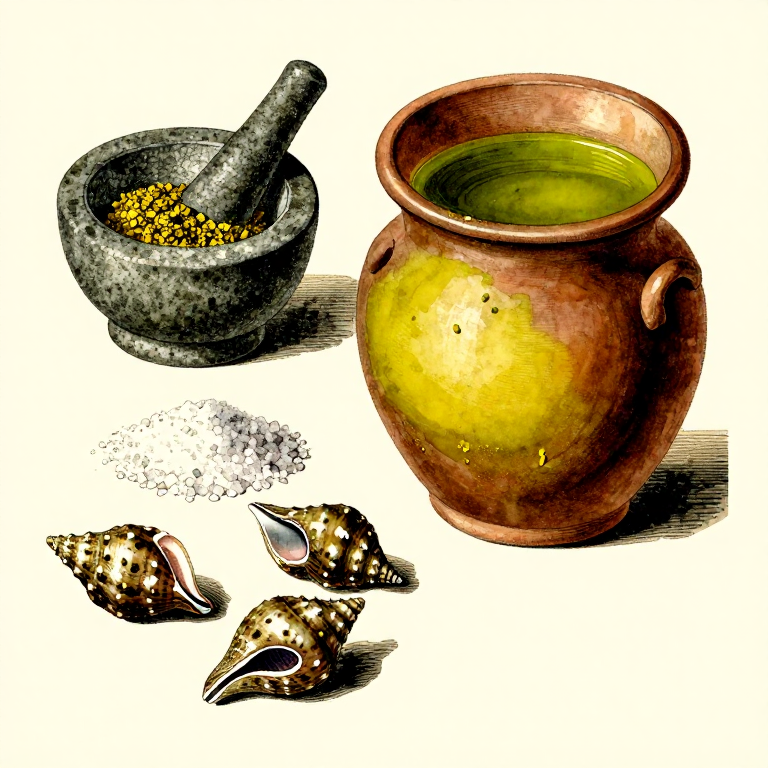
Crush the extracted glands with salt in a stone mortar. The salt helps rupture the cell membranes and release the dye precursors. Transfer the crushed gland paste to a large stone or ceramic vat and add water (approximately 3 parts water to 1 part gland paste by volume). The vat contents at this stage are a yellowish-green colour with a powerful, intensely unpleasant smell — ancient authors describe it as worse than garlic and rotting fish combined. This smell comes from the mercaptan compounds released during the enzymatic breakdown of the precursor molecules.
Photochemical Conversion
Photochemical Conversion
Expose the vat to sunlight for several days, stirring periodically. Ultraviolet light triggers a photochemical reaction that converts the precursor compounds through several intermediate stages into 6,6'-dibromoindigo — the final purple pigment molecule. The colour of the liquid gradually shifts from yellowish-green through blue-green to deep reddish-purple over 3-5 days. Pliny described heating the vat gently for 10 days, adding water as it evaporated. Modern analysis shows that both sunlight and gentle warmth are needed — the reaction is both photochemical and enzymatic. The final colour depends on the species: Bolinus brandaris produces a redder purple, while Hexaplex trunculus yields a bluer violet.
Dye the Textile
Dye the Textile
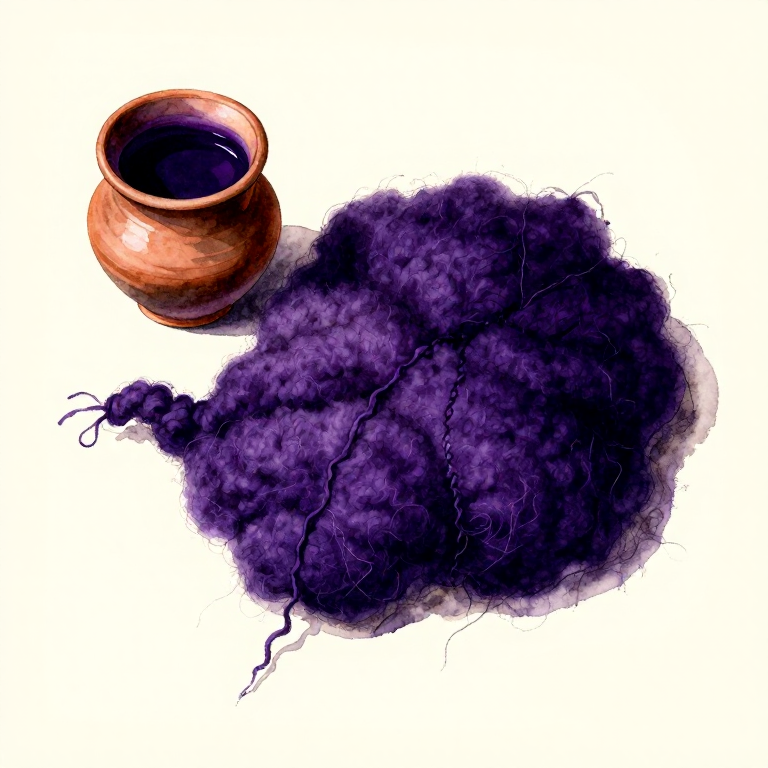
Immerse pre-wetted wool fabric or yarn in the mature dye vat. The dye adheres directly to protein fibers (wool, silk) without the need for a metallic mordant — this is unusual among ancient dyes and contributes to Tyrian purple's legendary wash-fastness and lightfastness. Soak the textile in the vat for 12-24 hours, turning occasionally. For the deepest colour, a double-dyeing process was used: first dye in a vat of Hexaplex trunculus (blue-purple), then overdye in Bolinus brandaris (red-purple). This double-dyed purple was called 'dibapha' and was the most expensive variety — reserved for Roman emperors and Phoenician royalty.
Rinse and Finish
Rinse and Finish
Remove the dyed textile from the vat and rinse thoroughly in clean seawater or fresh water to remove unfixed dye and residual organic material. The rinsing also helps eliminate the terrible smell. Dry the fabric in sunlight — this further develops and fixes the colour through continued photochemical reactions. The final purple has remarkable properties: it does not fade in sunlight (unlike most organic dyes, which are photodegraded), it becomes more vivid with washing and wear, and it resists all common solvents. These properties made it unique in the ancient world and justified its extraordinary cost. A single pound of double-dyed Tyrian purple wool was worth approximately 3 pounds of gold in Roman times.
Vật liệu
6- many hundreds (approx 10,000 per gram of dye) cáiTạm thời
- several handfuls cáiTạm thời
- enough for the dye vat cáiTạm thời
- for dyeing cáiTạm thời
- many hundreds (approx 10,000 per gram of dye) cáiTạm thời
- for dyeing cáiTạm thời
Bản thiết kế này làm ra

CC0 Phạm vi công cộng
Bản thiết kế này được phát hành theo CC0. Bạn tự do sao chép, sửa đổi, phân phối và sử dụng cho bất kỳ mục đích nào mà không cần xin phép.
Hỗ trợ nhà sáng tạo bằng cách mua sản phẩm qua bản thiết kế, nơi họ nhận Hoa hồng nhà sáng tạo do nhà bán hàng đặt, hoặc tạo phiên bản mới và kết nối trong bản thiết kế riêng để chia sẻ doanh thu.