NGHỆ THUẬT
LÀM ĐẸP VÀ SỨC KHỎE
THỦ CÔNG
VĂN HÓA VÀ LỊCH SỬ
GIẢI TRÍ
MÔI TRƯỜNG
THỰC PHẨM VÀ ĐỒ UỐNG
KỸ THUẬT NGƯỢC
KHOA HỌC
THỂ THAO
CÔNG NGHỆ
THIẾT BỊ ĐEO
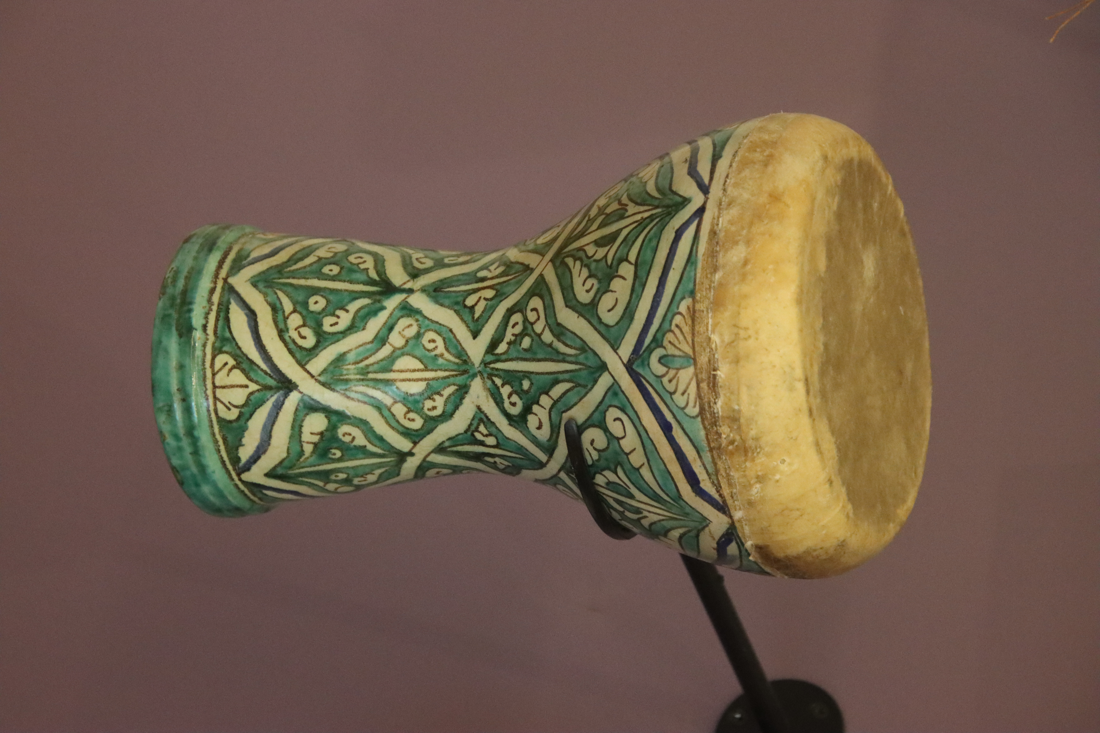
Terry Ballard · CC BY 2.0

Making a Darbuka — The Goblet Drum of the Middle East
Make a darbuka: a goblet-shaped clay drum with a single skin head, played with quick fingers. A deep 'doum' rings from the centre and a crisp 'tek' snaps off the rim. A buildable ceramics-and-drum school project in the membrane drum and how a goblet body shapes its voice.
Cơ bản
45 minutes
Hướng dẫn
1
1
A drum shaped like a goblet
A drum shaped like a goblet
The darbuka is a goblet-shaped drum with one skin head. Struck in the centre it booms a deep 'doum'; flicked at the rim it snaps a crisp 'tek'. Its narrow waist and open bottom shape the sound.
2
2
Prepare the clay
Prepare the clay
Wedge a large ball of clay firmly to press out every air bubble.
Vật liệu cho bước này:
 Đất sét sành thô1500 g
3
3
Form the goblet body
Form the goblet body
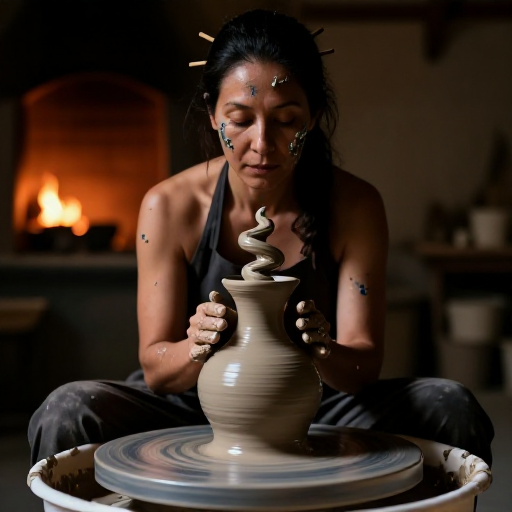
Shape a goblet: a wide open bowl at the top for the drumhead, narrowing to a waist, then flaring to an open foot at the bottom. Keep the walls even and fairly thin.
Công cụ cần thiết:
 Bộ dụng cụ làm gốm
4
4
Open the bottom
Open the bottom
Leave the bottom of the foot fully OPEN. The sound made by the head travels down the hollow body and out of this opening — it is a built-in loudspeaker for the bass.
5
5
Dry and fire it
Dry and fire it
Dry the body slowly for several days until bone-dry, then fire it hard in a kiln. For a no-kiln class, use air-dry clay instead.
6
6
Cut the head
Cut the head
Cut a round piece of rawhide a little larger than the wide top of the goblet.
Vật liệu cho bước này:
 Da sống1 cái
7
7
Head the drum
Head the drum
Soak the hide, stretch it drum-tight over the wide top, and lash it down around the rim. Let it dry hard — a tighter head gives a higher, crisper sound.
Vật liệu cho bước này:
 Dây buộc sợi chuối abaca1 cái
8
8
Play doum and tek
Play doum and tek
Tuck the drum under one arm. Strike the CENTRE of the head with your palm for the deep 'doum', and flick the EDGE with your fingertips for the sharp 'tek'. Alternate them to build the rhythm.
9
9
Compendium — the goblet membrane drum
Compendium — the goblet membrane drum
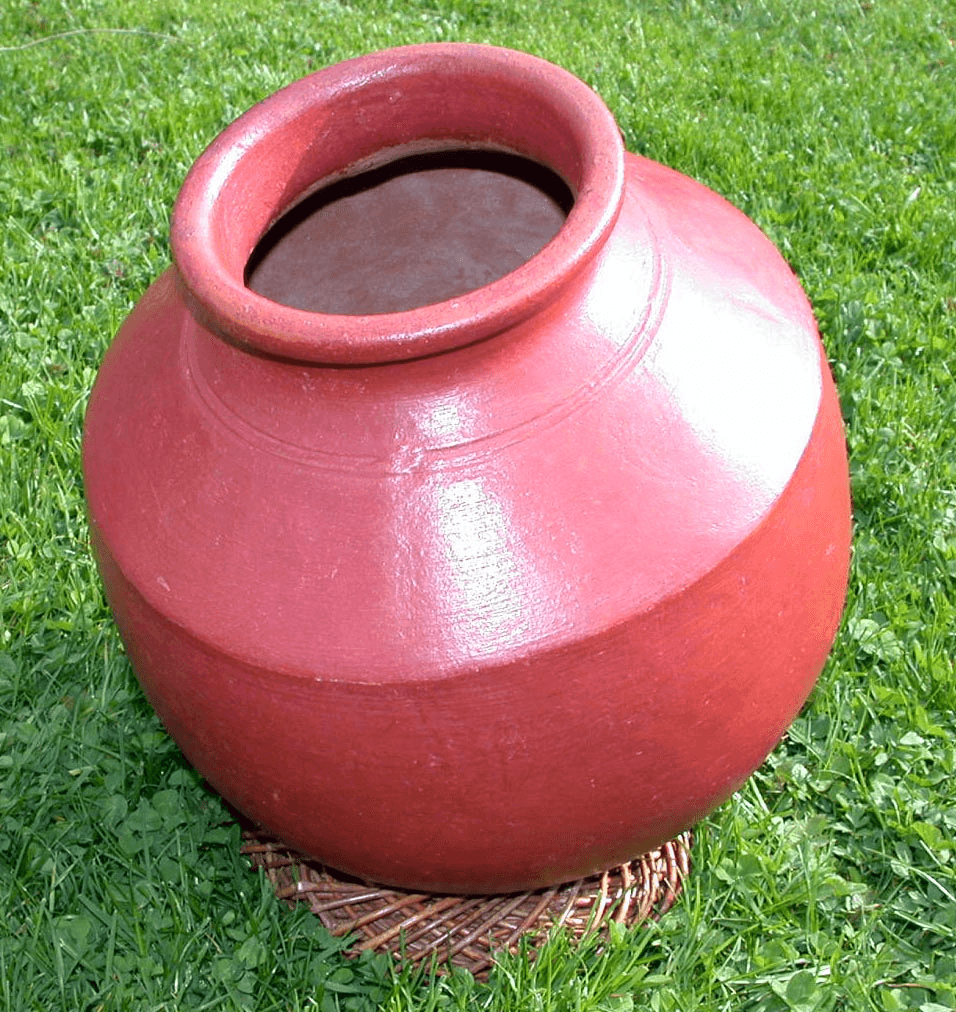
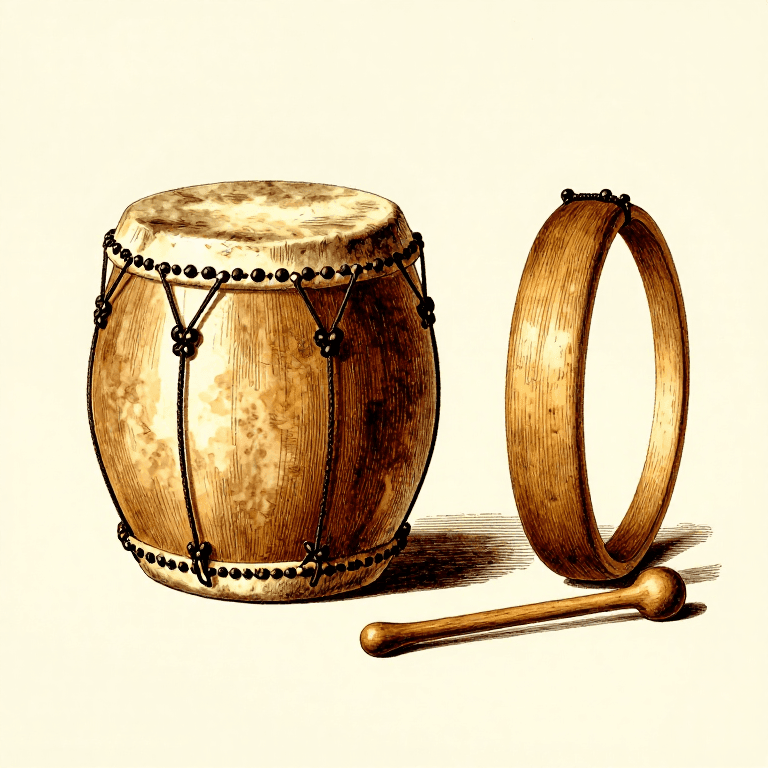
The darbuka is a membranophone: its sound is born on a stretched skin, not in the clay itself. When you strike the head, the membrane springs up and down, and its pitch rises with tension and falls with size — which is why a tightly-lashed head sounds high and crisp and a slack one sounds low and loose, and why players tighten the skin (traditionally by warming it) to tune the drum. But the goblet BODY shapes that sound. Hit near the centre and the whole head moves as one, driving a big slow pulse of air down the hollow goblet and out of the open foot, which acts like a short horn to boom out the deep, round 'doum'. Flick the rim and only the edge of the skin snaps, giving a high, dry, ringing 'tek' with almost no body resonance. So one drum and two strokes give two completely different voices — the alternating doum-and-tek that drives the dance rhythms of the Middle East, North Africa and the Balkans. Its Youblob cousins are the clay ghatam, another played clay pot, and the frame and hourglass drums; the difference is that the ghatam is a struck pot with no skin at all, while the darbuka, like the janggu, sings through a membrane.
Vật liệu
3- 1500 gTạm thời
- 1 cáiTạm thời
- Tạm thời
Công cụ yêu cầu
1- Tạm thời
Bản thiết kế này làm ra

Blueprint liên quan
Các blueprint này chia sẻ kiến thức — kỹ thuật, vật liệu hoặc nguyên tắc

CC0 Phạm vi công cộng
Bản thiết kế này được phát hành theo CC0. Bạn tự do sao chép, sửa đổi, phân phối và sử dụng cho bất kỳ mục đích nào mà không cần xin phép.
Hỗ trợ nhà sáng tạo bằng cách mua sản phẩm qua bản thiết kế, nơi họ nhận Hoa hồng nhà sáng tạo do nhà bán hàng đặt, hoặc tạo phiên bản mới và kết nối trong bản thiết kế riêng để chia sẻ doanh thu.