NGHỆ THUẬT
LÀM ĐẸP VÀ SỨC KHỎE
THỦ CÔNG
VĂN HÓA VÀ LỊCH SỬ
GIẢI TRÍ
MÔI TRƯỜNG
THỰC PHẨM VÀ ĐỒ UỐNG
KỸ THUẬT NGƯỢC
KHOA HỌC
THỂ THAO
CÔNG NGHỆ
THIẾT BỊ ĐEO
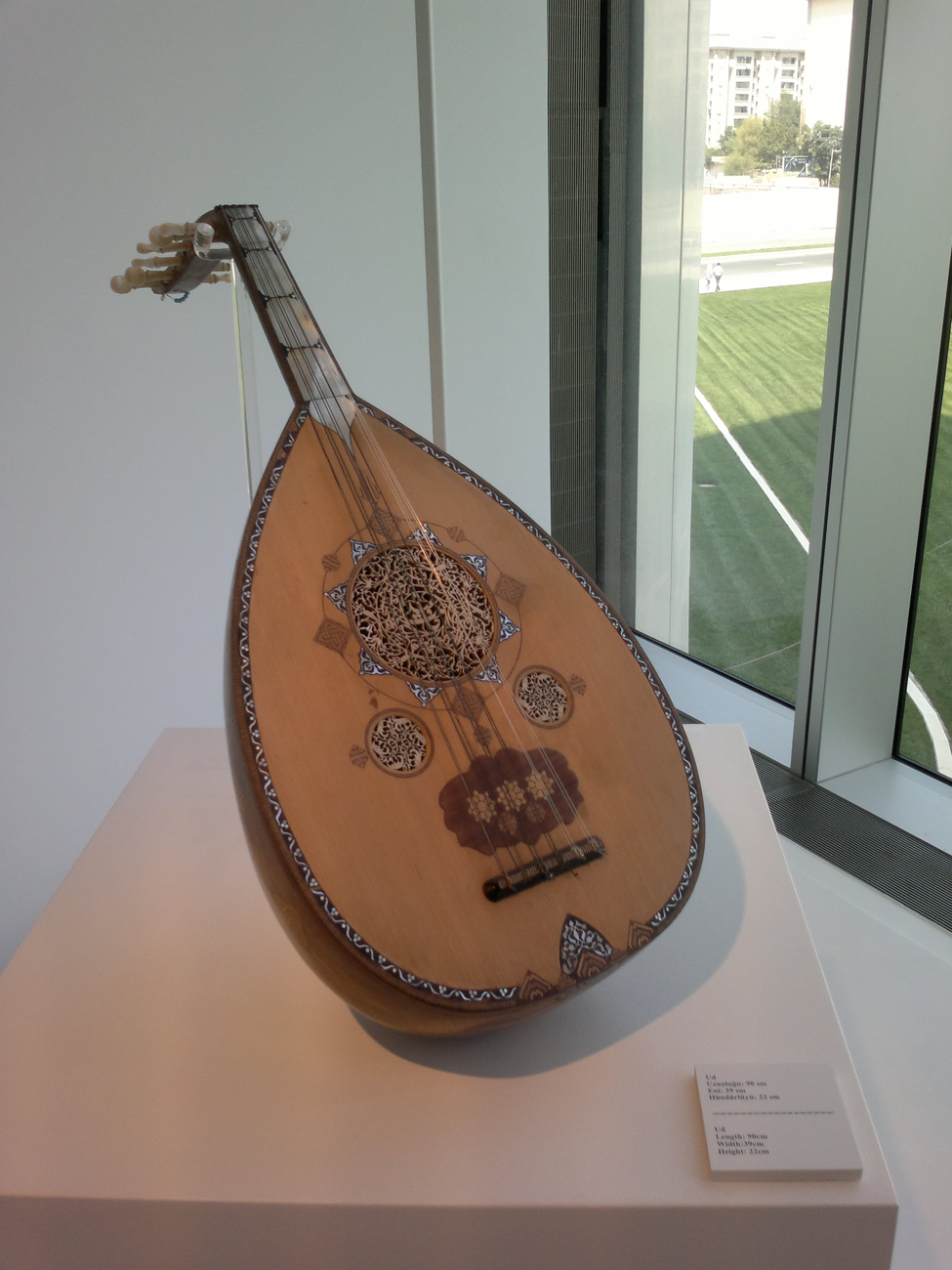


Building an Oud — The Fretless Arabic Lute
Build an oud: the deep-bowled, short-necked lute at the heart of Arabic and Turkish music — and famously FRETLESS, so your fingers can slide to any pitch and play the microtones of maqam. Shape the bowl, fit the bent pegbox, string the courses, and learn why leaving the frets off opens up the notes between the notes. A serious maker build in the fretless plucked string.
Trung cấp
Several hours over several sessions
Hướng dẫn
1
1
A lute with no frets
A lute with no frets
The oud is the deep-bowled short-necked lute of Arabic and Turkish music. Unlike a guitar or bağlama it has NO frets, so a player can slide the fingers to any pitch — including the microtones between the Western notes.
2
2
Shape the bowl body
Shape the bowl body
Build a deep, rounded bowl body from many thin wooden staves (ribs) glued edge to edge over a mould. The big bowl gives the oud its warm, resonant voice.
Vật liệu cho bước này:
 Ván ép bạch dương Baltic1 cái
 Keo gỗ PVA1 cái
Công cụ cần thiết:
 Cưa sắt
3
3
Fit the soundboard
Fit the soundboard
Glue a thin flat soundboard over the bowl and cut one or more decorative sound-holes (rosettes) in it.
Vật liệu cho bước này:
 Tấm gỗ mềm đã khô1 cáiKeo gỗ PVA1 cái
Công cụ cần thiết:
 Dao khắc sloyd
4
4
Fit the neck and pegbox
Fit the neck and pegbox
Fit a short, SMOOTH neck — no frets at all — ending in a pegbox that bends sharply back from the neck, the oud's signature shape.
Vật liệu cho bước này:
 Thanh chốt gỗ1 cáiKeo gỗ PVA1 cái
5
5
Fit the pegs and string it
Fit the pegs and string it
Fit the pegs and string it with paired courses — bright strings for the high courses and thicker wound strings for the low ones. An oud usually has eleven strings in six courses.
Vật liệu cho bước này:
 Trục lên dây6 cái
 Dây thép đàn hồi 0,032"1 cái
 Dây đồng thanh1 cái
Công cụ cần thiết:
 Dùi
Dùi6
6
Tune the courses
Tune the courses
Tune the six courses low to high. Doubling most strings in a course makes the sound fuller and richer.
7
7
Play with a risha
Play with a risha
Pluck the strings with a long thin plectrum (the risha), pressing the strings onto the bare, fretless neck with your other hand.
8
8
Slide the microtones
Slide the microtones
Because there are no frets, slide a finger up or down the smooth neck to glide between notes and land exactly on the in-between pitches that make an Arabic maqam.
9
9
Compendium — why leave the frets off
Compendium — why leave the frets off
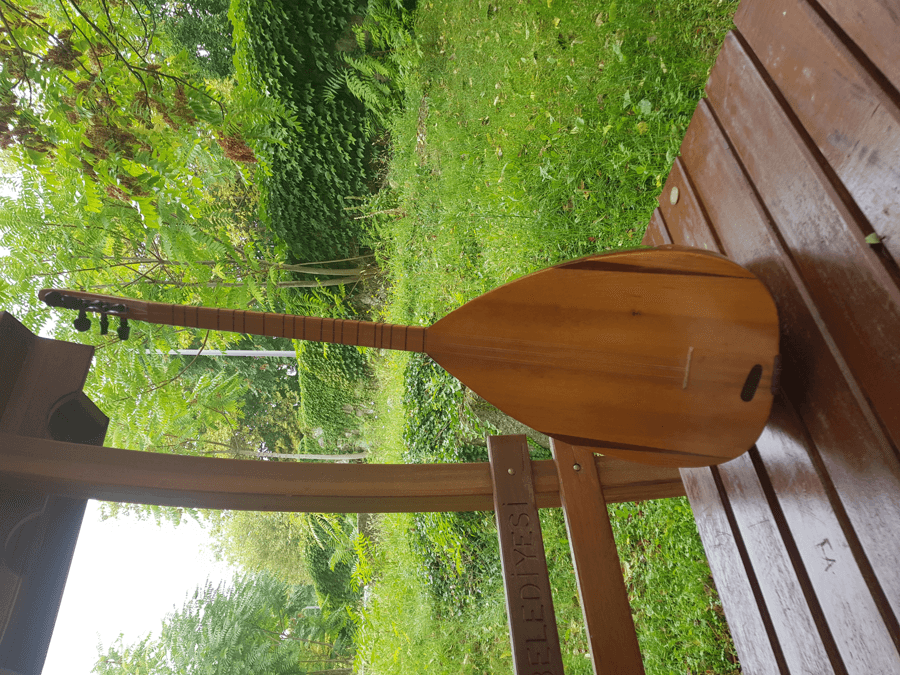
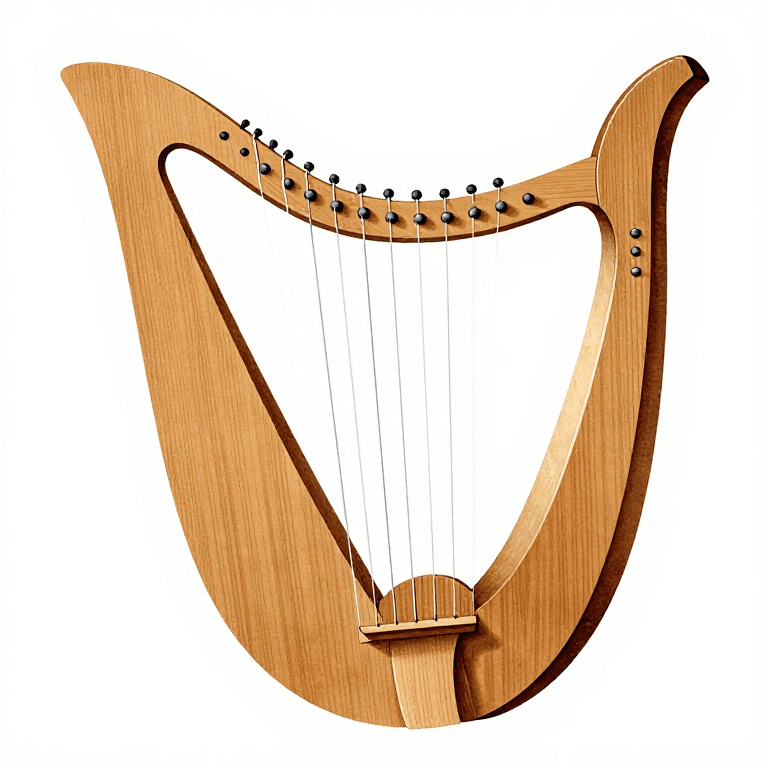
A plucked string sounds higher the shorter its vibrating length, and pressing it against the neck is how you shorten it. A FRET is a fixed ridge that stops the string at one exact spot every time, which makes it easy to hit set notes accurately but locks you to those notes. The oud does the opposite on purpose: its neck is left perfectly smooth, so the string is stopped only by the soft pad of your finger, wherever you place it. That means you can land on any pitch at all — including the neutral, in-between microtones that Arabic and Turkish maqam music lives on, which fall in the cracks a fretted guitar can never reach — and slide smoothly from one to the next, bending and ornamenting notes like a singing voice. The price is that intonation is all in the player's ear and fingers, with no frets to guide them. The deep staved bowl and thin soundboard amplify the strings as in any lute, and the sharply back-bent pegbox keeps the short neck balanced. The oud is the direct ancestor of the European LUTE (the very word 'lute' comes from the Arabic al-ʿūd), and a cousin of the fretted bağlama and, distantly, the guitar — the whole family of plucked, soundbox strings whose oldest Youblob ancestor is the lyre.
Vật liệu
7- Tạm thời
- 1 cáiTạm thời
- 1 cáiTạm thời
- 1 cáiTạm thời
- 6 cáiTạm thời
- Tạm thời
- 1 cáiTạm thời
Blueprint liên quan
Các blueprint này chia sẻ kiến thức — kỹ thuật, vật liệu hoặc nguyên tắc
CC0 Phạm vi công cộng
Bản thiết kế này được phát hành theo CC0. Bạn tự do sao chép, sửa đổi, phân phối và sử dụng cho bất kỳ mục đích nào mà không cần xin phép.
Hỗ trợ nhà sáng tạo bằng cách mua sản phẩm qua bản thiết kế, nơi họ nhận Hoa hồng nhà sáng tạo do nhà bán hàng đặt, hoặc tạo phiên bản mới và kết nối trong bản thiết kế riêng để chia sẻ doanh thu.