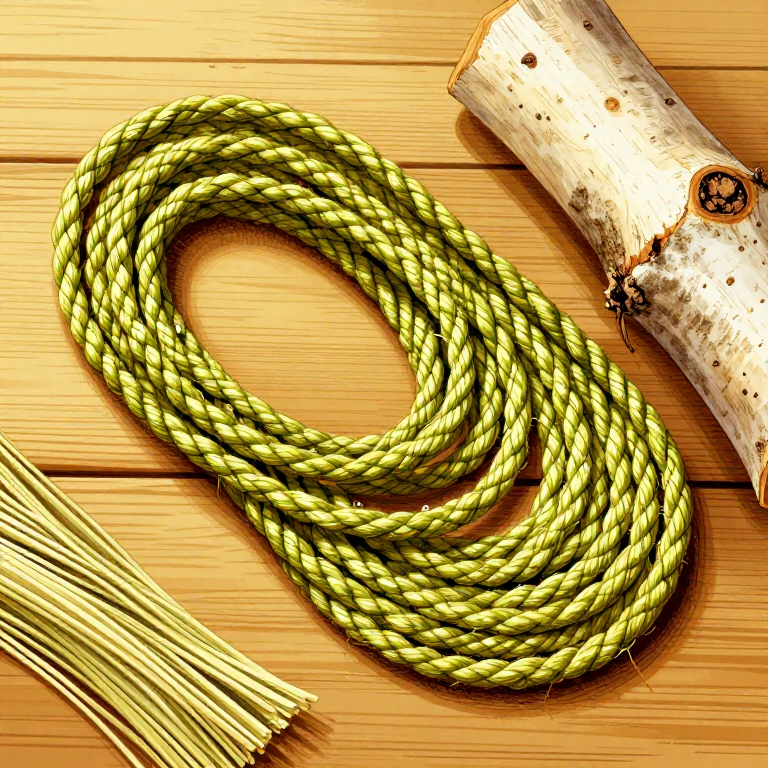


Twisting Bast Fiber Rope — Cordage from Lime Tree Inner Bark
Hướng dẫn
Harvest the Bast Layer
Harvest the Bast Layer
Bast is the fibrous inner bark layer between the outer bark and the wood of a tree. Lime (linden, Tilia) produces the best bast fiber in Europe — long, strong, and flexible. The word "bast" itself comes from this tree.
Harvest in late spring/early summer when sap is flowing. Cut young lime branches (3-8cm diameter) or strips from a larger trunk. Score the bark lengthwise and peel it away from the wood. You want the full bark including the inner fibrous layer.
Alternatively, use bark from a freshly felled lime tree — coppiced lime was managed specifically for bast production across medieval Scandinavia and Russia. The Russian word for bast shoes ("лапти" / lapti) comes from this fiber.
Vật liệu cho bước này:
 Vỏ cây đoạn
Ret the Bark
Ret the Bark
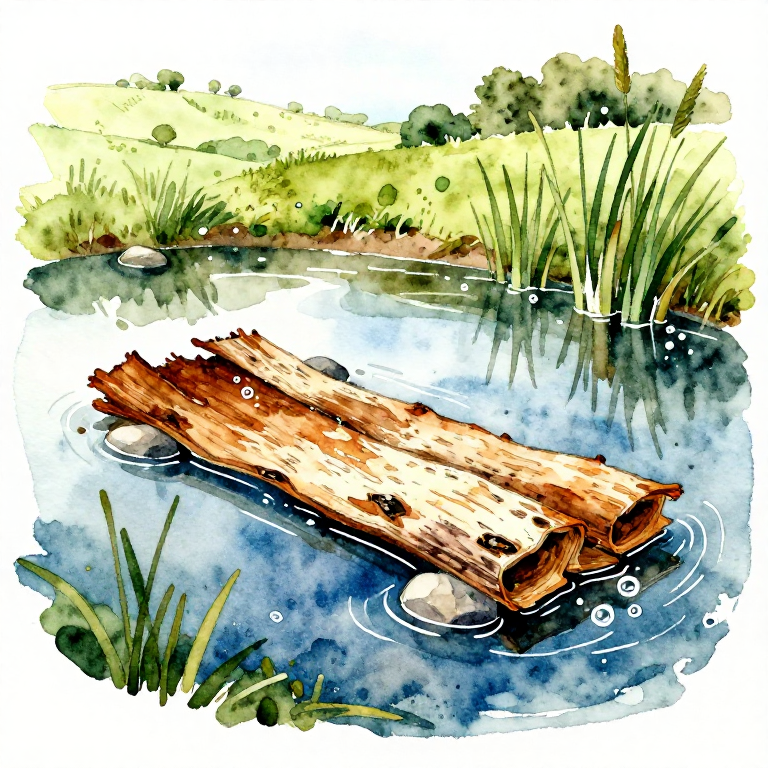
Retting is controlled rotting — bacteria break down the pectin that binds the bast fibers together, releasing them from the woody outer bark. Submerge your bark strips completely in a pond, slow stream, or water-filled container.
Weigh the bark down with stones to keep it submerged. Leave for 2-4 weeks, checking weekly. The retting is complete when the outer bark separates easily from the fibrous inner layer, and the fibers themselves can be pulled apart with gentle pressure.
Under-retted bark is stiff and the fibers won't separate cleanly. Over-retted bark has weakened fibers that break easily. The sweet spot is when fibers peel apart like string cheese.
Warning: Retting produces a strong, unpleasant smell. Do it away from dwellings.
Công cụ cần thiết:
 Thùng ngâm dầm
Separate and Prepare Fibers
Separate and Prepare Fibers
Once retted, pull the bark from the water and peel apart the layers. The outer bark (rough, dark) discards. The inner bast fibers (pale, stringy) are your cordage material.
Rinse the fibers in clean water to remove rotting residue. Then beat the fibers gently with a wooden mallet on a flat surface — this breaks apart any remaining clumps and separates individual fiber strands.
Hang the processed fibers to dry completely. Dried bast fibers are stiff; re-wet them slightly before working to restore flexibility. Well-prepared lime bast fiber has a tensile strength comparable to hemp — it was the primary cordage material in Northern Europe before hemp cultivation became widespread.
Twist Two-Ply Rope
Twist Two-Ply Rope
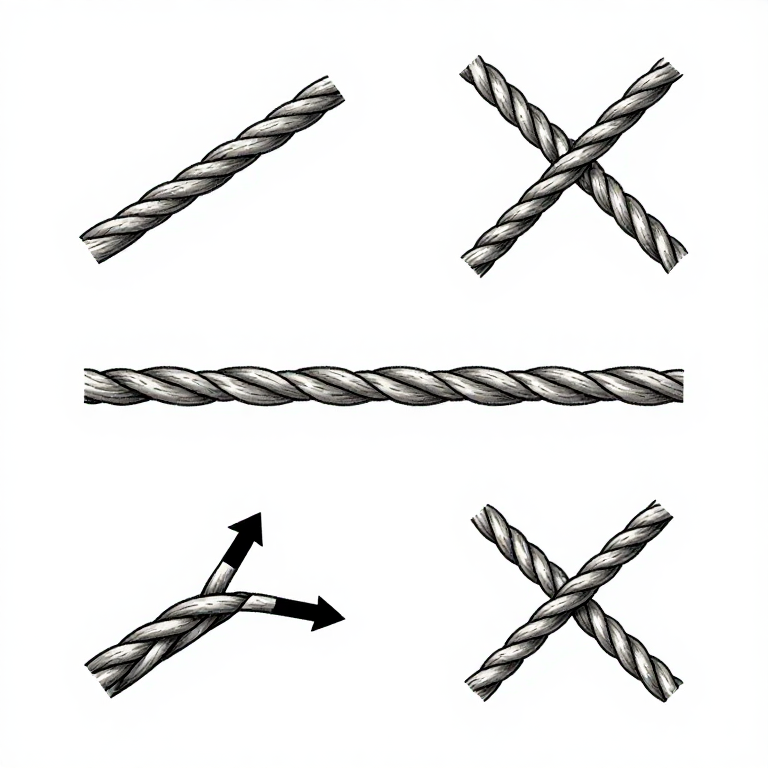
The fundamental rope-making technique is reverse-twist two-ply. Take a bundle of fibers and fold it roughly in half, creating a loop. Pin the loop under your foot or hang it from a hook.
You now have two strands (plies). Twist the strand closest to you clockwise (away from your body) until it kinks tightly. Then cross it over the other strand (this is the "lay" — counterclockwise). Now twist the other strand clockwise, and cross it over. Repeat.
The opposing twist directions lock the plies together — each one's tendency to untwist is held in check by the other. This is why rope holds together without glue.
To add length, splice in new fibers before the current bundle runs out. Overlap new fibers with the old ones for 10-15cm and twist them in together. Stagger your splices so both plies are never spliced at the same point.
Finish and Test the Rope
Finish and Test the Rope
When your rope reaches the desired length, secure the end by tying an overhand knot, whipping with thin fiber, or tucking the loose ends back into the twist.
Test strength by pulling firmly. Well-made lime bast rope of 8-10mm diameter can support 50-100kg. For heavier loads, make three-ply rope or braid multiple two-ply ropes together.
Lime bast rope was used for everything in Viking-age Scandinavia: ship rigging, fishing nets, animal tethering, building construction, and furniture lashing. Archaeological finds at Oseberg (Norway) include bast rope in excellent preservation.
To preserve rope long-term, coat with birch tar or pine pitch. Untreated bast rope deteriorates in sustained wet conditions — tar-coated rope lasts years.
Vật liệu
1- 1 cáiTạm thời
Công cụ yêu cầu
1- Tạm thời
Bản thiết kế này làm ra
CC0 Phạm vi công cộng
Bản thiết kế này được phát hành theo CC0. Bạn tự do sao chép, sửa đổi, phân phối và sử dụng cho bất kỳ mục đích nào mà không cần xin phép.
Hỗ trợ nhà sáng tạo bằng cách mua sản phẩm qua bản thiết kế, nơi họ nhận Hoa hồng nhà sáng tạo do nhà bán hàng đặt, hoặc tạo phiên bản mới và kết nối trong bản thiết kế riêng để chia sẻ doanh thu.