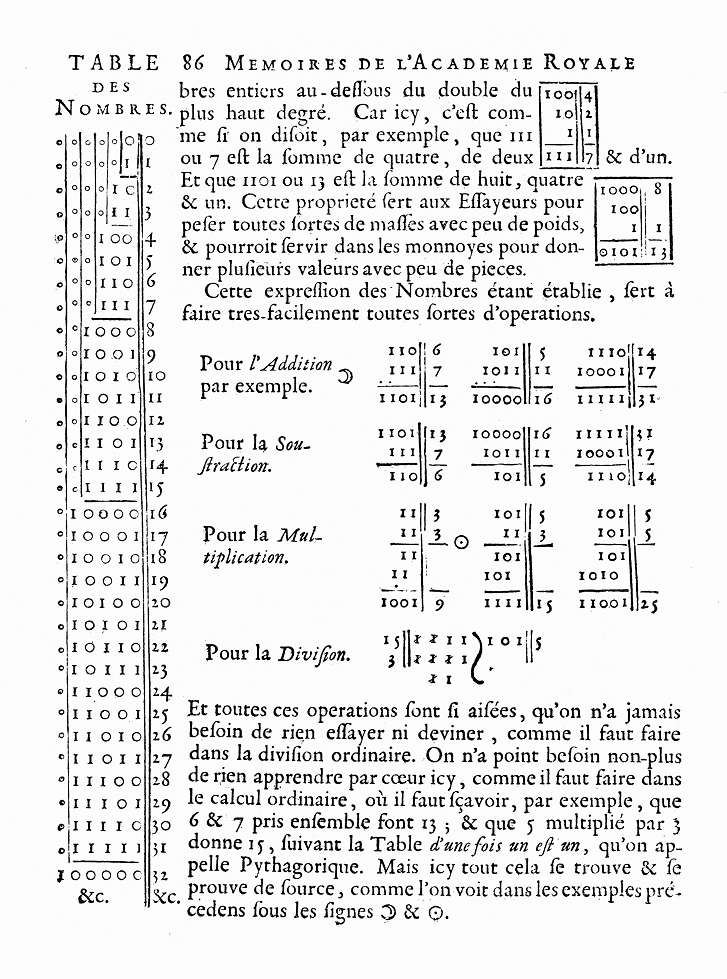

Binary Arithmetic
Hướng dẫn
Build a physical binary counter
Build a physical binary counter
Make the places real objects you can flip.
- Lay out cards for 1, 2, 4, 8, 16, 32 — face up is on, face down is off.
- Count from 0 to 20 by flipping cards.
- Watch what happens each time a place fills.
Vật liệu cho bước này:
 Bộ giấy bìa nhiều màu1 gói
Convert both ways
Convert both ways
Two procedures, and one of them you have already met.
- Decimal to binary: repeatedly halve, discarding remainders, and record odd (1) or even (0). Read from the bottom up.
- Binary to decimal: add the place values where there is a 1.
- Convert a dozen numbers each way and check against each other.
Vật liệu cho bước này:
 Giấy kẻ ô ly1 pad
Add, and find the carry
Add, and find the carry
Four rules, and that is the whole of binary addition.
- 0+0=0 · 0+1=1 · 1+0=1 · 1+1=0 carry 1.
- Add 1011 and 0110 column by column.
- Check your answer in decimal: 11 + 6 = 17.
Multiply by shifting
Multiply by shifting
Show that multiplication needs no new machinery.
- Take a binary number and add a zero on the right.
- Convert before and after.
- Repeat — each added zero doubles the value.
History and context
History and context
Gottfried Wilhelm Leibniz published his account of binary in 1703, and was struck by finding the same two-state structure in the hexagrams of the Chinese I Ching, which a Jesuit correspondent had sent him. He attached theological significance to a system that creates everything from one and nothing — a reading that is his own and not part of the mathematics.
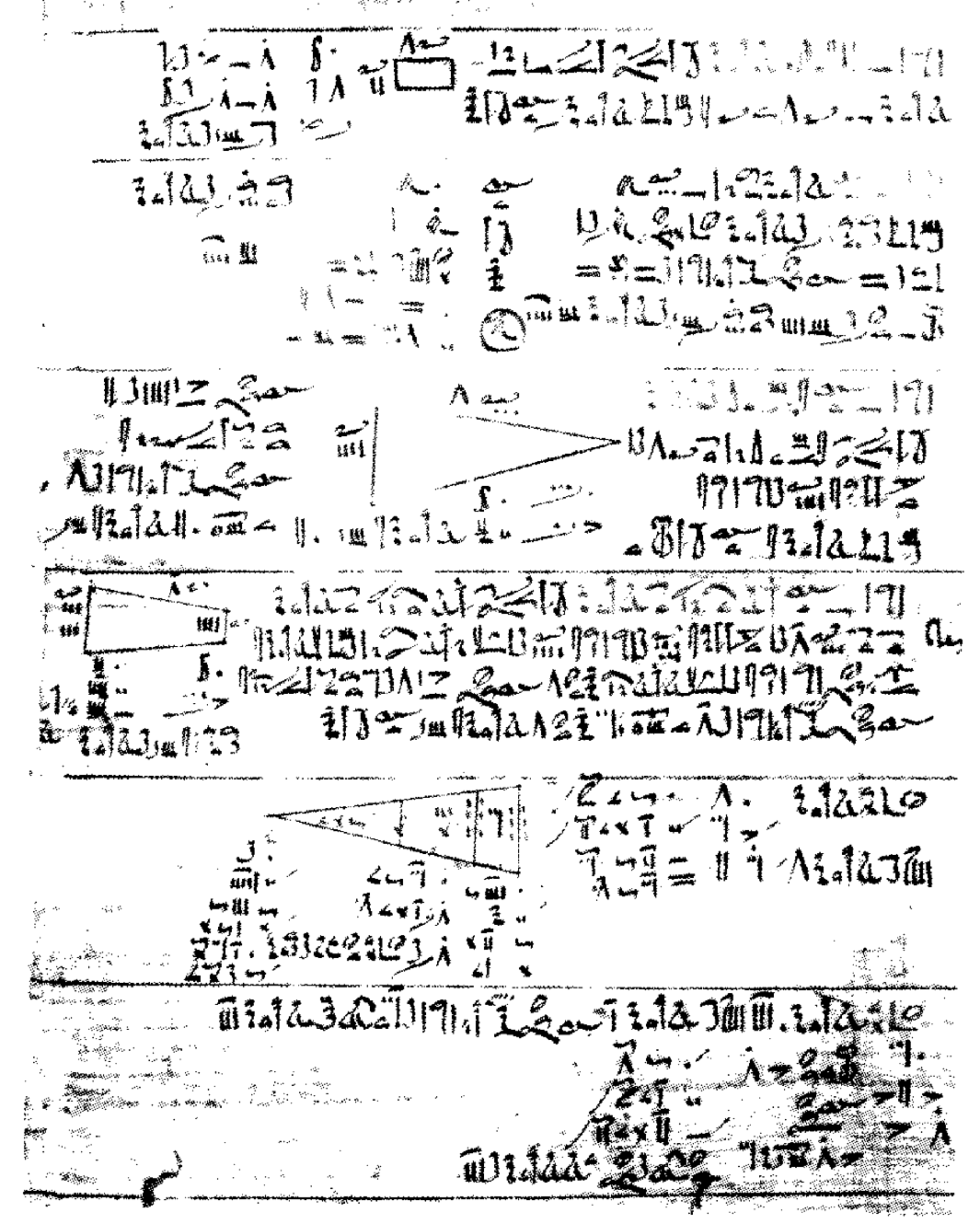
Earlier and elsewhere: binary and near-binary systems appear independently in the I Ching itself, in Indian prosody — Pingala described binary patterns of long and short syllables around the third century BC — and in African divination systems. Two-state encoding is something people keep arriving at.
The reason it won is engineering, not mathematics. A decimal computer needs a component that reliably distinguishes ten voltage levels; a binary one needs a component that distinguishes on from off, which almost any switch, relay, valve or transistor does robustly and cheaply. Claude Shannon's 1937 master's thesis made the connection explicit by showing that relay circuits implement Boolean algebra — arguably the most consequential master's thesis ever written.
Decimal computers did exist — ENIAC was one, and IBM built decimal machines for business — so the outcome was not inevitable. Binary won on component cost and reliability, and the survival of binary-coded decimal in financial software is a reminder that the argument was once genuinely open.
Vật liệu
2- Tạm thời
- 1 padTạm thời
Blueprint liên quan
Các blueprint này chia sẻ kiến thức — kỹ thuật, vật liệu hoặc nguyên tắc
CC0 Phạm vi công cộng
Bản thiết kế này được phát hành theo CC0. Bạn tự do sao chép, sửa đổi, phân phối và sử dụng cho bất kỳ mục đích nào mà không cần xin phép.
Hỗ trợ nhà sáng tạo bằng cách mua sản phẩm qua bản thiết kế, nơi họ nhận Hoa hồng nhà sáng tạo do nhà bán hàng đặt, hoặc tạo phiên bản mới và kết nối trong bản thiết kế riêng để chia sẻ doanh thu.