NGHỆ THUẬT
LÀM ĐẸP VÀ SỨC KHỎE
THỦ CÔNG
VĂN HÓA VÀ LỊCH SỬ
GIẢI TRÍ
MÔI TRƯỜNG
THỰC PHẨM VÀ ĐỒ UỐNG
KỸ THUẬT NGƯỢC
KHOA HỌC
THỂ THAO
CÔNG NGHỆ
THIẾT BỊ ĐEO
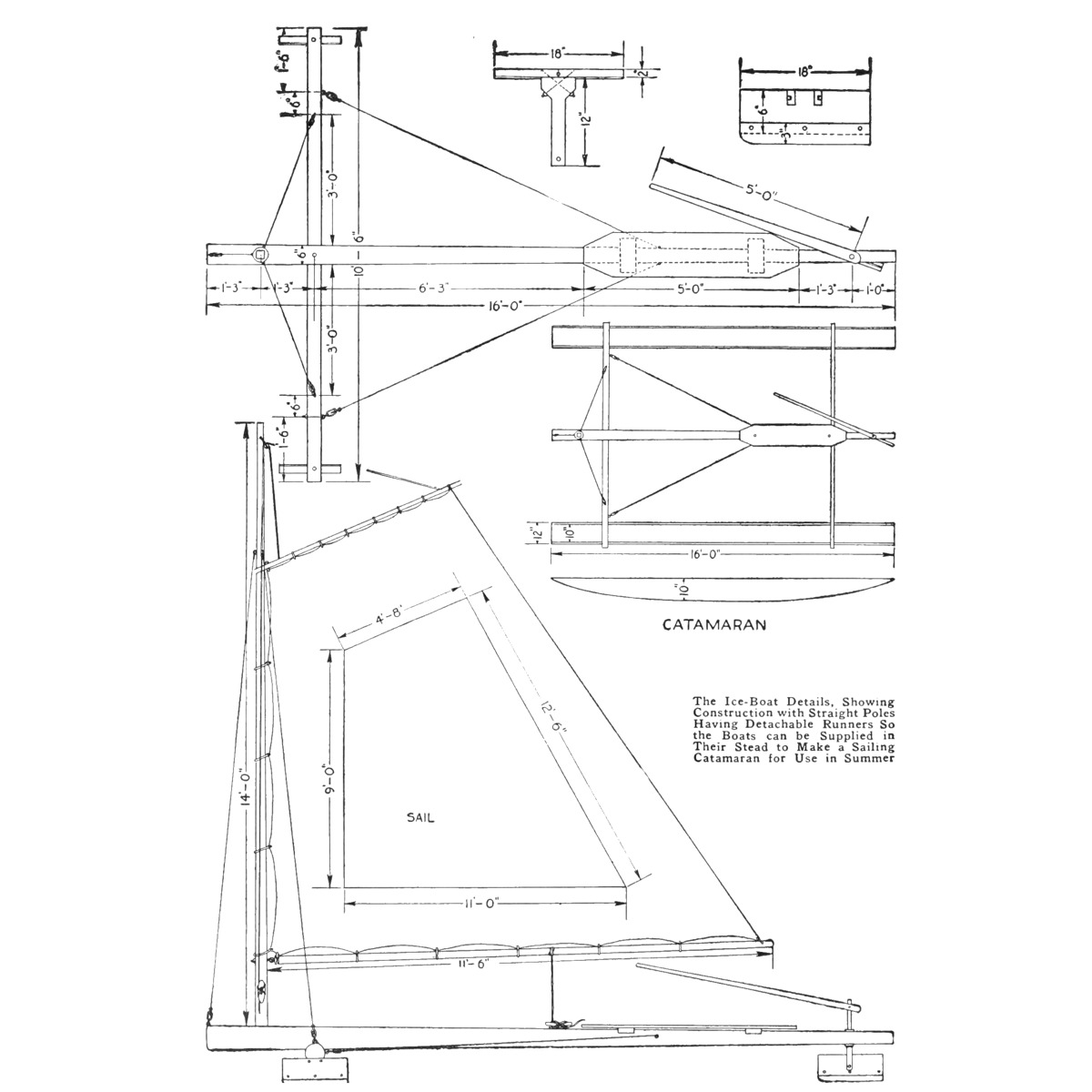


Ice Boat: Crossed Timbers, Skate-Edged Runners, Bicycle-Fork Steering and a Gaff Sail (Boy Mechanic, 1915)
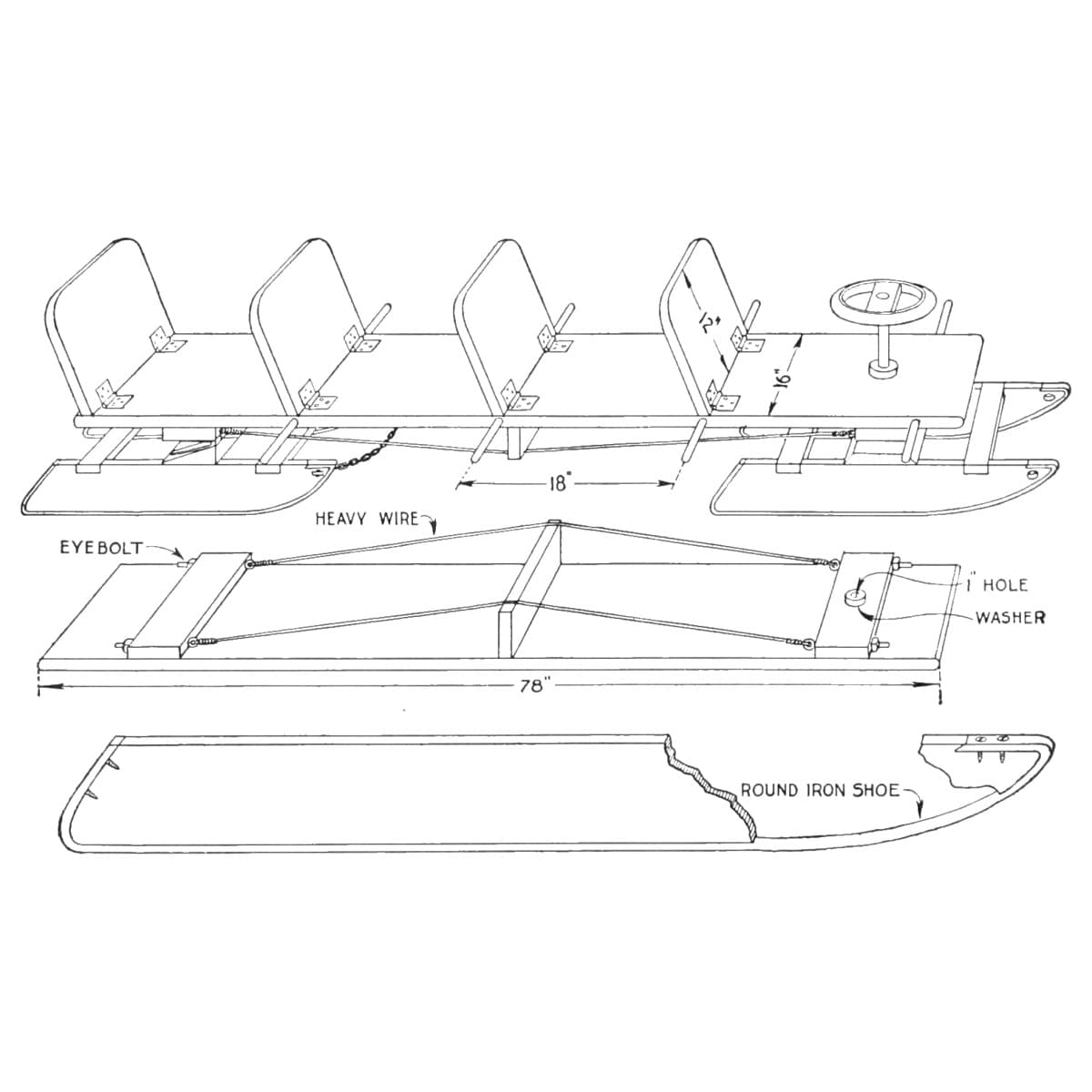
Robert K. Patterson's ice boat from The Boy Mechanic, Book 2 (1915): a 16 ft timber crossed by a 10-1/2 ft one and braced with wires, two front runners of band iron ground like a skate edge, and a rear steering runner clamped in a cut-down bicycle fork worked by a lever. His text and his drawing differ on the mast (about 12 ft against 14 ft); both are given.
Nâng cao
About 1 week
Hướng dẫn
1
1
Text against drawing
Text against drawing
Đang tải sổ tay Jupyter…
2
2
Read The Boy Mechanic, Book 2
Read The Boy Mechanic, Book 2
"In constructing the ice boat, use two poles, or timbers, one 16 ft. and the other 10-1/2 ft. long, crossed at a point 2-1/2 ft. from one end of the longer timber. The crossed pieces are firmly braced with wires, as shown."
3
3
Cross and brace the frame
Cross and brace the frame
Cross the 10-1/2 ft timber over the 16 ft one, 2-1/2 ft from its front end, and fasten them firmly. Brace them with wires as in the drawing: from the bow to points on the cross timber, and from the cross timber back along the long one. The drawing puts the wire points 6 in and 1 ft 6 in from each end of the cross timber.
Vật liệu cho bước này:
 Sào gỗ2 cái
 Bu lông đầu tròn cổ vuông1 cái
 Dây thép1 cái
Công cụ cần thiết:
 Cưa tay
 Khoan tay quay và mũi khoan
 Thước dây cuộn
 Bút chì
4
4
Make the front runners
Make the front runners
Cut two band-iron strips 18 in long, 3 in wide and 1/8 in thick; grind one edge like the edge of a skate and round the ends. Bolt each to the side of a wood piece 18 in long, 6 in wide and 2 in thick, so the ground edge projects about 1 in. With a pole frame, bolt each runner block at right angles to a 12 in piece of wood shaped as drawn, the bolts running diagonally through its shouldered part; the pole end rests on this and is bolted down. With squared timbers, fasten the runners straight to them.
Vật liệu cho bước này:
 Thanh thép dẹt1 cái
 Tấm gỗ cứng1 cáiBu lông đầu tròn cổ vuông1 cái
Công cụ cần thiết:
 Cưa sắt
 Máy mài để bàn
 Ê tô bàn nguội
 Khoan tayCưa tay
5
5
Make the steering runner
Make the steering runner
Fasten the rear runner between two pieces of wood so its edge projects, and clamp it in a bicycle fork cut down to leave about 3 in of the blades. Bore a hole through the rear end of the long timber for the fork head. Fit a lever (5 ft on the drawing) to the top of the fork head: bore a hole through the lever end at a slight angle to fit the head, slot the end, bore across the width of the handle and put in a bolt as a clamp.
Vật liệu cho bước này:
Thanh thép dẹt1 cáiTấm gỗ cứng1 cái Phuộc xe đạp1 cáiBu lông đầu tròn cổ vuông1 cái
 Thanh nẹp gỗ mềm1 cái
Công cụ cần thiết:
Cưa sắtMáy mài để bànKhoan tay quay và mũi khoanCưa tay Đục gỗ
6
6
Step the mast and fit the seat
Step the mast and fit the seat
Cut a mortise in the long timber 15 in from the front end and set the mast in it; stay it with wires as drawn. His text says the mast should be about 12 ft; his drawing marks it 14 ft 0 in: choose one and keep the sail to suit. Fasten a board on two crosspieces mortised into the top of the long timber, as a seat for the driver (5 ft long on the drawing, ending 2 ft 3 in from the stern).
Vật liệu cho bước này:
Thanh nẹp gỗ mềm1 cáiDây thép1 cái Ván thông1 cái
 Vít gỗ1 cái
Công cụ cần thiết:
Cưa tayĐục gỗ Bào tayThước dây cuộn
7
7
Make and rig the sail
Make and rig the sail
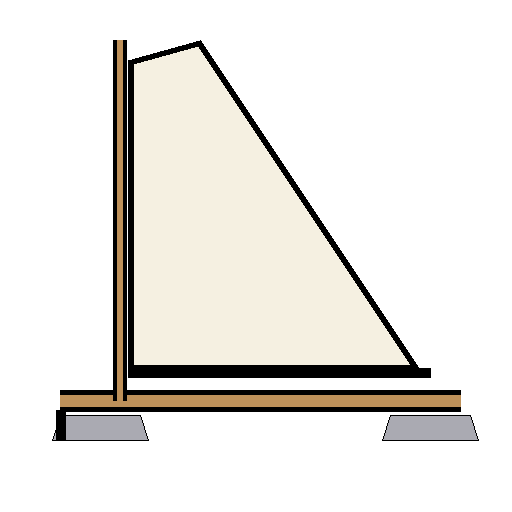
Make the sail of any good material to his drawing: luff (along the mast) 9 ft 0 in, head 4 ft 8 in, foot 11 ft 0 in, leech 12 ft 6 in. Hang the main boom, 11-1/2 ft long, and the upper spar on the mast "in the usual manner". The text also names a jib boom of about 6 ft, which the drawing does not show.
Vật liệu cho bước này:
 Vải bạt1 cáiThanh nẹp gỗ mềm1 cái
 Dây thừng bông1 cái
Công cụ cần thiết:
 KéoCưa tayThước dây cuộn
8
8
Troubleshooting
Troubleshooting
Ice boat troubleshooting.
Flow
Loading...
9
9
History and honest limits
History and honest limits
From "An Ice Boat and Catamaran" by Robert K. Patterson, in **The Boy Mechanic, Book 2**, Popular Mechanics, 1915 (Project Gutenberg 44585; checked on the archive.org scan boymechanicbook200chic2, pp. 27-28). His text and drawing differ on the mast (about 12 ft against 14 ft 0 in) and on the jib boom, which is in the text only; both are stated, not resolved. He gives no timber sections, wire size or sail cloth: those choices are ours, as are the tools and metric figures. The summer catamaran conversion is not made here.
Vật liệu
11- 2 cáiTạm thời
- Tạm thời
- 2 cáiTạm thời
- 1 cáiTạm thời
- 1 cáiTạm thời
- 1 cáiTạm thời
- 1 cáiTạm thời
- 1 cáiTạm thời
- 1 cáiTạm thời
- 1 cáiTạm thời
- 1 cáiTạm thời
Công cụ yêu cầu
11- Tạm thời
- Tạm thời
- 1 vendor sell this, none ship to you yetTạm thời
- 1 vendor sell this, none ship to you yetTạm thời
- Tạm thời
- Tạm thời
- Tạm thời
- Tạm thời
- Tạm thời
- Tạm thời
- Tạm thời
Bản thiết kế này làm ra
Blueprint liên quan
Các blueprint này chia sẻ kiến thức — kỹ thuật, vật liệu hoặc nguyên tắc
CC0 Phạm vi công cộng
Bản thiết kế này được phát hành theo CC0. Bạn tự do sao chép, sửa đổi, phân phối và sử dụng cho bất kỳ mục đích nào mà không cần xin phép.
Hỗ trợ nhà sáng tạo bằng cách mua sản phẩm qua bản thiết kế, nơi họ nhận Hoa hồng nhà sáng tạo do nhà bán hàng đặt, hoặc tạo phiên bản mới và kết nối trong bản thiết kế riêng để chia sẻ doanh thu.