NGHỆ THUẬT
LÀM ĐẸP VÀ SỨC KHỎE
THỦ CÔNG
VĂN HÓA VÀ LỊCH SỬ
GIẢI TRÍ
MÔI TRƯỜNG
THỰC PHẨM VÀ ĐỒ UỐNG
KỸ THUẬT NGƯỢC
KHOA HỌC
THỂ THAO
CÔNG NGHỆ
THIẾT BỊ ĐEO
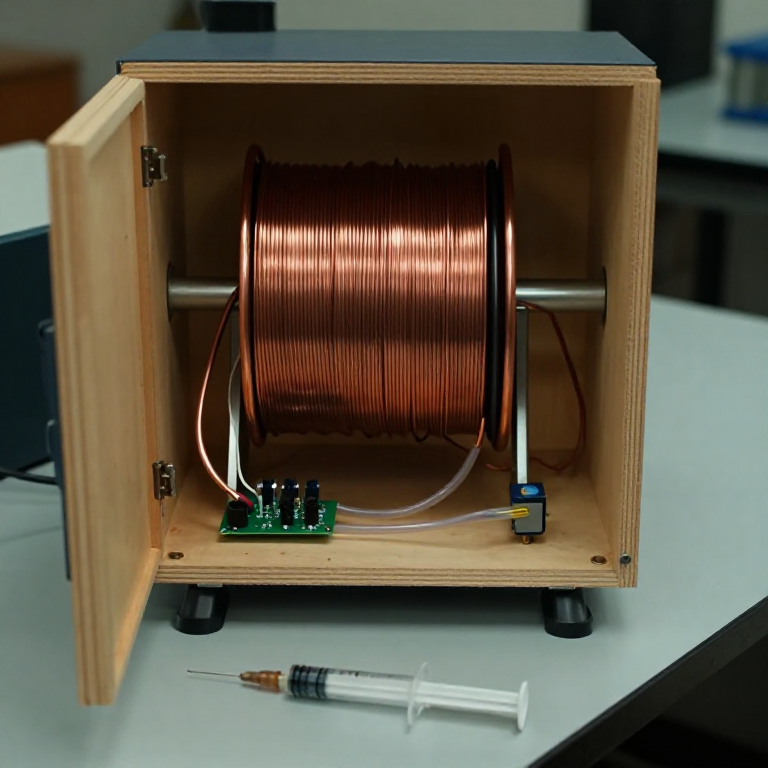


Building a Gas Chromatograph
Every separation so far has used a liquid to carry the sample. In 1952 Archer Martin and Anthony James — Martin again, eight years after paper chromatography — used a GAS instead, and the whole business got faster by a factor of a hundred.
A gas is thin. Molecules diffuse through it quickly, so they find the stationary phase, partition into it and come back out again thousands of times a second rather than thousands of times an hour. That speed is why a gas chromatograph resolves a mixture in minutes where a column takes an afternoon, and it is why the method now sits in every forensic, environmental and flavour laboratory on earth.
The catch is that the sample must survive being vaporised, so this works for what boils without decomposing: solvents, fuels, essential oils. You will build a working instrument from copper tube, an aquarium pump and a thermistor, and separate the components of a lavender oil you distilled yourself.
Nâng cao
2 days
Hướng dẫn
1
1
Understand the three parts before you build any of them
Understand the three parts before you build any of them
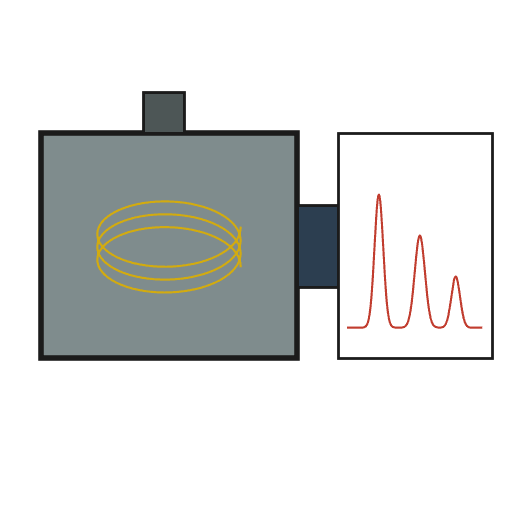
A gas chromatograph is an injector, a column and a detector, with a carrier gas flowing through all three and heat holding the column at a steady temperature.
The carrier gas does nothing chemically — it only pushes. The column is a long tube whose inside is coated with a high-boiling liquid: THAT liquid is the stationary phase and it does the separating. The detector reports when something other than pure carrier gas comes out the far end. Everything expensive about a commercial instrument is refinement of those three; nothing about them is beyond a workshop.
2
2
Make a packed column
Make a packed column
Crush firebrick, sieve it to a narrow size range, and soak the granules in silicone grease thinned with acetone so each one carries a thin film. Spread it out until the acetone has gone completely, then pack it into 2 metres of 4 mm copper tube, tapping constantly, and coil the tube.
The brick is only a support with a huge surface area; the grease film is the actual stationary phase. Sieving matters more than it sounds — mixed grain sizes pack unevenly, gas finds a fast channel, and every peak comes out broad. Plug both ends with a little glass wool so the packing cannot migrate into your pump or your detector.
Vật liệu cho bước này:
 Ống đồng2 metre
 Gạch chịu lửa1 cái
 Mỡ chân không (silicon)50 g
 Vật liệu cách nhiệt bông thủy tinh1 gói
Công cụ cần thiết:
 Cân điện tử chính xác
 Găng tay nitrile
 Axeton
3
3
Heat the column evenly, and measure the temperature you actually have
Heat the column evenly, and measure the temperature you actually have
Wind nichrome wire evenly along the coiled column, insulate it, and drive it from a variable supply. Bond a thermocouple to the tube itself, not to the air near it.
Retention time depends steeply on temperature — roughly halving for every 20 to 30 °C you add — so a column that is hotter at one end than the other smears every peak, and a column whose temperature drifts between runs gives retention times you cannot compare. Even winding and a real measurement of the metal are what make the instrument repeatable rather than merely working.
Vật liệu cho bước này:
 Dây nicrom5 metre
Công cụ cần thiết:
 Nguồn điện một chiều
 Cặp nhiệt điện loại K với mô đun MAX6675
 Đồng hồ vạn năng
4
4
Build a thermal conductivity detector
Build a thermal conductivity detector
Mount two matched thermistors in small chambers, one in the gas leaving the column and one in carrier gas that has bypassed it, and wire them as two arms of a bridge. Feed the bridge a steady low voltage and read the imbalance.
Each thermistor is self-heated by the current through it and cooled by the gas around it. Pure carrier gas cools both equally and the bridge sits balanced. The moment a different molecule emerges, the gas around one thermistor conducts heat differently, that bead changes temperature, its resistance changes and the bridge tips. This is a universal detector — it sees anything that is not the carrier — and it was the detector on the first commercial instruments.
Vật liệu cho bước này:
 Bộ nhiệt điện trở NTC1 bộ
Công cụ cần thiết:
Nguồn điện một chiềuĐồng hồ vạn năng Dây thử có kẹp cá sấu
5
5
Set a steady carrier flow — steady matters more than fast
Set a steady carrier flow — steady matters more than fast
Run an aquarium pump through a ballast vessel and a needle valve into the injector end, and measure the flow at the outlet by timing a soap bubble up a graduated tube.
The ballast is what turns a pump's pulsing into a smooth stream, and a pulsing carrier makes the detector baseline oscillate so hard that small peaks disappear into it. Air works as a carrier for this build; it is not ideal, because oxygen slowly degrades the stationary phase at temperature and its thermal conductivity is close to many analytes, which costs sensitivity. Nitrogen is better if you have it, helium better still.
Công cụ cần thiết:
 Máy bơm khí
 Đồng hồ bấm giờ
 Cốc thuỷ tinh borosilicat
6
6
Inject fast, inject tiny
Inject fast, inject tiny
Fit a septum at the column inlet, heat that inlet above the boiling point of your sample, and inject a fraction of a microlitre with a fine syringe in one quick motion.
Everything about injection is about making the sample enter as a narrow plug. A slow injection feeds the column over several seconds and every peak is that many seconds wide before separation even begins. Too much sample overloads the stationary phase and gives leaning, tailing peaks whose retention times shift with how much you put in — which quietly destroys the identification the whole instrument exists to provide.
Công cụ cần thiết:
 Xi-lanh phòng thí nghiệm
7
7
Run a lavender oil, and read the chromatogram
Run a lavender oil, and read the chromatogram
Inject a dilute solution of lavender essential oil and log the detector voltage against time. You should see a solvent peak early, then a series of peaks over several minutes: linalool and linalyl acetate are the two largest components of real lavender oil.
Retention time identifies; peak area quantifies. Run a known pure compound to find its retention time, then look for that time in your unknown. This is exactly how a laboratory tells adulterated essential oil from genuine — a cheap oil cut with synthetic linalool shows the right peak in the wrong proportion to its neighbours.
Vật liệu cho bước này:
 Etanol phẩm cấp thí nghiệm, 95 %50 ml
Công cụ cần thiết:
Xi-lanh phòng thí nghiệmĐồng hồ vạn năngĐồng hồ bấm giờ8
8
Van Deemter: why there is a best flow rate
Van Deemter: why there is a best flow rate
Đang tải sổ tay Jupyter…
Công cụ cần thiết:
Đồng hồ bấm giờVật liệu
7- 2 metreTạm thời
- 1 cáiTạm thời
- Tạm thời
- Tạm thời
- 5 metreTạm thời
- Tạm thời
- Tạm thời
Công cụ yêu cầu
11- Tạm thời
- Tạm thời
- Tạm thời
- Tạm thời
- Tạm thời
- Tạm thời
- Tạm thời
- Tạm thời
- Tạm thời
- Tạm thời
Bản thiết kế này làm ra
Blueprint liên quan
Các blueprint này chia sẻ kiến thức — kỹ thuật, vật liệu hoặc nguyên tắc


CC0 Phạm vi công cộng
Bản thiết kế này được phát hành theo CC0. Bạn tự do sao chép, sửa đổi, phân phối và sử dụng cho bất kỳ mục đích nào mà không cần xin phép.
Hỗ trợ nhà sáng tạo bằng cách mua sản phẩm qua bản thiết kế, nơi họ nhận Hoa hồng nhà sáng tạo do nhà bán hàng đặt, hoặc tạo phiên bản mới và kết nối trong bản thiết kế riêng để chia sẻ doanh thu.