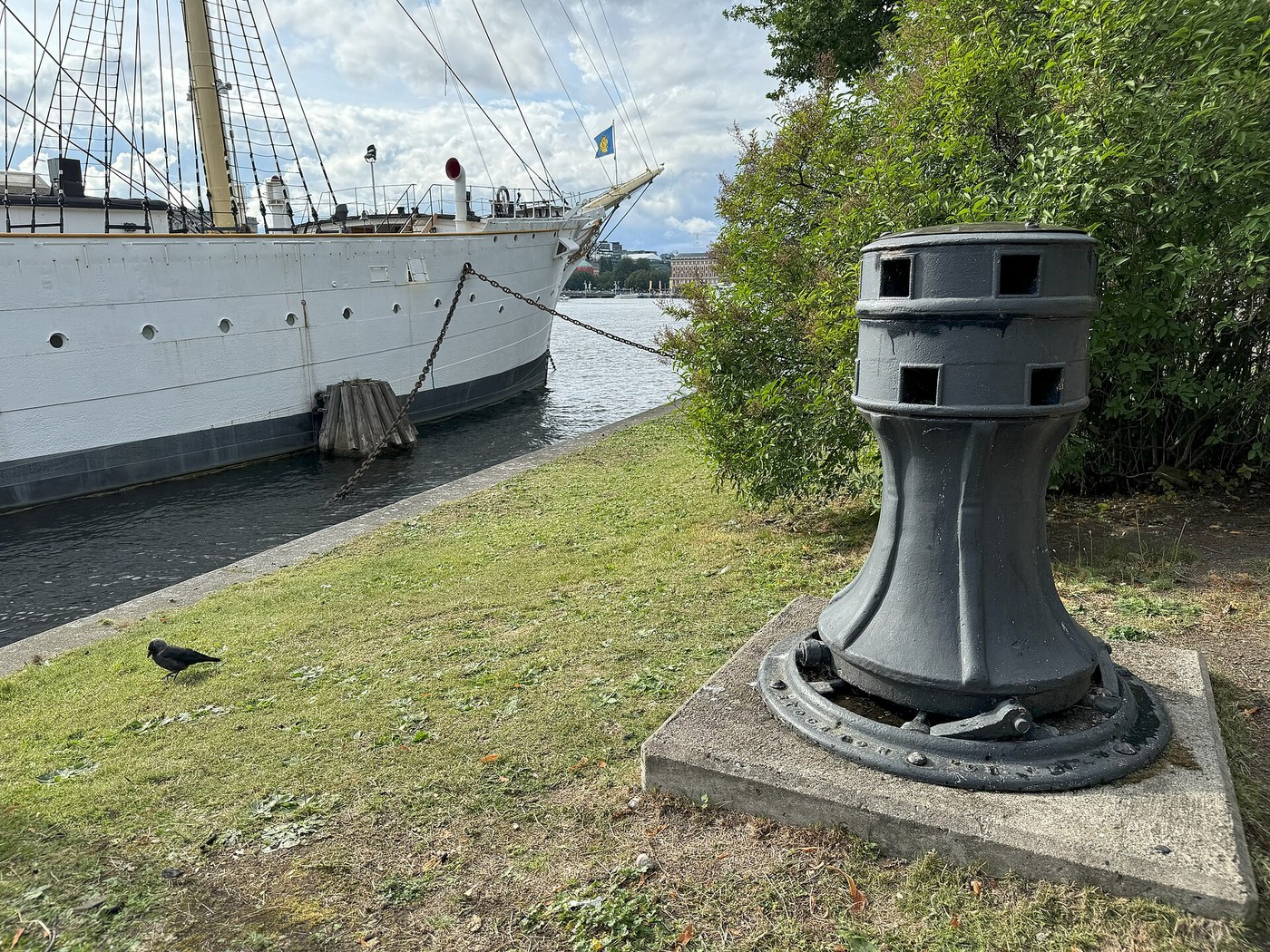


Capstan
Hướng dẫn
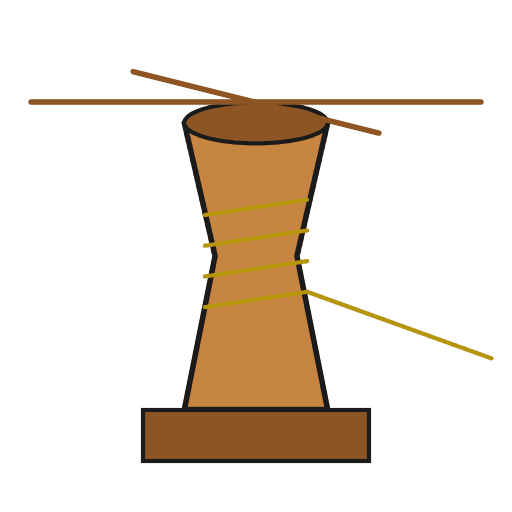
Turn the drum with a waisted profile
Turn the drum with a waisted profile
A capstan drum is narrower in the middle for a reason.
- Glue up three 140 mm plywood discs to make a drum about 54 mm tall.
- File or turn the outer face into a shallow hourglass — about 6 mm narrower at the waist.
- Bore the centre 8.0 mm.
- Sand the surface smooth but not polished.
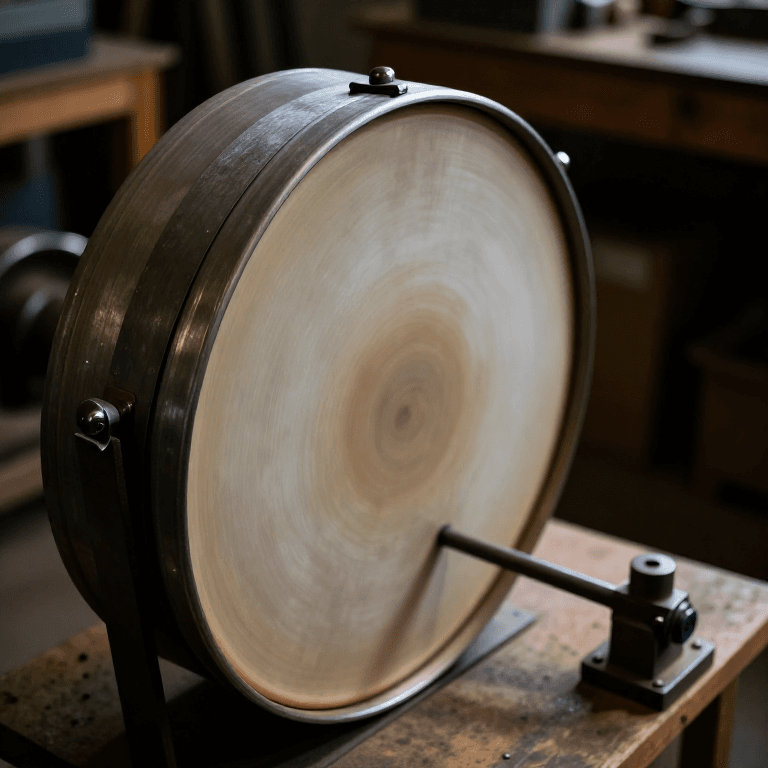
The waist keeps the turns together. On a straight cylinder, wraps wander apart and can ride over one another, which fouls the rope and makes the grip unpredictable. The hourglass gathers the turns toward the middle by exactly the same self-centring logic as the crowned pulley in this batch — but inverted, because here you want the rope to gather rather than to spread.
Do not polish the drum. Surface roughness is part of the friction coefficient you are about to measure, and a glassy drum simply slips.Vật liệu cho bước này:
 Ván ép bạch dương Baltic1 tờ
Công cụ cần thiết:
 Máy cưa lọng
 Bộ giũa
 Máy khoan pin
 Bộ mũi khoan
 Thước cặp điện tử 6 inch
Mount it to turn, and add the handspike sockets
Mount it to turn, and add the handspike sockets
A capstan is driven by bars pushed by people walking round it.
- Mount the drum on a vertical shaft in two 608 bearings set into a plywood base.
- Fix the bearing blocks with M6 × 50 hex bolts × 4, M6 flat washers × 8 and M6 hex nuts × 4.
- Drill four square or round sockets radially into the drum's top for handspikes.
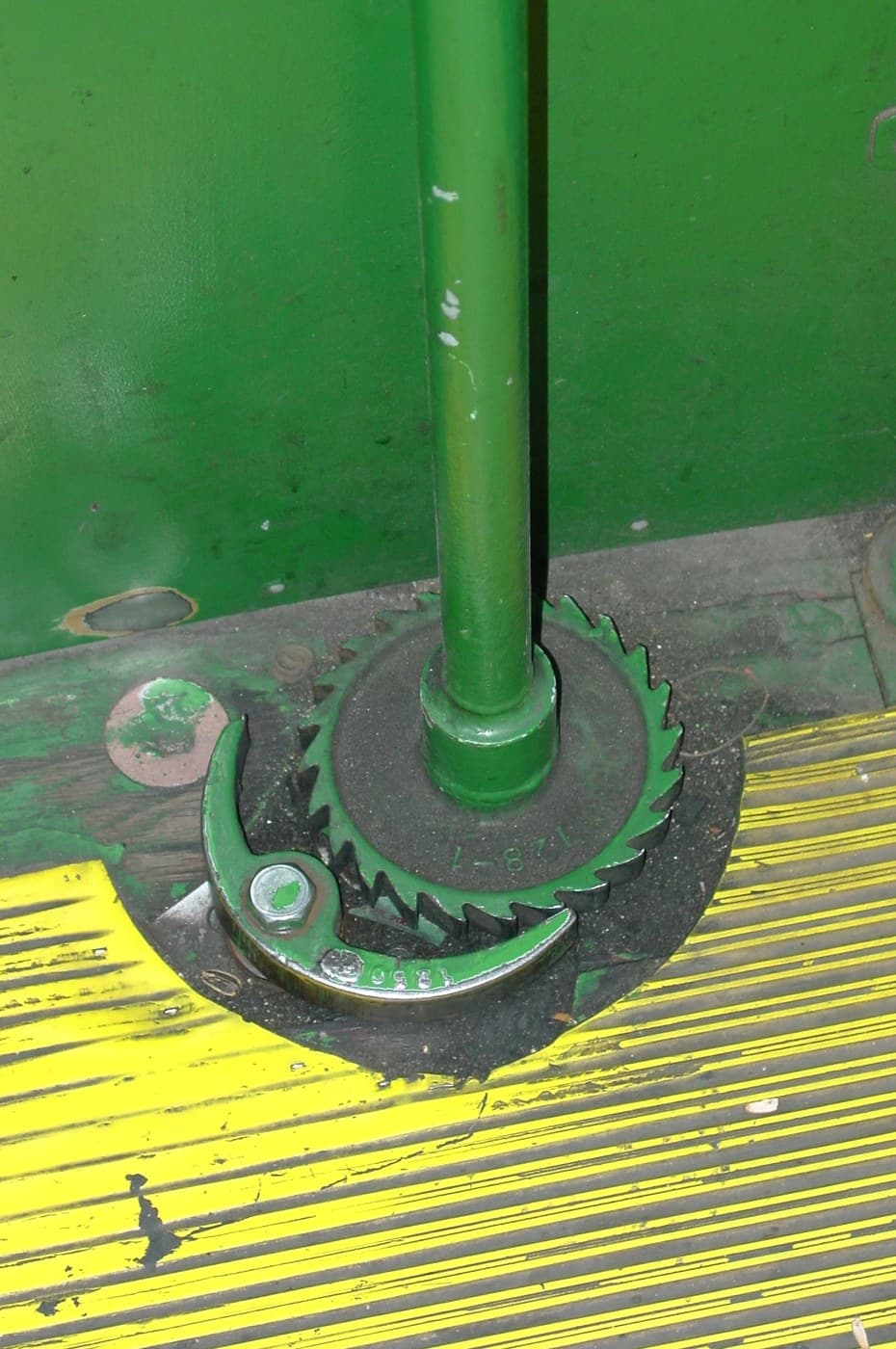
- Fit a pawl and ratchet to the drum's base so it cannot run backwards.
The pawl is not optional on a real capstan. If the crew's grip fails, the load runs the drum backwards at speed and the handspikes become weapons. This is one of the clearest cases where a ratchet is a safety device rather than a convenience — and it is why the ratchet blueprint sits in this catalogue alongside this one.
Round sockets and round handspikes are easier to make; square sockets transmit torque without the bar rolling in your hands. Either works at this scale.Vật liệu cho bước này:
Ván ép bạch dương Baltic1 tờ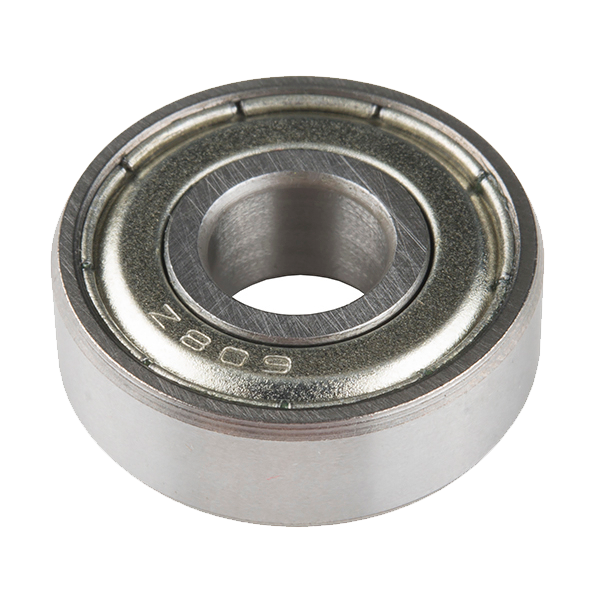 Ball Bearing - Non-Flanged (8mm Bore, 22mm OD)2 cái
 Vòng đệm phẳng8 cái
 Đai ốc lục giác4 cái
 Thanh chốt gỗ2 cái
Công cụ cần thiết:
Máy khoan pinBộ mũi khoan Cưa lọng tay
 Bộ lục giác
 Thước ke tổ hợp
Measure the multiplication, wrap by wrap
Measure the multiplication, wrap by wrap
The central experiment, and the numbers are startling.
- Lock the drum so it cannot turn.
- Hang a known load from one end of the rope.
- With ONE wrap, pull the other end with a spring balance until the rope just slips. Record the force.
- Repeat with two wraps, then three, then four.
- Plot holding force against number of wraps.
Vật liệu cho bước này:
 Vải muslin cô tông1 metre
 Giấy kẻ ô ly1 pad
Công cụ cần thiết:
Thước cặp điện tử 6 inch Đồng hồ bấm giờ
Test different ropes and surfaces
Test different ropes and surfaces
The exponent depends on the friction coefficient, so change it and watch.
- Repeat the three-wrap test with a synthetic rope, then natural fibre, then a wire cable if you have one.
- Wet the rope and repeat.
- Try a smooth painted drum surface against the bare sanded one.
- Tabulate all combinations.
Công cụ cần thiết:
Thước cặp điện tử 6 inchOne equation, many machines, and history
One equation, many machines, and history
Capstans and windlasses are ancient — vertical capstans turned by handspikes and horizontal windlasses appear throughout maritime history, used to raise anchors, warp ships alongside and haul on running rigging. The crucial operational point is that the rope is never tied to the drum. It is wrapped, and a crew member tails the free end. The load is held by friction and released by easing that tail, so a load can be surged or checked instantly — something impossible with a rope made fast.
The same equation runs through this batch. The band brake's holding force grows exponentially with wrap angle; the jockey pulley increases a belt's torque capacity by increasing wrap; a belt drive's slip limit depends on wrap the same way. Rope on a post, band on a drum, belt on a pulley — three machines that look nothing alike and obey one relationship.
Where you meet it outside machinery: a climber's belay device is a capstan in miniature, using wrap angle so a hand can hold a falling body. A sailing winch is a powered capstan. Even a simple hitch round a bollard is the same physics.
Honest limits: the multiplication is real but it depends on a friction coefficient that changes with wet, wear, contamination and rope material — so it is never a precise number, and rigging practice builds in generous margins. And it holds only while someone tails the rope; let go entirely and there is nothing to stop the load, which is exactly why the pawl in step 2 exists.
Vật liệu
7- Tạm thời
- Ball Bearing - Non-Flanged (8mm Bore, 22mm OD)Hoa hồng 10%2 cái$1.26
- 8 cáiTạm thời
- 4 cáiTạm thời
- 2 cáiTạm thời
- 1 metreTạm thời
- 1 padTạm thời
Công cụ yêu cầu
9- 1 vendor sell this, none ship to you yetTạm thời
- Tạm thời
- 1 vendor sell this, none ship to you yetTạm thời
- Tạm thời
- Tạm thời
- Tạm thời
- Tạm thời
- Tạm thời
- Tạm thời
Bản thiết kế này làm ra
Blueprint liên quan
Các blueprint này chia sẻ kiến thức — kỹ thuật, vật liệu hoặc nguyên tắc
CC0 Phạm vi công cộng
Bản thiết kế này được phát hành theo CC0. Bạn tự do sao chép, sửa đổi, phân phối và sử dụng cho bất kỳ mục đích nào mà không cần xin phép.
Hỗ trợ nhà sáng tạo bằng cách mua sản phẩm qua bản thiết kế, nơi họ nhận Hoa hồng nhà sáng tạo do nhà bán hàng đặt, hoặc tạo phiên bản mới và kết nối trong bản thiết kế riêng để chia sẻ doanh thu.