NGHỆ THUẬT
LÀM ĐẸP VÀ SỨC KHỎE
THỦ CÔNG
VĂN HÓA VÀ LỊCH SỬ
GIẢI TRÍ
MÔI TRƯỜNG
THỰC PHẨM VÀ ĐỒ UỐNG
KỸ THUẬT NGƯỢC
KHOA HỌC
THỂ THAO
CÔNG NGHỆ
THIẾT BỊ ĐEO
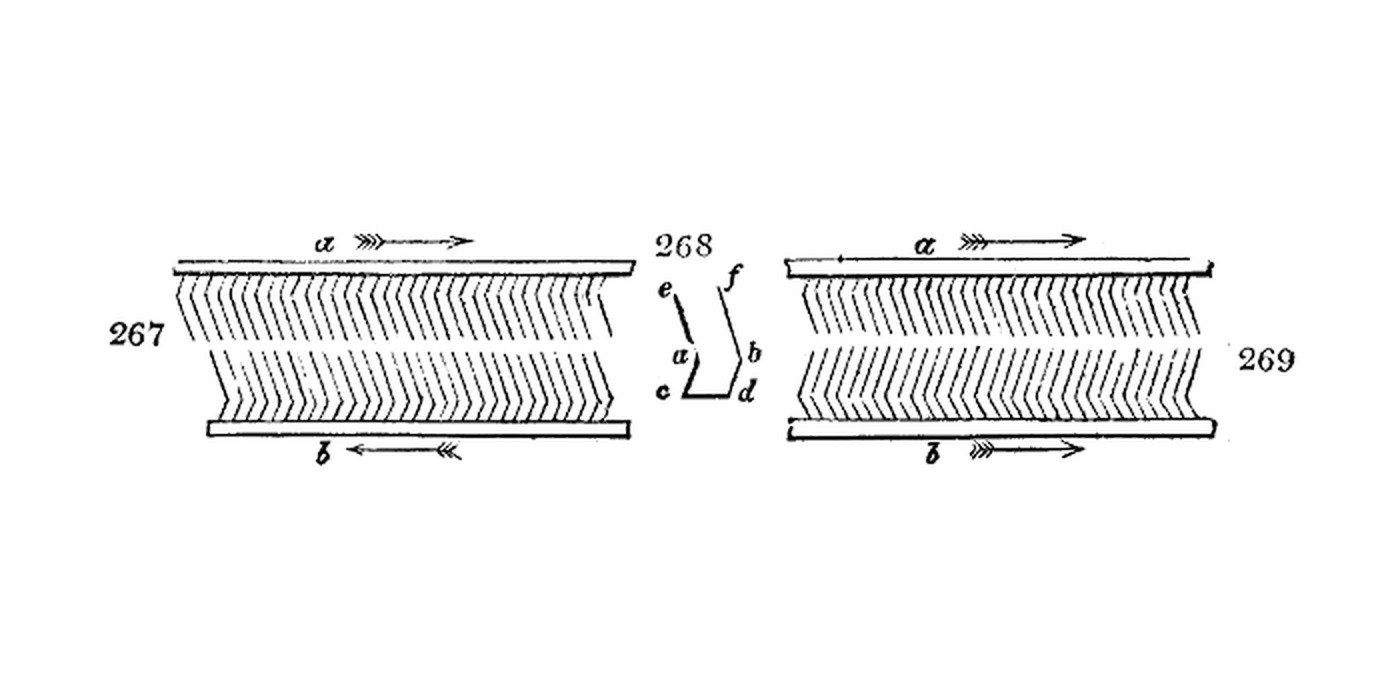


Card Clothing: Twin-Toothed Wire Staples Set in Shaved Leather (Ure, 1839)
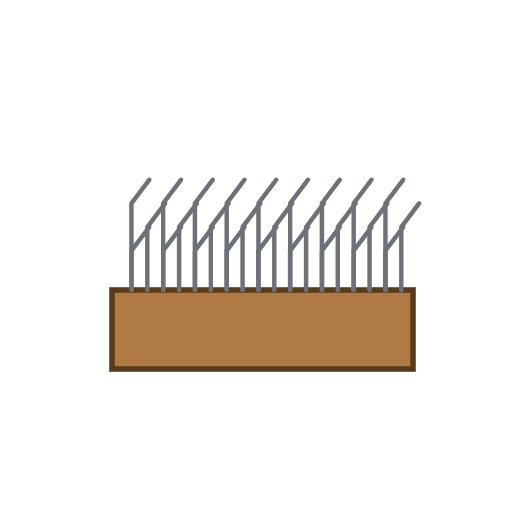
Card clothing is the toothed face of a card: leather set with rows of bent wire staples. Andrew Ure's Dictionary of Arts (1839) explains why it is hard to make well. Every staple gives two teeth, and both teeth must be bent to exactly the same angle; the twin holes for each staple must slope at the same angle through the leather; and the leather must be the same thickness everywhere, or the teeth stand at different lengths and the card works unevenly. Factories shaved the leather to an even thickness, losing about half its weight, and gave the wire and leather out to be put together by hand.
Ure gives no wire metal, gauge, tooth length, angle or hole spacing; those are unknown here.
Source: Andrew Ure, A Dictionary of Arts, Manufactures and Mines (1839), CARDS. Picture: his figs. 267-269, card teeth and one staple.
Trung cấp
A day for a small sheet
Hướng dẫn
1
1
Read Ure
Read Ure
"Cards are formed of a sheet or fillet of leather pierced with a multitude of small holes, in which are implanted small staples of wire with bent projecting ends called teeth. Thus every piece of wire is double toothed."
2
2
Shave the leather even
Shave the leather even
Shave the leather to the same thickness over its whole surface; in the factory about half its weight is lost in shaving and trimming. If the thickness varies, teeth of the same length stand at different heights. The thickness is not given (unknown).
Vật liệu cho bước này:
 Da thuộc thảo mộc1 tờ
Công cụ cần thiết:
 Dao lạng da
 Kích thước chưa rõ
3
3
Bend the staples
Bend the staples
Cut the wire into equal lengths. Bend each length at right angles at two points (c and d in fig. 268) to make a staple, then bend each leg again at the same obtuse angle (a and b), so the two teeth lean the same way. Every staple must be bent alike. The metal and gauge of the wire, the tooth length and the angle are not given (unknown).
Vật liệu cho bước này:
 Kim loại chưa rõ1 wire
Công cụ cần thiết:
 Kìm cắt
 Kìm mỏ dẹtKích thước chưa rõ
4
4
Prick the twin holes
Prick the twin holes
Prick the leather with pairs of holes the width of a staple apart (c to d), in regular rows, every hole sloping at the same angle through the leather. The spacing is not given (unknown).
Công cụ cần thiết:
 DùiKích thước chưa rõ
5
5
Set the staples
Set the staples
Push each staple through its two holes from the back, so the cross piece (c d) lies against the back of the leather and holds it, and the teeth stand out on the face all leaning one way.
Công cụ cần thiết:
Kìm mỏ dẹt6
6
History and honest limits
History and honest limits
By 1839 machines at Halifax, Leeds, Glasgow and Lille shaved the leather, pierced it, cut and bent the wire and set the staples; Ure describes a machine that does all four in turn. Card clothing was then nailed to the flat or cylindrical wooden or metal surfaces of hand cards and carding engines.
The wire metal and gauge, tooth length, knee angle, hole spacing and leather thickness are not given; vegetable-tanned leather stands for the card leather.
Vật liệu
2- Tạm thời
- 1 wireTạm thời
Bản thiết kế này làm ra
CC0 Phạm vi công cộng
Bản thiết kế này được phát hành theo CC0. Bạn tự do sao chép, sửa đổi, phân phối và sử dụng cho bất kỳ mục đích nào mà không cần xin phép.
Hỗ trợ nhà sáng tạo bằng cách mua sản phẩm qua bản thiết kế, nơi họ nhận Hoa hồng nhà sáng tạo do nhà bán hàng đặt, hoặc tạo phiên bản mới và kết nối trong bản thiết kế riêng để chia sẻ doanh thu.