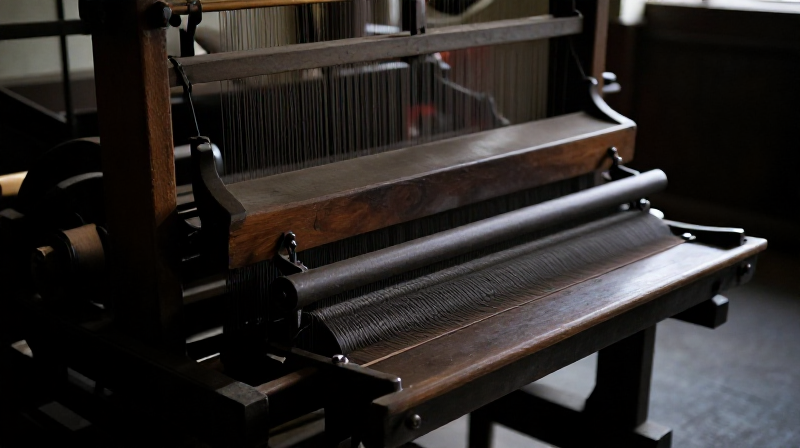

Cartwright's Power Loom — Mechanized Weaving by Steam and Water
In 1785, Edmund Cartwright — a clergyman with no experience in textiles — patented the power loom, the first loom driven entirely by mechanical power rather than human muscle. Cartwright was motivated by a dinner conversation in which Manchester cotton merchants complained that the new spinning machines (jenny, water frame, mule) were producing yarn faster than hand weavers could consume it. He reasoned that if spinning could be mechanized, weaving could be too.
Cartwright's first prototype was crude and impractical — it required two strong men to operate and produced inferior cloth. But the principle was sound: a cam-driven mechanism could raise and lower the heddles, throw the shuttle, and beat the weft automatically, all powered by a water wheel or steam engine. Over the next two decades, other engineers (William Horrocks, Richard Roberts) refined the design until the power loom became commercially viable by about 1820.
The power loom completed the mechanization of textile production that began with Kay's flying shuttle in 1733. Within a single human lifetime, every step from raw fiber to finished cloth had been transferred from human hands to machines. By 1850, there were over 250,000 power looms in England, and hand-loom weavers — once the aristocrats of the textile trade — were destitute. The power loom is the machine that turned the Industrial Revolution from a spinning revolution into a complete textile revolution.
Hướng dẫn
Prepare the warp beam
Prepare the warp beam
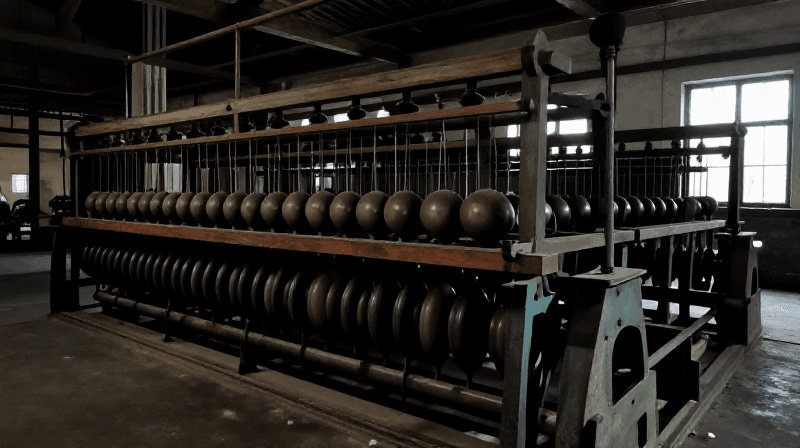
The warp beam is a large cylinder at the back of the loom holding hundreds or thousands of parallel warp threads wound under even tension. For the power loom, the warp is prepared on a separate warping mill — a large rotating frame that winds measured lengths of yarn in parallel. The finished warp is then transferred to the loom's beam. Machine-spun warp yarn (from the water frame or mule) must be sized with starch paste to withstand the mechanical stress of power weaving.
Vật liệu cho bước này:
 Warp Yarn1 kg
Thread the warp through the heddles
Thread the warp through the heddles
Each warp thread is drawn through a heddle — a wire loop with an eye in the center, mounted on a heddle frame. For plain weave, alternate threads go through frame 1 and frame 2. When frame 1 rises, half the warp threads lift, creating the shed. The power loom automates this motion with cams or tappets that raise and lower the frames in sequence, but the initial threading (called 'drawing in') is still done by hand, thread by thread.
Công cụ cần thiết:
 Power Loom
Pass the warp through the reed
Pass the warp through the reed
After the heddles, each warp thread passes through a dent (gap) in the reed — a comb-like frame mounted in the beater. The reed spaces the warp threads evenly across the loom width and is used to beat each weft pick into place. Reed density (dents per centimeter) determines the fabric's thread count. A fine cotton shirting might use 20 dents per centimeter; coarse canvas uses 6–8.
Tie the warp to the cloth beam
Tie the warp to the cloth beam
Gather the warp threads into small groups and tie them to the cloth beam apron (a fabric strip attached to the front roller). Tension the warp by rotating the warp beam's brake until all threads are taut and level. Even tension across the full width is essential — power looms operate at speeds that amplify any tension variation into visible fabric faults.
Load the shuttle with a weft bobbin
Load the shuttle with a weft bobbin
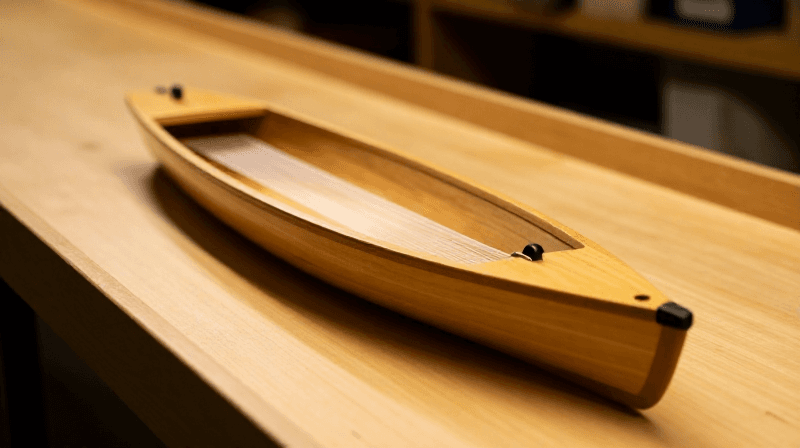
Insert a wound bobbin of weft yarn into the shuttle. On power looms, the shuttle is a robust boat shuttle reinforced with metal tips to withstand being thrown at high speed by the picking mechanism. The weft feeds through a small hole or tension eye in the shuttle body. Ensure the bobbin spins freely — a stuck bobbin causes the shuttle to trail yarn across the shed instead of laying it cleanly.
Vật liệu cho bước này:
 Weft Yarn500 g
Connect the power source to the loom
Connect the power source to the loom
The power loom is driven by a main shaft connected to a water wheel or steam engine via belts and pulleys. Engaging a clutch lever connects the loom to the spinning main shaft. The loom's internal cam mechanism converts this continuous rotation into the sequential motions of weaving: shedding (opening the warp), picking (throwing the shuttle), and beating (pushing the weft into place).
Start the loom at slow speed
Start the loom at slow speed
Engage the clutch and let the loom run at reduced speed for the first few picks. Watch the shedding motion: the heddle frames should rise and fall cleanly, creating a clear opening for the shuttle. The shuttle should fly across the full width and land firmly in the opposite shuttle box. The beater should swing forward and push the weft snugly against the fell (the edge of the woven cloth).
Observe the automated picking motion
Observe the automated picking motion
The picking mechanism — derived from Kay's flying shuttle — uses a cam-driven lever to strike the shuttle across the loom at precisely the right moment in each cycle. The timing is critical: the shuttle must cross after the shed is fully open and before it begins to close. On early power looms, mistimed picks caused the shuttle to smash into the closing warp, breaking threads and damaging the shuttle — a violent event called a 'smash.'
Monitor the warp stop motion
Monitor the warp stop motion
Power looms include an automatic warp stop motion — a sensing mechanism that detects broken warp threads and halts the loom instantly. Each warp thread passes through a thin metal drop wire. If a thread breaks, its drop wire falls, triggering a lever that disengages the clutch. This prevents the loom from weaving with a missing thread, which would create a visible streak in the fabric. Re-tie the broken thread and restart.
Increase to operating speed
Increase to operating speed
Once the loom is running cleanly, increase to full operating speed. An early power loom operated at 60–80 picks per minute; by the 1830s, improved designs reached 100–120 picks per minute. At full speed, the shuttle crosses the loom as a blur and the beater swings in a continuous rhythm. The noise of a weaving shed full of power looms was so intense that workers communicated by lip-reading — a practice called 'mee-mawing.'
Replace empty bobbins during operation
Replace empty bobbins during operation
When the weft bobbin runs out, the shuttle flies without laying thread. The operator must stop the loom, remove the empty bobbin, insert a full one, and restart. On later power looms, an automatic bobbin-changing mechanism (the Northrop automatic loom, 1894) replaced bobbins without stopping — but in Cartwright's era, this was still a manual task and the main reason each weaver could only tend 2–4 looms simultaneously.
Advance the cloth as it accumulates
Advance the cloth as it accumulates
A ratchet mechanism on the cloth beam automatically advances the woven fabric forward by a small increment after every few picks, keeping the fell at a constant distance from the reed. The take-up rate determines the fabric's picks per centimeter (weft density). This mechanical precision produces cloth with more consistent pick density than any hand weaver could achieve.
Inspect the cloth during weaving
Inspect the cloth during weaving
Periodically examine the cloth surface for faults: broken warp ends (vertical streaks), double picks (two weft threads in one shed), loose selvedges, or oil stains from the machinery. Mark faults with a chalk line so they can be repaired in finishing. A skilled power loom weaver could tend multiple looms while maintaining quality — by the 1840s, one weaver typically managed 4 looms, producing as much cloth as 15 hand weavers.
Remove the finished cloth from the loom
Remove the finished cloth from the loom
When the warp is exhausted (or the desired cloth length is reached), stop the loom, cut the remaining warp behind the heddles, and unwind the finished cloth from the cloth beam. A full warp might produce 50–100 meters of continuous fabric. The raw cloth (called 'grey goods' or 'loomstate') goes to the finishing department for scouring, bleaching, dyeing, and pressing before sale.
Công cụ cần thiết:
 Sharp Scissors
Understand the power loom's transformative impact
Understand the power loom's transformative impact
The power loom was the final link in the chain of textile mechanization. In 1733, Kay invented the flying shuttle. In 1764–1779, the jenny, water frame, and mule mechanized spinning. In 1785, Cartwright mechanized weaving. Within 52 years, every step from fiber to fabric was machine-driven. Cotton cloth production in England increased from 2 million pounds in 1760 to over 300 million pounds by 1830 — a 150-fold increase. The textile revolution was complete, and the template for industrial manufacturing was set for all industries to follow.
Vật liệu
2- Tạm thời
- 500 gTạm thời
Vật liệu bản thiết kế liên kết
Weaving with a Flying Shuttle — Kay's Invention That Launched the Textile Revolution
bởi Tex
Dệt và da
Crompton's Spinning Mule — The Machine That Made Fine Cotton Possible
bởi Tex
Dệt và da
Arkwright's Water Frame — Roller-Drafted Warp Yarn by Water Power
bởi Tex
Dệt và da
Blueprint liên quan
Các blueprint này chia sẻ kiến thức — kỹ thuật, vật liệu hoặc nguyên tắc

CC0 Phạm vi công cộng
Bản thiết kế này được phát hành theo CC0. Bạn tự do sao chép, sửa đổi, phân phối và sử dụng cho bất kỳ mục đích nào mà không cần xin phép.
Hỗ trợ nhà sáng tạo bằng cách mua sản phẩm qua bản thiết kế, nơi họ nhận Hoa hồng nhà sáng tạo do nhà bán hàng đặt, hoặc tạo phiên bản mới và kết nối trong bản thiết kế riêng để chia sẻ doanh thu.