NGHỆ THUẬT
LÀM ĐẸP VÀ SỨC KHỎE
THỦ CÔNG
VĂN HÓA VÀ LỊCH SỬ
GIẢI TRÍ
MÔI TRƯỜNG
THỰC PHẨM VÀ ĐỒ UỐNG
KỸ THUẬT NGƯỢC
KHOA HỌC
THỂ THAO
CÔNG NGHỆ
THIẾT BỊ ĐEO


Making a Dizi — The Chinese Bamboo Flute with a Buzzing Membrane
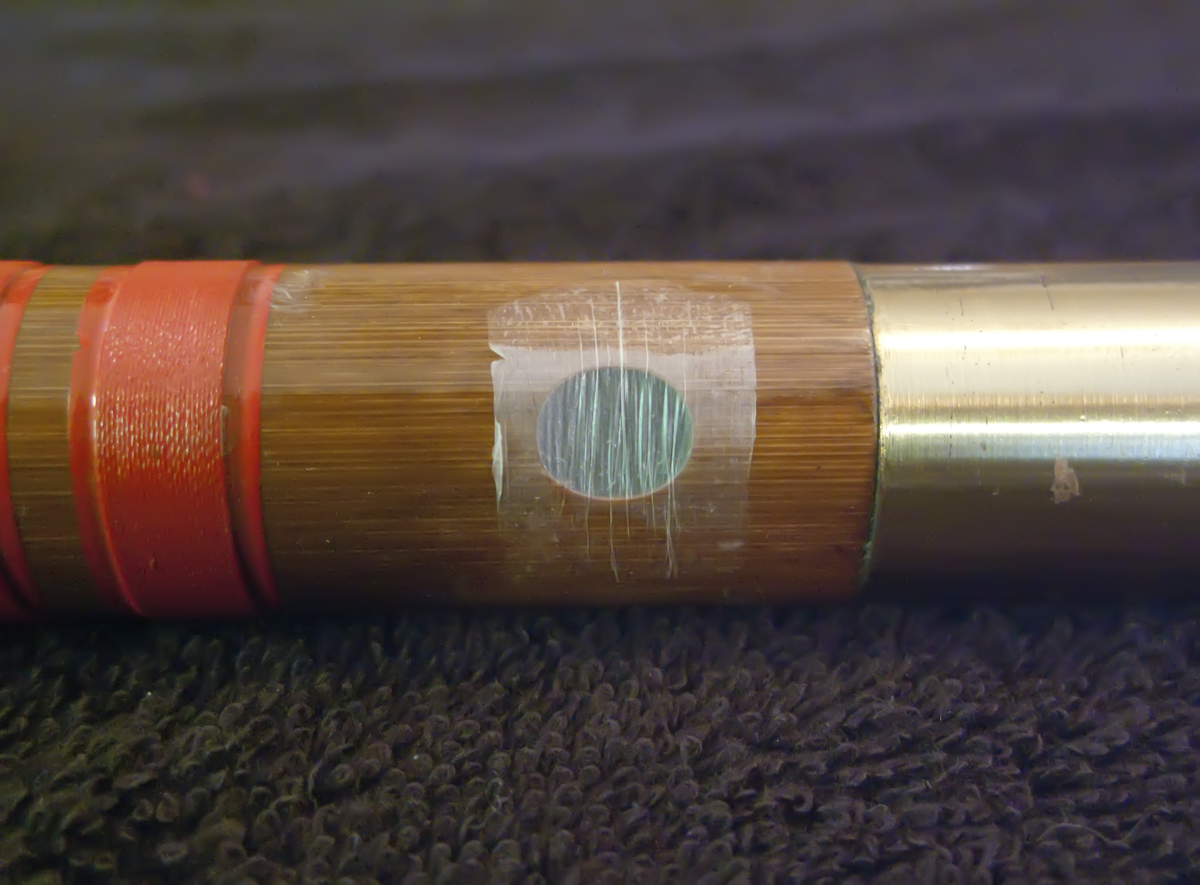
Build a dizi, the Chinese transverse bamboo flute with a secret: a thin membrane (the dimo) stretched over an extra hole that buzzes and gives the flute its bright, reedy voice. Cut the blowing hole, the membrane hole and the finger holes, glue the dimo, and play. A buildable school project in the side-blown flute and the buzzing membrane.
Cơ bản
45 minutes
Hướng dẫn
1
1
A flute with a buzz
A flute with a buzz
The dizi is a Chinese bamboo flute you blow across from the side. Its secret is a thin membrane over an extra hole that buzzes, giving the dizi its bright, reedy, singing voice.
2
2
Choose a bamboo tube
Choose a bamboo tube
Pick a straight bamboo tube about 45 cm long and a thumb thick, with a solid node left near one end to seal it. The far end stays open.
Vật liệu cho bước này:
 Tre1 cái
3
3
Clear the bore
Clear the bore
Push out the inner pith and nodes so the tube is clear — but keep the one node near the top sealed, just behind where the blowing hole will go.
Công cụ cần thiết:
 Dùi
Dùi4
4
Cut the blowing hole
Cut the blowing hole
A couple of centimetres below the sealed node, cut a round blowing hole. You blow ACROSS this hole from the side, not into the end of the tube.
Công cụ cần thiết:
 Dao khắc sloyd
5
5
Cut the membrane hole
Cut the membrane hole
A little below the blowing hole, cut a second round hole — the membrane hole. This one is the dizi's secret and carries the buzzing dimo.
Công cụ cần thiết:
Dao khắc sloyd6
6
Cut the six finger holes
Cut the six finger holes
Further down the tube, cut six finger holes in a line, spaced to fall comfortably under your fingers.
Công cụ cần thiết:
Dùi7
7
Cut the end holes
Cut the end holes
Near the open end, cut one or two extra holes. These set the lowest note and, on real dizi, hold the hanging tassels.
Công cụ cần thiết:
Dao khắc sloyd8
8
Prepare the dimo membrane
Prepare the dimo membrane
Take a small piece of thin dimo membrane — traditionally the inner skin of a reed. Very thin tissue or an onion skin will also buzz.
Vật liệu cho bước này:
 Màng sáo dizi (dimo)1 cái
9
9
Glue the membrane
Glue the membrane
Brush a little garlic juice or weak glue around the membrane hole and lay the dimo over it with TINY wrinkles across the grain. The wrinkles are what make it buzz.
10
10
Test the buzz
Test the buzz
Blow across the blowing hole. The membrane trembles and adds a bright, buzzing shimmer to the note — that reedy rasp is the true voice of the dizi.
11
11
Play the scale
Play the scale
Cover all six finger holes for the lowest note and lift them one by one to climb. Blow harder to overblow into the higher register.
12
12
Tune the buzz
Tune the buzz
Press the wrinkles tighter for a mellow tone, or loosen them for a brighter, louder buzz. A fresh, taut dimo sings; a slack one rattles.
13
13
Compendium — the membrane flute
Compendium — the membrane flute
The dizi is a transverse, or side-blown, flute: you blow across the blowing hole so the ribbon of air splits on its edge and sets the air column inside vibrating — the same edge-tone that sounds a Western flute, and quite unlike the end-blown recorder or panpipe. The finger holes change the pitch in the usual way, by shortening the vibrating air column when you open them. What makes the dizi unique is the dimo: a thin membrane stretched over its own hole. When the air column vibrates it drives the membrane too, and the lightly wrinkled membrane buzzes at many frequencies at once, pouring extra high harmonics into every note — a bright, reedy shimmer. This is a mirliton: a membrane that buzzes in sympathy with a sound, exactly the principle of a kazoo or a comb-and-paper. Bamboo flutes are ancient in China — the bone flutes of Jiahu are about 9,000 years old — and the membrane dizi became the standard voice of Chinese music over the last thousand years. Tighten the dimo for a soft tone or loosen it for a rasp; it is the one part of the flute you can re-tune every time you play.
Bản thiết kế này làm ra

Blueprint liên quan
Các blueprint này chia sẻ kiến thức — kỹ thuật, vật liệu hoặc nguyên tắc
CC0 Phạm vi công cộng
Bản thiết kế này được phát hành theo CC0. Bạn tự do sao chép, sửa đổi, phân phối và sử dụng cho bất kỳ mục đích nào mà không cần xin phép.
Hỗ trợ nhà sáng tạo bằng cách mua sản phẩm qua bản thiết kế, nơi họ nhận Hoa hồng nhà sáng tạo do nhà bán hàng đặt, hoặc tạo phiên bản mới và kết nối trong bản thiết kế riêng để chia sẻ doanh thu.