NGHỆ THUẬT
LÀM ĐẸP VÀ SỨC KHỎE
THỦ CÔNG
VĂN HÓA VÀ LỊCH SỬ
GIẢI TRÍ
MÔI TRƯỜNG
THỰC PHẨM VÀ ĐỒ UỐNG
KỸ THUẬT NGƯỢC
KHOA HỌC
THỂ THAO
CÔNG NGHỆ
THIẾT BỊ ĐEO


Building a Sheng — The Chinese Free-Reed Mouth Organ
Build a sheng: a cluster of bamboo pipes rising from a wind chamber, each voiced by a tiny springy free reed. Cover a pipe's finger hole and it sings; cover several and it plays a chord — and it sounds on both blow and draw. A serious maker build in the free reed, the mechanism the harmonica and accordion were born from.
Trung cấp
Several hours over a few sessions
Hướng dẫn
1
1
A gourd full of singing bamboo
A gourd full of singing bamboo
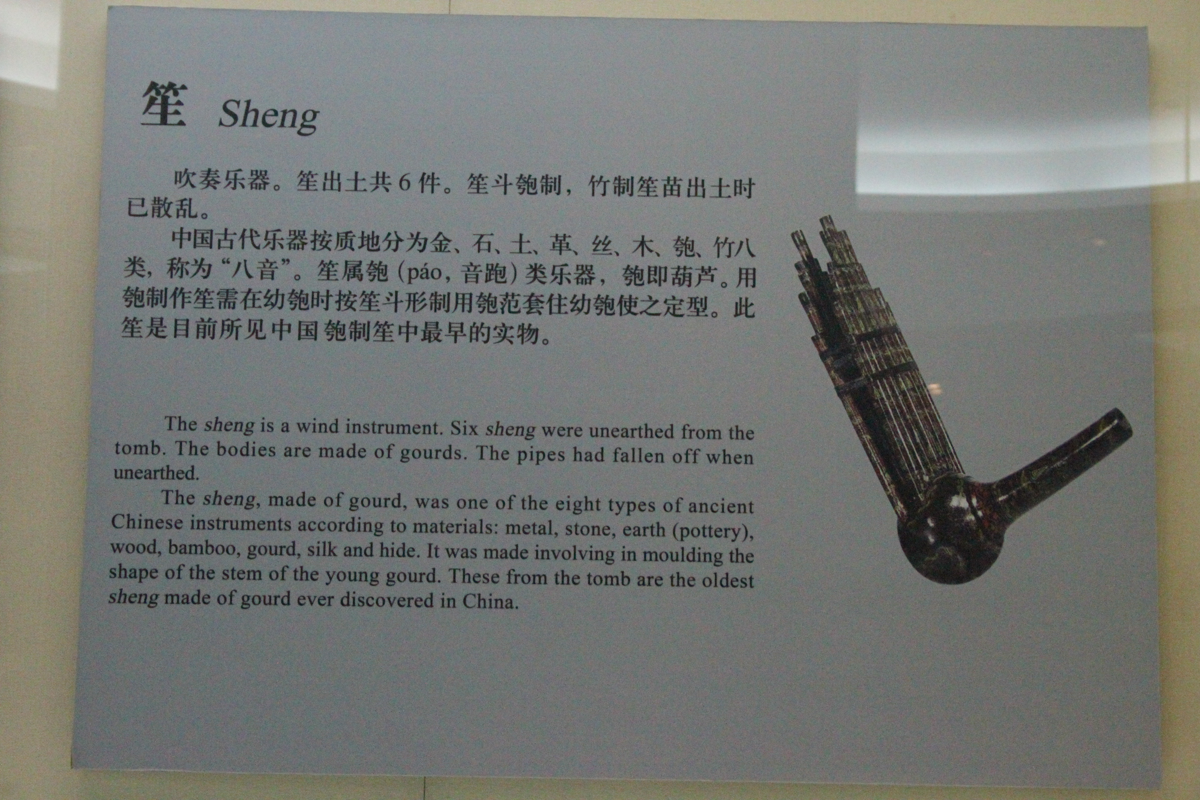
The sheng is a mouth organ: a bundle of bamboo pipes standing in a wind chamber, each voiced by a tiny springy reed. It is the world's first free-reed instrument and the ancestor of the harmonica and accordion — and it can play chords.
2
2
Make the wind chamber
Make the wind chamber
Hollow a dried bottle gourd into an airtight air-chamber and fit a short mouthpiece tube into its neck to blow through. Early sheng used a gourd just like this.
Vật liệu cho bước này:
 Quả bầu khô già1 cái
Công cụ cần thiết:
 Dao khắc sloyd
3
3
Cut the pipes
Cut the pipes
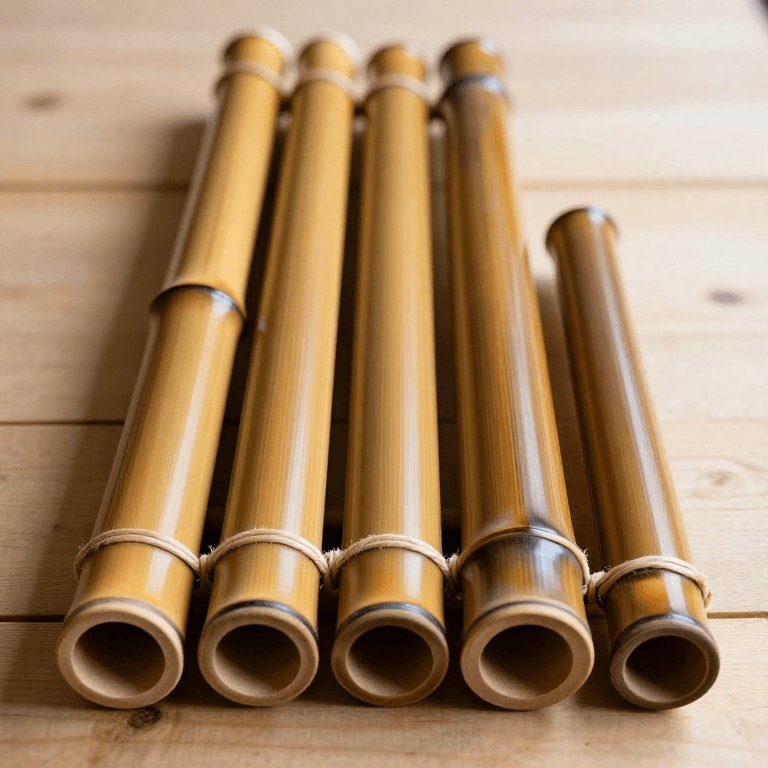
Cut several thin bamboo pipes of different lengths. Start with five or six — enough for a small scale or a couple of chords.
Vật liệu cho bước này:
 Tre1 cái
Công cụ cần thiết:
 Cưa sắt
4
4
Cut a reed window in each pipe
Cut a reed window in each pipe
Near the bottom of each pipe cut a small, clean rectangular window. The free reed will sit over this window.
Công cụ cần thiết:
Dao khắc sloyd5
5
Cut the free reeds
Cut the free reeds
From thin brass, cut a tiny tongue that ALMOST fills a matching slot — fixed at one end, free at the other, with a hair-fine gap all around so it can swing cleanly through.
Vật liệu cho bước này:
 Lá đồng thau mỏng (làm dăm kèn)1 cái
Công cụ cần thiết:
 Giũa kim loại
6
6
Fit a reed to each pipe
Fit a reed to each pipe
Seal a reed over each pipe's window with wax, airtight, with the free tongue facing inward toward the chamber.
Vật liệu cho bước này:
 Sáp ong dạng hạt1 cái
7
7
Cut a finger hole in each pipe
Cut a finger hole in each pipe
Cut one finger hole in the side of each pipe. This little hole is the on/off switch for that pipe's note.
Công cụ cần thiết:
 Dùi
Dùi8
8
Seat the pipes airtight
Seat the pipes airtight
Push the pipes down into the top of the chamber and seal each with wax so NO air can leak except through the reeds themselves.
Vật liệu cho bước này:
Sáp ong dạng hạt1 cái9
9
Test one pipe
Test one pipe
Blow gently into the mouthpiece and cover one pipe's finger hole. Covering the hole forces the air through that pipe's reed, and the reed sings out.
10
10
The finger-hole switch
The finger-hole switch
With the hole OPEN, air just escapes and the reed stays silent. COVER the hole and the pipe sounds. That is how you pick out notes on a sheng.
11
11
Tune the reeds
Tune the reeds
Add a dab of wax to a reed's tip to LOWER its pitch, or file the tip thinner to RAISE it, until every pipe is in tune. The reed sets the pitch, not the pipe length.
Vật liệu cho bước này:
Sáp ong dạng hạt1 cáiCông cụ cần thiết:
Giũa kim loại12
12
Play a chord
Play a chord
Cover several finger holes at once and blow. The sheng sounds them all together as a chord — something almost no other wind instrument can do.
13
13
Blow and draw
Blow and draw
Now breathe IN through the mouthpiece. Free reeds sound on both blow and draw — the very trick the harmonica borrowed from the sheng.
14
14
Compendium — the free reed
Compendium — the free reed
The sheng is built on the free reed: a thin springy tongue that vibrates freely back and forth THROUGH a close-fitting slot, instead of slapping shut against a frame like the beating reed of a clarinet or the buzzing lips of a horn. Air flowing past the tongue sets it swinging in and out of the slot, chopping the airflow into a steady tone at the tongue's own pitch — and because the tongue passes cleanly through the gap, it speaks equally well whether you blow or draw, which is why the sheng and its child the harmonica both play in and out. Each reed is paired with a pipe whose air column reinforces it, and the finger hole is a switch: only when the hole is covered is the air forced through the reed, so a player can pick out notes, and several at once, giving the sheng its rare power to play chords. Pitch is set by the reed's length, thickness and a tuning dab of wax — not by the pipe's length. The sheng has been played in China for some three thousand years, and when examples reached Europe around 1800 they sparked a whole family of Western instruments: the harmonica, accordion, concertina, harmonium and reed organ all descend from this gourd full of singing bamboo. Its distant cousin is the jaw harp, whose plucked springy tongue is the same free-vibrating idea, driven by a finger instead of by breath.
Vật liệu
4- 1 cáiTạm thời
- 1 cáiTạm thời
- Tạm thời
- 1 cáiTạm thời
Blueprint liên quan
Các blueprint này chia sẻ kiến thức — kỹ thuật, vật liệu hoặc nguyên tắc
CC0 Phạm vi công cộng
Bản thiết kế này được phát hành theo CC0. Bạn tự do sao chép, sửa đổi, phân phối và sử dụng cho bất kỳ mục đích nào mà không cần xin phép.
Hỗ trợ nhà sáng tạo bằng cách mua sản phẩm qua bản thiết kế, nơi họ nhận Hoa hồng nhà sáng tạo do nhà bán hàng đặt, hoặc tạo phiên bản mới và kết nối trong bản thiết kế riêng để chia sẻ doanh thu.