NGHỆ THUẬT
LÀM ĐẸP VÀ SỨC KHỎE
THỦ CÔNG
VĂN HÓA VÀ LỊCH SỬ
GIẢI TRÍ
MÔI TRƯỜNG
THỰC PHẨM VÀ ĐỒ UỐNG
KỸ THUẬT NGƯỢC
KHOA HỌC
THỂ THAO
CÔNG NGHỆ
THIẾT BỊ ĐEO
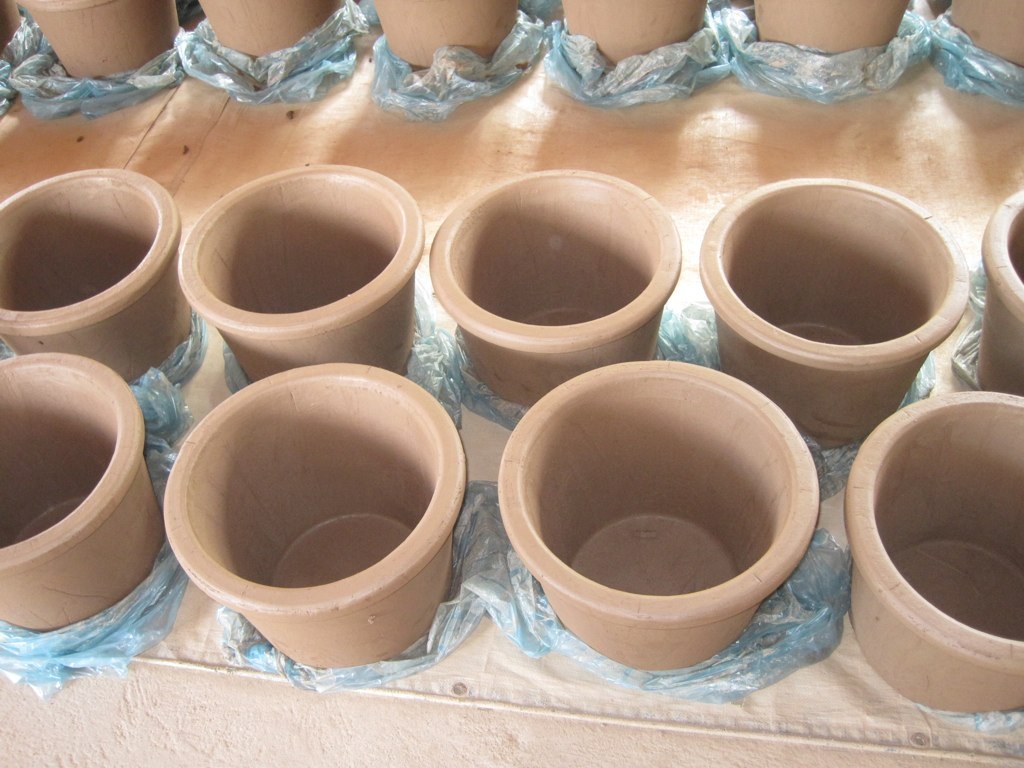
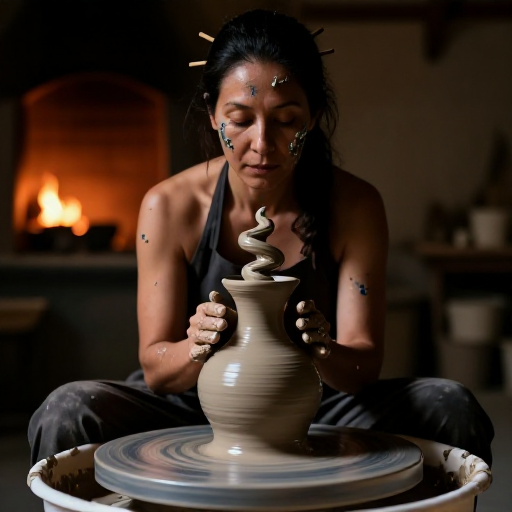

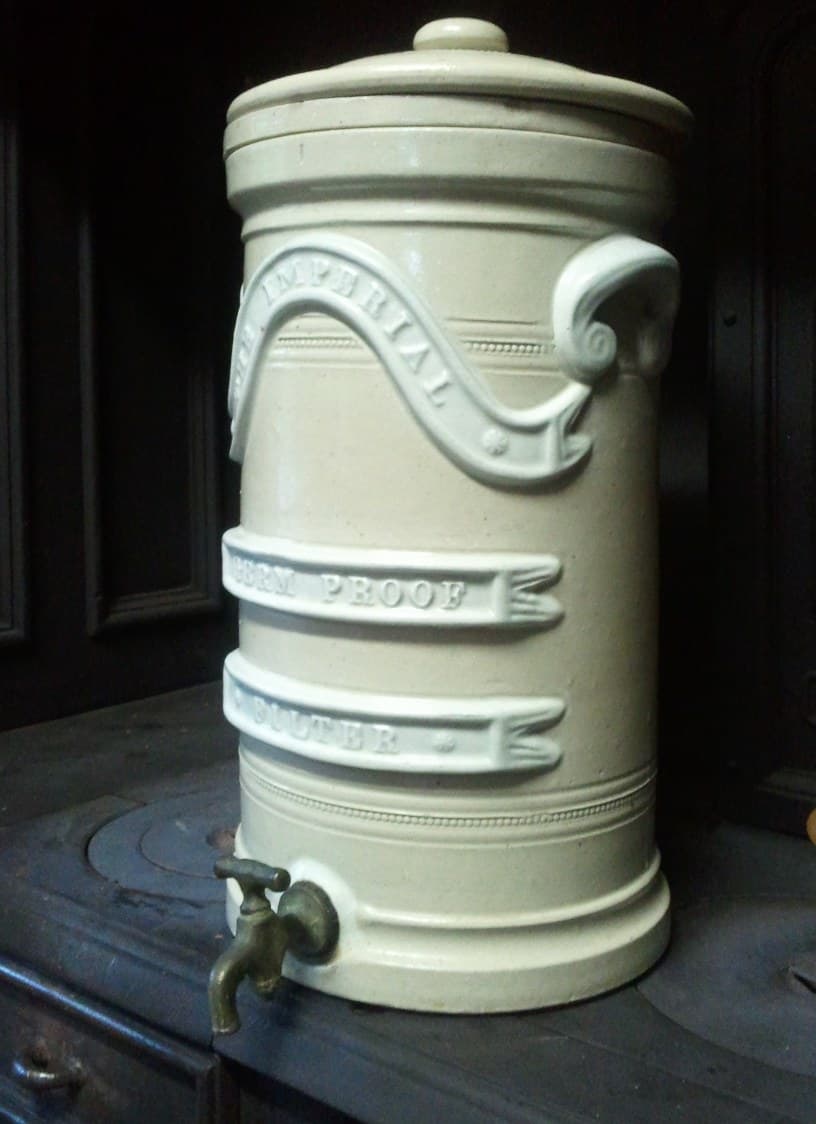
Colloidal-Silver Ceramic Pot Filter
A fired ceramic candle strains bacteria out because its pores are smaller than they are. It has one weakness: the pores are not smaller than a virus, and anything that sits in the wet clay can grow there.
In 1981 Fernando Mazariegos, at the Central American Industrial Research Institute in Guatemala, took the porous pot and painted it with colloidal silver. Silver ions are toxic to bacteria at concentrations harmless to us, so the filter no longer only strains — its surfaces actively kill, and they stop the biofilm that would otherwise blind the pot and breed in it. The design was deliberately never patented and is made today in dozens of countries by local potters from local clay. This is the rung where a pot becomes a piece of public health.
Trung cấp
3 days plus firing
Hướng dẫn
1
1
Test your clay before you make fifty pots
Test your clay before you make fifty pots
Mix small test tiles at several sawdust ratios — 10, 15, 20 and 25 per cent by volume — fire them together, and measure how fast water passes each.
Local clay varies enormously, and the ratio that gives the right flow in one valley gives a colander in the next. The production filters that work were all calibrated this way first. It is a day's work that saves a kiln-load.
Vật liệu cho bước này:
 Đất sét3 kg
 Mùn cưa1 lít
Công cụ cần thiết:
 Ống đong
 Đồng hồ bấm giờ
2
2
Sieve the sawdust, and mean it
Sieve the sawdust, and mean it
Sieve the sawdust so it all passes a fine mesh, then wedge it evenly into the clay at your chosen ratio. Wedge far longer than feels necessary.
Every clump of sawdust becomes a void after firing, and a void that reaches from inside to outside is a pipe past the filter. Uneven mixing is the single most common reason a batch of pots fails its flow test — some pour, some barely drip, from one bucket of the same body.
Vật liệu cho bước này:
Đất sét8 kgMùn cưa2 lítCông cụ cần thiết:
 Cân điện tử
3
3
Press the pot
Press the pot
Press or throw a flowerpot-shaped vessel about 25 cm across and 25 cm deep, holding around 8 to 10 litres, with an even wall of roughly 15 to 20 mm and a rim that will sit on the mouth of a receiving bucket.
The classic production version uses a two-part press mould precisely because it makes wall thickness repeatable. Dry very slowly, covered, for two or three days: this is a thick wall, and a thick wall dried fast cracks from the inside where you cannot see it.
4
4
Fire slowly through the burnout
Fire slowly through the burnout
Fire to about 870-900 °C, but climb slowly between 200 and 600 °C — this is where the sawdust burns out, and it needs air and time.
Rush that band and two things go wrong: the trapped carbon leaves a black core that weakens the wall, and the gases escaping too fast crack the pot. Hold at the top, then cool slowly. The finished pot should be pink-buff, ring dully, and darken when wet.
5
5
Flow test every single pot
Flow test every single pot
Soak each pot overnight, fill it, and measure the litres it delivers in the first hour. Accept 1 to 3 litres per hour. Reject anything outside that band, and mark the rejects so they cannot be sold or given away.
Too slow is a household that will go back to the river out of impatience. Too fast means pores wide enough to pass what you are trying to remove, and a fast filter feels like the good one, which is exactly what makes it dangerous. The production programmes test every pot, not a sample.
Công cụ cần thiết:
Ống đongĐồng hồ bấm giờ Xô
Xô6
6
Paint on the silver
Paint on the silver
With the pot still damp, paint or dip colloidal silver over the whole inside and outside surface at the dose your supplier specifies — typically around 32 mg of silver per pot for this size — and let it dry fully before use.
Silver ions disrupt bacterial enzymes and membranes at concentrations of a tenth of a milligram per litre, far below anything that affects a person; the WHO guideline for silver in drinking water is 0.1 mg/l and a correctly dosed filter releases well under it. Do not improvise the dose upwards. More silver does not make a safer filter, it makes an expensive one that tastes metallic.
Vật liệu cho bước này:
 Dung dịch bạc keo1 chai
7
7
What the silver adds, in numbers
What the silver adds, in numbers
Đang tải sổ tay Jupyter…
8
8
Seat it, and teach the household the two rules
Seat it, and teach the household the two rules
Rest the pot in the mouth of a lidded receiving bucket fitted with a tap, so nobody ever dips a cup into the clean water.
Two habits decide whether this works in practice. Scrub the inside of the pot with a clean brush when the flow slows — never with soap, which the porous body absorbs and slowly releases. And keep the receiving bucket covered and its tap clean: recontamination after treatment is the most common way a working filter ends up delivering unsafe water, and it has nothing to do with the pot at all.
Công cụ cần thiết:
XôBlueprint liên quan
Các blueprint này chia sẻ kiến thức — kỹ thuật, vật liệu hoặc nguyên tắc

CC0 Phạm vi công cộng
Bản thiết kế này được phát hành theo CC0. Bạn tự do sao chép, sửa đổi, phân phối và sử dụng cho bất kỳ mục đích nào mà không cần xin phép.
Hỗ trợ nhà sáng tạo bằng cách mua sản phẩm qua bản thiết kế, nơi họ nhận Hoa hồng nhà sáng tạo do nhà bán hàng đặt, hoặc tạo phiên bản mới và kết nối trong bản thiết kế riêng để chia sẻ doanh thu.