NGHỆ THUẬT
LÀM ĐẸP VÀ SỨC KHỎE
THỦ CÔNG
VĂN HÓA VÀ LỊCH SỬ
GIẢI TRÍ
MÔI TRƯỜNG
THỰC PHẨM VÀ ĐỒ UỐNG
KỸ THUẬT NGƯỢC
KHOA HỌC
THỂ THAO
CÔNG NGHỆ
THIẾT BỊ ĐEO
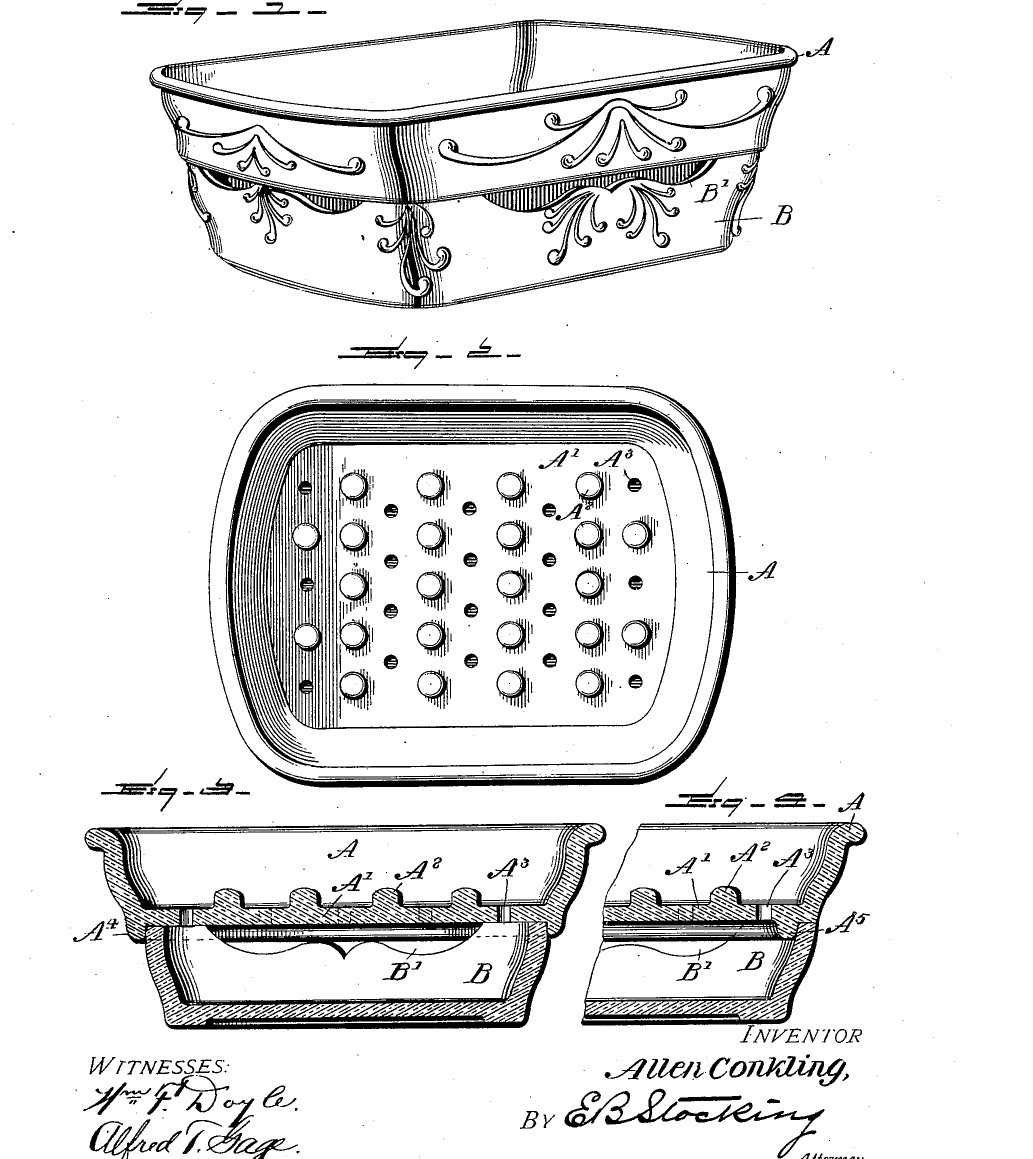


Two-Part Soap Dish: a Studded, Drained Tray on a Scallop-Edged Base That Lets Air Under the Soap (Conkling, 1901)
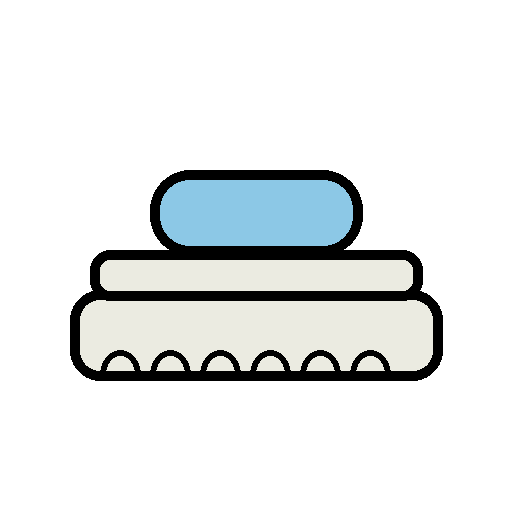
Allen Conkling of Chicago received US 679,110, dated 23 July 1901, for a soap dish in two parts that keeps soap dry. The upper tray holds the soap on little rounded studs above drain holes; it sits on a lower dish whose edge is scalloped, so air flows in underneath, up through the holes and round the soap. The lower part lifts off to be cleaned.
We make it from stoneware clay. All sizes are ours.
Cơ bản
About 3 hours plus drying and firing
Hướng dẫn
1
1
Shrinkage
Shrinkage
Đang tải sổ tay Jupyter…
2
2
Read US 679,110
Read US 679,110
"A circulation of air is thus established through the spaces at the edges of the lower part, thence through the drain-openings in the outer or upper part to and around the soap, which soon dries the same after use."
3
3
Make the upper tray
Make the upper tray
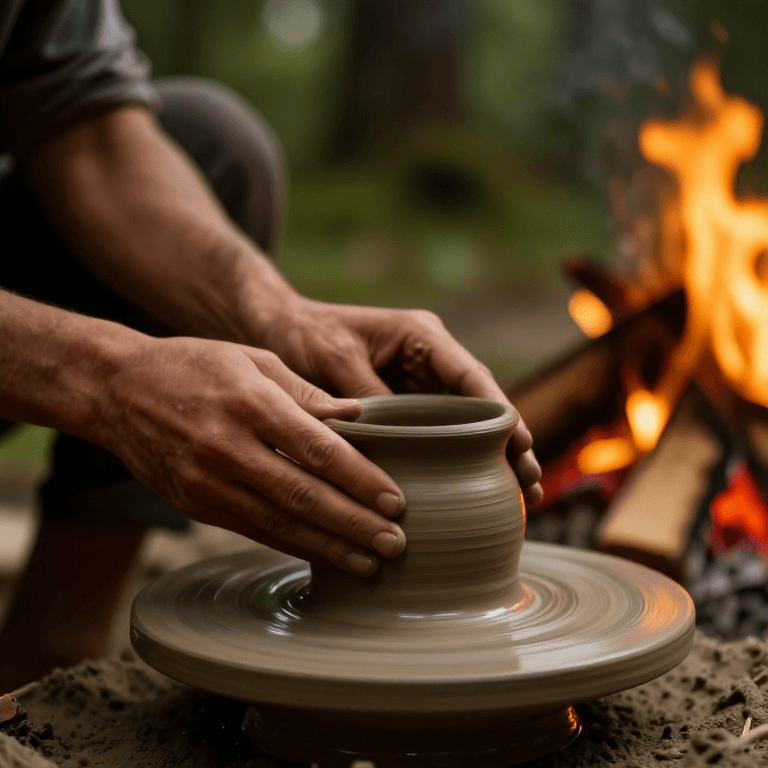
Roll a slab of stoneware clay about 6 mm thick (ours). Cut the tray's bottom and a strip for its retaining wall, score and slip the joins and join them. Roll small balls, flatten them slightly and join them to the bottom inside as his rounded studs A2. Pierce drain holes A3 between the studs with a tool.
Vật liệu cho bước này:
 Đất sét sành1 cái
Công cụ cần thiết:
 Cây cán bột
 Bộ dụng cụ làm gốm
 Dụng cụ cào đất sét
4
4
Add the flange
Add the flange
Join a narrow strip round the underside of the tray, a little in from its edge, so it hangs down as his flange A4 and will sit over the lower part's rim.
Vật liệu cho bước này:
Đất sét sành1 cáiCông cụ cần thiết:
Bộ dụng cụ làm gốmDụng cụ cào đất sét5
5
Make the lower part
Make the lower part
Make a shallow dish of the same outline, sized so its rim fits inside the tray's flange. Cut scallops into the top of its rim, his B', so there are gaps for air when the tray sits on it.
Vật liệu cho bước này:
Đất sét sành1 cáiCông cụ cần thiết:
Cây cán bộtBộ dụng cụ làm gốmDụng cụ cào đất sét6
6
Dry, glaze and fire
Dry, glaze and fire
Let both parts dry slowly under loose cover, fire them to bisque, dip them in glaze with tongs (wipe the glaze off the rim and flange where they touch the kiln shelf), and glaze-fire them, both as the clay and glaze makers specify.
Vật liệu cho bước này:
 Men trong1 cái
Công cụ cần thiết:
 Lò nung
 Bộ phụ kiện lò nung
 Kẹp nhúng men
7
7
Use it
Use it
Set the tray on the lower part with the flange over the rim. Water from the soap drains through the holes into the lower part; lift the tray off to empty and clean it.
8
8
Troubleshooting
Troubleshooting
Soap dish troubleshooting.
Flow
Loading...
9
9
History and honest limits
History and honest limits
**Allen Conkling** of Chicago, US 679,110, dated 23 July 1901, filed 7 March 1901. He claimed "a soap-dish formed of two parts, the upper part forming a supporting-tray having a retaining-wall, perforated bottom and studs above the same, and a retaining-flange extending downward from the bottom of said upper part to fit the upper edge of the lower part, and a lower part having an upper edge scalloped". He made the parts to be molded and names no material; the stoneware, slab-building, glaze, firing and all sizes are ours.
Bản thiết kế này làm ra
Blueprint liên quan
Các blueprint này chia sẻ kiến thức — kỹ thuật, vật liệu hoặc nguyên tắc

CC0 Phạm vi công cộng
Bản thiết kế này được phát hành theo CC0. Bạn tự do sao chép, sửa đổi, phân phối và sử dụng cho bất kỳ mục đích nào mà không cần xin phép.
Hỗ trợ nhà sáng tạo bằng cách mua sản phẩm qua bản thiết kế, nơi họ nhận Hoa hồng nhà sáng tạo do nhà bán hàng đặt, hoặc tạo phiên bản mới và kết nối trong bản thiết kế riêng để chia sẻ doanh thu.