NGHỆ THUẬT
LÀM ĐẸP VÀ SỨC KHỎE
THỦ CÔNG
VĂN HÓA VÀ LỊCH SỬ
GIẢI TRÍ
MÔI TRƯỜNG
THỰC PHẨM VÀ ĐỒ UỐNG
KỸ THUẬT NGƯỢC
KHOA HỌC
THỂ THAO
CÔNG NGHỆ
THIẾT BỊ ĐEO
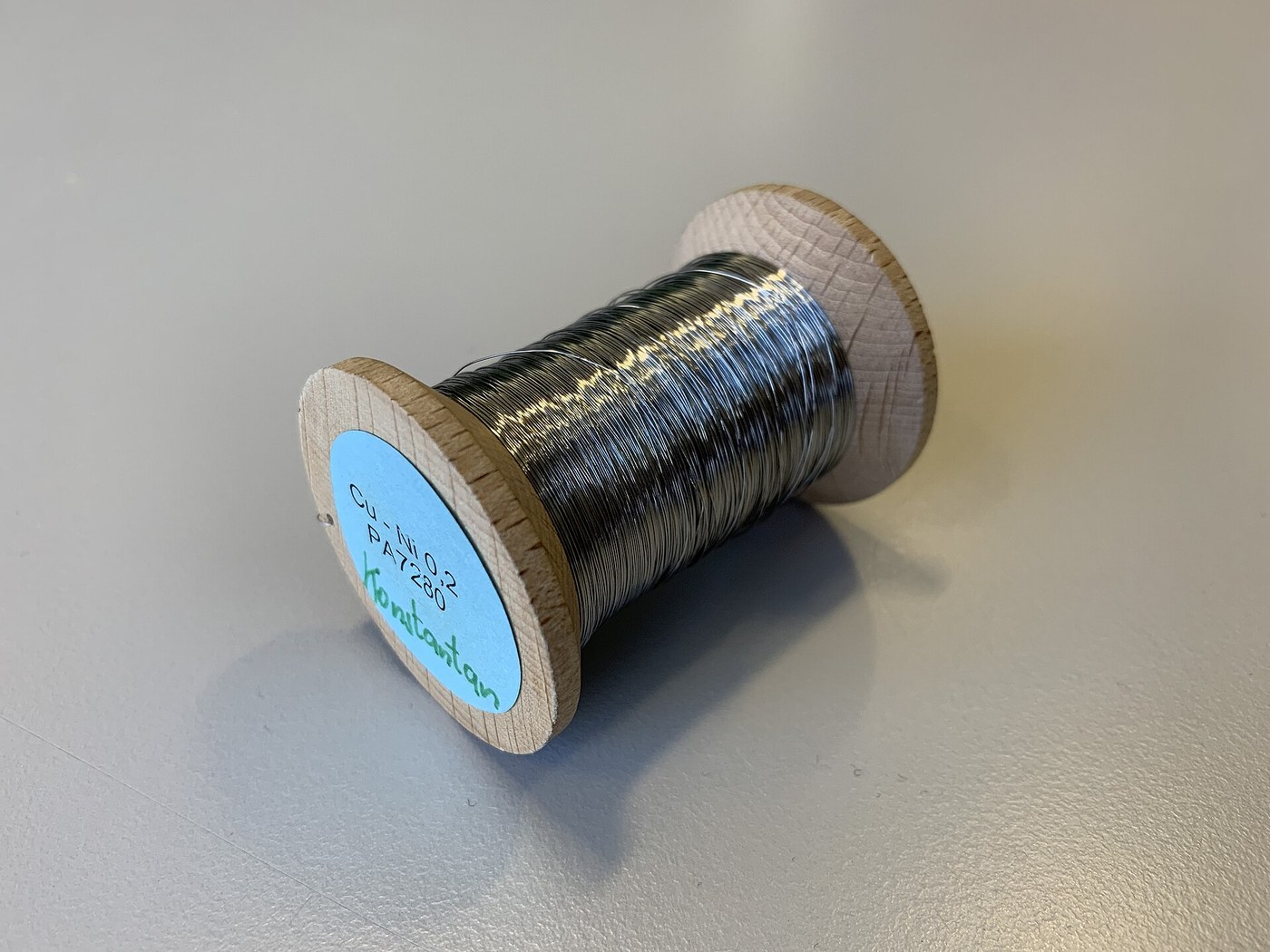


Constantan Resistance Wire from Copper and Nickel
Constantan is a copper-nickel alloy, usually 55 % copper and 45 % nickel, whose electrical resistance stays nearly the same as it warms; that is why strain gauges, thermocouples and resistance coils are wound with it. Copper and nickel melt together in any proportion, so the alloy is made by fusing the two, casting small sticks and drawing them into wire.
The melt follows C. Morfit's copper-nickel alloy as Brannt gives it in *The Metallic Alloys* (1889): nickel and an equal weight of copper fused with borax in a graphite crucible, the rest of the copper stirred in. Hiorns (1912) adds that the nickel must be as pure as possible, which is what the Mond process gives.
Nâng cao
Foundry day, then drawing
Hướng dẫn
1
1
Weigh the charge
Weigh the charge
For 1 kg of 55/45 constantan weigh 450 g nickel and 550 g copper, and set aside 100 g of the copper for the second addition. Use nickel as pure as you can get: Hiorns warns that silicon, carbon, iron and sulphur in it greatly reduce how well the alloy works.
Vật liệu cho bước này:
 Thỏi đồng550 g
 Niken quy trình cacbonyl450 g
Công cụ cần thiết:
 Cân đòn
2
2
Fuse nickel with an equal weight of copper
Fuse nickel with an equal weight of copper
Put the nickel and an equal weight of copper (450 g of each) into a graphite crucible with some borax, and fuse them in the furnace. This is Morfit's first stage: nickel melts far hotter than copper, and melting it among copper brings it down sooner. Constantan itself melts at about 1,220–1,300 °C.
Vật liệu cho bước này:
 Bột hàn the1 as required
Công cụ cần thiết:
 Nồi nấu kim loại graphit-đất sét
 Lò than
 Kìm gắp nồi nấu kim loại
 Găng tay chịu nhiệt
 Tạp dề da
3
3
Stir in the rest of the copper
Stir in the rest of the copper
Add the remaining 100 g of copper to the melted mass, stirring constantly with an iron rod until it has gone in and the metal is one even liquid.
Công cụ cần thiết:
 Que khuấy sắtLò thanKìm gắp nồi nấu kim loạiGăng tay chịu nhiệt
4
4
Cast small sticks
Cast small sticks
Pour the alloy into a warmed ingot mould as small sticks, as Morfit did. Pour in one run; the alloy chills quickly.
Công cụ cần thiết:
 Khuôn đúc thỏiKìm gắp nồi nấu kim loạiGăng tay chịu nhiệtTạp dề da
5
5
Anneal the sticks
Anneal the sticks
Anneal the cast sticks before working them: cast copper-nickel is crystalline, and Hiorns gives careful annealing at a moderate temperature as the cure.
Công cụ cần thiết:
 Lò ủKìm gắp nồi nấu kim loạiGăng tay chịu nhiệt
6
6
Draw it like copper wire
Draw it like copper wire
Forge a stick into a round rod, file a taper and draw it through the drawplate hole by hole, as copper wire is drawn. Never take the size down too fast: Hiorns warns that metal drawn without annealing breaks unless it rests five to ten minutes between passes. Anneal it as the copper wire is annealed. Simmons's strain gauges used No. 40 gauge, about 0.08 mm.
7
7
Measure the resistance
Measure the resistance
Measure the diameter in several places, cut a measured length and find its resistance on a Wheatstone bridge. Compare the result with the ohms per metre in the next step. A wire that reads much higher than expected has a thin place or a crack in it.
Công cụ cần thiết:
 Panme
Panme Cầu Wheatstone
8
8
Charge and resistance figures
Charge and resistance figures
Đang tải sổ tay Jupyter…
9
9
Troubleshooting
Troubleshooting
Constantan wire troubleshooting.
Flow
Loading...
10
10
History and honest limits
History and honest limits
In 1887 Edward Weston found an alloy whose resistance falls as it warms, a property, he wrote, of no other metallic conductor he knew. Wikipedia says his "Alloy No. 2" was produced in Germany and renamed Konstantan. By 1912 Hiorns listed Constantan, Eureka and Heckenham metal among the copper-nickel alloys used for resistances.
Morfit's alloy was 33 nickel to 67 copper; we keep his two-stage method and scale it to 55/45, the usual constantan and Simmons's wire. That scaling is ours. The 55/45 figure and the resistivity are from Wikipedia's Constantan article. Very fine wire like No. 40 gauge needs drawplate holes that fine.
Vật liệu
3- 550 gTạm thời
- Tạm thời
- 1 as requiredTạm thời
Bản thiết kế này làm ra

Blueprint liên quan
Các blueprint này chia sẻ kiến thức — kỹ thuật, vật liệu hoặc nguyên tắc

CC0 Phạm vi công cộng
Bản thiết kế này được phát hành theo CC0. Bạn tự do sao chép, sửa đổi, phân phối và sử dụng cho bất kỳ mục đích nào mà không cần xin phép.
Hỗ trợ nhà sáng tạo bằng cách mua sản phẩm qua bản thiết kế, nơi họ nhận Hoa hồng nhà sáng tạo do nhà bán hàng đặt, hoặc tạo phiên bản mới và kết nối trong bản thiết kế riêng để chia sẻ doanh thu.