NGHỆ THUẬT
LÀM ĐẸP VÀ SỨC KHỎE
THỦ CÔNG
VĂN HÓA VÀ LỊCH SỬ
GIẢI TRÍ
MÔI TRƯỜNG
THỰC PHẨM VÀ ĐỒ UỐNG
KỸ THUẬT NGƯỢC
KHOA HỌC
THỂ THAO
CÔNG NGHỆ
THIẾT BỊ ĐEO
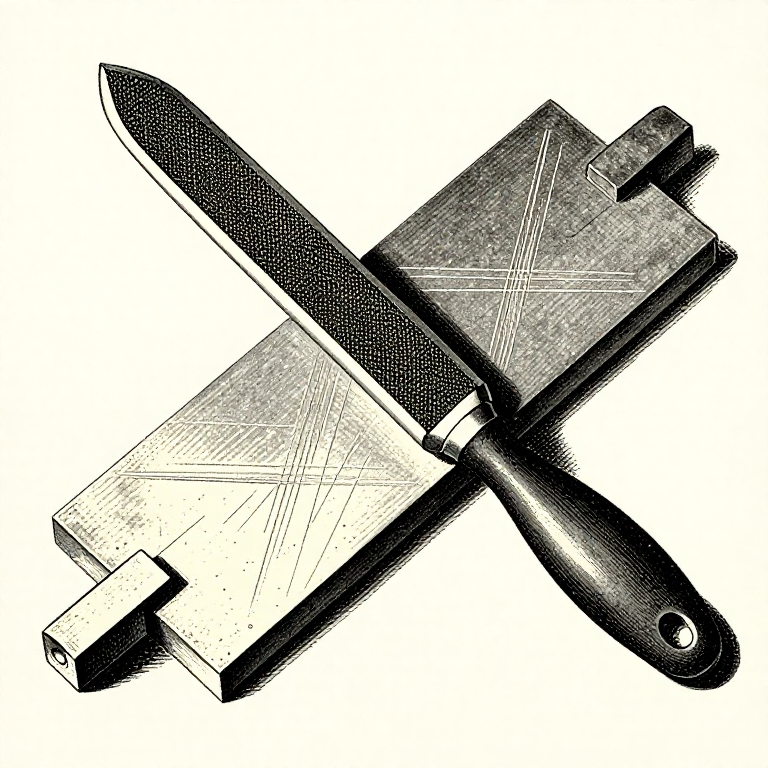


Cross-Filing: Taking Metal Down Fast and Keeping It Flat
Cross-filing is the stroke that removes stock: the file pushed across the work at an angle, then the angle reversed, then reversed again. It is how a rough sawn edge becomes a flat one.
The reason for changing direction is not decoration. Each pass leaves scratches running one way; the next pass crossing them makes the high spots obvious the moment they stop being touched. The file itself tells you where the surface is high — you do not have to measure to find out.
The enemy is ROCKING. A file 250 mm long pivoting a degree through the stroke takes more off the ends than the middle, and produces a convex surface that will never sit flat on anything.
Trung cấp
3 hours
Hướng dẫn
1
1
The stroke: weight forward, level, and lift on the return
The stroke: weight forward, level, and lift on the return
Hold the handle in your dominant hand with the thumb along the top, and the tip of the file between the thumb and fingers of the other. Push the file forward with the weight of your upper body, not by pressing down with your arms.
The pressure balance shifts through the stroke. At the start most of the file hangs off the far side of the work, so the leading hand carries the weight; at the end the handle hangs off the near side, so the pressure shifts back. Getting that transfer right is the whole skill, and it is what keeps the stroke level.
Lift on the return. The teeth cut only forward, so dragging back wears them and drags chips across the surface. The one exception is soft metal like lead where a light return helps clear the teeth.
Công cụ cần thiết:
 Giũa (giũa tay)
 Ê tô bàn nguội hạng nặng
 Tấm thép mềm
2
2
Cross the strokes, and let the file find the high spots
Cross the strokes, and let the file find the high spots
File at roughly 30 degrees across the work for a dozen strokes, then swing to 30 degrees the other way and file until the first set of scratches has gone.
The moment they have all gone, the surface is level to the depth of those scratches. If a patch of the old scratches survives, that patch is LOW and everything around it is high — so work the high ground, not the hollow. This is the single most useful thing about cross-filing and it costs nothing.
Chalk rubbed on the file face makes the pattern easier to read and slows clogging on soft metal. Marking blue on the work does the same job more clearly on steel.
Vật liệu cho bước này:
 Phấn đánh dấu1 cái
Công cụ cần thiết:
Giũa (giũa tay) Bột đánh dấu màu xanh
 Kính lúp thợ kim hoàn
3
3
Why rocking makes a convex surface
Why rocking makes a convex surface
Đang tải sổ tay Jupyter…
Công cụ cần thiết:
 Máy tính bỏ túi
 Thước cặp
4
4
Check flat, check square, and check often
Check flat, check square, and check often
Lay a straightedge across the work and hold it up to a light. A gap anywhere shows as a line of light, and the eye can see a gap of a few micrometres this way — far finer than any rule you can read.
Check in three directions: along, across, and diagonally. A face can be straight along its length and still be twisted, and the diagonal is what finds that. For square, stand a try square on the reference face and look for light under the blade the same way.
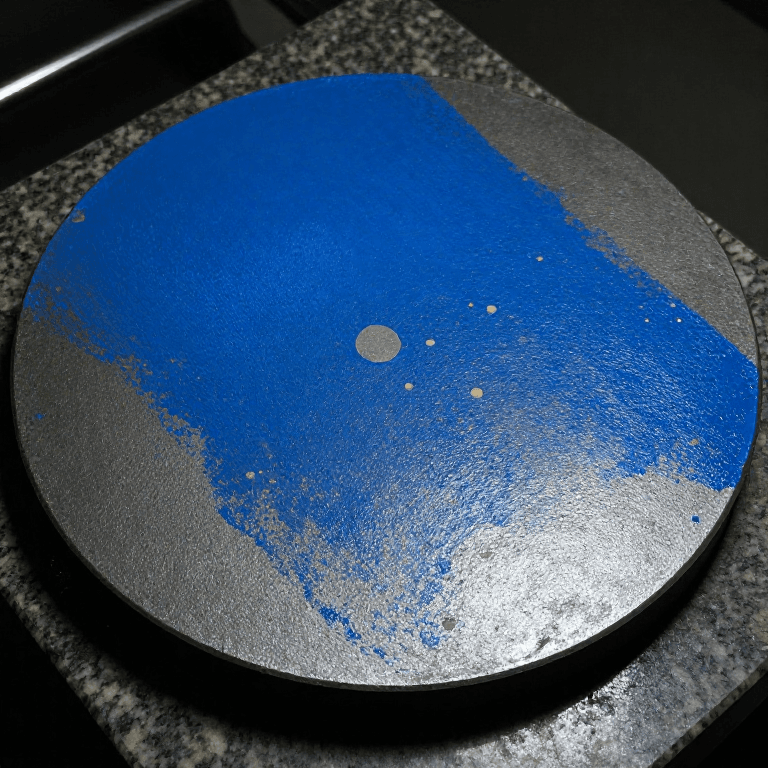
Check every dozen strokes near the end, not every hundred. Metal comes off far faster than it goes back on, and the published surface-plate-and-marking-blue blueprint is the next step up in precision when light-gap checking is no longer good enough.
Công cụ cần thiết:
 Thước thẳng chuẩn
 Ke vuông thợ nguội
 Ê ke vuông cố địnhBột đánh dấu màu xanh
Vật liệu
1- 1 cáiTạm thời
Công cụ yêu cầu
10- Tạm thời
- Tạm thời
- Tạm thời
- Tạm thời
- Tạm thời
- Tạm thời
- Tạm thời
- Tạm thời
- Tạm thời
- Tạm thời
Blueprint liên quan
Các blueprint này chia sẻ kiến thức — kỹ thuật, vật liệu hoặc nguyên tắc
CC0 Phạm vi công cộng
Bản thiết kế này được phát hành theo CC0. Bạn tự do sao chép, sửa đổi, phân phối và sử dụng cho bất kỳ mục đích nào mà không cần xin phép.
Hỗ trợ nhà sáng tạo bằng cách mua sản phẩm qua bản thiết kế, nơi họ nhận Hoa hồng nhà sáng tạo do nhà bán hàng đặt, hoặc tạo phiên bản mới và kết nối trong bản thiết kế riêng để chia sẻ doanh thu.