NGHỆ THUẬT
LÀM ĐẸP VÀ SỨC KHỎE
THỦ CÔNG
VĂN HÓA VÀ LỊCH SỬ
GIẢI TRÍ
MÔI TRƯỜNG
THỰC PHẨM VÀ ĐỒ UỐNG
KỸ THUẬT NGƯỢC
KHOA HỌC
THỂ THAO
CÔNG NGHỆ
THIẾT BỊ ĐEO
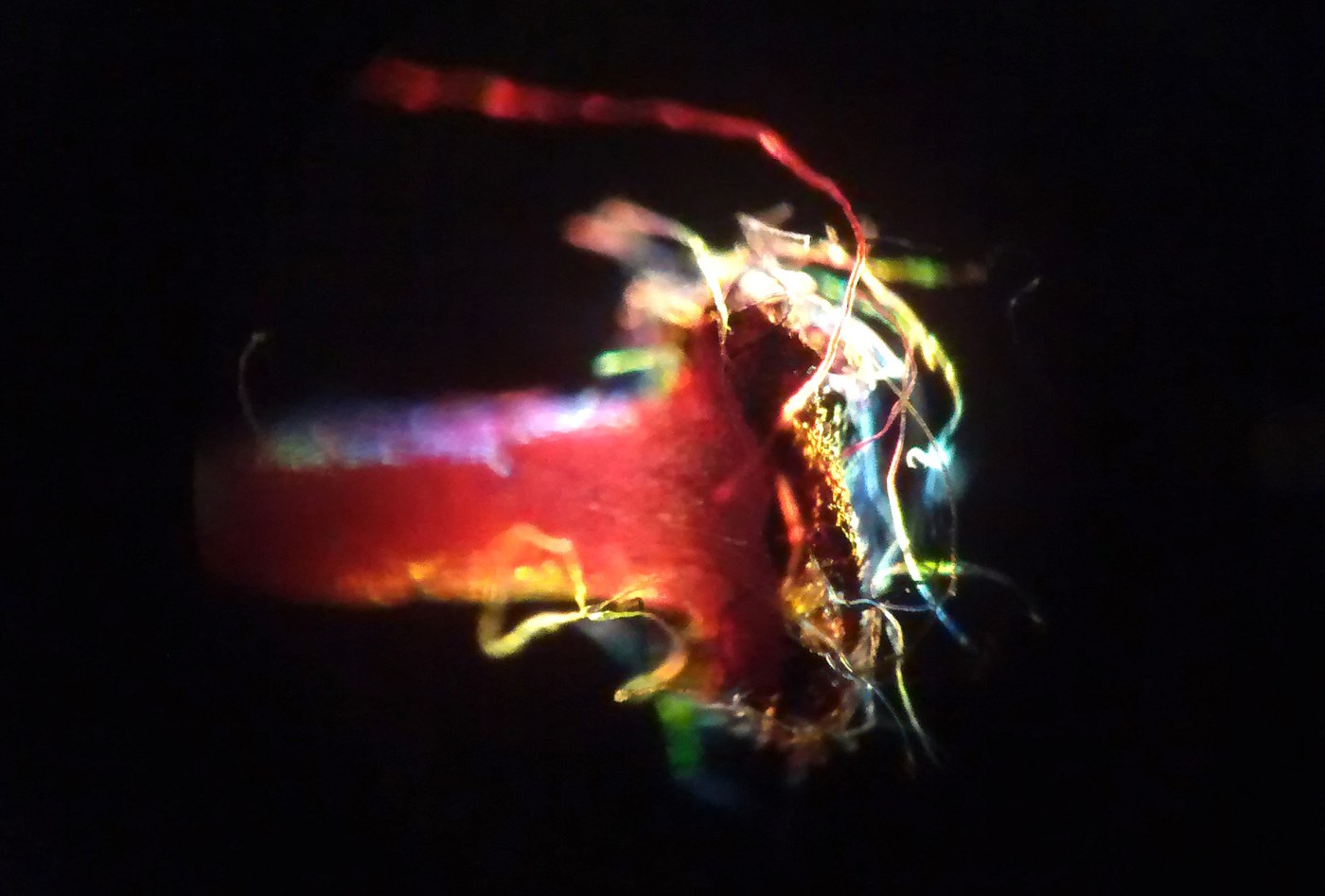


Dark-Field Illumination
Staining puts contrast into a specimen chemically, and it has a price: almost every stain requires the specimen to be dead, fixed and usually sectioned. If you want to watch something alive and moving, the chemistry is no use to you.
Dark-field puts the contrast in optically instead, and it is astonishingly simple. Block the centre of the illuminating cone so that no direct light can enter the objective at all. The field goes black. Anything in the specimen that SCATTERS light then throws some of it sideways into the objective, and appears brilliantly bright against that blackness.
The effect is out of all proportion to the effort — a coin of black card in the right place — and it reveals things far below the resolution limit. You cannot resolve a bacterial flagellum, but you can see that one is there, because it scatters.
Cơ bản
2 hours
Hướng dẫn
1
1
Cut a stop, and get the size right
Cut a stop, and get the size right
Cut a disc of black card and centre it on a clear disc that fits under the condenser — a coverslip or a cut-down transparency works.
The size is the whole design. The stop must block every ray that would enter the objective directly, and no more, so its diameter depends on your objective's numerical aperture and on the condenser's focal length. Too small and direct light leaks in and the field greys out; too large and there is not enough oblique light left to illuminate anything. The notebook works out the size for your own optics.
Vật liệu cho bước này:
 Bìa đen4 cái
 Lam kính kèm lamen10 cái
Công cụ cần thiết:
 Dao mổ
 Thước kẻ
2
2
Centre it, and open the condenser fully
Centre it, and open the condenser fully
Drop the stop into the filter holder below the condenser, open the condenser diaphragm all the way, and centre the stop by eye until the field goes evenly black.
Open all the way is deliberate and it feels wrong after the Köhler rung. Here you need the widest possible cone, because only the OUTER rays survive the stop and those outer rays are the whole illumination. Any stopping-down removes exactly the light you are relying on.
Công cụ cần thiết:
 Kính hiển vi
3
3
Use a low-aperture objective, or stop it down
Use a low-aperture objective, or stop it down
Dark-field works when the objective's aperture is smaller than the illuminating cone's inner edge. A 10× or 20× objective is ideal; a high-aperture 40× or 100× will collect the direct light and defeat the stop.
This is the method's real constraint, and it is worth stating plainly: dark-field and high magnification fight each other. Proper high-power dark-field needs a special condenser with an internal mirror, which is exactly the piece you cannot easily make at home.
Công cụ cần thiết:
Kính hiển vi4
4
Look at living things
Look at living things
Put a drop of pond water, or a smear of yeast in water, on a slide and look.
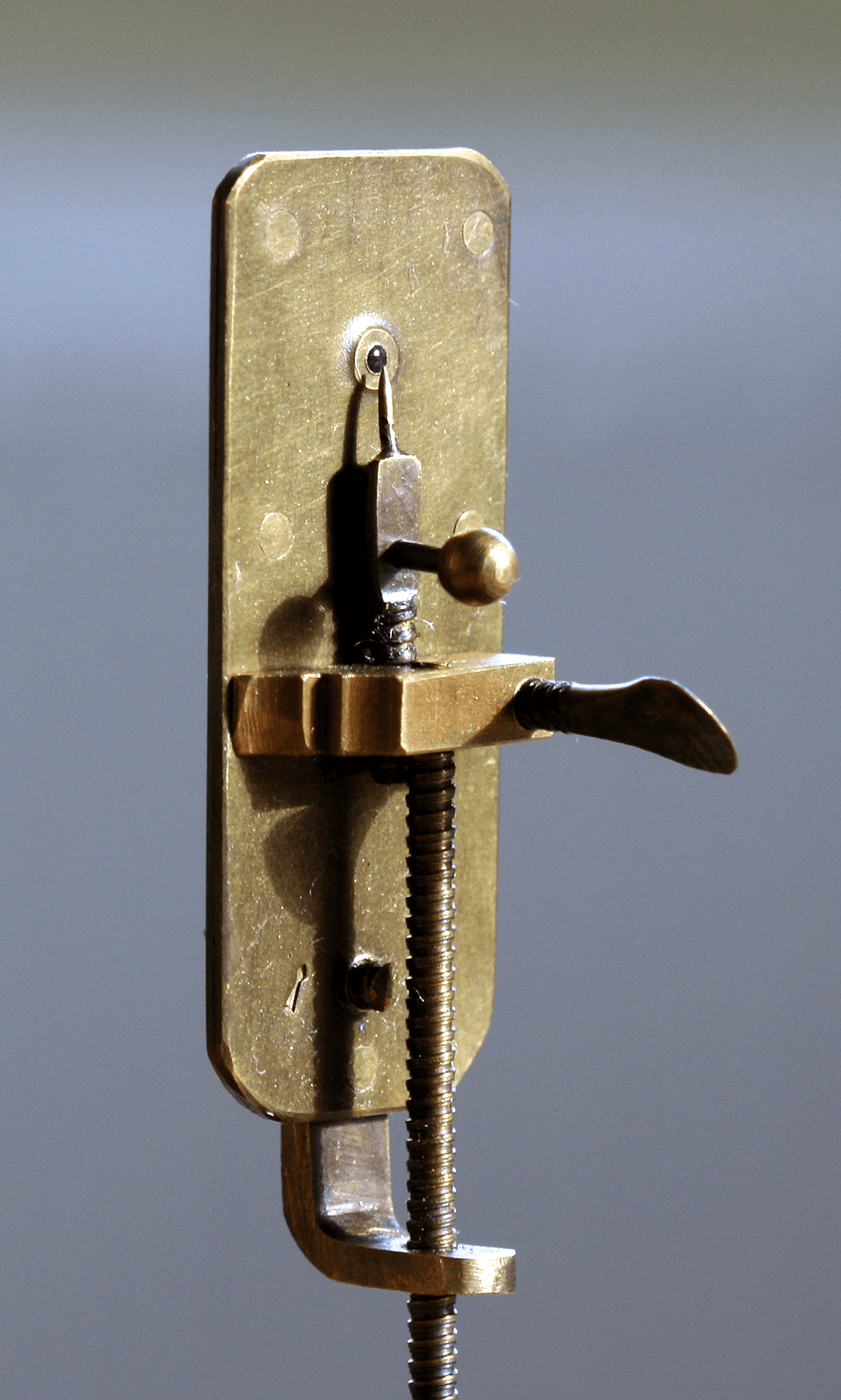
Nothing is stained, nothing is dead, and organisms that were nearly invisible in bright-field now blaze white against black. Watch a ciliate swim. This is the view Leeuwenhoek was chasing with his beads of glass, and it is why dark-field is still used for living samples where a stain would end the experiment.
Vật liệu cho bước này:
 Men bánh mì10 gLam kính kèm lamen10 cái
Công cụ cần thiết:
Kính hiển vi Pipet chia độ (Mohr)
5
5
Keep everything scrupulously clean
Keep everything scrupulously clean
Dust on the slide, grease on the coverslip and scratches in the glass all scatter light, and dark-field shows scattering — so they all blaze as brightly as your specimen.
In bright-field a dust speck is a grey dot you learn to ignore. Here it is a brilliant star sitting beside an organism, indistinguishable at a glance. Clean slides matter more in this technique than in any other in this batch, and a filtered drop of water is worth the extra minute.
Vật liệu cho bước này:
 Giấy lọc10 cái
Công cụ cần thiết:
 Găng tay nitrile
6
6
Sizing the stop, and what dark-field can and cannot tell you
Sizing the stop, and what dark-field can and cannot tell you
Đang tải sổ tay Jupyter…
Công cụ cần thiết:
Thước kẻ7
7
Try oblique illumination as the cheaper cousin
Try oblique illumination as the cheaper cousin
Instead of a central stop, slide a piece of card across HALF the condenser aperture so the specimen is lit from one side only.
The result looks three-dimensional, as though lit by a low sun, and it brings out edges and steps that vanish in even illumination. It is not quantitative and the apparent relief can reverse if you move the card to the other side — so it is a way of SEEING structure, never of proving it. It costs a piece of card and five seconds, and it is the most under-used trick in microscopy.
Vật liệu cho bước này:
Bìa đen2 cáiCông cụ cần thiết:
Kính hiển viVật liệu
4- 4 cáiTạm thời
- 10 cáiTạm thời
- 10 gTạm thời
- 10 cáiTạm thời
Blueprint liên quan
Các blueprint này chia sẻ kiến thức — kỹ thuật, vật liệu hoặc nguyên tắc



CC0 Phạm vi công cộng
Bản thiết kế này được phát hành theo CC0. Bạn tự do sao chép, sửa đổi, phân phối và sử dụng cho bất kỳ mục đích nào mà không cần xin phép.
Hỗ trợ nhà sáng tạo bằng cách mua sản phẩm qua bản thiết kế, nơi họ nhận Hoa hồng nhà sáng tạo do nhà bán hàng đặt, hoặc tạo phiên bản mới và kết nối trong bản thiết kế riêng để chia sẻ doanh thu.