NGHỆ THUẬT
LÀM ĐẸP VÀ SỨC KHỎE
THỦ CÔNG
VĂN HÓA VÀ LỊCH SỬ
GIẢI TRÍ
MÔI TRƯỜNG
THỰC PHẨM VÀ ĐỒ UỐNG
KỸ THUẬT NGƯỢC
KHOA HỌC
THỂ THAO
CÔNG NGHỆ
THIẾT BỊ ĐEO
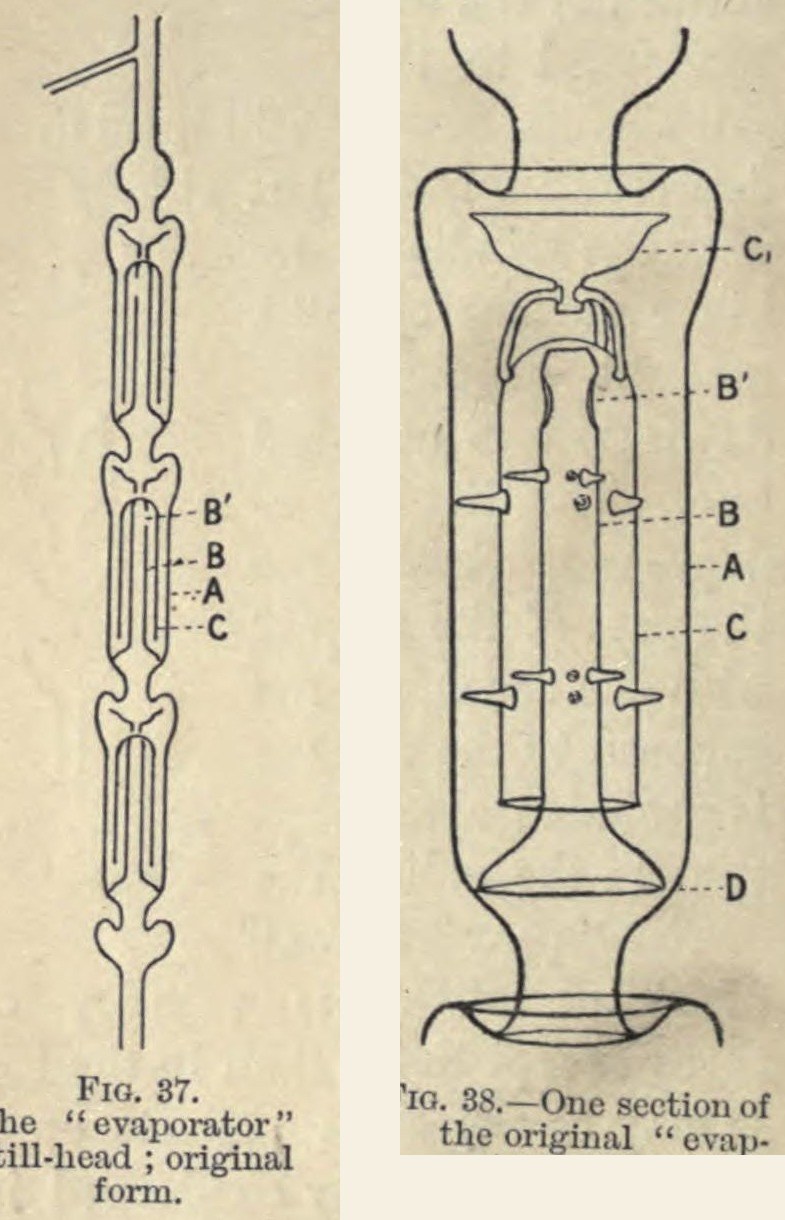


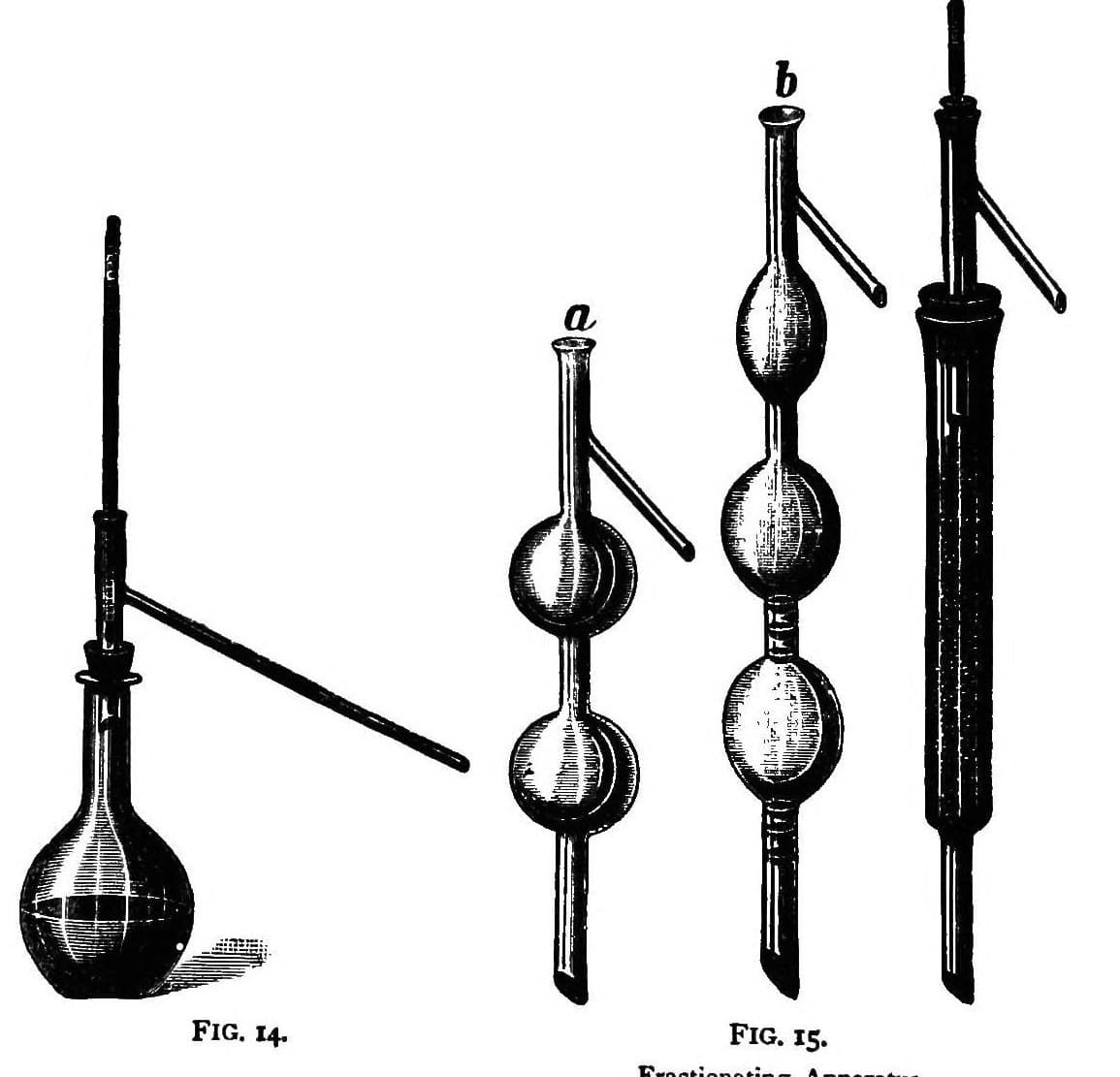
Distillation Column Assembly: Flask, "Evaporator" Still-Head, Liebig Condenser and Receivers (Young, 1903)
A complete fractional distillation set: a globular flask, Young and Thomas's 'evaporator' still-head built of stacked glass sections, a Liebig condenser and a row of receivers. In each section the rising vapour is forced through the liquid running back down, so the mixture separates better at each step.
Result: a fractionating apparatus for separating liquids by boiling point, the fractions caught in receivers changed at set temperatures.
Source: S. Young, Fractional Distillation (1903), pp. 4-7, 115-116, 166-168. Picture: Figs. 37 and 38 of the book.
Nâng cao
Unknown
Hướng dẫn
1
1
Choose the still
Choose the still
Use a globular flask, since a flat-bottomed one may crack over a naked flame, no larger than the amount of liquid needs. Fit it with a cork for the still-head. Ours: a round-bottom flask.
Vật liệu cho bước này:
 Bình cầu đáy tròn1 still
 Nút bần1 still cork
Công cụ cần thiết:
 Đèn Bunsen
2
2
Blow the evaporator still-head
Blow the evaporator still-head
Build the still-head of sections joined end to end. Each outer tube is 22 to 24 mm inside and about 10 to 10.5 cm long, constricted at the bottom. In it stands a thin inner tube, 7.5 to 8 mm inside and 60 mm long, open at both ends, with two large holes near its top. Its lower end widens into a funnel resting on the constriction, with three or four tiny glass beads fused to the rim so it does not fit too tightly. Over it stands an intermediate tube about 14 mm inside and 50 mm long, like a small inverted test tube. A small funnel, slightly wider than the dip in the outer tube above, sits on top of it on three glass legs. Small glass projections centre the tubes. Make the head long enough that the thermometer's bulb and stem both sit in the vapour, with a side delivery tube at the top.
Vật liệu cho bước này:
 Ống thủy tinh1 sections, inner and intermediate tubes, delivery tube
Công cụ cần thiết:
 Đèn khò thổi thủy tinh để bàn
3
3
Fit the condenser
Fit the condenser
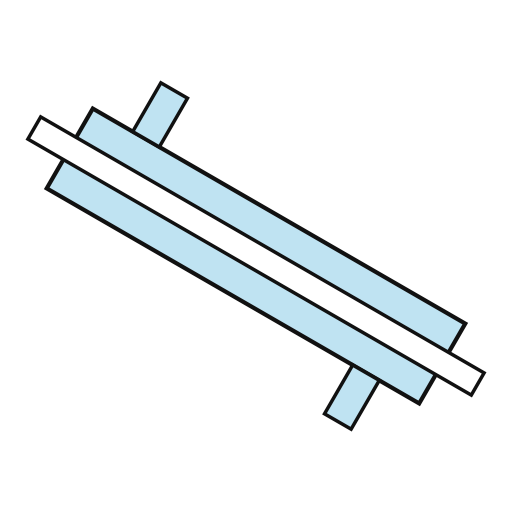
Use a Liebig condenser, about 7 or 8 mm inside for the inner tube and 15 mm for the outer, cooled by running water. Pass the delivery tube through a cork into it. Draw out the joint where the wide inlet meets the narrow tube so no pool of liquid lies there. Bend the narrow tube so the condenser can stand upright. Above about 170 °C use a long tube cooled by air instead of water.
Vật liệu cho bước này:
 Ống sinh hàn làm mát bằng nước1 condenserNút bần1 condenser cork
Công cụ cần thiết:
Đèn khò thổi thủy tinh để bàn Nước làm mát
4
4
Set the heat and the receivers
Set the heat and the receivers
Heat with a Bunsen burner, its top about 2 mm below the flask so the small flame touches the glass, shielded from draughts. Add a few pieces of porous porcelain (a broken clay pipe will do) or pumice if the liquid bumps. Set a thermometer in the still-head and a row of small flasks as receivers.
Vật liệu cho bước này:
 Nhiệt kế1 still-head thermometer
 Bình hứng10 receivers
Công cụ cần thiết:
Đèn Bunsen Vật liệu không rõ
5
5
Distil in fractions
Distil in fractions
Read the barometer and correct the set temperatures for it. Distil steadily. In each section, condensed liquid seals the narrow passage, so the vapour rises up the inner tube, down between the tubes and up again, while liquid drips from section to section back to the still. Collect the distillate in fractions, changing the receiver each time the temperature reaches one of the values fixed beforehand.
Công cụ cần thiết:
 Khí áp kế thuỷ ngânĐèn BunsenNước làm mát
Vật liệu
6- 1 stillTạm thời
- 1 condenser corkTạm thời
- 1 sections, inner and intermediate tubes, delivery tubeTạm thời
- 1 condenserTạm thời
- 1 still-head thermometerTạm thời
- 10 receiversTạm thời
Công cụ yêu cầu
5- Tạm thời
- Tạm thời
- Tạm thời
- Tạm thời
- Tạm thời
Vật liệu bản thiết kế liên kết

Bản thiết kế này làm ra

Blueprint liên quan
Các blueprint này chia sẻ kiến thức — kỹ thuật, vật liệu hoặc nguyên tắc
CC0 Phạm vi công cộng
Bản thiết kế này được phát hành theo CC0. Bạn tự do sao chép, sửa đổi, phân phối và sử dụng cho bất kỳ mục đích nào mà không cần xin phép.
Hỗ trợ nhà sáng tạo bằng cách mua sản phẩm qua bản thiết kế, nơi họ nhận Hoa hồng nhà sáng tạo do nhà bán hàng đặt, hoặc tạo phiên bản mới và kết nối trong bản thiết kế riêng để chia sẻ doanh thu.