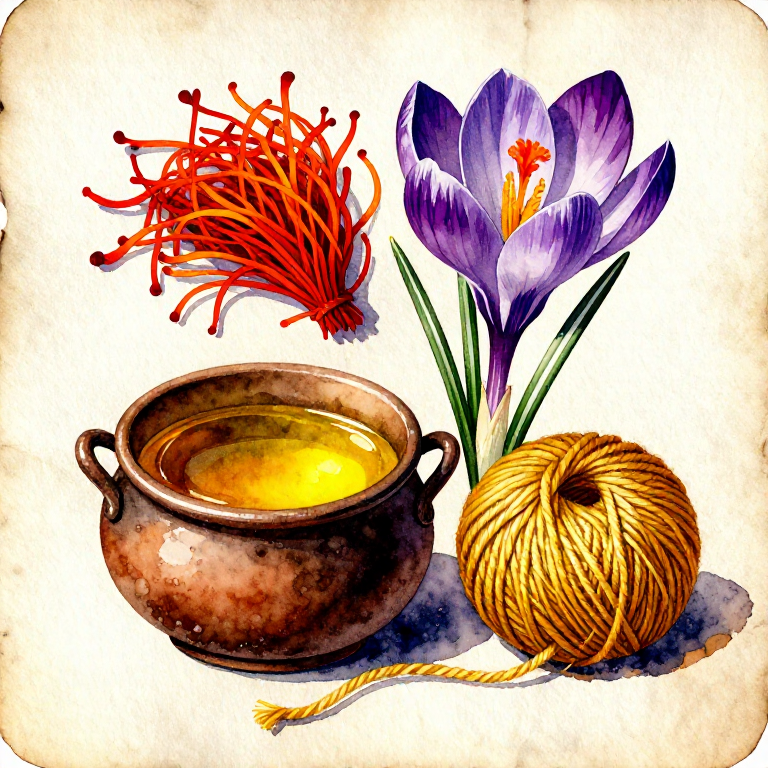


Dyeing Golden-Yellow with Saffron — The Most Precious Dye Spice in History
Saffron (Crocus sativus) is the dried stigma of the saffron crocus — the most expensive spice in the world by weight and one of the oldest luxury dye materials known to humanity. Each crocus flower produces only three stigmas, and it takes approximately 150,000 flowers to yield one kilogram of dried saffron. This extraordinary labour cost made saffron-dyed textiles a symbol of wealth, royalty, and sacred status across the ancient world. Buddhist monks' robes, Phoenician royal garments, Greek wedding veils, and Roman imperial fabrics were all dyed with saffron.
The golden-yellow colour comes from crocin and crocetin — carotenoid pigments unique to the Crocus genus. Unlike most carotenoids (which are oil-soluble), crocin is water-soluble, making it an effective textile dye without any special extraction chemistry. On alum-mordanted wool, saffron produces a luminous, warm golden-yellow — brighter and more vivid than most plant yellows, with a distinctive orange undertone.
Saffron was cultivated in Bronze Age Crete — frescoes at Knossos (c. 1600 BCE) depict saffron gatherers. It spread through Persia, India, and eventually to medieval Europe, where saffron cultivation became a major industry in regions of Spain (La Mancha), Italy, and England (Saffron Walden in Essex takes its name from the crop). As a dye, saffron was reserved for the highest-status textiles due to its cost. This blueprint uses a small quantity to demonstrate the process — even a few grams produce a visible golden-yellow on wool.
Hướng dẫn
Weigh the saffron threads
Weigh the saffron threads
Use 5-10% WOF of dried saffron threads. For 100 g of wool, weigh out 5-10 g of saffron — a small but expensive quantity. Saffron is one of the most concentrated natural dyes: even at 5% WOF, the colour is clearly visible. The threads should be a deep red-orange, dry and brittle. Avoid powdered saffron for dyeing — it is often adulterated with turmeric or safflower. Whole threads guarantee authenticity.
Vật liệu cho bước này:
 Nhụy nghệ tây8 g
Công cụ cần thiết:
 Cân nhà bếp điện tử
Soak the saffron in warm water for 30 minutes
Soak the saffron in warm water for 30 minutes
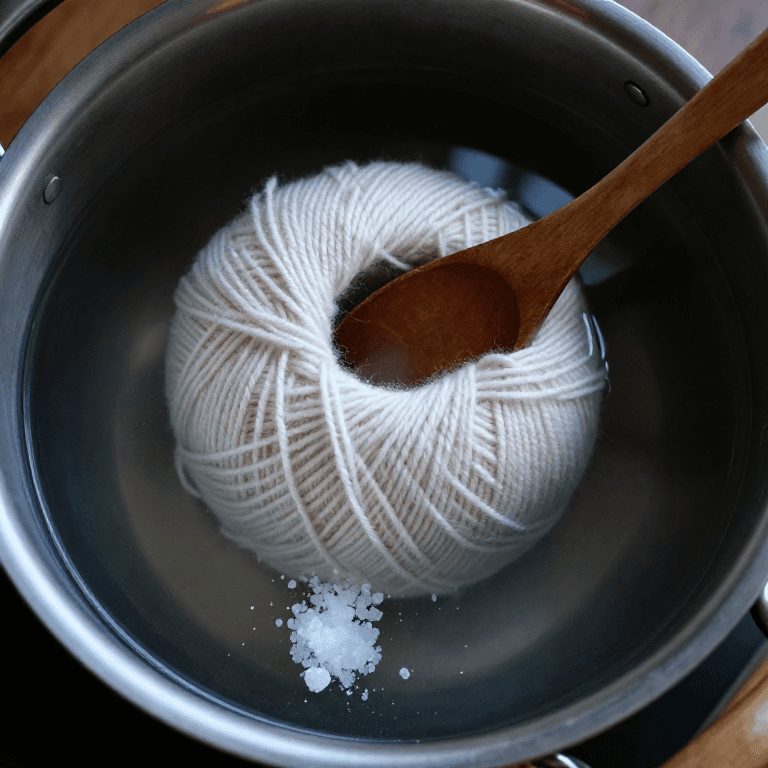
Place the saffron threads in a dye pot with 4 litres of warm water. Within seconds, the water will begin turning a vivid golden-yellow — saffron releases its crocin pigment almost instantly. Soak for 30 minutes, stirring occasionally. The liquid will become an intense, luminous gold. The threads will have paled from deep red to pale yellow as they release their pigment. No overnight soak is needed — saffron extracts completely in minutes.
Công cụ cần thiết:
 Nồi cao
Warm gently to 70-75°C
Warm gently to 70-75°C
Bring the pot to 70-75°C. Crocin is reasonably heat-stable but the best colour clarity comes from moderate temperatures. Do not boil. Stir gently. The liquid will be a vivid, clear golden-yellow — brighter and more orange-toned than most plant yellows. The saffron threads are so fine that straining is optional — they will not affect the dyeing. If preferred, remove them with a tea strainer.
Công cụ cần thiết:
 Nhiệt kế nấu ăn
 Thìa khuấy bằng gỗ
Dye alum-mordanted wool at 70-75°C for 30-45 minutes
Dye alum-mordanted wool at 70-75°C for 30-45 minutes
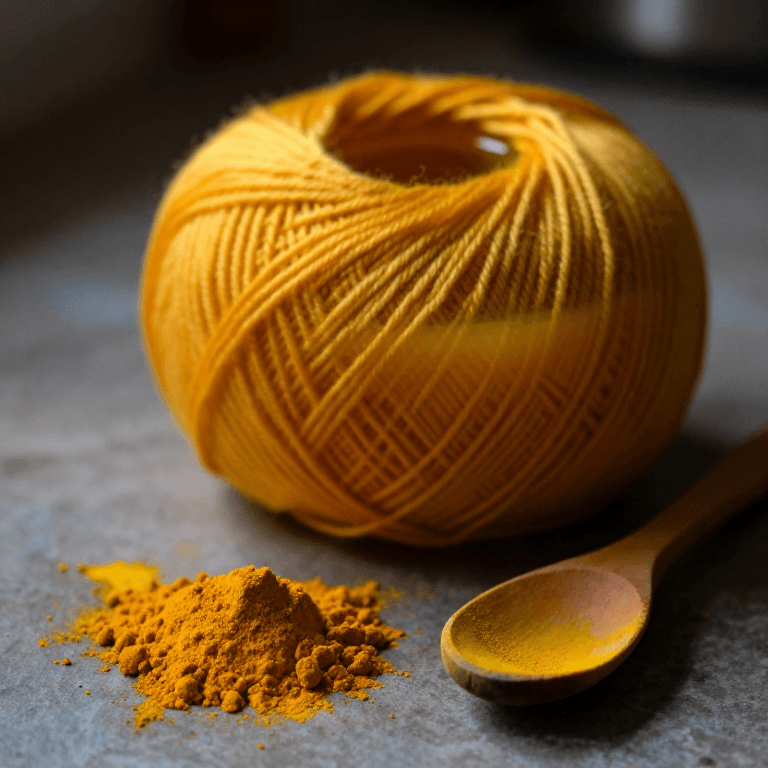
Pre-wet the alum-mordanted wool in lukewarm water for 15 minutes, squeeze gently, and lower it into the saffron dye bath at room temperature. Slowly raise to 70-75°C over 15 minutes, then hold for 30-45 minutes. Turn gently every 10 minutes. The wool will develop a luminous golden-yellow — warm, vivid, and distinctly different from weld or turmeric yellows. Saffron yellow has a characteristic orange warmth and clarity that no other plant dye quite matches.
Vật liệu cho bước này:
 Con sợi len100 g
 Phèn chua (phèn kali)10 g
Cool overnight, rinse, and dry
Cool overnight, rinse, and dry
Turn off the heat and let the wool cool in the dye bath overnight. Remove, squeeze gently, and rinse in lukewarm water until the runoff is clear. The final colour is a luminous golden-yellow — the colour of imperial robes, Buddhist monasteries, and Mediterranean sunshine. Lightfastness is moderate — better than turmeric but not as permanent as weld. The colour will gradually soften toward pale gold with extended light exposure. Washfastness is fair with alum mordanting. The extraordinary cost of saffron explains why weld, turmeric, and fustic replaced it in everyday dyeing — all produce similar yellows at a fraction of the price. Saffron remains the luxury choice. Dry in shade.
Vật liệu
3- Tạm thời
- 100 gTạm thời
- Tạm thời
Công cụ yêu cầu
4- Tạm thời
- Tạm thời
- Tạm thời
- Tạm thời
Vật liệu bản thiết kế liên kết
Bản thiết kế này làm ra

Blueprint liên quan
Các blueprint này chia sẻ kiến thức — kỹ thuật, vật liệu hoặc nguyên tắc
CC0 Phạm vi công cộng
Bản thiết kế này được phát hành theo CC0. Bạn tự do sao chép, sửa đổi, phân phối và sử dụng cho bất kỳ mục đích nào mà không cần xin phép.
Hỗ trợ nhà sáng tạo bằng cách mua sản phẩm qua bản thiết kế, nơi họ nhận Hoa hồng nhà sáng tạo do nhà bán hàng đặt, hoặc tạo phiên bản mới và kết nối trong bản thiết kế riêng để chia sẻ doanh thu.