NGHỆ THUẬT
LÀM ĐẸP VÀ SỨC KHỎE
THỦ CÔNG
VĂN HÓA VÀ LỊCH SỬ
GIẢI TRÍ
MÔI TRƯỜNG
THỰC PHẨM VÀ ĐỒ UỐNG
KỸ THUẬT NGƯỢC
KHOA HỌC
THỂ THAO
CÔNG NGHỆ
THIẾT BỊ ĐEO
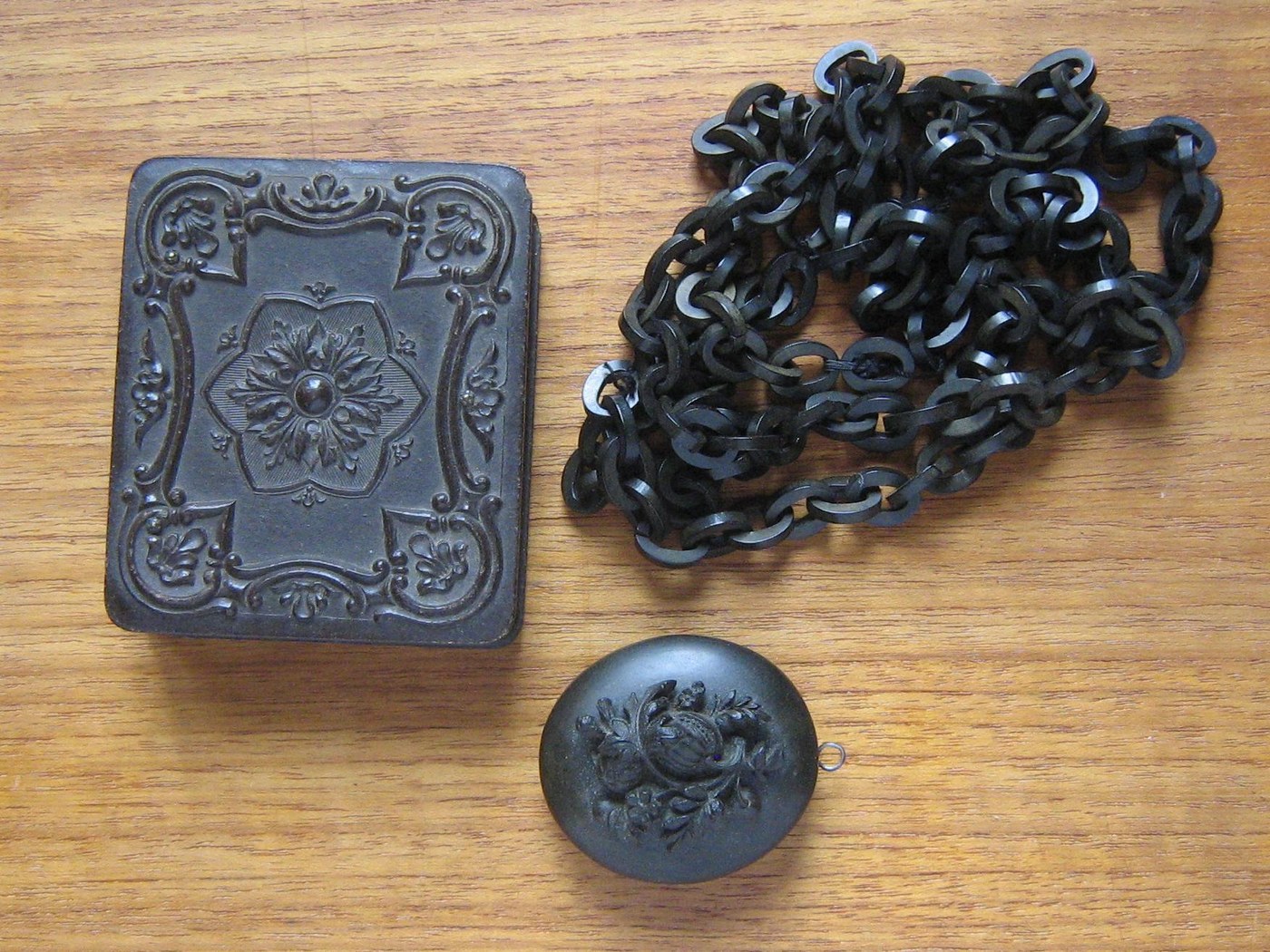


Ebonite (Hard Rubber)
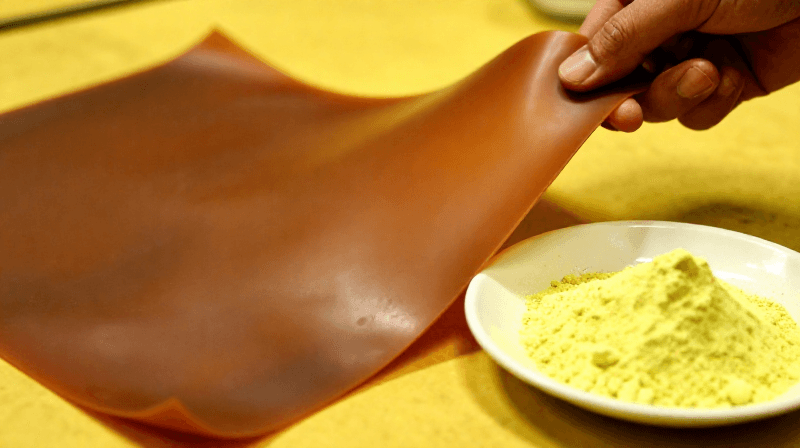
Vulcanised rubber is rubber with a few sulphur bridges between its chains. Keep adding sulphur and the bridges multiply until the chains cannot move at all: the soft, stretchy material turns into a hard black solid you can turn on a lathe, polish like ebony and use as an electrical insulator.
**US 8,075**, "Improvement in the Manufacture of India Rubber", Nelson Goodyear (brother of Charles), granted 6. May 1851, claims "the combining of india-rubber and sulphur… for making a hard and inflexible substance hitherto unknown": about equal parts by weight, heated to 260–275 °F for three to six hours. It was one of the first rigid materials made by chemically changing a natural polymer, over half a century before Bakelite.
**You turn a part from commercial ebonite rod and measure what the sulphur did** — its density, and its charge when rubbed. Curing ebonite needs a heated press and releases hydrogen sulphide, so the blueprint starts from finished rod; the notebook does the chemistry.
Trung cấp
3 hours
Hướng dẫn
1
1
Cut the blank
Cut the blank
Clamp 20 mm ebonite rod in the vise between soft jaws. Saw off 60 mm. Ebonite chips like hard wood; saw slowly to avoid cracking the end.
Vật liệu cho bước này:
 Thanh ebonit1 cái
Công cụ cần thiết:
 Cưa sắt
 Ê tô bàn nguội
 Thước kẻ
 Kính bảo hộ trong suốt
2
2
Chuck and face
Chuck and face
Grip 20 mm of the blank in the lathe's 3-jaw chuck. Face the end square with a sharp HSS tool at about 800 rpm, light cuts.
Công cụ cần thiết:
 Máy tiện kim loại
 Bộ dao tiện gỗ (HSS)Kính bảo hộ trong suốt
 Khẩu trang chống bụi
3
3
Turn to 16 mm
Turn to 16 mm
Turn 40 mm of length down to 16.0 mm. Check with the caliper every pass. The chips smell of sulphur - that is the bonded sulphur you measure later.
Công cụ cần thiết:
Máy tiện kim loạiBộ dao tiện gỗ (HSS) Thước cặp điện tử 6 inch
4
4
Drill the bore
Drill the bore
Spot the centre with a centre drill, then drill 3 mm through 35 mm from the tailstock. Clear chips every 5 mm - ebonite heats and gums if packed.
Công cụ cần thiết:
 Bộ mũi khoan tâm
 Bộ mũi khoanMáy tiện kim loại
5
5
Taper the grip
Taper the grip
Set the compound to a shallow angle and taper 25 mm from 16 mm down to 10 mm. This is a fountain-pen grip section, the job ebonite still does today.
Công cụ cần thiết:
Máy tiện kim loạiBộ dao tiện gỗ (HSS)Thước cặp điện tử 6 inch6
6
Sand and polish
Sand and polish
At low speed, sand 400 then 800 grit, then run the Micro-Mesh grits in order. Finish with polishing compound on a cloth. Ebonite takes a deep gloss without lacquer.
Vật liệu cho bước này:
 Giấy nhám2 tờ
 Kem đánh bóng5 g
Công cụ cần thiết:
 Bộ giấy nhám vi lưới (9 độ hạt)Máy tiện kim loạiKhẩu trang chống bụi
7
7
Part off
Part off
Part off at 45 mm with the parting tool. Chamfer the cut end by hand with 800 grit.
Công cụ cần thiết:
Bộ dao tiện gỗ (HSS)Máy tiện kim loại8
8
Measure the density
Measure the density
Weigh the part. Drop it into 50 ml of water in the graduated cylinder and read the rise. Do the same with a bundle of rubber bands. Enter both in the notebook.
Vật liệu cho bước này:
 Dây thun1 gói
Công cụ cần thiết:
 Cân điện tử chính xác
 Ống đong chia vạch
9
9
Rub it and pick up paper
Rub it and pick up paper
Tear tissue into 5 mm scraps. Rub the ebonite 10 strokes on wool felt and hold it 2 cm above the scraps. Repeat with an acrylic offcut. Count scraps lifted by each.
Vật liệu cho bước này:
 Giấy lụa không axit1 tờ
 Tấm acrylic1 cái
Công cụ cần thiết:
 Nỉ len
10
10
The sulphur arithmetic
The sulphur arithmetic
Đang tải sổ tay Jupyter…
11
11
History & Context
History & Context
**What the patent specifies:** rubber and sulphur in about equal parts (or 2 : 1 with magnesia or lime), 260–275 °F, three to six hours. **Modern build (derived):** commercial ebonite rod, typically 25–32 % sulphur - the notebook shows why more than about 32 % cannot bond.
Ebonite was named for ebony, which it replaced in combs, pipe stems and instrument parts. It became a standard insulator of the electrical age and is still preferred for fountain-pen feeds because ink wets it. Its limits: it softens with heat, fades to brown and smells of sulphur in sunlight as the surface oxidises, and is brittle under impact.
Vật liệu
6- 1 cáiTạm thời
- 2 tờTạm thời
- Tạm thời
- 1 góiTạm thời
- Tạm thời
- 1 cáiTạm thời
Công cụ yêu cầu
14- Tạm thời
- Tạm thời
- Tạm thời
- Tạm thời
- Tạm thời
- Tạm thời
- Tạm thời
- Tạm thời
- Tạm thời
- Tạm thời
- Tạm thời
- Tạm thời
- Tạm thời
- Tạm thời
Blueprint liên quan
Các blueprint này chia sẻ kiến thức — kỹ thuật, vật liệu hoặc nguyên tắc

CC0 Phạm vi công cộng
Bản thiết kế này được phát hành theo CC0. Bạn tự do sao chép, sửa đổi, phân phối và sử dụng cho bất kỳ mục đích nào mà không cần xin phép.
Hỗ trợ nhà sáng tạo bằng cách mua sản phẩm qua bản thiết kế, nơi họ nhận Hoa hồng nhà sáng tạo do nhà bán hàng đặt, hoặc tạo phiên bản mới và kết nối trong bản thiết kế riêng để chia sẻ doanh thu.