
Throwing Arita Porcelain on the Wheel — Japanese Porcelain Tradition
Hướng dẫn
Prepare and Wedge the Porcelain Clay
Prepare and Wedge the Porcelain Clay
Porcelain is less plastic and more difficult to throw than stoneware, so thorough preparation is essential. Wedge (knead) the clay using the chrysanthemum wedging technique (kiku-momi) for at least 100 rotations to align the clay particles and remove trapped air. The clay should have a smooth, homogeneous consistency with no air pockets — even a small bubble will expand during firing and ruin the piece. Porcelain has a narrow working window: too wet and it collapses on the wheel, too dry and it cracks during throwing. The ideal consistency is slightly stiffer than stoneware clay.
Vật liệu cho bước này:
 Đất sét sứ1-2 kg per piece kg
 Coban oxit10-20g g
 Men trong500ml prepared ml
Công cụ cần thiết:
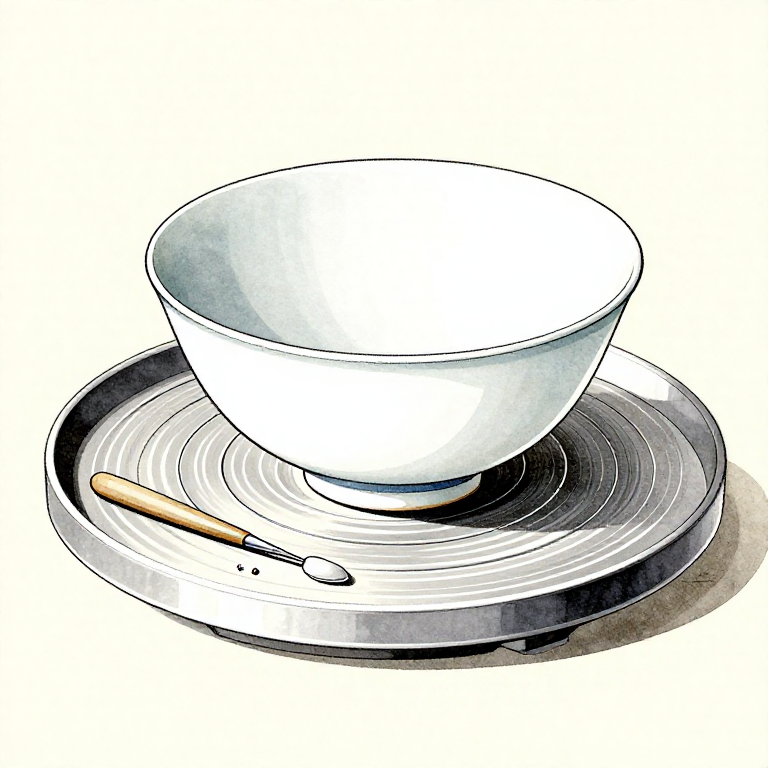
 Bàn xoay của thợ gốm
 Bộ dao tiện gỗ tươi
 Bộ cọ vẽ
 Lò nung
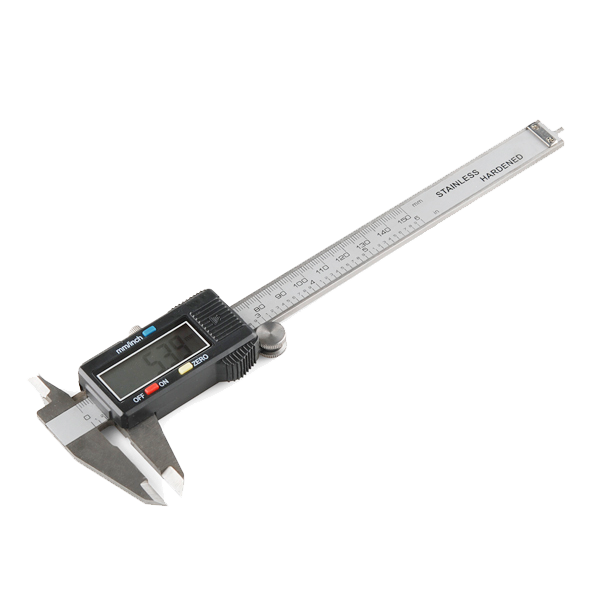 Digital Calipers - 152.4 mm
Centre and Throw on the Wheel
Centre and Throw on the Wheel
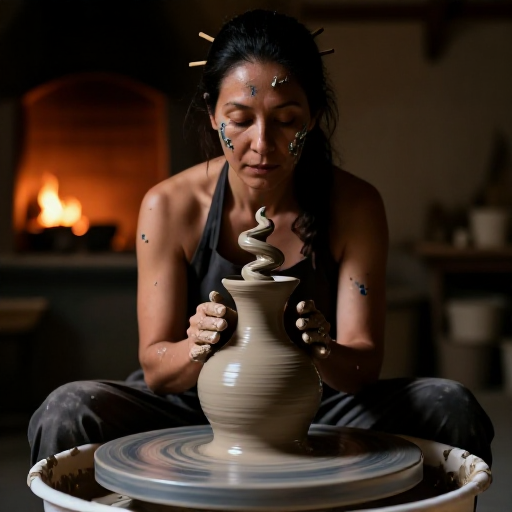
Centre the clay firmly on the wheel head. Porcelain requires confident, decisive movements — hesitation causes wobble that is difficult to correct. Open the centre by pressing downward to within 5-8mm of the wheel head to form the floor. Pull the walls upward in 3-4 steady lifts, keeping even thickness of approximately 3-4mm throughout. Porcelain's fine particle size means the walls can be made thinner than stoneware without losing structural integrity, but it also means the clay fatigues faster and becomes floppy if overworked. Complete the form in as few pulls as possible. Porcelain shrinks 12-15% during drying and firing, so throw approximately 15% larger than the desired finished size.
Trim the Foot Ring
Trim the Foot Ring
When the piece reaches leather-hard stage, invert it on the wheel and centre it for trimming. Arita porcelain is known for its refined foot rings — thin, precisely cut, and slightly concave on the base. Use sharp loop tools to carve away excess clay, creating a foot ring approximately 4-5mm wide and 5-8mm tall. The base thickness inside the foot ring should be shaved to approximately 3-4mm. Hold the piece up to a light source — properly trimmed porcelain will show slight translucency through thin areas. This translucency, called hotarude, is one of the hallmarks of quality porcelain. Smooth the foot ring surface carefully as any roughness will scratch tables and shelves after firing.
Paint Underglaze Decoration
Paint Underglaze Decoration
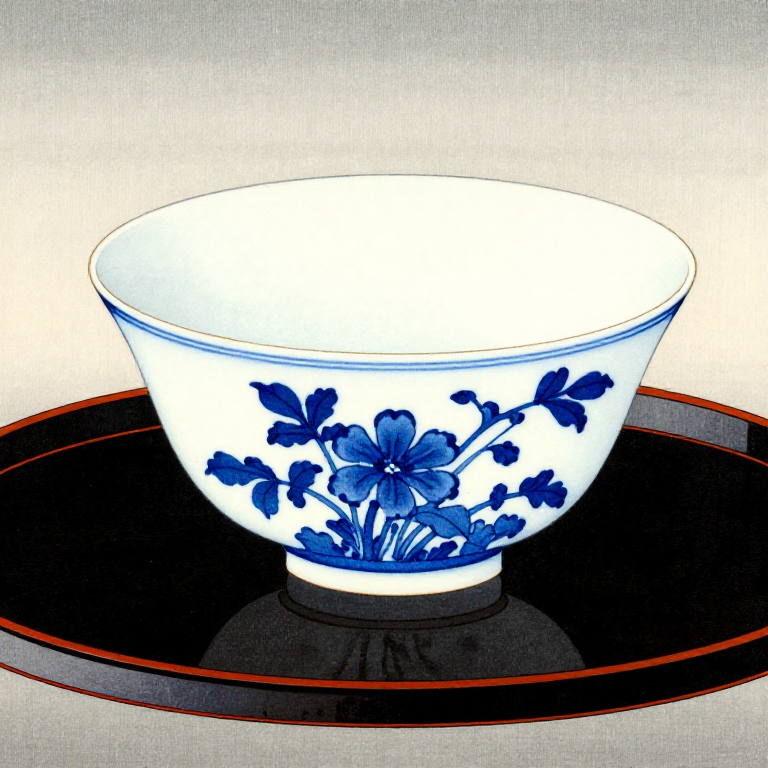
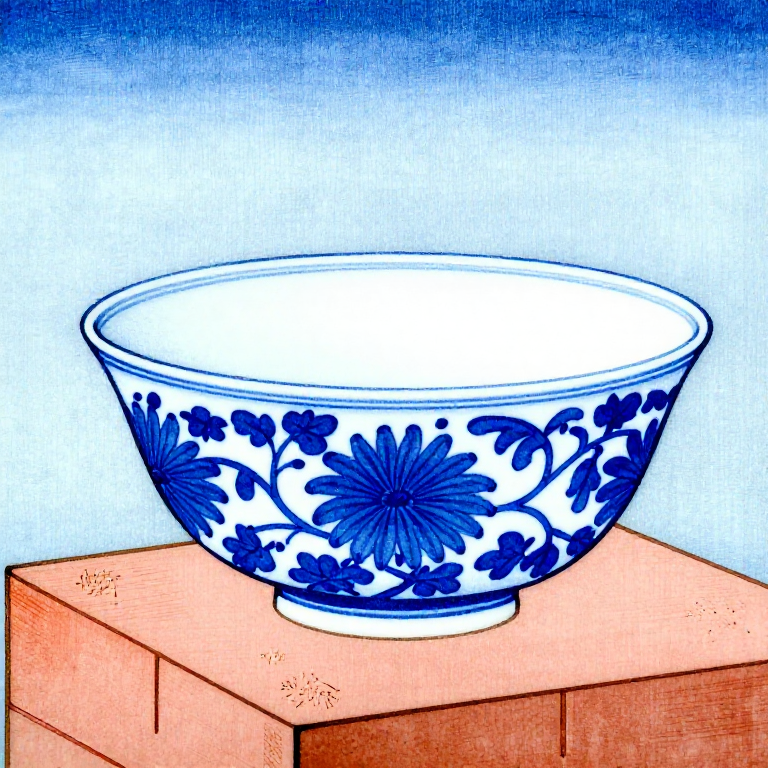
Traditional Arita porcelain features sometsuke (underglaze blue) decoration painted with cobalt oxide mixed with water or tea to a smooth ink-like consistency. Paint directly onto the bone-dry or bisque-fired porcelain surface using fine-pointed brushes. Classic motifs include landscapes, birds, flowers (especially chrysanthemum, peony, and plum blossom), geometric patterns, and scenes from nature. The cobalt appears grey-black when applied but fires to a vivid blue under the glaze. Vary line thickness by controlling brush pressure. Practice the design on paper first — cobalt cannot be easily corrected once applied to the porous clay surface, as it is immediately absorbed.
Glaze and Fire to Cone 10
Glaze and Fire to Cone 10
Dip or pour clear feldspar glaze over the decorated piece, leaving the foot ring bare to prevent sticking to the kiln shelf. The glaze coat should be thin and even — approximately 0.5-1mm thick. Load the piece into a high-fire kiln and fire to cone 10 (approximately 1300 degrees C) in a reduction atmosphere. Reduction firing (achieved by restricting oxygen in the kiln at peak temperature) transforms the cobalt blue to a deeper, richer tone and gives the porcelain body a warm white colour rather than cold blue-white. The firing cycle takes 12-16 hours with a slow cooling period. The finished piece should be fully vitrified, ring clearly when tapped, and show a smooth glossy glaze surface with vivid blue decoration beneath.
Vật liệu
3- 1-2 kg per piece kgTạm thời
- 500ml prepared mlTạm thời
- 10-20g cáiTạm thời
Công cụ yêu cầu
9- Tạm thời
- Tạm thời
- Digital Calipers - 152.4 mmHoa hồng 10%$14.10
- Tạm thời
- Tạm thời
- Tạm thời
- Tạm thời
- Tạm thời
- Tạm thời
Bản thiết kế này làm ra

CC0 Phạm vi công cộng
Bản thiết kế này được phát hành theo CC0. Bạn tự do sao chép, sửa đổi, phân phối và sử dụng cho bất kỳ mục đích nào mà không cần xin phép.
Hỗ trợ nhà sáng tạo bằng cách mua sản phẩm qua bản thiết kế, nơi họ nhận Hoa hồng nhà sáng tạo do nhà bán hàng đặt, hoặc tạo phiên bản mới và kết nối trong bản thiết kế riêng để chia sẻ doanh thu.