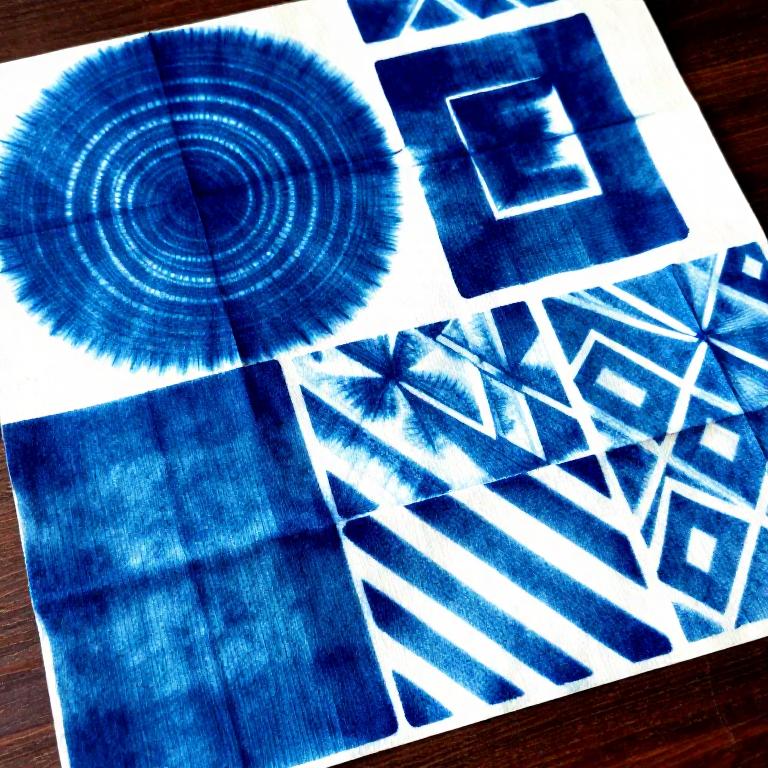


Folding and Binding Shibori Resist Patterns — Japanese Shaped-Resist Dyeing
Hướng dẫn
Prepare the Fabric
Prepare the Fabric
Wash the cotton fabric in hot water with soda ash or washing soda to remove sizing, oils, and any finishes that would prevent dye uptake. This process is called scouring. Rinse thoroughly and wring out the excess water. The fabric should be damp but not dripping when you begin binding — damp fabric folds more crisply and holds its shape better than dry fabric. Iron the damp fabric flat if it has wrinkled, as creases will create unintended resist marks. Cut the fabric into manageable pieces (30cm x 30cm squares work well for practice) or work with a full length for a finished textile.
Vật liệu cho bước này:
 Vải bông hữu cơ1-2 metres cái
 Bông5-10m m
 Bộ thùng nhuộm chàmprepared vat cái
 Vồ gỗ2 matching pieces cái
 Dây thun10-20 cái
Công cụ cần thiết:
 Bộ chỉ và kim nhồi bông tiêu bản
 Thanh chốt gỗ
Apply Resist Techniques
Apply Resist Techniques
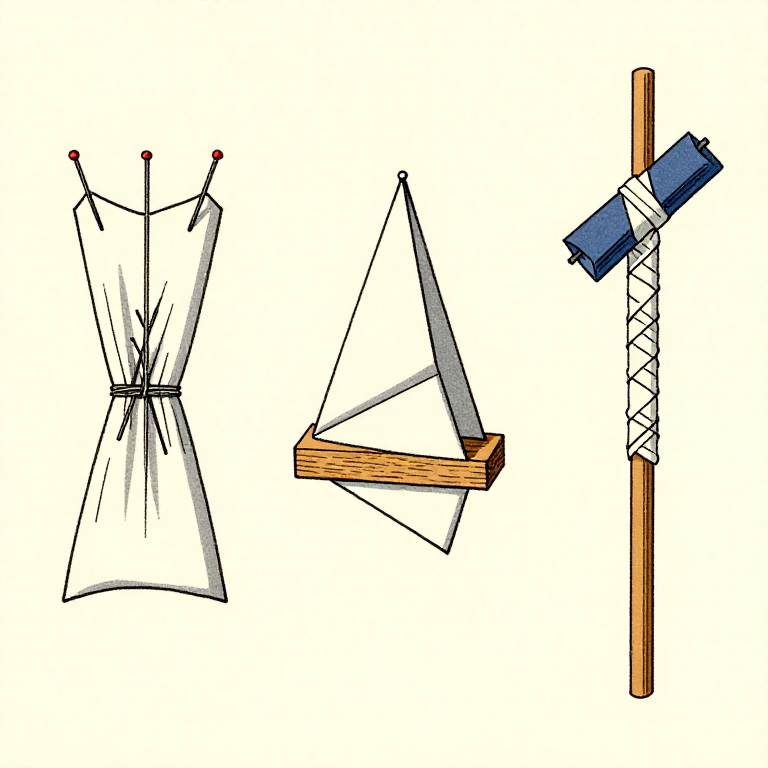
Choose one or more shibori resist techniques. For kumo (spider web) shibori, pinch a point of fabric, pull it into a peak, and bind it tightly with string at intervals down the peak — each bound section creates a concentric ring when opened. For itajime (clamp resist), fold the fabric into a precise accordion then fold again into triangles or squares, and clamp between two identical wooden shapes — the clamped areas remain undyed, creating geometric repeating patterns. For arashi (storm) shibori, wrap the fabric diagonally around a pole, push it into compressed pleats along the pole, and bind it in place — this creates diagonal stripe patterns. Each technique can be combined with others on a single piece of fabric for complex overlapping designs.
Dye the Bound Fabric
Dye the Bound Fabric
Submerge the bound fabric in a prepared indigo vat (or other dye bath). Keep it submerged for 3-5 minutes, gently squeezing to encourage dye penetration into the exposed areas while the bound, clamped, or stitched areas resist absorption. Remove and oxidize in the air for 15-20 minutes. The key to crisp shibori patterns is tight, secure binding — any areas where the binding has loosened will allow dye to seep in, blurring the pattern. Repeat the dip-and-oxidize cycle 3-5 times for medium indigo blue, more for darker shades. With itajime clamping, the clamps can be tightened between dips if they have loosened.
Unbind and Reveal the Pattern
Unbind and Reveal the Pattern
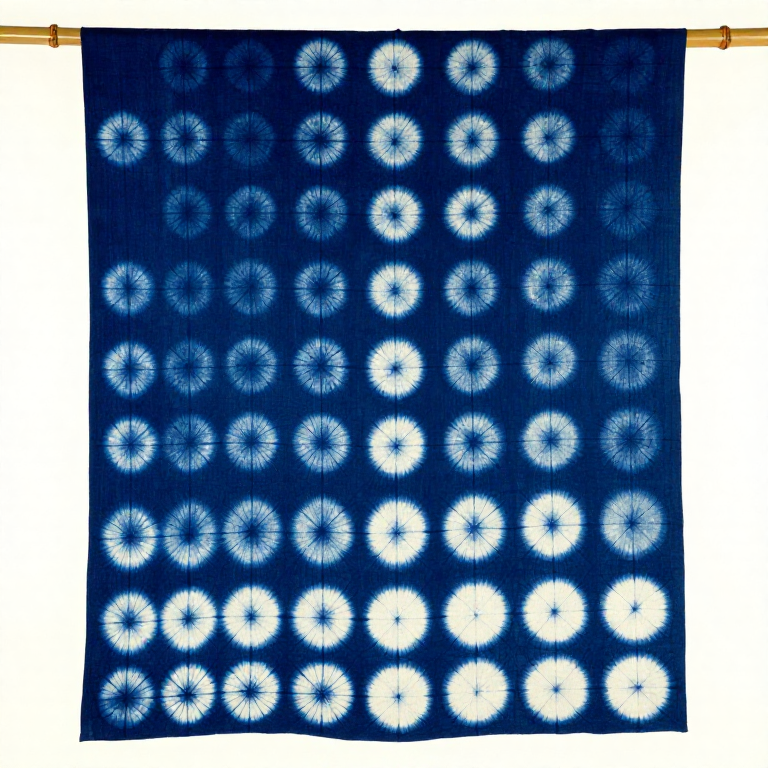
After the final dye dip and oxidation, carefully remove all string, clamps, or stitching while the fabric is still damp. Unclamp itajime pieces gently to avoid tearing wet fabric. Cut and pull stitching threads slowly. The resist areas appear white or very light against the dyed ground, revealing the shibori pattern for the first time. This moment of unfolding is one of the most rewarding aspects of shibori — the pattern is never fully predictable because small variations in folding tension, binding tightness, and dye penetration create unique results even when following the same technique repeatedly.
Rinse and Set the Pattern
Rinse and Set the Pattern
Rinse the unbound fabric in cold running water until the water runs clear. Avoid wringing or twisting, which can distort the still-wet fabric and blur crisp pattern edges. Lay the fabric flat or hang it to dry away from direct sunlight. The pattern is now permanent — indigo bonds mechanically to the cotton fibres and does not wash out. If using dyes other than indigo, follow the specific setting instructions for that dye (heat setting, vinegar rinse, etc.). Once dry, the fabric can be ironed on a medium setting. Traditional Edo-period shibori textiles were used for kimono, noren (door curtains), furoshiki (wrapping cloths), and tenugui (hand towels).
Vật liệu
5- 1-2 metres cáiTạm thời
- 5-10m mTạm thời
- prepared vat cáiTạm thời
- 2 matching pieces cáiTạm thời
- 10-20 cáiTạm thời
Công cụ yêu cầu
5- Tạm thời
- Tạm thời
- C-clamps or large binder clips
- Tạm thời
- Tạm thời
Bản thiết kế này làm ra

CC0 Phạm vi công cộng
Bản thiết kế này được phát hành theo CC0. Bạn tự do sao chép, sửa đổi, phân phối và sử dụng cho bất kỳ mục đích nào mà không cần xin phép.
Hỗ trợ nhà sáng tạo bằng cách mua sản phẩm qua bản thiết kế, nơi họ nhận Hoa hồng nhà sáng tạo do nhà bán hàng đặt, hoặc tạo phiên bản mới và kết nối trong bản thiết kế riêng để chia sẻ doanh thu.