

Egyptian Emmer Bread — Baking Emmer Wheat Flatbread in a Clay Oven
Hướng dẫn
Mill the Emmer Wheat
Mill the Emmer Wheat
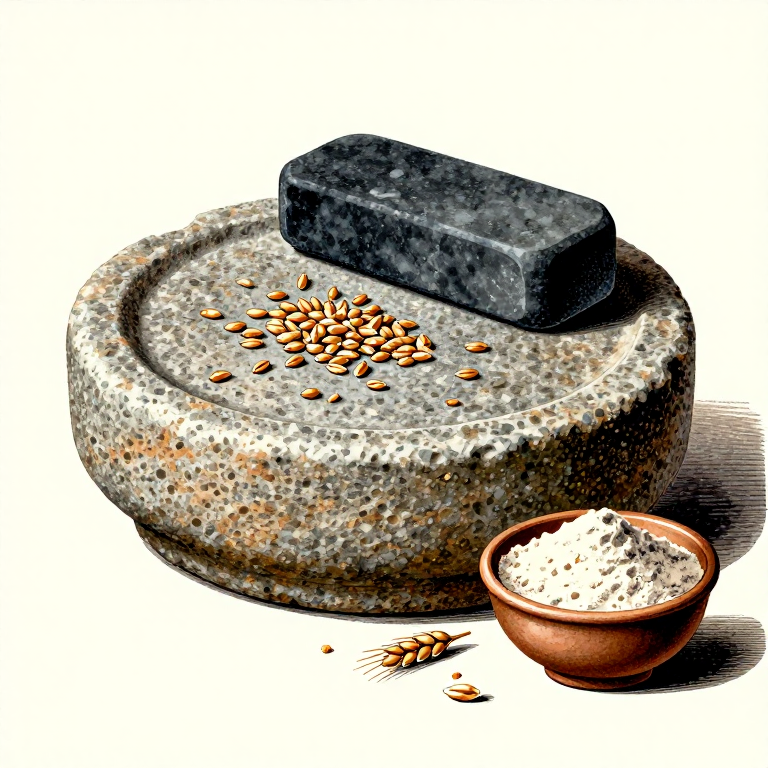
If starting with whole emmer grain, the husks must first be removed. Unlike modern free-threshing wheat, emmer is a hulled grain — the glumes (husks) cling tightly to the kernels and must be pounded off in a mortar before milling. Pound small batches in a stone mortar, then winnow by tossing the grain in a light breeze to separate the chaff. Grind the dehusked kernels on a saddle quern (a flat grinding stone with a rubbing stone) to produce a coarse flour. Egyptian bread frequently contained sand particles from the grinding stones, which caused severe dental wear visible in ancient Egyptian mummies. If using pre-milled emmer flour, sift it through a coarse sieve to remove the largest bran particles while retaining the nutritious germ.
Vật liệu cho bước này:
 Whole Wheat Flour500 g g
 Water300-350 ml ml
 Salt5 g (1 tsp) g
 Yeast Culture100 g g
Công cụ cần thiết:
 Grain Mill
 Mixing Bowl Set
 Flat paddle or board for shaping
Mix and Knead the Dough
Mix and Knead the Dough
Place the emmer flour in a mixing bowl and add salt. Create a well in the center and pour in warm water gradually, mixing as you go. Emmer flour absorbs water differently from modern wheat — it needs slightly less water and produces a stickier, less elastic dough because it has lower gluten content and a different gluten structure. If using a sourdough starter, mix it in with the water for a leavened bread with a tangy flavor. Knead the dough for 5-10 minutes until it holds together in a cohesive mass. Do not overknead — emmer dough becomes gummy rather than smooth and elastic like modern bread dough. Cover and rest the dough for 30-60 minutes, or overnight if using sourdough for slow fermentation.
Shape the Flatbreads
Shape the Flatbreads
Divide the rested dough into portions of approximately 100-120 g each. Shape each portion into a ball, then flatten it on a lightly floured surface into a round disc approximately 15-20 cm in diameter and 1-2 cm thick. Emmer dough does not stretch easily, so pat and press rather than pulling. Many Egyptian bread forms were discovered at sites like Deir el-Medina, showing round, triangular, and even animal-shaped loaves. Some tomb models show bread baked in conical clay molds called bedja. For this basic recipe, flat round loaves are the simplest and most common form. Dock the surface by pressing several shallow impressions to prevent large air bubbles during baking.
Heat the Oven and Bake
Heat the Oven and Bake
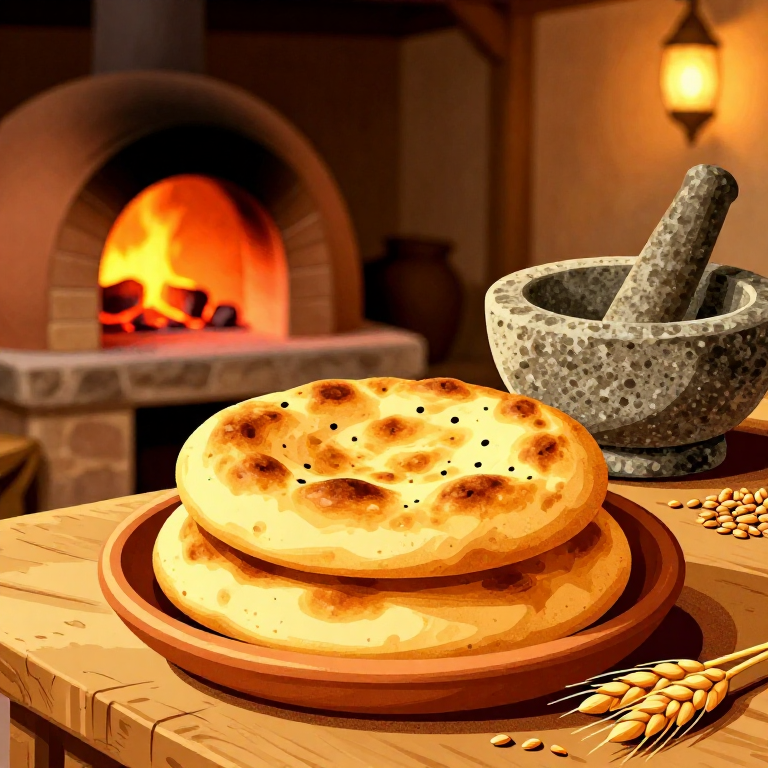
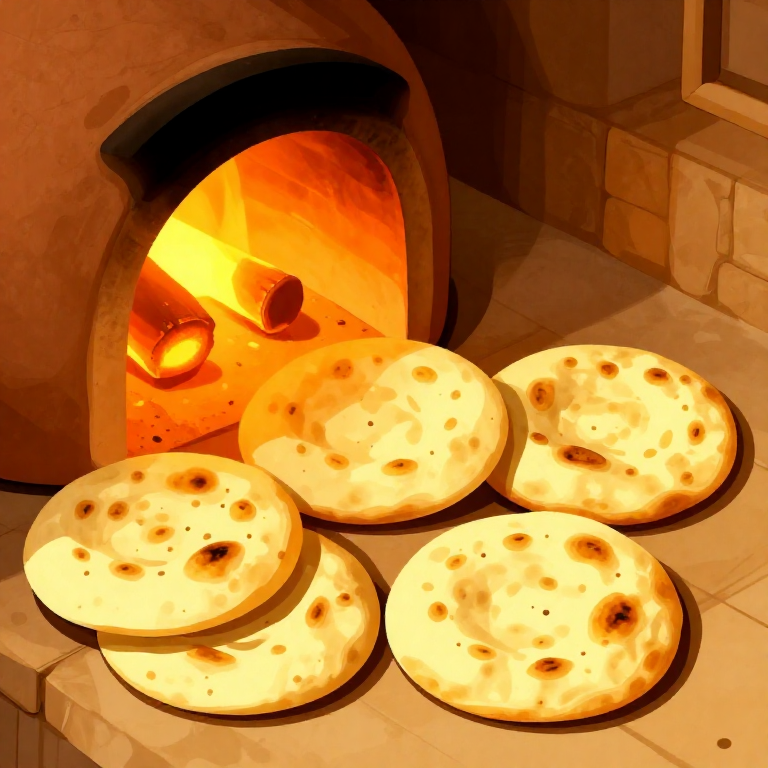
Heat a clay oven, tandoor, or thick baking stone until very hot — approximately 250-300 degrees Celsius at the baking surface. Ancient Egyptian ovens were cylindrical clay structures, open at the top, heated with wood or dried animal dung fuel. Once the interior walls are hot, the fire is raked out or pushed to one side. Slide the shaped flatbreads directly onto the hot oven floor or baking stone. The bread bakes quickly at high heat — 8-12 minutes for unleavened bread, or 15-20 minutes for sourdough-leavened loaves. The bottom should develop a crisp, golden-brown crust while the interior remains soft. Ancient Egyptian bakeries, as depicted in the tomb of Ramesses III at Medinet Habu, were large-scale operations producing hundreds of loaves daily to feed temple workers.
Cool and Serve the Bread
Cool and Serve the Bread
Remove the baked flatbreads from the oven using a paddle and place them on a reed mat or wooden board to cool slightly. The bread should sound hollow when tapped on the bottom, indicating the interior is fully baked. Emmer flatbread has a distinctive nutty, earthy flavor quite different from modern wheat bread, with a denser crumb and slightly gritty texture from the coarser flour. Bread was the cornerstone of the ancient Egyptian diet and economy — workers at Deir el-Medina were paid partly in bread rations, and the Egyptian word for bread (ta) appears in countless offering formulae. Eat the bread fresh, as it dries out quickly without modern preservatives. It pairs well with honey, sesame paste, or fresh vegetables.
Vật liệu
4- 500 g gTạm thời
- 300-350 ml mlTạm thời
- 100 g gTạm thời
- 5 g (1 tsp) cáiTạm thời
Công cụ yêu cầu
6- Tạm thời
- Tạm thời
- Clay oven, tandoor, or heavy baking stone
- Tạm thời
- Tạm thời
- Tạm thời
CC0 Phạm vi công cộng
Bản thiết kế này được phát hành theo CC0. Bạn tự do sao chép, sửa đổi, phân phối và sử dụng cho bất kỳ mục đích nào mà không cần xin phép.
Hỗ trợ nhà sáng tạo bằng cách mua sản phẩm qua bản thiết kế, nơi họ nhận Hoa hồng nhà sáng tạo do nhà bán hàng đặt, hoặc tạo phiên bản mới và kết nối trong bản thiết kế riêng để chia sẻ doanh thu.