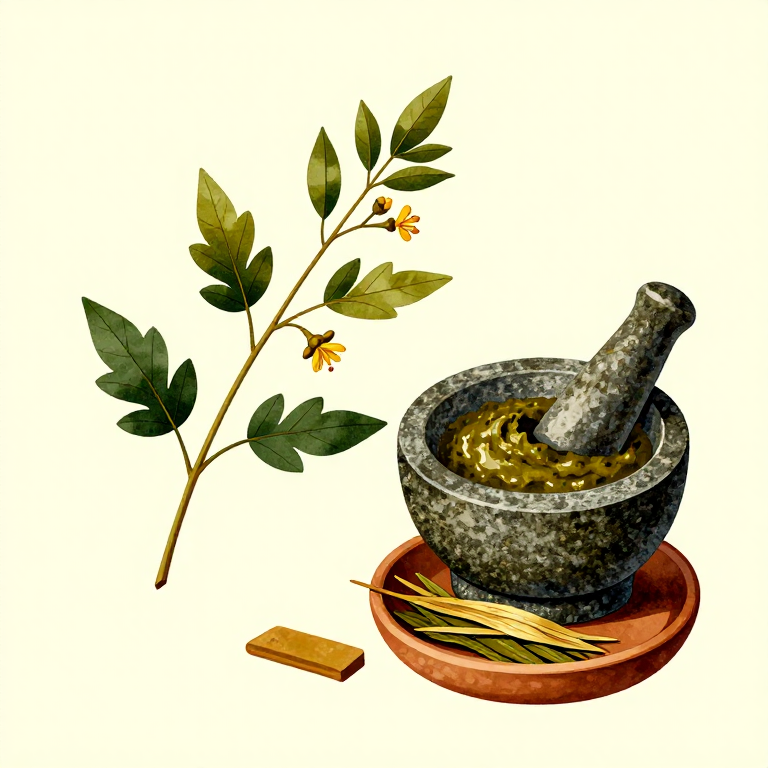


Egyptian Henna Dye — Preparing Henna Paste for Body Decoration
Hướng dẫn
Grind the Dried Henna Leaves
Grind the Dried Henna Leaves
Place dried Lawsonia inermis leaves in a stone mortar and grind to a fine powder. Leaves should be bright green when freshly dried — brown or dull-colored leaves indicate age and produce weaker stain. Sieve through fine mesh to remove stems, leaf veins, or coarse particles. The finer the powder, the smoother the paste and the more even the stain. The active dye molecule is lawsone (2-hydroxy-1,4-naphthoquinone), concentrated in leaves at 1-2% by dry weight. This molecule binds to keratin protein in skin, hair, and nails through a Michael addition reaction, producing a permanent reddish-brown stain that fades only as stained cells naturally exfoliate.
Vật liệu cho bước này:
 Chanh vàng3-4 for juice cái
Công cụ cần thiết:
 Cối và chày
 Rây lọc trà lưới mịn
Mix the Paste with Acidic Liquid
Mix the Paste with Acidic Liquid
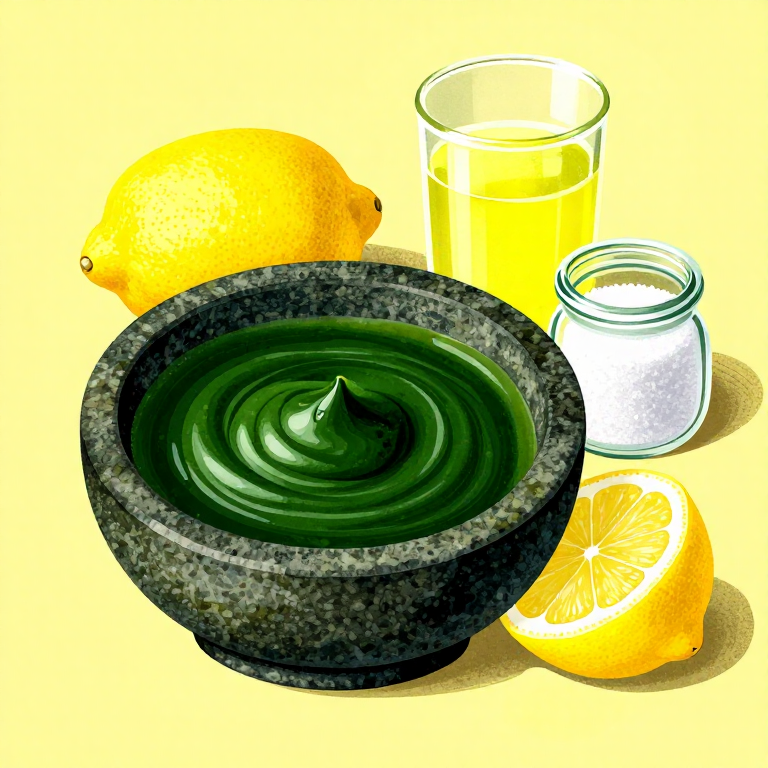
Place sifted henna powder in a non-metallic bowl (metal can react with lawsone). Gradually add lemon juice or mildly acidic liquid (pH 4-5.5) while stirring until the mixture forms thick paste with the consistency of mashed potatoes. The acid breaks down cellulose in leaf cells and releases lawsone from its bound sugar form (hennosides) into free lawsone. Add a tablespoon of sugar to improve skin adhesion without cracking. Optionally, add essential oil containing monoterpene compounds, which enhance lawsone release and skin penetration.
Vật liệu cho bước này:
Chanh vàng150-200ml juice cái Đường trắng1 tablespoon cái
 Tinh dầu thảo mộc5-10 drops cái
Công cụ cần thiết:
 Bộ tô trộn
Allow the Dye to Release
Allow the Dye to Release
Cover the paste with plastic wrap or damp cloth pressed onto the surface. Allow to rest at room temperature (20-25 degrees Celsius) for 8-12 hours, or in warmth (30-35 degrees Celsius) for 4-6 hours. During this dye release period, lawsone molecules migrate from leaf cells into the liquid phase, becoming available to bind keratin. The paste darkens from bright green to brownish-green. Test by applying a small dot to a fingertip — if it stains orange within 10-15 minutes, dye release is complete. In ancient Egypt's warm climate, dye release would have occurred naturally within a few hours.
Công cụ cần thiết:
 Vải (để lọc)
Apply the Henna Paste
Apply the Henna Paste
Apply the rested paste to clean, dry skin in desired patterns using a small stick, cone, or brush, in a layer approximately 2-3 mm thick. Ancient Egyptians applied henna to fingernails, palms, soles, and hair. The mummy of Ramesses II showed henna-stained hair, suggesting its use even for pharaohs. The paste must remain moist and in contact with skin for 2-6 hours for light stains, 6-12 hours for deep color. Wrap the pasted area gently to maintain moisture. Body heat and paste moisture drive lawsone molecules into the keratin layer.
Remove the Paste and Develop the Stain
Remove the Paste and Develop the Stain
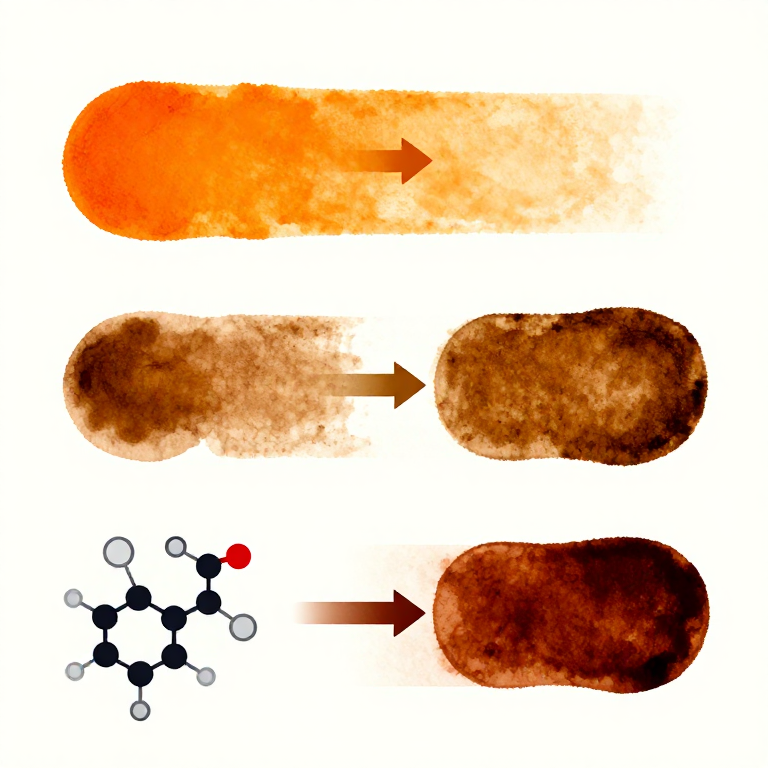
Scrape or peel the dried paste off — do not wash with water, as water interferes with the final oxidation stage. The initial stain appears bright orange. Over 24-48 hours, the lawsone-keratin complex oxidizes when exposed to air, deepening to rich reddish-brown or mahogany. The stain on palms and soles (thickest keratin) is darkest and longest-lasting, persisting 2-4 weeks. On thinner skin it fades within 1-2 weeks as epidermal cells naturally shed. Ancient Egyptian women were frequently depicted with reddish fingertips and palms, consistent with regular henna use.
Vật liệu
6- 3-4 for juice cáiTạm thời
- 1 tablespoon cáiTạm thời
- 5-10 drops cáiTạm thời
- 100 g cáiTạm thời
- 150-200 ml cáiTạm thời
- 5-10 drops cáiTạm thời
Công cụ yêu cầu
4- Tạm thời
- Tạm thời
- Tạm thời
- Tạm thời
CC0 Phạm vi công cộng
Bản thiết kế này được phát hành theo CC0. Bạn tự do sao chép, sửa đổi, phân phối và sử dụng cho bất kỳ mục đích nào mà không cần xin phép.
Hỗ trợ nhà sáng tạo bằng cách mua sản phẩm qua bản thiết kế, nơi họ nhận Hoa hồng nhà sáng tạo do nhà bán hàng đặt, hoặc tạo phiên bản mới và kết nối trong bản thiết kế riêng để chia sẻ doanh thu.