

Egyptian Natron Salt — Harvesting and Processing Natron Salt
Hướng dẫn
Understand Natron and Its Sources
Understand Natron and Its Sources
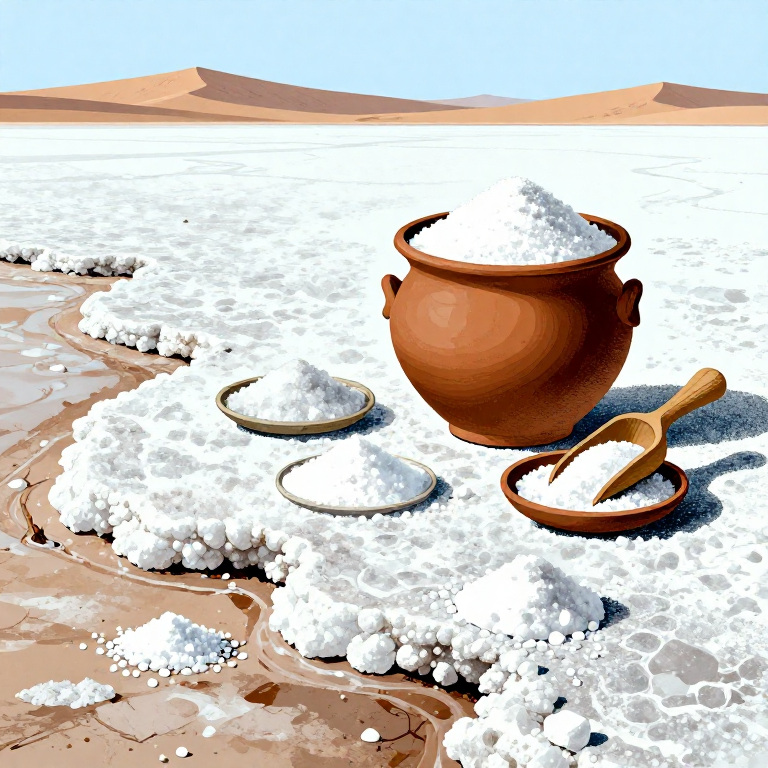
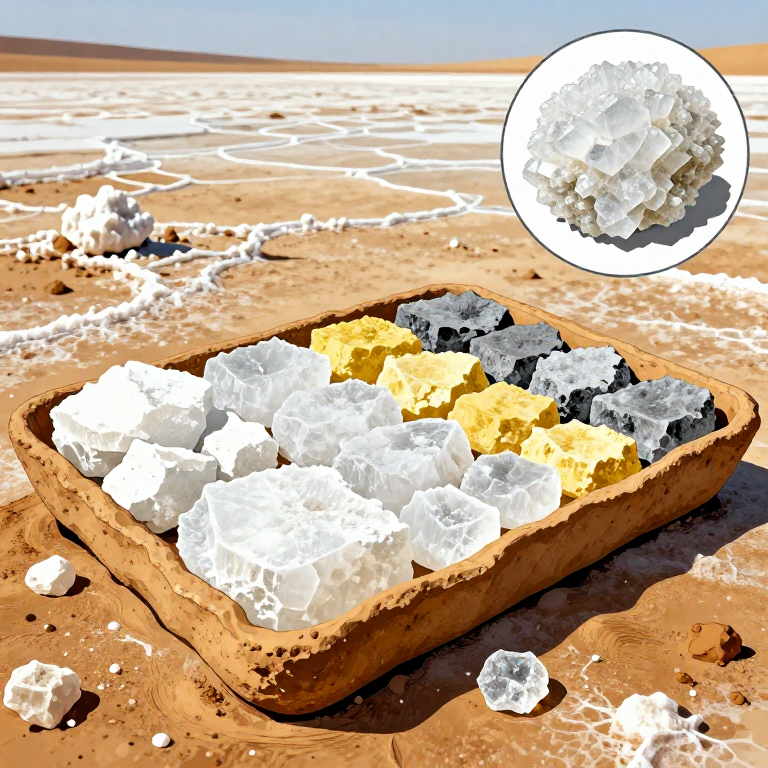
Natron is a naturally occurring evaporite mineral deposit found on the shores and beds of alkaline lakes, most famously at Wadi Natrun approximately 100 km northwest of Cairo. The mineral is a mixture of sodium carbonate decahydrate (Na2CO3-10H2O), sodium bicarbonate (NaHCO3), and smaller quantities of sodium chloride and sodium sulphate. It forms when sodium-rich groundwater seeps into shallow lakes and evaporates in the intense desert heat, concentrating dissolved salts into crystalline crusts. Raw natron appears as white to yellowish-grey crystalline deposits, sometimes with a pinkish tint from iron impurities. The ancient Egyptians called it netjeri, closely associated with ritual purity and divine preservation.
Vật liệu cho bước này:
 Khoáng natron thô500 g g
 Nước2-3 liters cái
 Vải (để lọc)1 piece, 50x50 cm cái
Công cụ cần thiết:
 Khay gốm
 Khay gốm nông
 Bộ thìa gỗ
 Cối và chày
Collect and Sort the Raw Natron
Collect and Sort the Raw Natron
Raw natron can be gathered directly from dried lake beds where it forms crusts and efflorescent deposits on the surface. Break off chunks of the crystalline deposit and sort them by purity — the whitest, cleanest crystals contain the highest proportion of sodium carbonate. Discard fragments heavily discolored by mud, organic matter, or iron staining. The natron should feel dry and slightly chalky, with a bitter, soapy taste. If raw natron is unavailable, commercial sodium carbonate (washing soda or soda ash) is chemically identical to the primary component of natural natron. Handle with care as concentrated sodium carbonate is mildly caustic and can irritate skin.
Dissolve and Filter for Purification
Dissolve and Filter for Purification
To purify the raw natron, dissolve it in warm water at a ratio of approximately 1 part natron to 3 parts water, stirring until fully dissolved. Insoluble impurities — sand, clay, iron compounds — will settle to the bottom or remain in suspension. Filter the solution through clean linen into a separate vessel, leaving sediment behind. For highest purity, repeat the dissolving and filtering process. The resulting clear solution contains primarily dissolved sodium carbonate and sodium bicarbonate. Ancient Egyptians likely performed this purification for applications requiring clean natron, such as mummification and cosmetic use, though cruder unrefined natron sufficed for cleaning and metallurgical flux.
Evaporate to Recrystallize
Evaporate to Recrystallize
Pour the filtered natron solution into shallow ceramic trays and place them in direct sunlight or a warm, dry location. As the water slowly evaporates, pure natron crystals form on the surface and sides of the tray. In the Egyptian desert climate, evaporation occurs rapidly, but in temperate climates this may take several days. Do not heat the solution over a fire, as rapid boiling produces fine powder rather than clean crystals. The recrystallized natron will be significantly purer and whiter than the original raw mineral. Once most water has evaporated, scrape up the crystalline deposit and spread it on a clean surface to dry completely.
Grade and Store for Different Uses
Grade and Store for Different Uses
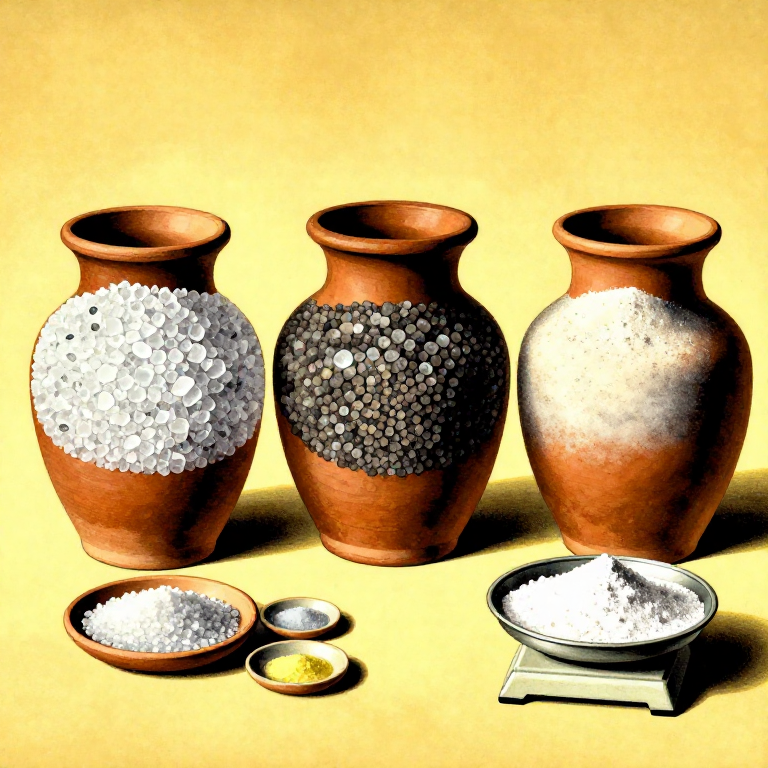
Grind the dried natron crystals to the desired fineness using a mortar and pestle. For mummification, a coarse granular grade was packed around and inside the body to desiccate it over a 40-day period, as described by Herodotus — the sodium carbonate absorbs moisture and creates a strongly alkaline environment that inhibits bacterial decomposition. For faience and glass-making, finely ground natron served as the sodium flux that lowers the melting point of silica. For cleaning, natron was mixed with oil to create a primitive soap, and dissolved in water it served as a mild bleaching agent for linen. Store the processed natron in sealed ceramic jars in a dry location, as it is hygroscopic and will absorb atmospheric moisture if left exposed.
Vật liệu
3- 500 g gTạm thời
- 2-3 liters cáiTạm thời
- 1 piece, 50x50 cm cáiTạm thời
Công cụ yêu cầu
6- Tạm thời
- Tạm thời
- Tạm thời
- Tạm thời
- Tạm thời
- Tạm thời
Vật liệu bản thiết kế liên kết


Bản thiết kế này làm ra

CC0 Phạm vi công cộng
Bản thiết kế này được phát hành theo CC0. Bạn tự do sao chép, sửa đổi, phân phối và sử dụng cho bất kỳ mục đích nào mà không cần xin phép.
Hỗ trợ nhà sáng tạo bằng cách mua sản phẩm qua bản thiết kế, nơi họ nhận Hoa hồng nhà sáng tạo do nhà bán hàng đặt, hoặc tạo phiên bản mới và kết nối trong bản thiết kế riêng để chia sẻ doanh thu.