NGHỆ THUẬT
LÀM ĐẸP VÀ SỨC KHỎE
THỦ CÔNG
VĂN HÓA VÀ LỊCH SỬ
GIẢI TRÍ
MÔI TRƯỜNG
THỰC PHẨM VÀ ĐỒ UỐNG
KỸ THUẬT NGƯỢC
KHOA HỌC
THỂ THAO
CÔNG NGHỆ
THIẾT BỊ ĐEO
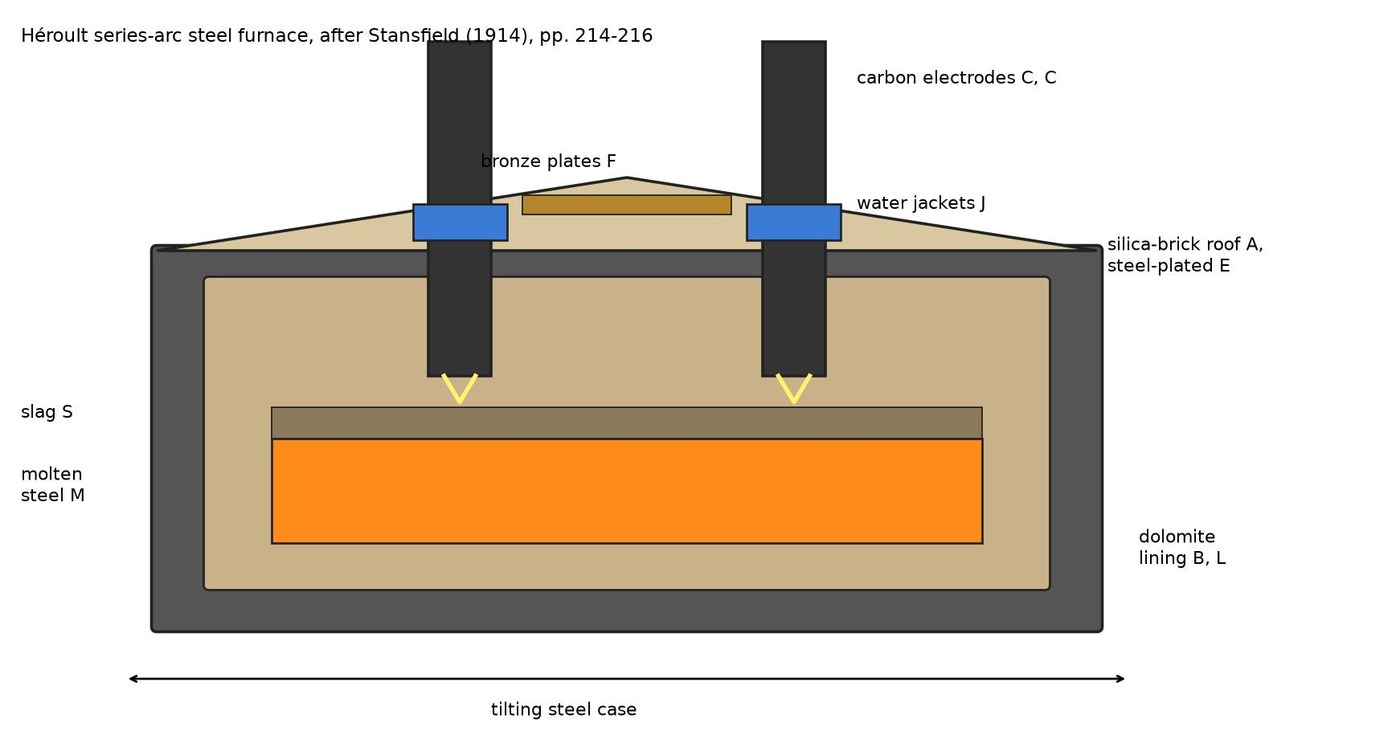

Electric Arc Furnace: the Héroult Series-Arc Steel Furnace (Stansfield, 1914)
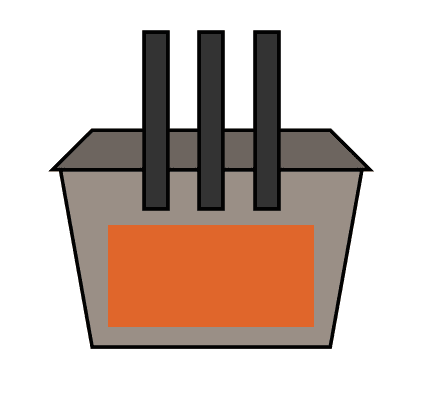
Héroult's steel furnace: a tilting hearth like an open-hearth furnace, lined with dolomite, with two carbon electrodes coming down through the roof. The current goes down one electrode, arcs into the slag, passes through the molten steel and arcs back up the other, so the heat goes straight into the metal.
Result: an electric steel furnace about 7 x 4 ft inside for a 3 ton charge, run at about 350 kW and 110 V.
Source: A. Stansfield, The Electric Furnace, 2nd ed. (1914), pp. 115-116, 214-216. Unknown: case and tilting gear details, electrode size. Picture: a drawn diagram (Fig. 93 is blank in the scan).
Chuyên gia
Unknown
Hướng dẫn
1
1
Build the case and lining
Build the case and lining
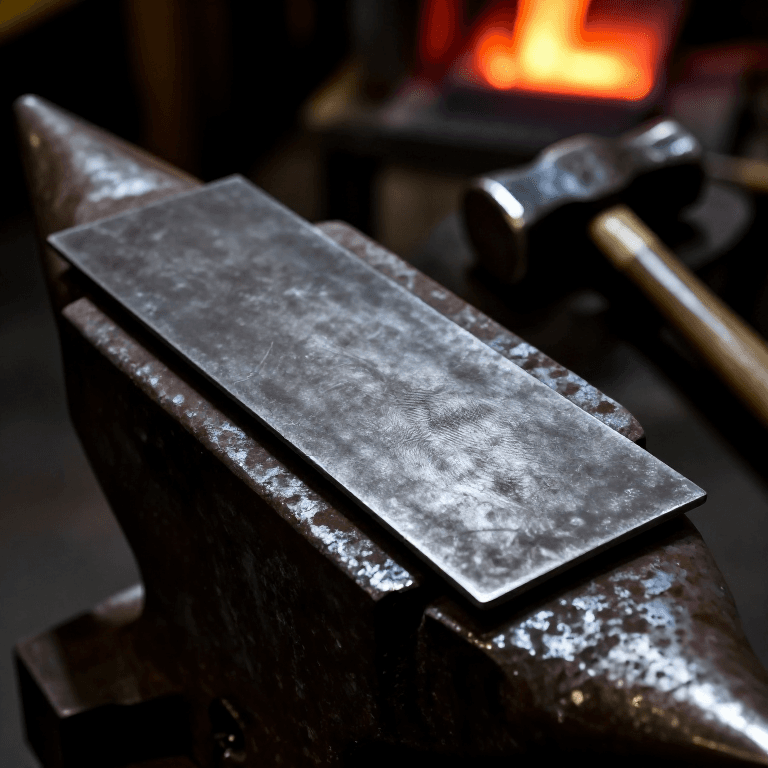
Build the furnace in a steel case on a tilting mounting, about 7 x 4 ft inside, with charging doors at the ends. Line it with dolomite bricks and crushed dolomite; dolomite or magnesite on the hearth, which allows strongly basic slags. Ours: mild steel plate. Not given: the case and tilting gear, the bricks' making.
Vật liệu cho bước này:
 Tấm thép mềm1 case
 Dolomit (đá vôi magiê)1 lining and crushed dolomite
 Khối magnesit1 hearth, if magnesite
Công cụ cần thiết:
 Máy hàn hồ quang
 Bay xây
 Kích thước chưa rõ
2
2
Make the removable roof
Make the removable roof
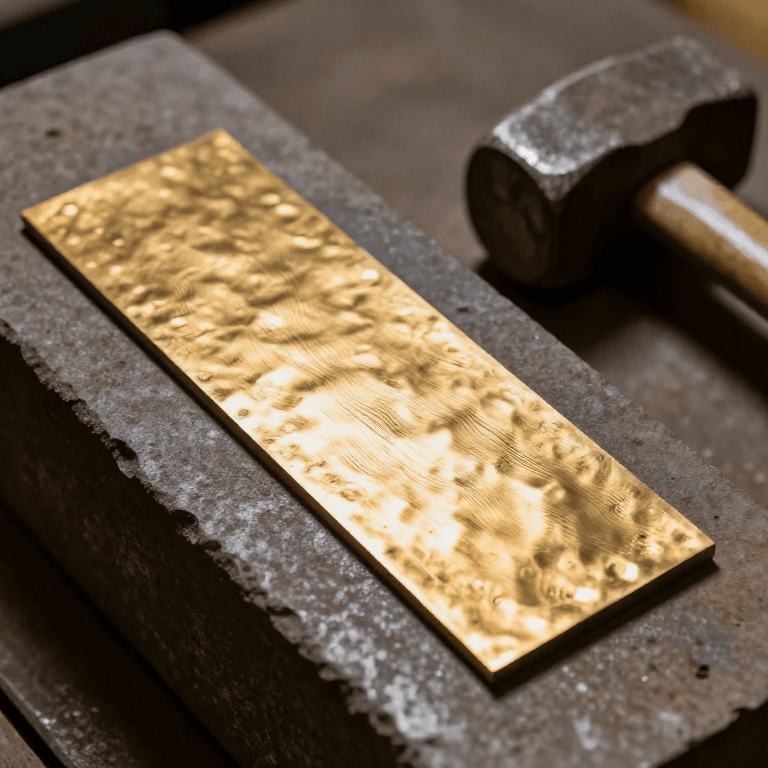
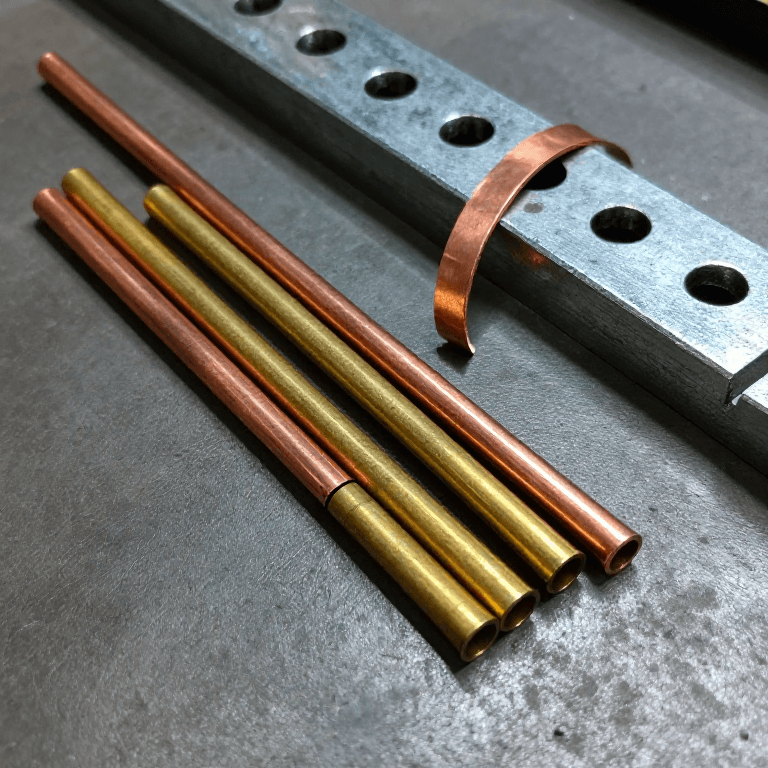
Make the roof of silica brick, covered with steel plates and given eyes so it can be lifted off. Between the two electrode holes use bronze plates instead of steel, because steel there would raise the inductance of the AC circuit. Fit water jackets round each electrode hole for a close fit, so less heat escapes and the electrodes do not burn in the air. Ours: copper tube for the water jackets. Silica brick has no head here.
Vật liệu cho bước này:
 Vật liệu không rõ1 silica brickTấm thép mềm1 roof plates
 Tấm đồng thiếc1 plates between electrodes
 Ống đồng1 water jackets
Công cụ cần thiết:
Máy hàn hồ quang Máy khoan bàn
 Nước
3
3
Hang the electrodes
Hang the electrodes
Use two vertical carbon electrodes, square in section. Carry each in a holder on an arm supported by the furnace itself, so its height does not change when the furnace tilts: four contact pieces round the electrode, drawn tight by a steel strap and a screw in the arm, with the cable bolted to them. Raise and lower each electrode separately, by a regulator controlled by the voltage between it and the metal. Not given: electrode size, the regulator's build.
Vật liệu cho bước này:
 Điện cực cacbon2 electrodes
 Kim loại chưa rõ1 holders, arms, contact pieces
Công cụ cần thiết:
Máy khoan bàn4
4
Melt and refine a charge
Melt and refine a charge
Charge steel scrap with some iron ore and lime. Keep each electrode a little above the slag, leaving room for its arc. Regulate the current by hand while the scrap melts, then switch to automatic; full power only after about an hour. Pour off the slag and make a second, then a third, with lime and a little sand and fluorspar, before the final additions. At La Praz this took about 350 kW at 110 V: 5 hours for 1.25 tons of low-carbon steel, 8 hours for 2.33 tons of high-carbon steel. Not given: the electric supply.
Công cụ cần thiết:
NướcVật liệu
8- 1 roof platesTạm thời
- 1 lining and crushed dolomiteTạm thời
- 1 hearth, if magnesiteTạm thời
- 1 silica brickTạm thời
- 1 plates between electrodesTạm thời
- 1 water jacketsTạm thời
- 2 electrodesTạm thời
- 1 holders, arms, contact piecesTạm thời
Vật liệu bản thiết kế liên kết

Bản thiết kế này làm ra
CC0 Phạm vi công cộng
Bản thiết kế này được phát hành theo CC0. Bạn tự do sao chép, sửa đổi, phân phối và sử dụng cho bất kỳ mục đích nào mà không cần xin phép.
Hỗ trợ nhà sáng tạo bằng cách mua sản phẩm qua bản thiết kế, nơi họ nhận Hoa hồng nhà sáng tạo do nhà bán hàng đặt, hoặc tạo phiên bản mới và kết nối trong bản thiết kế riêng để chia sẻ doanh thu.