NGHỆ THUẬT
LÀM ĐẸP VÀ SỨC KHỎE
THỦ CÔNG
VĂN HÓA VÀ LỊCH SỬ
GIẢI TRÍ
MÔI TRƯỜNG
THỰC PHẨM VÀ ĐỒ UỐNG
KỸ THUẬT NGƯỢC
KHOA HỌC
THỂ THAO
CÔNG NGHỆ
THIẾT BỊ ĐEO
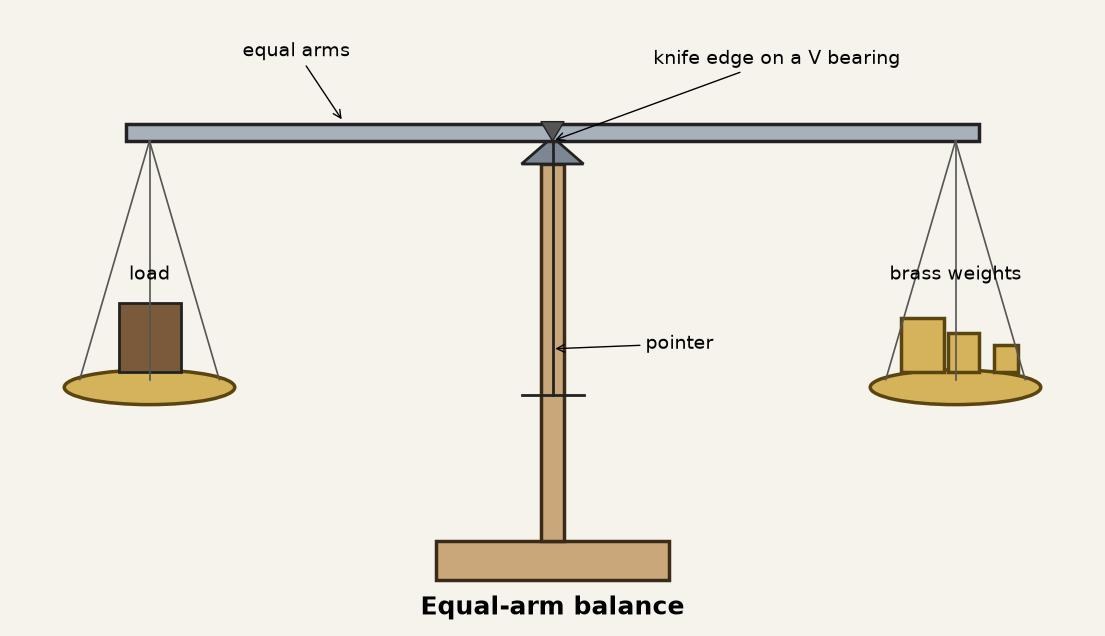


Equal-Arm Balance on a Knife Edge, with a Set of Brass Weights
The oldest weighing machine is a beam with equal arms balanced on a pivot, a pan hanging from each end: put the load in one pan and known weights in the other until the beam lies level. Balances go back to the Fourth Dynasty of Egypt. A hardened knife edge makes it sensitive and a long pointer shows the smallest tilt; the weights are cast in brass and adjusted against each other.
The picture: our diagram of the balance, its knife edge, pointer, pans and weights.
Trung cấp
Two to three days
Hướng dẫn
1
1
Beam and knife edge
Beam and knife edge
File a straight beam from flat tool steel with a hole exactly in the middle and one near each end, the two end holes equally far from the centre. Forge and file a short steel knife edge, harden and temper it, and fit it through the centre hole, edge down. File a long pointer onto the beam.
Vật liệu cho bước này:
 Thanh thép dụng cụ dẹt1 cái
Công cụ cần thiết:
 Giũa kim loại
 Khoan tay
 Thước cặp điện tử 6 inch
 Lò rèn của thợ rèn
 Thùng tôi nước
 Kính bảo hộ
2
2
Stand and bearing
Stand and bearing
Make an upright stand of hardwood with a hardened steel V-block on top, shallower than the knife edge, so the beam rocks freely. Mark a zero line behind the pointer.
Vật liệu cho bước này:
 Nan gỗ cứng2 cái
 Thanh thép mềm0.3 m
Công cụ cần thiết:
Giũa kim loạiLò rèn của thợ rènThùng tôi nước3
3
Pans
Pans
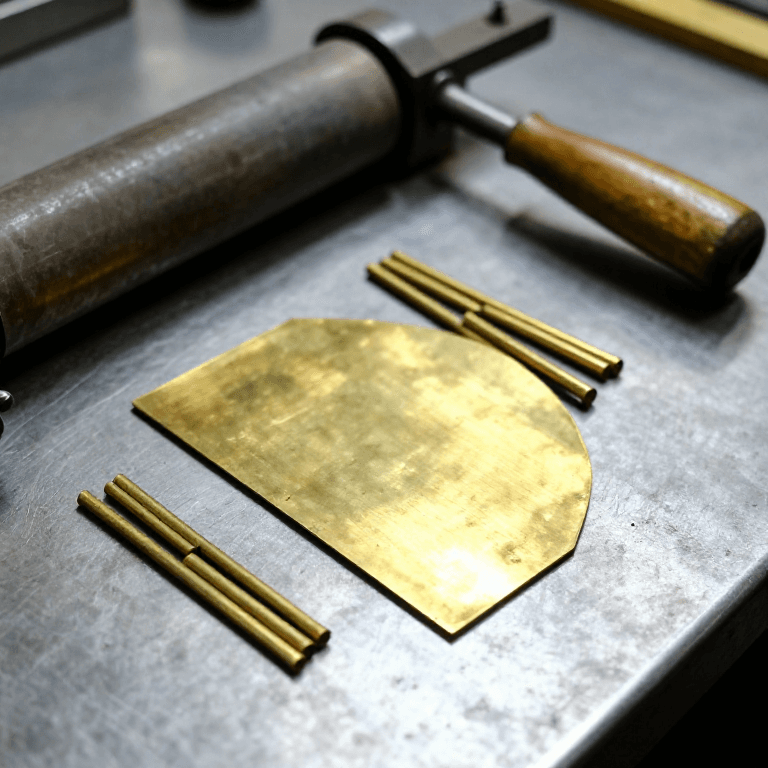
Cut two equal brass discs, dish them slightly, drill three holes in each rim and hang each from an end hole on three equal cords.
Vật liệu cho bước này:
 Tấm đồng thau1 cái
 Chỉ lanh sáp3 m
Công cụ cần thiết:
 Kéo cắt tônKhoan tayGiũa kim loại
4
4
Trim to level
Trim to level
With both pans empty, file the heavier side until the pointer rests on zero. Swap the pans and check again: if the pointer moves, the arms are unequal and the end holes need moving.
Công cụ cần thiết:
Giũa kim loại5
5
Cast the weights
Cast the weights
Melt brass and cast a row of plain cylinders a little heavy in green sand.
Vật liệu cho bước này:
 Thỏi đồng thau2 kg
 Than củi1 as required
 Cát đúc5 kg
Công cụ cần thiết:
Lò rèn của thợ rèn Nồi nấu bằng đất chịu lửa
 Kìm gắp nồi nấu kim loại
 Hòm khuôn đúc (nắp và đáy)
 Găng tay hàn
6
6
Adjust the weights
Adjust the weights
Balance the largest weight against a litre of water measured in the cylinder (one kilogram, our reference), filing it down until the beam is level. Make the smaller ones by balancing pairs against a larger one and against each other, filing each to level.
Vật liệu cho bước này:
 Nước1 lít
Công cụ cần thiết:
 Ống đong chia vạchGiũa kim loại
7
7
A binary set of weights
A binary set of weights
Đang tải sổ tay Jupyter…
8
8
Limits
Limits
The balance's form and use are as Wikipedia describes; the sizes and the water reference are ours. Water's density changes a little with temperature, so the reference is good to a few parts in a thousand.
Vật liệu
9- Tạm thời
- 2 cáiTạm thời
- 0.3 mTạm thời
- 1 cáiTạm thời
- 3 mTạm thời
- 2 kgTạm thời
- 1 as requiredTạm thời
- 5 kgTạm thời
- 1 lítTạm thời
Công cụ yêu cầu
12- Tạm thời
- Tạm thời
- Tạm thời
- Tạm thời
- Tạm thời
- Tạm thời
- Tạm thời
- Tạm thời
- Tạm thời
- Tạm thời
- Tạm thời
- Tạm thời
Bản thiết kế này làm ra
Blueprint liên quan
Các blueprint này chia sẻ kiến thức — kỹ thuật, vật liệu hoặc nguyên tắc


CC0 Phạm vi công cộng
Bản thiết kế này được phát hành theo CC0. Bạn tự do sao chép, sửa đổi, phân phối và sử dụng cho bất kỳ mục đích nào mà không cần xin phép.
Hỗ trợ nhà sáng tạo bằng cách mua sản phẩm qua bản thiết kế, nơi họ nhận Hoa hồng nhà sáng tạo do nhà bán hàng đặt, hoặc tạo phiên bản mới và kết nối trong bản thiết kế riêng để chia sẻ doanh thu.