
Extracting Antimony from Stibnite — The Ancient Cosmetic Turned Metal
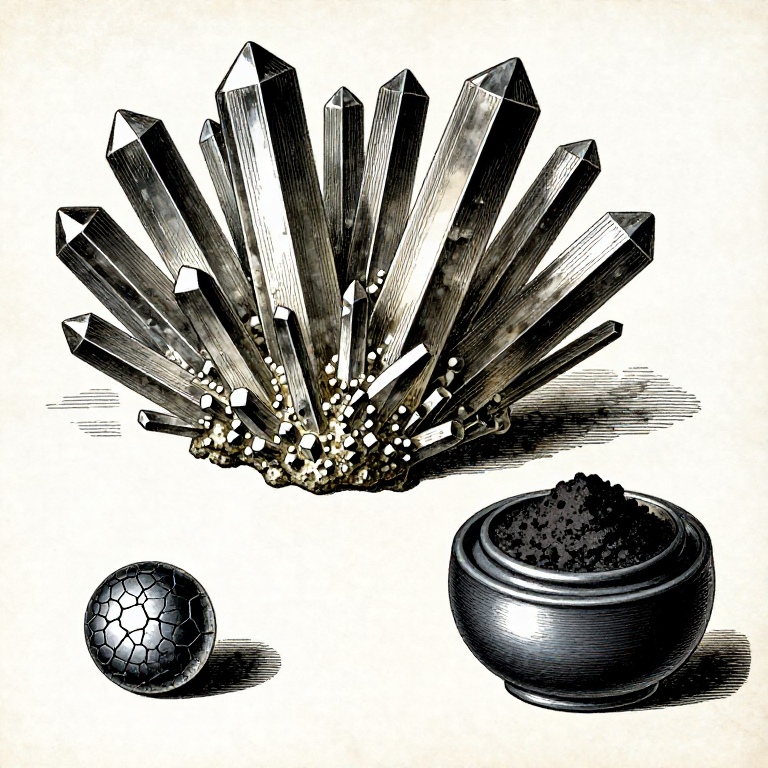
Antimony (Sb, element 51, from Latin stibium) has one of the longest histories of any element. Stibnite (antimony trisulfide, Sb₂S₃) — a lustrous, steel-grey mineral — was ground into powder and used as kohl eye cosmetic in ancient Egypt from at least 3100 BCE. The Ebers Papyrus (c. 1550 BCE) mentions it as a medicine. Yet metallic antimony was not reliably produced until the 16th century CE, when Vannoccio Biringuccio described its smelting in De la pirotechnia (1540).
Stibnite is the principal ore of antimony, containing 71.7% antimony by mass. The extraction involves two stages: first, stibnite is roasted in air to convert Sb₂S₃ to antimony trioxide (Sb₂O₃), releasing sulfur dioxide. Then the oxide is reduced with carbon at approximately 700–800 °C to yield metallic antimony. Alternatively, stibnite can be reduced directly using metallic iron in a precipitation reaction — the iron displaces antimony from the sulfide because iron has a greater affinity for sulfur.
HAZARD: Antimony and its compounds are toxic. Antimony trioxide is classified as a possible carcinogen (IARC Group 2B). Chronic exposure causes antimoniosis — a pneumoconiosis affecting the lungs. Stibine gas (SbH₃), while not produced in this process, is extremely toxic. Work outdoors with respiratory protection. Wash hands thoroughly after handling antimony or its ores.
Nội dung nguy hiểm
Blueprint này chứa các quy trình nguy hiểm. Đăng nhập và bật nội dung nguy hiểm trong cài đặt tài khoản của bạn để xem hướng dẫn từng bước.
Đăng nhậpBản thiết kế này làm ra
CC0 Phạm vi công cộng
Bản thiết kế này được phát hành theo CC0. Bạn tự do sao chép, sửa đổi, phân phối và sử dụng cho bất kỳ mục đích nào mà không cần xin phép.
Hỗ trợ nhà sáng tạo bằng cách mua sản phẩm qua bản thiết kế, nơi họ nhận Hoa hồng nhà sáng tạo do nhà bán hàng đặt, hoặc tạo phiên bản mới và kết nối trong bản thiết kế riêng để chia sẻ doanh thu.