NGHỆ THUẬT
LÀM ĐẸP VÀ SỨC KHỎE
THỦ CÔNG
VĂN HÓA VÀ LỊCH SỬ
GIẢI TRÍ
MÔI TRƯỜNG
THỰC PHẨM VÀ ĐỒ UỐNG
KỸ THUẬT NGƯỢC
KHOA HỌC
THỂ THAO
CÔNG NGHỆ
THIẾT BỊ ĐEO
The Fabry-Perot Optical Cavity
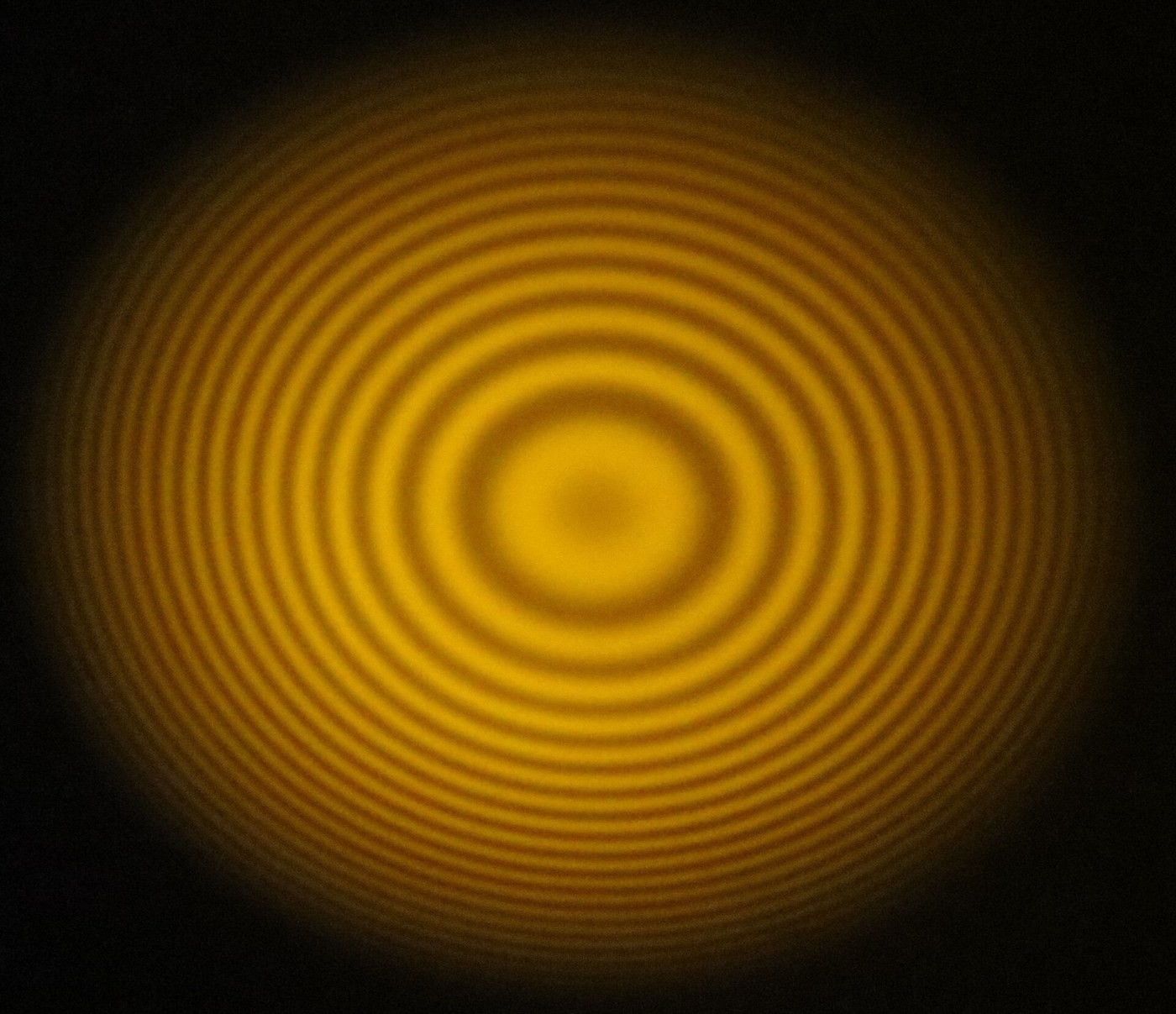
Charles Fabry and Alfred Perot built their interferometer in 1899 to measure wavelengths more precisely than a prism could. Two partly-reflecting surfaces facing each other, and light bouncing between them until only the wavelengths that come back in step survive.
For sixty years it was a spectroscopist's instrument. Then in 1958 Arthur Schawlow and Charles Townes wrote the paper that turned it into the other half of every laser ever built. Their problem was this: a microwave maser uses a closed metal cavity sized to the wavelength. At optical wavelengths that cavity would be a few hundred nanometres across and would support an unusable forest of modes. Their answer was to stop trying to close it. Two mirrors facing each other, open at the sides, throw away everything travelling off-axis and keep a clean comb of frequencies spaced by c/2L.
That is why every laser in this batch has mirrors, and why the diode's cleaved facets count as mirrors too. Before you can understand any laser you have to understand the box.
This blueprint is fully buildable. You will make an etalon out of a microscope slide, find the fringes, measure the free spectral range against a caliper reading, and measure the finesse from the sharpness of a fringe. Two numbers, two independent causes: length sets the spacing, mirrors set the sharpness.
Trung cấp
3 hours
Hướng dẫn
1
1
Make an etalon and find the fringes
Make an etalon and find the fringes
Clean one microscope slide with isopropyl alcohol and let it dry. Hold it at a slight angle in the beam of a class-2 red laser pointer, about 2 m from a white wall. Wear the safety glasses; never look along the beam.
You will see a set of nested rings or straight bars on the wall. That is the slide's two surfaces acting as a low-reflectivity Fabry-Perot etalon: R is only about 0.04 per surface, so the fringes are broad, but they are there.
Measure the slide thickness with the caliper to 0.01 mm. Record it — it is the L in the free spectral range and it enters linearly.
Vật liệu cho bước này:
 Lam kính kèm lamen1 gói
 Cồn isopropyl 99 %50 ml
Công cụ cần thiết:
 Bút laser
 Kính bảo hộ laser
 Thước cặp điện tử 6 inch
2
2
Two mirrors on a rail
Two mirrors on a rail
Mount two front-surface mirrors on the optical bench carriers, facing each other, 100 mm apart. Set them parallel: walk the adjustment until the reflected spots from the laser overlap after several passes.
Drill or leave a 2 mm gap at the edge so you can inject the beam at a shallow angle and watch the multiple reflections walk along the mirrors. Count them. The number of visible passes before the spot dies away is a direct, crude measurement of the round-trip loss: after N passes the intensity is R^(2N).
Do not silver the mirrors or use back-surface household mirrors. A back-surface mirror gives you two reflections offset by the glass thickness and the fringes turn to mush.
Công cụ cần thiết:
 Gương tráng mặt trước
 Bộ băng quang họcBút laserKính bảo hộ laserThước cặp điện tử 6 inch
3
3
Free spectral range and finesse
Free spectral range and finesse
Đang tải sổ tay Jupyter…
Công cụ cần thiết:
 Máy tính để bàn
4
4
Measure the fringe sharpness
Measure the fringe sharpness
Put the photodiode behind a 0.5 mm slit on a carrier and slide it across the fringe pattern, reading the current on the oscilloscope or the multimeter every millimetre.
Plot intensity against position. Finesse is the fringe SPACING divided by the fringe WIDTH at half maximum. For your slide etalon expect a finesse near 0.7 — barely more than one, which is the honest answer for 4 % mirrors and exactly what the notebook predicts.
Repeat with the two front-surface mirrors, which are around 90 % reflective. The finesse should climb to roughly 30. Same measurement, same instrument, one variable changed.
Công cụ cần thiết:
 Điốt quang (BPW34)
 Máy hiện sóng số
 Đồng hồ vạn năng số cấp phòng thí nghiệmBộ băng quang học
5
5
Compendium: why the box decides everything
Compendium: why the box decides everything
WHY OPEN AND NOT CLOSED. A closed cavity of volume V supports about 8 pi V nu^2 dnu / c^3 modes. At 500 nm in a 1 cm cube that is astronomically many, and an amplifier would try to oscillate on all of them at once. Removing the side walls means only rays that stay very nearly on-axis survive many round trips. The mode count collapses to a comb.
STABILITY. Two flat mirrors is the hardest case to align, because any tilt walks the beam out sideways. Real lasers curve at least one mirror. The condition is 0 <= (1-L/R1)(1-L/R2) <= 1. A confocal cavity, where both radii equal the length, sits comfortably inside it and is far more forgiving to align.
COMMON MISTAKES. Back-surface mirrors give doubled fringes. A dirty slide scatters more than it transmits. A laser pointer whose coherence length is under a millimetre will not produce fringes on a 1 mm etalon at all — if you see nothing, that is the likely cause, and it is the same coherence length that governs holography later in this batch.
WHAT COMES NEXT. Every laser in this batch is an amplifier inside one of these. The amplifier decides the wavelength band; the cavity decides which frequencies inside that band are allowed and how much light leaks out per pass. Gain must exceed that leak. That inequality is the whole of laser physics and you have just measured its right-hand side.
Vật liệu
2- 1 góiTạm thời
- 50 mlTạm thời
Công cụ yêu cầu
9- Tạm thời
- Tạm thời
- Tạm thời
- Tạm thời
- Tạm thời
- Tạm thời
- Tạm thời
- 1 vendor sell this, none ship to you yetTạm thời
Blueprint liên quan
Các blueprint này chia sẻ kiến thức — kỹ thuật, vật liệu hoặc nguyên tắc
Cutting and Polishing a Glass Prism — The Instrument That Splits White Light into Colours
bởi Penny
Không gian
54
0
0
0
0
0
Snell's Law — Measure How Light Bends (Laser and Protractor)
bởi Penny
Vật lý học
42
0
0
0
0
0
Building a Simple Spectroscope — Splitting Starlight into Its Rainbow of Elements
bởi Astro
Không gian
52
0
0
0
0
0
Achromatic Lens
bởi Penny
Vật lý học
37
0
0
0
0
0
CC0 Phạm vi công cộng
Bản thiết kế này được phát hành theo CC0. Bạn tự do sao chép, sửa đổi, phân phối và sử dụng cho bất kỳ mục đích nào mà không cần xin phép.
Hỗ trợ nhà sáng tạo bằng cách mua sản phẩm qua bản thiết kế, nơi họ nhận Hoa hồng nhà sáng tạo do nhà bán hàng đặt, hoặc tạo phiên bản mới và kết nối trong bản thiết kế riêng để chia sẻ doanh thu.