NGHỆ THUẬT
LÀM ĐẸP VÀ SỨC KHỎE
THỦ CÔNG
VĂN HÓA VÀ LỊCH SỬ
GIẢI TRÍ
MÔI TRƯỜNG
THỰC PHẨM VÀ ĐỒ UỐNG
KỸ THUẬT NGƯỢC
KHOA HỌC
THỂ THAO
CÔNG NGHỆ
THIẾT BỊ ĐEO
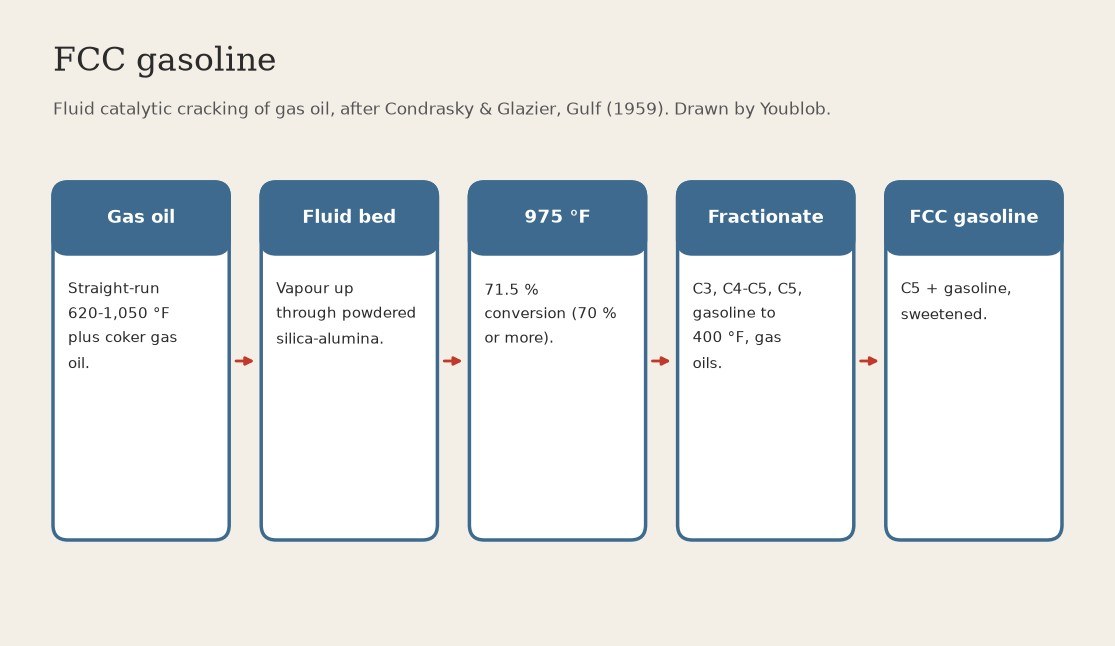

FCC Gasoline: Gas Oil Cracked over Fluidised Silica-Alumina at 975 °F, 71.5 % Conversion (Gulf, US 3,071,535)
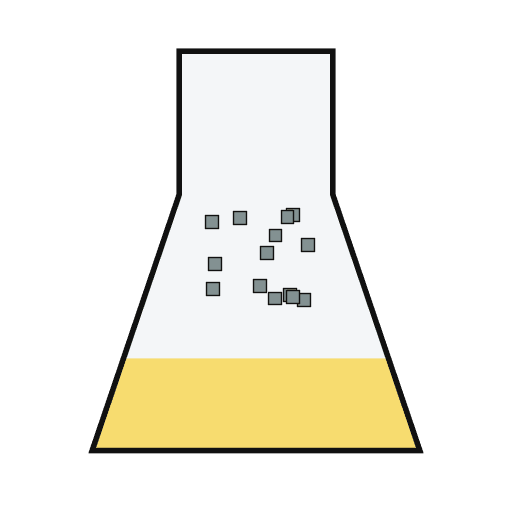
In a fluid catalytic cracker, gas oil vapour streams up through a bed of fine silica-alumina powder kept floating by the gas, and breaks into gasoline and lighter products. Gulf ran theirs hotter than usual, at 975 °F, to make more butylenes for alkylation.
Result (Gulf's example, barrels per day): from 44,840 of gas oil, 15,052 of gasoline boiling to 400 °F plus 4,393 of pentane fraction, with 7,547 of C4-C5, 4,230 of C3, 10,555 of light gas oil and fuel gas. Conversion 71.5 %.
Source: Condrasky & Glazier, US 3,071,535 (Gulf, filed 1959). The heavy gas oil and coker gas oil come from Gulf's own crude unit and coker. Not given: catalyst regeneration, space velocity, how the gasoline is sweetened. Hot oil vapour: fire risk. Picture drawn by Youblob.
Chuyên gia
1 day
Hướng dẫn
1
1
Charge the gas oils
Charge the gas oils
The fresh charge is heavy straight-run gas oil boiling from 620 to 1,050 °F, 36,950 barrels per day in Gulf's example, plus 7,890 of coker gas oil boiling above 400 °F.
Vật liệu cho bước này:
 Dầu gas nặng36950 parts by volume
 Dầu gas cốc hóa7890 parts by volume
Công cụ cần thiết:
 Bể chứa dầu
 Bơm chuyển
2
2
Crack over a suspended bed of silica-alumina powder
Crack over a suspended bed of silica-alumina powder
Vaporise the charge and pass it upward through a suspended bed of powdered silica-alumina catalyst, as in a conventional fluid catalytic cracker.
Công cụ cần thiết:
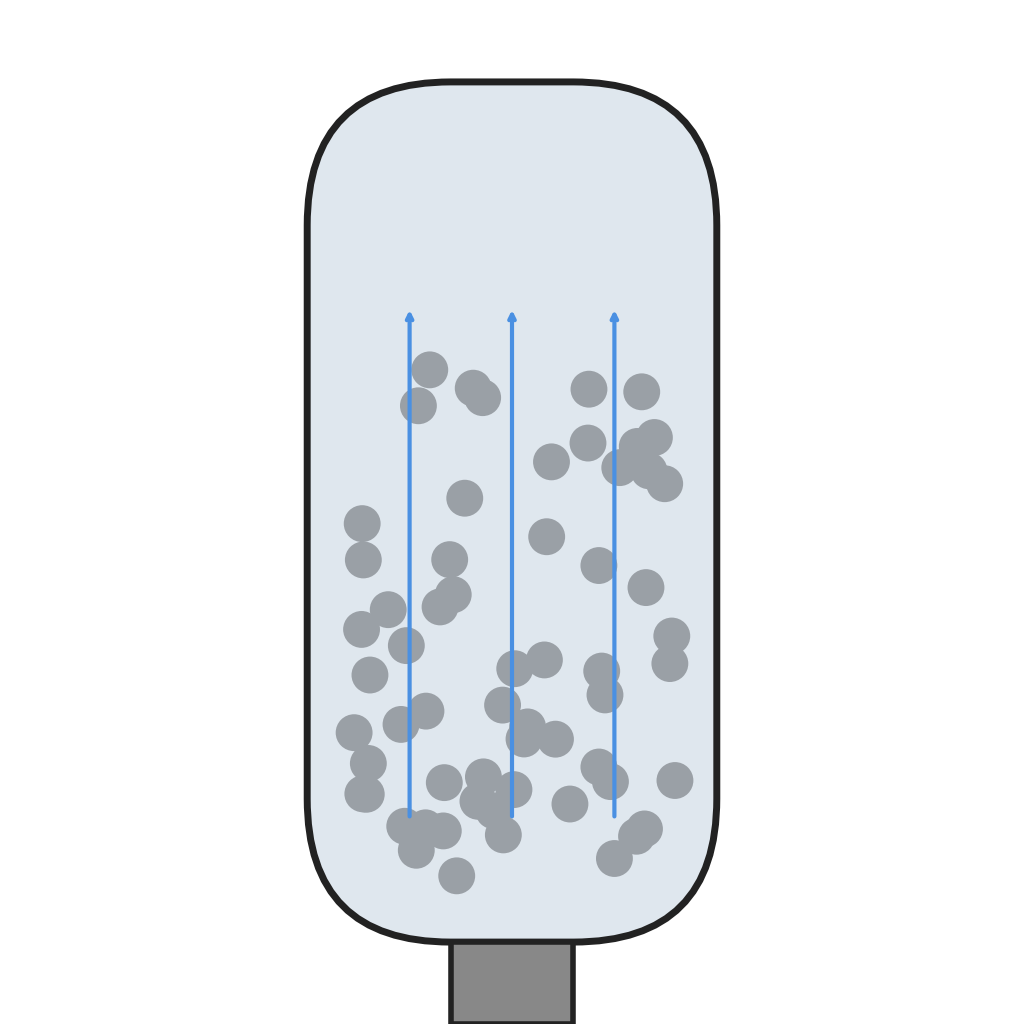 Lò phản ứng tầng sôi
 Chất xúc tác gel silica-alumina
3
3
Run at 975 °F or hotter, to 70 % conversion or more
Run at 975 °F or hotter, to 70 % conversion or more
Hold the cracking temperature at 975 °F or more, preferably 975 to 1,050 °F, and set the space velocity to convert at least 70 % by volume of the fresh charge. Gulf's example: 975 °F, 71.5 %.
Công cụ cần thiết:
Lò phản ứng tầng sôi Hỏa kế
4
4
Fractionate the products
Fractionate the products
Split the cracked products: fuel gas, a C3 fraction (4,230), a C4-C5 fraction (7,547), a C5 fraction (4,393), gasoline boiling from C6 to 400 °F (15,052), light gas oil (10,555) and heavy oils. The C3 fraction and the light gas oil are kept for polymerisation and hydrotreating. Gulf does not describe the fractionator. Ours: a fractionating still.
Công cụ cần thiết:
 Nồi chưng cất phân đoạn
5
5
Sweeten the C5 fraction and the gasoline
Sweeten the C5 fraction and the gasoline
The C5 fraction and the gasoline are preferably sweetened in a conventional unit that turns mercaptans into less objectionable sulphur compounds. Gulf does not give the method. This is the FCC gasoline; its part boiling up to 200 °F is the light FCC of the premium blend.
Công cụ cần thiết:
Bể chứa dầuVật liệu
2- 36950 parts by volumeTạm thời
- 7890 parts by volumeTạm thời
Công cụ yêu cầu
6- Tạm thời
- Tạm thời
- Tạm thời
- Tạm thời
- Tạm thời
- Tạm thời
Bản thiết kế này làm ra
Blueprint liên quan
Các blueprint này chia sẻ kiến thức — kỹ thuật, vật liệu hoặc nguyên tắc
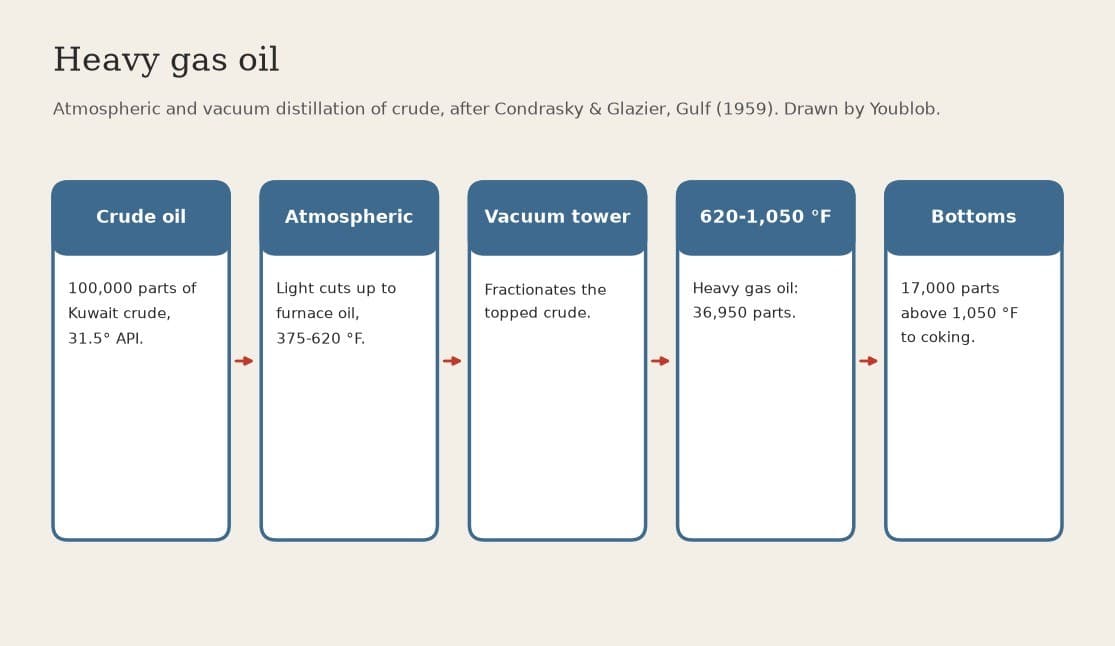
Heavy Gas Oil: the 620-1,050 °F Cut from Atmospheric and Vacuum Distillation of Crude Oil (Gulf, US 3,071,535)
bởi Charlie
Công nghiệp
1
0
0
0
0
0
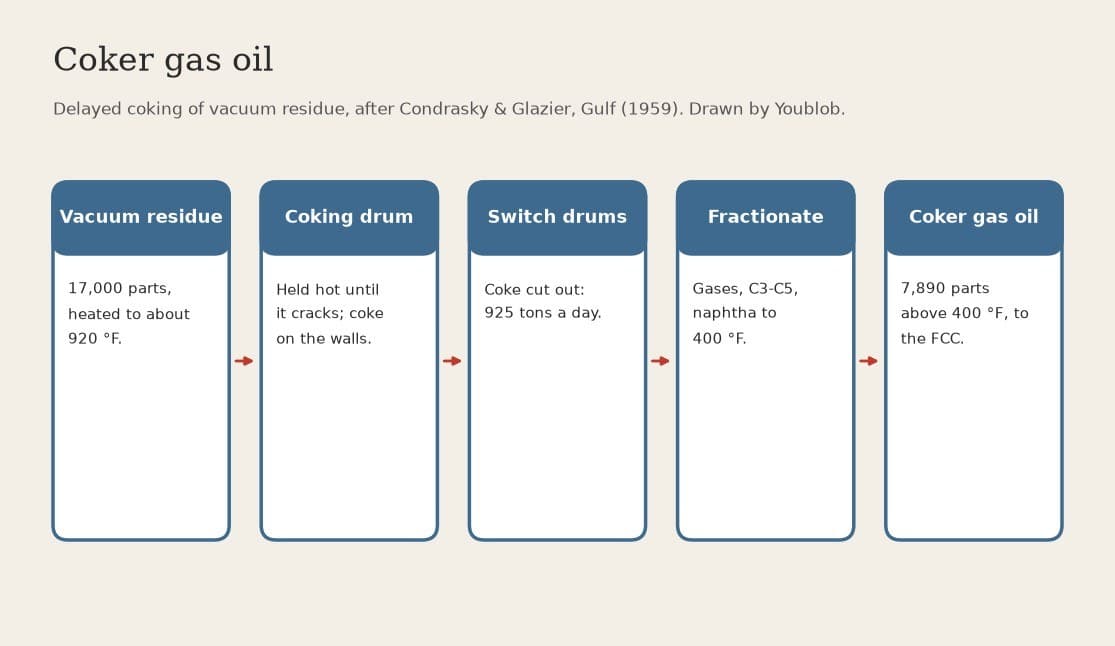
Coker Gas Oil and Petroleum Coke: Vacuum Residue Delayed-Coked at about 920 °F (Gulf, US 3,071,535)
bởi Charlie
Công nghiệp
2
0
0
0
0
0
Aviation Gasoline by Catalytic Cracking over Silica-Alumina Gel at 750 °F (Voorhies, US 2,230,552)
bởi Charlie
Công nghiệp
2
0
0
0
0
0
CC0 Phạm vi công cộng
Bản thiết kế này được phát hành theo CC0. Bạn tự do sao chép, sửa đổi, phân phối và sử dụng cho bất kỳ mục đích nào mà không cần xin phép.
Hỗ trợ nhà sáng tạo bằng cách mua sản phẩm qua bản thiết kế, nơi họ nhận Hoa hồng nhà sáng tạo do nhà bán hàng đặt, hoặc tạo phiên bản mới và kết nối trong bản thiết kế riêng để chia sẻ doanh thu.