

Chromium Plating
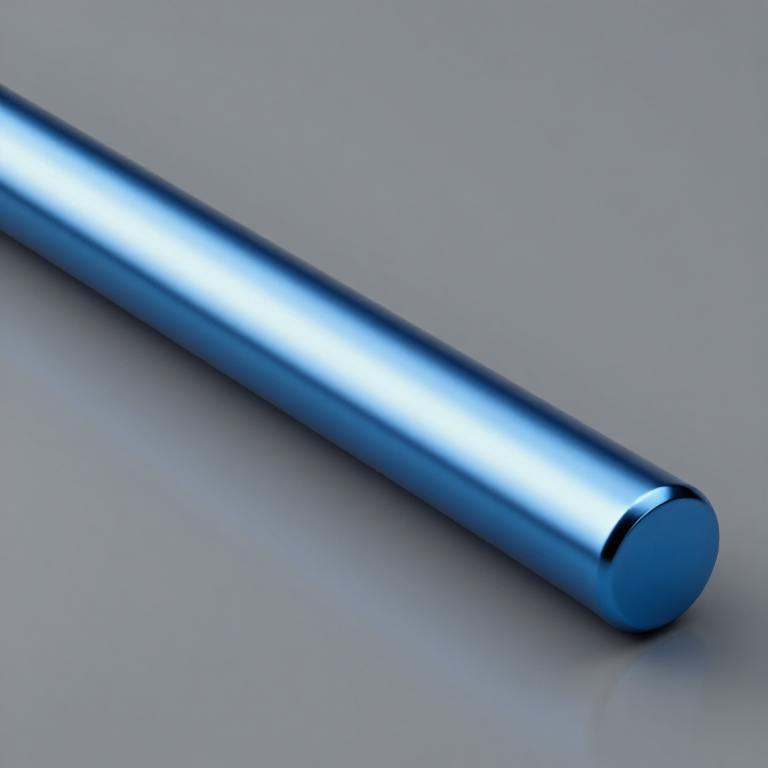
Nickel plating was already routine by 1900, and it had one flaw: nickel yellows and dulls as it oxidises. Chromium does not — it holds a blue-white mirror indefinitely and is far harder than nickel. Everyone knew that. Nobody could deposit it.
Chromium plates out of chromic acid, and a pure chromic acid bath simply does not work: it deposits nothing, or a grey powder that brushes off. Dozens of chemists failed on it for thirty years.
Colin G. Fink found the missing piece — a catalyst anion. A small, precisely controlled quantity of sulphate must be present, at roughly 100 parts chromic acid to 1 part sulphate. Too little and nothing deposits; too much and nothing deposits. The window is narrow and it is the entire invention. His patent is US 1,581,188, "Process of Electrodepositing Chromium and of Preparing Baths Therefor", filed 19 December 1925 and granted 20 April 1926, later assigned to United Chromium, Inc.
Within five years every American car carried chrome, and the 1930s look — chrome bumpers, chrome grilles, chrome trim — exists because of a ratio.
⚠ This process uses hexavalent chromium, a confirmed human carcinogen. It is documented here because it is historically decisive and because omitting dangerous processes leaves holes in the record — not because it should be attempted outside professional containment. Read the safety step before anything else.
Nội dung nguy hiểm
Blueprint này chứa các quy trình nguy hiểm. Đăng nhập và bật nội dung nguy hiểm trong cài đặt tài khoản của bạn để xem hướng dẫn từng bước.
Blueprint liên quan
Các blueprint này chia sẻ kiến thức — kỹ thuật, vật liệu hoặc nguyên tắc

CC0 Phạm vi công cộng
Bản thiết kế này được phát hành theo CC0. Bạn tự do sao chép, sửa đổi, phân phối và sử dụng cho bất kỳ mục đích nào mà không cần xin phép.
Hỗ trợ nhà sáng tạo bằng cách mua sản phẩm qua bản thiết kế, nơi họ nhận Hoa hồng nhà sáng tạo do nhà bán hàng đặt, hoặc tạo phiên bản mới và kết nối trong bản thiết kế riêng để chia sẻ doanh thu.