


Frequency Analysis
Hướng dẫn
Build your own reference profile
Build your own reference profile
Do not take the published table on trust — measure it.
- Take a page of ordinary English, at least 1000 letters.
- Tally every letter.
- Convert to percentages and draw a bar chart.
Vật liệu cho bước này:
 Giấy kẻ ô ly1 pad
 Bộ bút chì than chì1 bộ
Find how much text you need
Find how much text you need
The method has a minimum sample size, and it is worth knowing yours.
- Tally a 50-letter passage and chart it.
- Repeat with 200 letters, then 1000.
- Compare each against your reference.
Work from pairs, not just single letters
Work from pairs, not just single letters
Single-letter counts get you started; the structure finishes the job.
- Tally the commonest two-letter sequences — TH, HE, IN, ER, AN.
- Note doubled letters: LL, SS, EE, OO are common; QQ never occurs.
- Note that Q is essentially always followed by U.
Read a message end to end
Read a message end to end
Put it together on a real ciphertext enciphered with a scrambled alphabet.
- Chart the ciphertext frequencies and assign the top few candidates.
- Use doubles and common pairs to test each guess.
- Fill in short words — a one-letter word is A or I; a three-letter word beginning with your candidate T is likely THE.
- Revise any assignment that produces impossible spellings.
Vật liệu cho bước này:
 Giấy bìa1 gói
History and context
History and context
Al-Kindi (c. 801-873), working in the House of Wisdom in Baghdad, wrote A Manuscript on Deciphering Cryptographic Messages, which contains the earliest known description of frequency analysis. It emerged from an existing scholarly practice: Arabic linguists were already counting letter and word frequencies to study the Qur'an and to date texts. A technique developed for scholarship turned out to answer a completely different question.
Europe took roughly six hundred years to arrive at the same place, which is worth stating plainly rather than treating European cryptography as the main line with others as footnotes.
Where the approach applies: anywhere a code maps symbols consistently and the underlying message has statistical structure. That is a wide region — it covers simple substitution, many historical nomenclators, and a great deal of amateur encoding. It also applies outside cryptography entirely: the same counting is used to attribute disputed authorship, to identify the language of an unknown text, and in the earliest work on compression, where frequent symbols are given shorter codes.
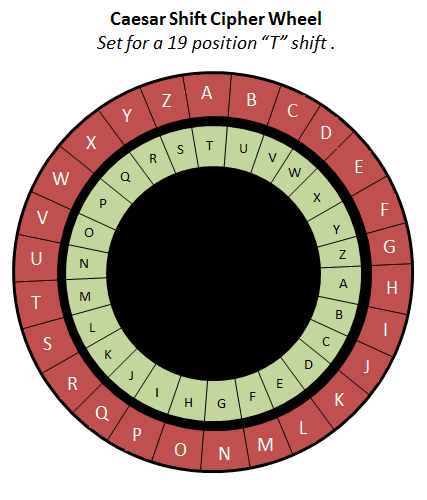
Where it does not reach: methods that change the mapping as they go, such as a turning cipher disc, flatten the profile and put the message outside this technique's range. That is not a defeat of frequency analysis; it defines the boundary of where it is the right tool, and it is why the polyalphabetic family exists at all.
Vật liệu
3- 1 padTạm thời
- Tạm thời
- 1 góiTạm thời
Blueprint liên quan
Các blueprint này chia sẻ kiến thức — kỹ thuật, vật liệu hoặc nguyên tắc
CC0 Phạm vi công cộng
Bản thiết kế này được phát hành theo CC0. Bạn tự do sao chép, sửa đổi, phân phối và sử dụng cho bất kỳ mục đích nào mà không cần xin phép.
Hỗ trợ nhà sáng tạo bằng cách mua sản phẩm qua bản thiết kế, nơi họ nhận Hoa hồng nhà sáng tạo do nhà bán hàng đặt, hoặc tạo phiên bản mới và kết nối trong bản thiết kế riêng để chia sẻ doanh thu.