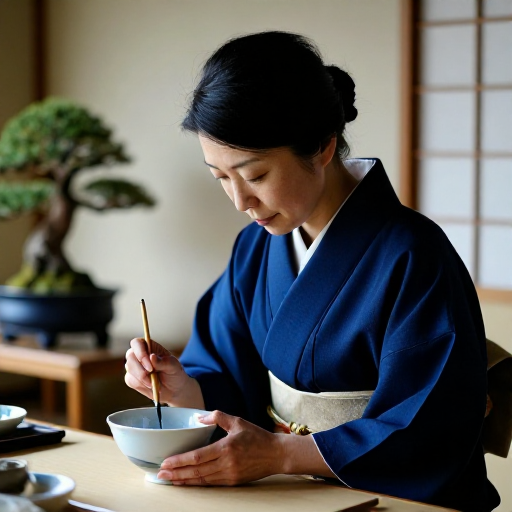

Separating Glutamic Acid — The Substance Behind Umami
Kikunae Ikeda noticed that the kombu dashi in the tofu his wife cooked had a taste that was none of sweet, sour, salty or bitter. The tongue could detect it, yet the four-taste theory of the day could not account for it. In that case, he reasoned, there must be a substance.
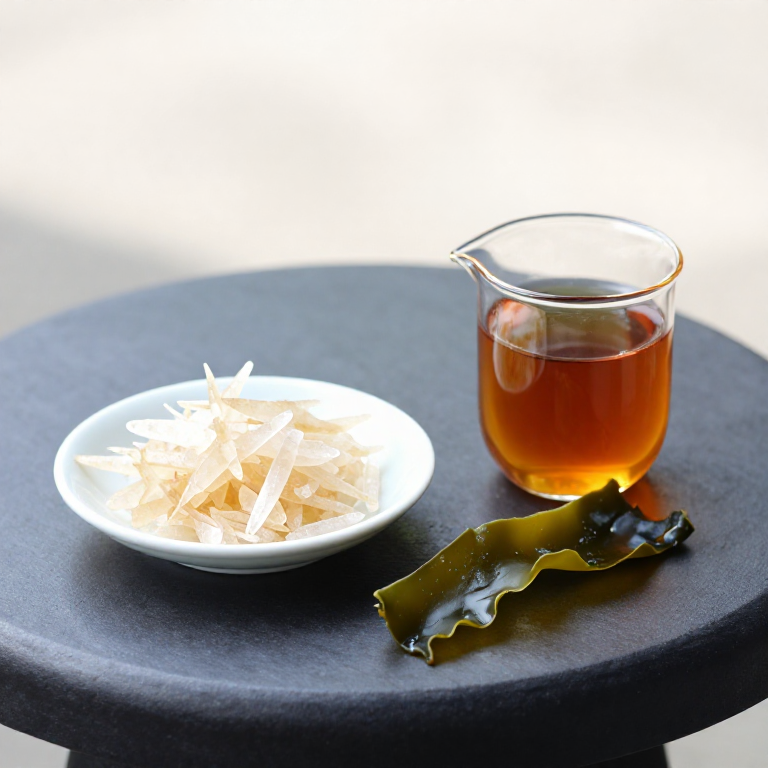
So he boiled down kombu and separated its components one by one. In 1908, from more than ten kilograms of kelp, he obtained the sodium salt of glutamic acid. The substance behind the fifth taste, umami, turned out to be an ordinary amino acid — one of the building blocks of protein.
The patent is titled for the separation process, not the taste: US 1,015,891, “Process of separating glutamic acid and other products of hydrolysis of albuminous substances from one another by electrolysis” — granted 30 January 1912 to Kikunae Ikeda and Saburosuke Suzuki, two inventors.
Hướng dẫn
Read patent US 1,015,891
The title is a method for SEPARATING glutamic acid — it is not the invention of a seasoning. The inventors are Kikunae Ikeda AND Saburosuke Suzuki. Naming Ikeda alone is inaccurate.
Công cụ cần thiết:
Notebook and PencilFirst try to explain kombu dashi with four tastes
First try to explain kombu dashi with four tastes
Take a mouthful of kombu dashi and try to assign it to sweet, sour, salty or bitter. It does not fit. That failure to fit was Ikeda's starting point.
Draw dashi from kombu in cold water
Steep dried kombu in water and warm it without boiling. Boiling brings out sliminess and bitterness and makes the later separation harder.
Vật liệu cho bước này:
Dried Kombu Seaweed100 gStrain and reduce gently
Strain and reduce gently
Filter through cloth and reduce the volume greatly over low heat. Ikeda obtained tens of grams from tens of kilograms of kombu — the yield is normally extremely low.
Vật liệu cho bước này:
Cotton Muslin Cloth1 cáiCool the concentrate and wait for crystals
Cool the concentrate and wait for crystals
Leave the concentrate to stand and cool. Differences in solubility make the target substance come out first. Chill it too fast and fine crystals intermix and separate nothing.
Understand the isoelectric point
An amino acid's charge changes with pH, and at the pH where positive and negative balance, its solubility is lowest. For glutamic acid that is about pH 3.2. Precipitating there is the heart of the separation.
Adjust the pH to precipitate
Add acid a little at a time to reach about pH 3. When cloudiness appears, that is your product. Go too far and it redissolves.
Vật liệu cho bước này:
Wine Vinegar100 mlCông cụ cần thiết:
pH Test StripsCollect and wash the precipitate
Collect and wash the precipitate
Filter it off and wash lightly with cold water. Wash too much and it dissolves away; wash too little and salt and colour remain.
Recrystallise to raise purity
Dissolve in a little hot water and crystallise again on cooling. Purity is decided by how many times you repeat the cycle.
Why the acid itself is not a seasoning
Glutamic acid is poorly soluble in water and its taste does not carry. Only as the sodium salt does it dissolve and act as umami.
Neutralise with bicarbonate to form the salt
Suspend the crystals in water and add sodium bicarbonate a little at a time. When the fizzing stops and the liquid clears, the salt has formed.
Vật liệu cho bước này:
Baking Soda50 gTaste it dissolved in plain water
Taste it dissolved in plain water
Dissolve a very small amount in water and hold it in the mouth. Neither salty nor sweet, spreading across the tongue and lingering — that is umami.
Combine with katsuobushi and test the synergy
Add a little inosinate from dried bonito. The intensity does not add — it multiplies several-fold. This is why dashi combines kombu with bonito.
Compare with fermented foods
Taste soy sauce, miso, cheese and fish sauce side by side. All are proteins broken down to release free glutamate — the world's umami is the same substance everywhere.
Compendium — the taste had a substance
The patent. US patent 1,015,891, “Process of separating glutamic acid and other products of hydrolysis of albuminous substances from one another by electrolysis”, was granted on 30 January 1912 to Kikunae Ikeda and Saburosuke Suzuki. Ikeda was a chemist at Tokyo Imperial University who isolated monosodium glutamate from kombu in 1908 and named its taste umami. Suzuki was the businessman who brought it to market as Aji-no-moto the following year. The patent's subject is a separation process, not the discovery of a taste; the specification merely notes the seasoning application.
Is umami really a fifth basic taste? For a long time it was dismissed as a combination of the four. In the 2000s receptors responding to glutamate were identified in the taste buds — T1R1/T1R3 and metabotropic glutamate receptors — giving physiological support for an independent basic taste. Ikeda's claim took roughly a century to be accepted.
The synergy is not a coincidence. Add a small amount of a nucleotide such as inosinate from dried bonito or guanylate from dried shiitake to glutamate, and perceived intensity multiplies rather than adds, because binding is stabilised at the receptor. Kombu with bonito, tomato with meat, Parmesan with mushrooms — combinations cooks found empirically all exploit this.
What should be added honestly. Glutamate is the source of umami, not a special substance. Free glutamate occurs in tomatoes, Parmesan, dried shiitake, soy sauce, fish sauce and human breast milk, and the body does not distinguish kombu-derived from manufactured. As for “Chinese restaurant syndrome”, popularised in 1968, subsequent double-blind trials have not reproduced it in the general population, and the US FDA classifies MSG as generally recognised as safe. The investigation began in a kitchen; the conclusion came back from the laboratory as a receptor.
Vật liệu
4- 100 gTạm thời
- 1 cáiTạm thời
- 100 mlTạm thời
- 50 gTạm thời
Công cụ yêu cầu
2- Tạm thời
- Tạm thời
Blueprint liên quan
Các blueprint này chia sẻ kiến thức — kỹ thuật, vật liệu hoặc nguyên tắc
CC0 Phạm vi công cộng
Bản thiết kế này được phát hành theo CC0. Bạn tự do sao chép, sửa đổi, phân phối và sử dụng cho bất kỳ mục đích nào mà không cần xin phép.
Hỗ trợ nhà sáng tạo bằng cách mua sản phẩm qua bản thiết kế, nơi họ nhận Hoa hồng nhà sáng tạo do nhà bán hàng đặt, hoặc tạo phiên bản mới và kết nối trong bản thiết kế riêng để chia sẻ doanh thu.