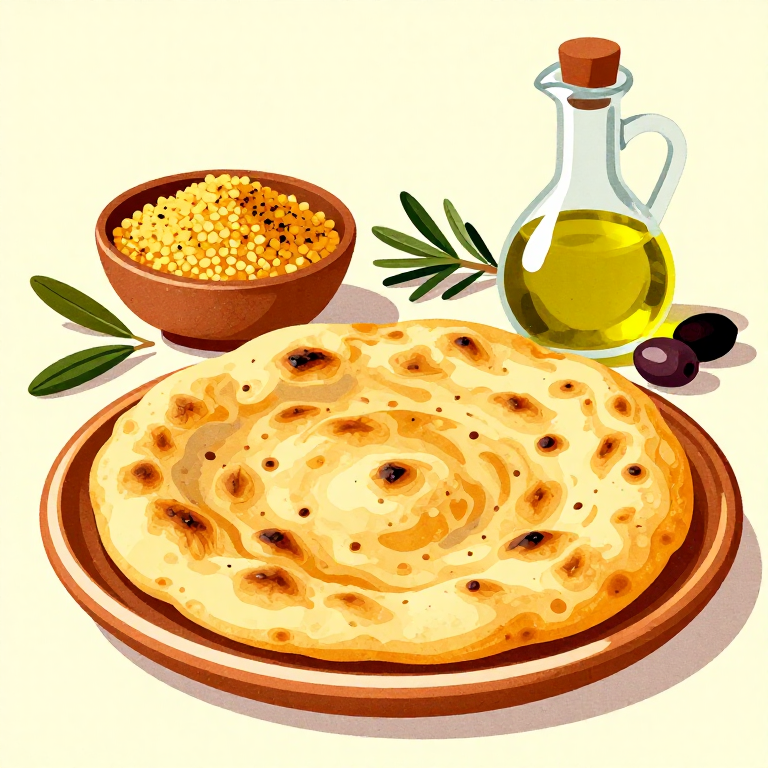


Greek Barley Bread — Baking Maza Barley Flatbread
Hướng dẫn
Roast and Grind the Barley
Roast and Grind the Barley
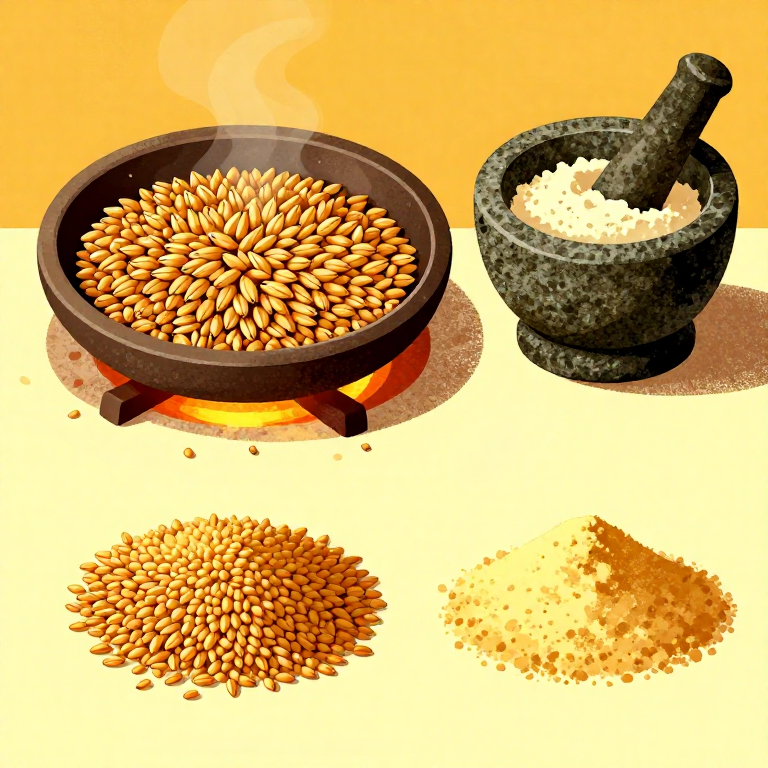
If starting with whole barley grains, spread them in a single layer on a flat pan or griddle and roast over moderate heat, stirring constantly, until they turn golden-brown and fragrant — approximately 10-15 minutes. Roasting develops flavor and makes the grain easier to grind, as well as gelatinizing some of the starches. Grind the roasted grain to a coarse flour using a mortar and pestle or hand mill. This roasted barley flour (alphita) was the most common form of grain preparation in ancient Greece. Unlike wheat, barley has very low gluten content and cannot form an elastic, leavened bread dough. This is why the Greeks ate barley as maza (a dense cake or paste) rather than as risen loaves. Wheat bread (artos) was a luxury food associated with higher social status.
Vật liệu cho bước này:
 Hạt lúa mạch300-400 g g
 Nước150-200 ml ml
 Muối biển mịnpinch cái
 Mật ongsmall amount cái
Công cụ cần thiết:
 Bộ tô trộn
 Đá nướng bánh pizza
 Cối và chày
Mix the Maza Dough
Mix the Maza Dough
Place the roasted barley flour in a mixing bowl and add salt. Gradually add water, olive oil, or a mixture of both, stirring until a stiff, cohesive dough forms. The dough will be dense and crumbly rather than smooth and elastic like wheat dough. Some ancient Greek recipes describe mixing maza with honey, wine, milk, or animal fat for richer versions. The poet Hesiod described maza made from alphita mixed with water as the basic food of the working farmer. Knead briefly to combine all ingredients — overworking does nothing for barley dough since there is no gluten network to develop.
Shape the Flatbreads
Shape the Flatbreads
Divide the dough into portions of approximately 80-100 g each. Press each portion into a flat disc approximately 10-12 cm in diameter and 1-1.5 cm thick. Barley dough does not roll easily, so pat and press it flat with dampened palms. The shape can be round, oval, or even pressed into a mold for a decorative form. Maza was sometimes simply eaten raw as a thick paste rather than baked — the roasted flour is already cooked and nutritious without further heating. For a more palatable product, however, baking on a hot griddle significantly improves both texture and flavor by creating a crisp exterior crust while the interior remains dense and chewy.
Bake on a Hot Griddle
Bake on a Hot Griddle
Heat a flat griddle, baking stone, or the floor of a clay oven until very hot. Lightly oil the surface to prevent sticking. Place the shaped maza cakes on the hot surface and bake for 3-5 minutes per side until golden-brown spots appear and the surface develops a dry, slightly crisp texture. The bread will not rise or puff like wheat bread — it remains flat and dense. Greek households baked on a simple ceramic disc called a klibanos, essentially a portable baking dome placed over hot coals. Turn the cakes once to brown both sides evenly. The finished maza should be firm but not hard, with a nutty, toasted barley flavor.
Serve with Traditional Accompaniments
Serve with Traditional Accompaniments
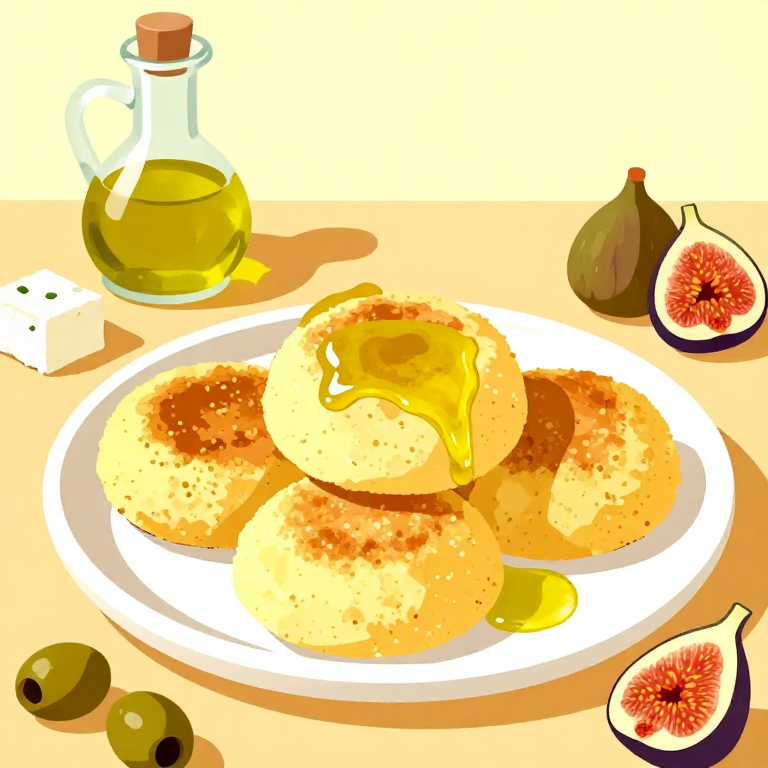
Serve maza warm or at room temperature with traditional Greek accompaniments: olive oil for drizzling, fresh or pickled olives, goat cheese, raw onion or garlic, and dried figs or honey for a sweeter dish. The combination of maza, olive oil, and wine was called the Mediterranean triad and formed the dietary foundation of Greek civilization. Maza was the food of soldiers on campaign, sailors at sea, and laborers in the fields — portable, nutritious, and requiring no elaborate preparation. Despite its humble reputation compared to wheat bread, well-made maza from quality roasted barley is genuinely tasty, with a deep, nutty flavor. Store extra maza in a dry place; it keeps well for several days due to its low moisture content.
Vật liệu
4- 300-400 g gTạm thời
- 150-200 ml mlTạm thời
- small amount cáiTạm thời
- pinch cáiTạm thời
Công cụ yêu cầu
4- Tạm thời
- Tạm thời
- Tạm thời
- Tạm thời
Bản thiết kế này làm ra
CC0 Phạm vi công cộng
Bản thiết kế này được phát hành theo CC0. Bạn tự do sao chép, sửa đổi, phân phối và sử dụng cho bất kỳ mục đích nào mà không cần xin phép.
Hỗ trợ nhà sáng tạo bằng cách mua sản phẩm qua bản thiết kế, nơi họ nhận Hoa hồng nhà sáng tạo do nhà bán hàng đặt, hoặc tạo phiên bản mới và kết nối trong bản thiết kế riêng để chia sẻ doanh thu.