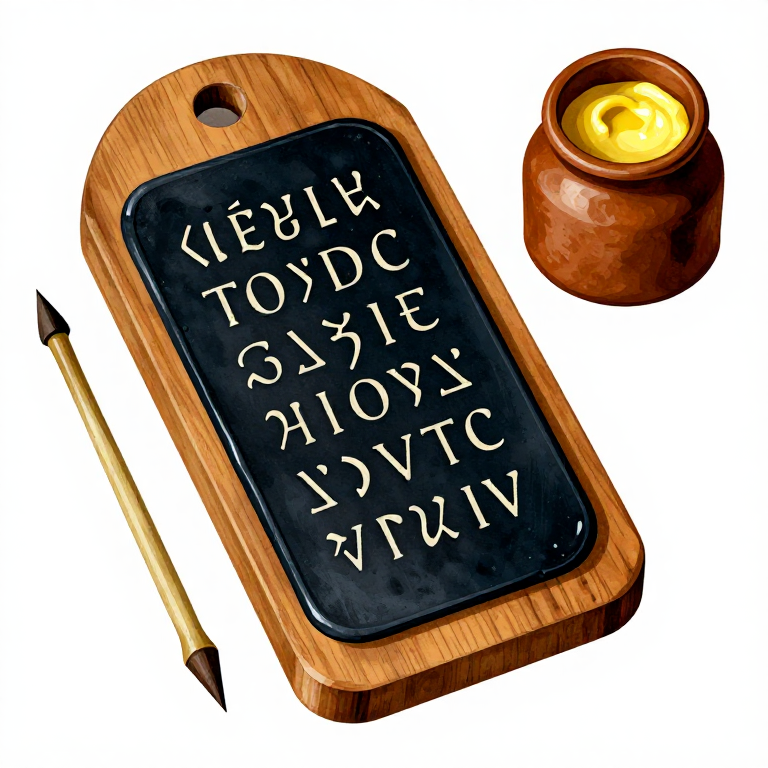


Greek Wax Tablet — Making a Wax Writing Tablet
Hướng dẫn
Prepare the Wooden Frames
Prepare the Wooden Frames
Cut two thin hardwood boards to approximately 15x20 cm (a standard size for ancient tablets, though they varied from 10 cm pocket tablets to 30 cm school tablets). Using a chisel, cut a shallow rabbet (recess) approximately 3-4 mm deep on the inner face of each board, leaving a raised border approximately 10-15 mm wide around all four edges. This raised border acts as a frame that protects the wax surface from accidental contact when the tablet is closed and provides the correct wax depth. Alternatively, glue thin wooden strips around the edges of each board to create the frame. Sand the recessed area smooth — any roughness in the wood will show through the thin wax layer.
Vật liệu cho bước này:
 Tấm gỗ cứng2 pieces, approximately 15x20 cm, 8-10 mm thick mm
 Sáp ong dạng hạt100-150 g g
 Mồ hóngsmall amount cái
 Thanh chốt gỗ4 strips per board cái
 Dây thừng, dây bện30 cm cm
Công cụ cần thiết:
 Cưa lọng tay
 Đục sắt
 Vật đựng
 Xương
XươngMelt and Color the Wax
Melt and Color the Wax
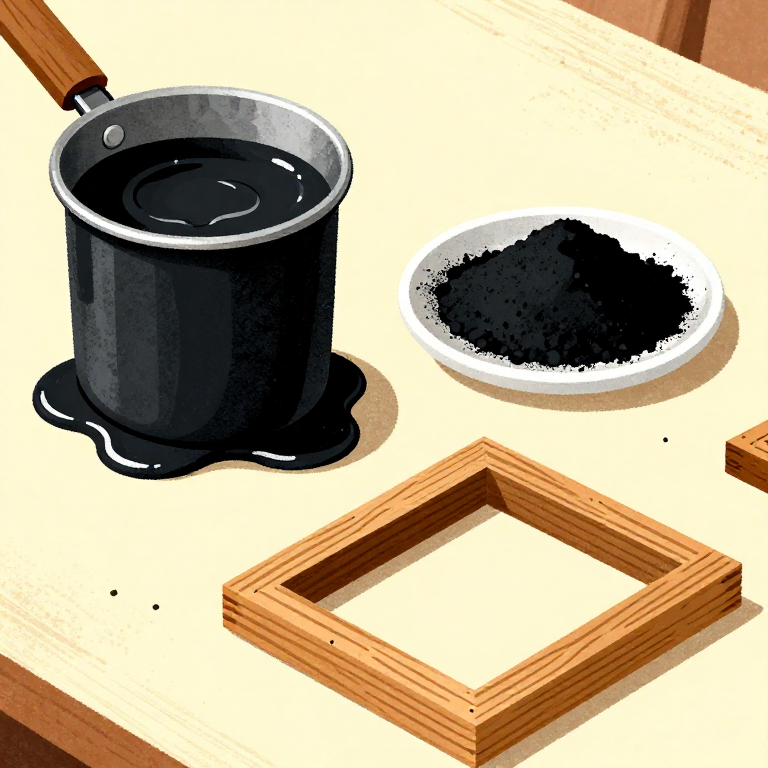
Melt beeswax in a double boiler (never over direct flame). Once liquid, stir in a small amount of lamp black or carbon black powder to darken the wax to a deep brown or black color. The dark coloring serves a practical purpose: when the stylus scratches through the dark wax, it exposes the lighter wood beneath, creating high-contrast visible text. Some ancient tablets used red wax (colored with red ochre) or plain yellow beeswax. You can also add a small amount of tallow or olive oil to the wax to keep it slightly softer and easier to inscribe, especially in cool climates. Mix thoroughly until the color is uniform.
Pour the Wax into the Frames
Pour the Wax into the Frames
Place the wooden frames on a level surface with the recessed side facing up. Carefully pour the melted, colored wax into each recess, filling it to approximately 2-3 mm depth — just below the level of the raised border. Tilt the frame gently to spread the wax evenly across the entire surface. Allow the wax to cool and solidify completely, which takes approximately 30-60 minutes at room temperature. If air bubbles form in the wax surface, you can warm the surface briefly with a heat source held above it (not touching) to smooth them out. The finished wax surface should be smooth, flat, and uniformly dark.
Hinge the Two Halves Together
Hinge the Two Halves Together
Drill two small holes along one long edge of each board and thread a leather thong or cord through them to create a simple hinge, allowing the tablet to fold closed like a book with the wax surfaces facing inward for protection. This hinged pair is called a diptych (two-leaf tablet). Some ancient writing tablets had three (triptych) or more leaves bound together. The protective raised borders prevent the wax surfaces from touching and smearing each other when the tablet is closed. The exterior faces can be left plain or decorated with carved designs. Many surviving ancient wax tablets were found in dry contexts in Egypt (where the climate preserved the wax) and in waterlogged conditions in Roman Britain.
Make a Stylus and Write
Make a Stylus and Write
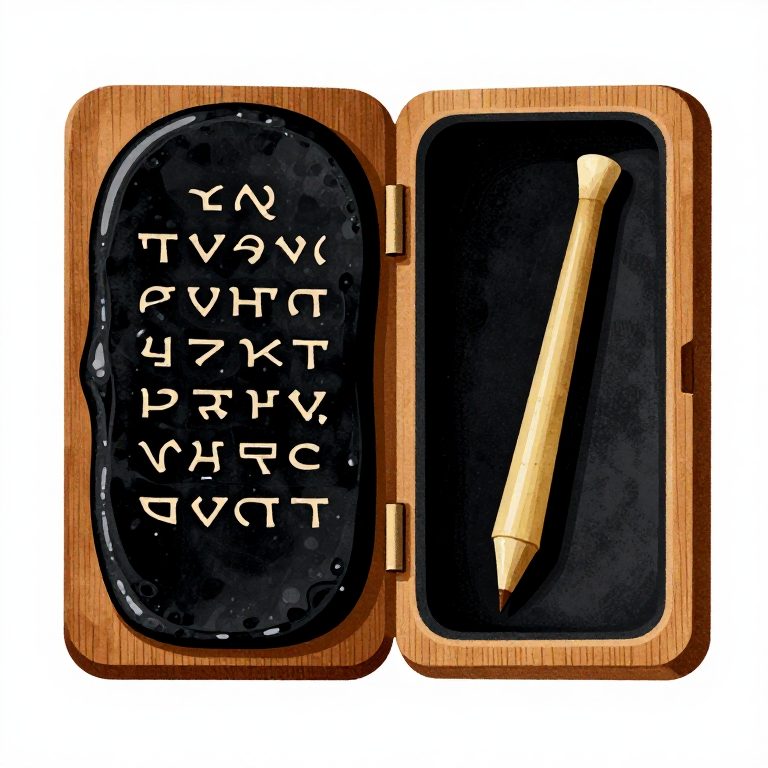
Create a writing stylus from bone, metal (bronze or iron), or hardwood, approximately 12-15 cm long. One end should be sharpened to a fine point for inscribing letters into the wax; the other end should be flattened into a small spatula shape for erasing text by smoothing the wax flat. To write, hold the stylus at approximately 45 degrees and press the point through the dark wax to expose the lighter wood beneath, forming letters. The writing should be crisp and legible. To erase, warm the flat end of the stylus slightly by rubbing it and press it over the inscribed text, smoothing the wax back to a flat surface. Wax tablets were used throughout the Greek and Roman world for school exercises, personal notes, letters, commercial records, and legal documents. The phrase tabula rasa (blank slate) derives from the practice of erasing wax tablets for reuse.
Vật liệu
10- 2 pieces, approximately 15x20 cm, 8-10 mm thick mmTạm thời
- 100-150 g gTạm thời
- 4 strips per board cáiTạm thời
- 30 cm cmTạm thời
- 100-150 g cáiTạm thời
- small amount cáiTạm thời
- 4 strips per board cáiTạm thời
- 30 cm cáiTạm thời
- 1 cáiTạm thời
- Tạm thời
CC0 Phạm vi công cộng
Bản thiết kế này được phát hành theo CC0. Bạn tự do sao chép, sửa đổi, phân phối và sử dụng cho bất kỳ mục đích nào mà không cần xin phép.
Hỗ trợ nhà sáng tạo bằng cách mua sản phẩm qua bản thiết kế, nơi họ nhận Hoa hồng nhà sáng tạo do nhà bán hàng đặt, hoặc tạo phiên bản mới và kết nối trong bản thiết kế riêng để chia sẻ doanh thu.