
NGHỆ THUẬT
LÀM ĐẸP VÀ SỨC KHỎE
THỦ CÔNG
VĂN HÓA VÀ LỊCH SỬ
GIẢI TRÍ
MÔI TRƯỜNG
THỰC PHẨM VÀ ĐỒ UỐNG
KỸ THUẬT NGƯỢC
KHOA HỌC
THỂ THAO
CÔNG NGHỆ
THIẾT BỊ ĐEO
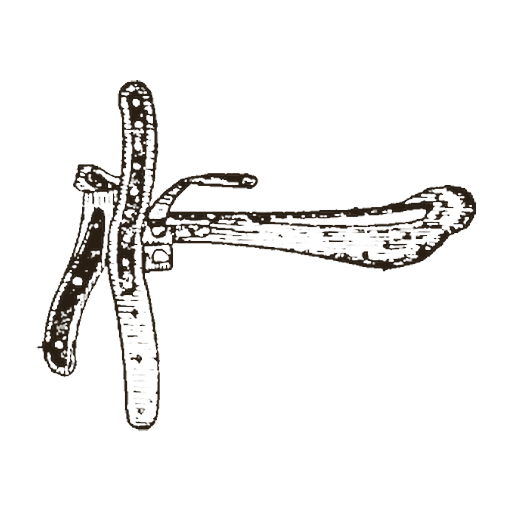
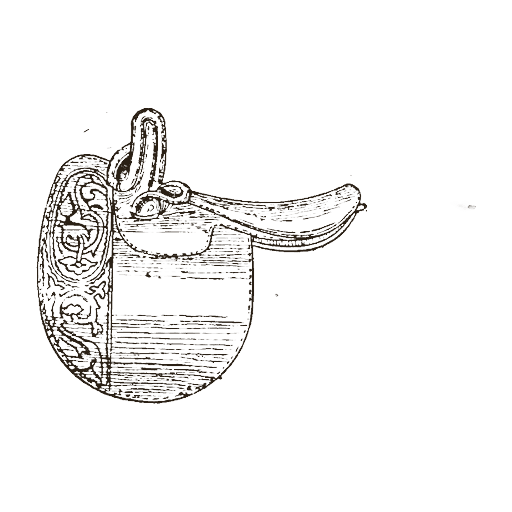
Lady's Side Saddle: Stuffed Head, Small Off-Head, Bolstered Safe and Leather Girth (Hasluck, Saddlery, 1904)
Tex

Tạo bởi

Tex

13. tháng Mười Một 2026FO
14
0
0
0
0

Lady's Side Saddle: Stuffed Head, Small Off-Head, Bolstered Safe and Leather Girth (Hasluck, Saddlery, 1904)

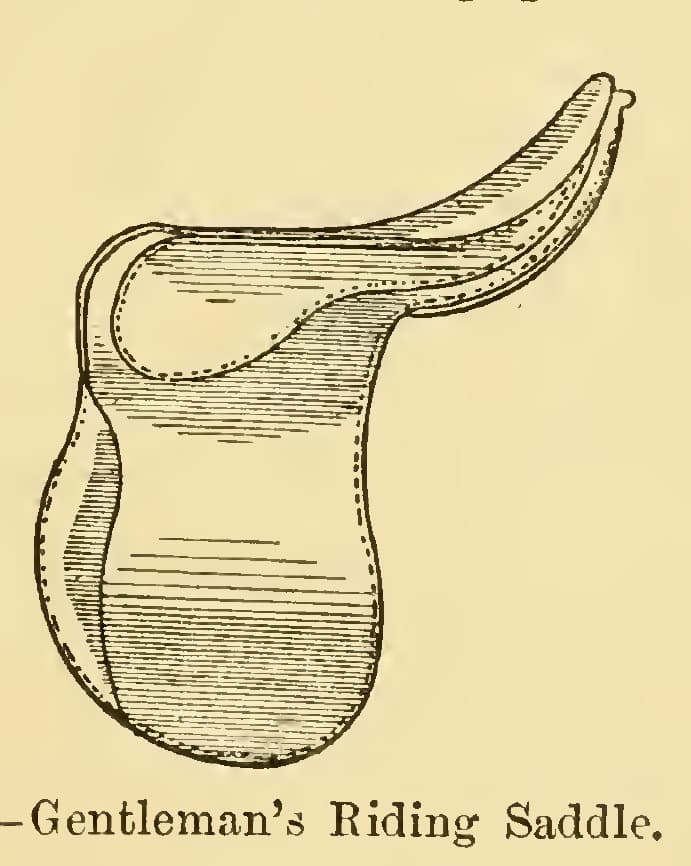
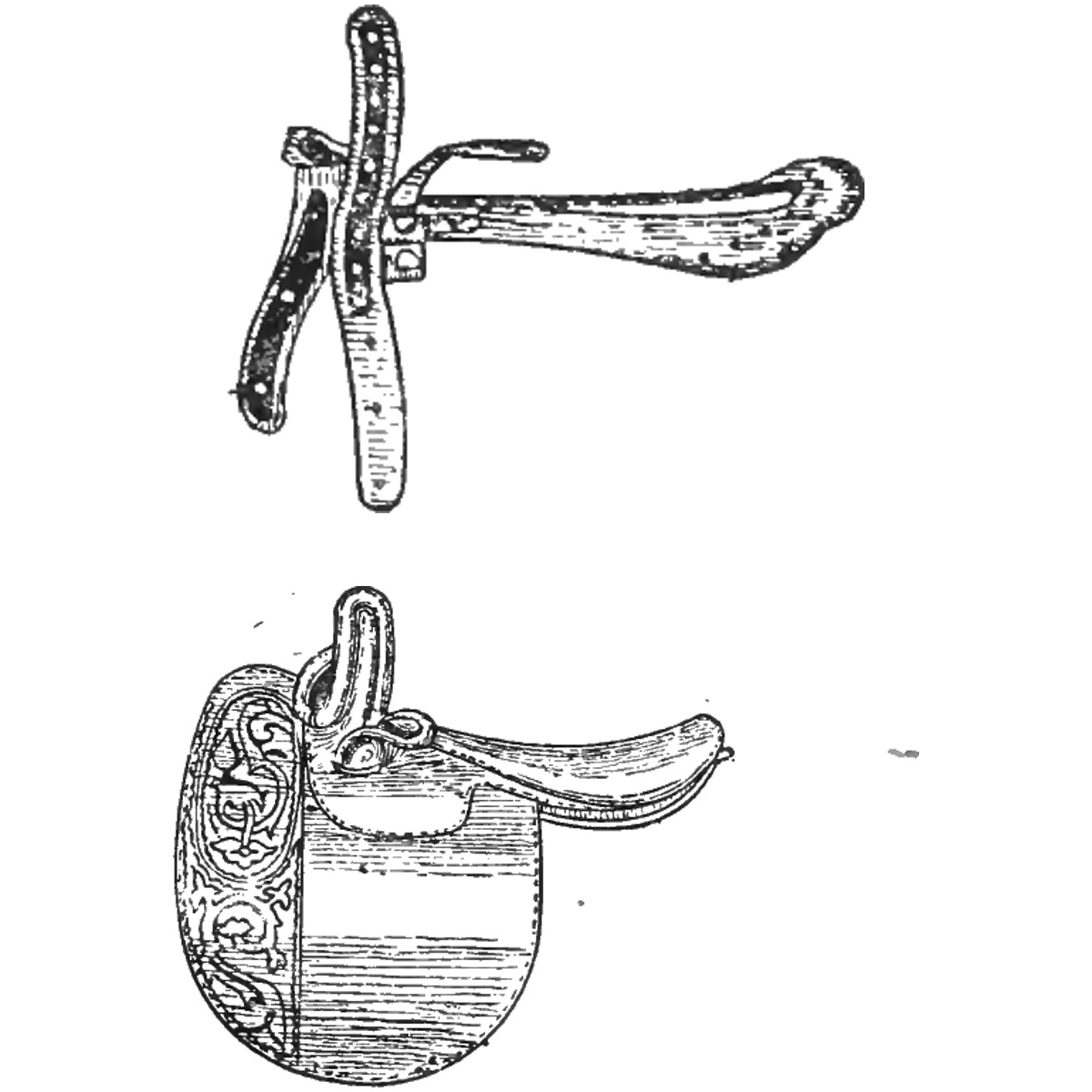
On a side saddle the rider sits with both legs on the near side, the right knee over a stuffed head in front. This is the side saddle from Paul N. Hasluck's Saddlery (1904): a bought tree with a small off-head, the seat built like the gentleman's saddle but padded higher on the riding side, a quilted (bolstered) safe on the near side, and a thin leather girth that buckles from the saddle. He refers back to the gentleman's saddle for many steps, and so does this blueprint.
Nâng cao
About 4-5 days

Hướng dẫn

1

His sizes in centimetres

Đang tải sổ tay Jupyter…
2

Read Saddlery, ch. III

"The head or point is the part projecting on the side of the saddle in front, over which the rider's knee is placed"; "the safe is the part in front which reaches beyond the saddle, covering the horse's shoulder to keep the rider's clothes from the horse." The tree (Fig. 6) is bought; trees differ in head, seat and cantle.
3

Web the tree and build the seat ground

Get a side saddle tree with a small off-head. Strain the web thoroughly and fit the cross pieces and linen to form a ground for the seat, exactly as for the gentleman's saddle. Cover it with white serge for stuffing, but make the sausage pad on the side where the rider sits nearly twice as thick as on the off side: if the seat ran down steep towards the riding side, the rider could fall. Increase the rounding gradually, sloping it down towards the front; sharp corners there would hurt the rider.

Vật liệu cho bước này:

Cốt yên ngồi một bênCốt yên ngồi một bên1 cái
Dây vải căngDây vải căng1 cái
Vải lanhVải lanh1 cái
Vải serge lenVải serge len1 cái
Len nhồiLen nhồi1 cái
ĐinhĐinh1 cái
Chỉ lanhChỉ lanh1 cái
Sáp ongSáp ong1 cái

Công cụ cần thiết:

Kìm nhổ đinhKìm nhổ đinh
Búa nhổ đinhBúa nhổ đinh
KéoKéo
Hai kim khâu yênHai kim khâu yên
DùiDùi
4

Stuff the head

Before covering the seat: cut two pieces of stiff leather the shape of the head, reaching to the bottom on the inside and large enough outside to stitch round the horn. Stitch one firmly on each side, put two or three tacks in the outer one at the bottom, and thin and shape the edges. Shape white serge to the head, round at the top and about 2-1/2 in wider along the sides and as much longer at the top; tack round it with white linen thread, turning the edges in and puckering the top so it bulges when stuffed. Stitch it inside the head to the stitches in the leathers so it covers the edge of the horn, bulging equally all round. Stuff clean carded flock, cut small, from the bottom, pushing it up with the seat awl until firm, plump and smooth; hold it with a few loose stitches back and forth along the sides, top up the centre if needed and level it with the seat awl.

Vật liệu cho bước này:

Da làm yên cươngDa làm yên cương1 cái
Vải serge lenVải serge len1 cái
Len nhồiLen nhồi1 cái
Chỉ lanhChỉ lanh1 cái
Sáp ongSáp ong1 cái
ĐinhĐinh1 cái

Công cụ cần thiết:

Dao cắt daDao cắt da
KéoKéo
DùiDùi
Hai kim khâu yênHai kim khâu yên
Sắt dàn chỗ ngồiSắt dàn chỗ ngồi
Búa nhổ đinhBúa nhổ đinh
5

Cover and stuff the seat

Put serge on the outer side of the small head, nailed at the bottom and turned in along its edge. Put on the serge seat cover as for the gentleman's saddle, but cut it round the stuffed horn, turn the edges under and nail the ends in front; along the small horn, turn in the seat cover's edge and whip it to the turned-in edge of the piece underneath. Cut the slit in the centre and stuff as for the gentleman's saddle. Quilt along the ridge from the near-side horn to the root of the cantle, giving a flat, full, square edge, and the same on the other side; refill and level the centre and both points with the seat awl.

Vật liệu cho bước này:

Vải serge lenVải serge len1 cái
Len nhồiLen nhồi1 cái
ĐinhĐinh1 cái
Chỉ lanhChỉ lanh1 cái
Sáp ongSáp ong1 cái

Công cụ cần thiết:

KéoKéo
Búa nhổ đinhBúa nhổ đinh
DùiDùi
Hai kim khâu yênHai kim khâu yên
Sắt dàn chỗ ngồiSắt dàn chỗ ngồi
6

Cover the head and seat in hogskin

Nail hogskin over the long point at the back, pull it tight and tack it close round the top to remove every pleat; leave it to dry. Damp the hogskin seat and put it on, with a small piece of hogskin outside the small point; cut the seat round the long point, cross the ends in front and tack them low. When dry, cut firm leather to fit the hollow at the back of the long point and hogskin about 1/8 in larger all round; shave both and paste them together.

Vật liệu cho bước này:

Da heo thuộcDa heo thuộc1 cái
Da làm yên cươngDa làm yên cương1 cái
Hồ bột mìHồ bột mì1 cái
ĐinhĐinh1 cái

Công cụ cần thiết:

Dao cắt daDao cắt da
Bọt biểnBọt biển
Kìm nhổ đinhKìm nhổ đinh
Búa nhổ đinhBúa nhổ đinh
7

Welt the skirts and seat

Fit and mark the skirts as for the gentleman's saddle. Put the thin hogskin welt along the upper edge of the seat and stitch skirt and welt together only as far as the root of the big point, and the same opposite under the short point. From there stitch a wider doubled welt to the skirt to the end. Put a narrow welt round the hole cut for the point with a broad welt on it, and a narrow and broad welt under the short point, and stitch the seat to the hogskin piece there. Tack the ends round the long point neatly under the skirt on the near side.

Vật liệu cho bước này:

Da heo thuộcDa heo thuộc1 cái
Da vạt yênDa vạt yên1 cái
Chỉ daChỉ da1 cái
Sáp thợ giàySáp thợ giày1 cái

Công cụ cần thiết:

Dao cắt daDao cắt da
DùiDùi
Hai kim khâu yênHai kim khâu yên
8

Fit the cover to the head

Remove the long-point cover, put a small welt round the back piece, cover it with hogskin and stitch the cover to it all round without stretching or pleating. Turn the cover inside out, damp it, slip it down over the point and nick the bottom so it sits flat on the seat. Paste between the back piece and the point and press it hard into the hollow; hold it with two or three thicknesses of soft brown leather and a soft rag rolled round until the paste dries. Nail the back piece to the tree at the bottom with two or three tacks out of sight, and cut and stitch the pleats in the seat behind the cantle.

Vật liệu cho bước này:

Da heo thuộcDa heo thuộc1 cái
Hồ bột mìHồ bột mì1 cái
Da cừu basilDa cừu basil1 cái
Giẻ bôngGiẻ bông1 cái
ĐinhĐinh1 cái
Chỉ daChỉ da1 cái
Sáp thợ giàySáp thợ giày1 cái

Công cụ cần thiết:

Dao cắt daDao cắt da
Bọt biểnBọt biển
DùiDùi
Hai kim khâu yênHai kim khâu yên
Búa nhổ đinhBúa nhổ đinh
9

Put the seat on the tree

Cover the points running to the panel pockets with thin hogskin or basil, as for the gentleman's saddle. Damp the seat, nail it in front and then at the back, tightening it well round the sides. Nail the hogskin piece behind the short point and pull the welt seam exactly along the edge. Draw the skirt points tightly forward with a tack in the end, the skirt edges under the points; cover the nails and leather ends there, and cut the waste close to the nails all round.

Vật liệu cho bước này:

Da heo thuộcDa heo thuộc1 cái
Đinh yênĐinh yên1 cái
ĐinhĐinh1 cái

Công cụ cần thiết:

Bọt biểnBọt biển
Kìm nhổ đinhKìm nhổ đinh
Búa nhổ đinhBúa nhổ đinh
Dao cắt daDao cắt da
10

Make the near-side flap and bolstered safe

Cut the near-side flap and safe (Fig. 7) as two pieces joined in a straight line, the point side in front: the back part like a saddle flap but a little fuller at the bottom, reaching no farther than the end of the saddle-bar front; the safe running a little beyond the centre at the top. Join them with a closing stitch in strong black wax thread, crossing it every six or seven stitches. For the bolstered safe, cut hogskin the size of the safe plus 1 in all round, quilt and mark it with a small single crease in a regular pattern, and press a design into it. Line it with calico stitched along every mark with white or yellow silk or linen thread, outer lines first, flat and without puckers, pricking a hole in every space. Stuff each space with very fine flock cut small, just enough to show the pattern and feel soft. Fit the cover edge to edge on the safe, crease and prick its edge very fine, stitch the straight edge wrong side out over the joint, turn it over and stitch round the edge double-handed. Paste hogskin on the flap part and stitch it round.

Vật liệu cho bước này:

Da vạt yênDa vạt yên1 cái
Da heo thuộcDa heo thuộc1 cái
Vải calicoVải calico1 cái
Len nhồiLen nhồi1 cái
Chỉ lanhChỉ lanh1 cái
Chỉ daChỉ da1 cái
Sáp thợ giàySáp thợ giày1 cái
Hồ bột mìHồ bột mì1 cái

Công cụ cần thiết:

Dao cắt daDao cắt da
Dụng cụ gấp nếpDụng cụ gấp nếp
Đèn khò propanĐèn khò propan
Đục may daĐục may da
KéoKéo
DùiDùi
Hai kim khâu yênHai kim khâu yên
11

Fit the off-side flap and both flaps

The off-side flap is small, exactly as for a gentleman's saddle but fuller in the rounds below. Make a gullet piece from the front end of the flap to a little over the centre at the top, to be covered by the point of the safe. Nail the off-side flap underneath from the point backwards and above the point in front, and the near-side safe and flap the same way. Where the web hangs down for the straps, punch a hole in the front of the safe close by the tree and near the end of the flap, and turn that part of the flap to the point under the tree, nailing it along the gullet. The girth straps go on the web.

Vật liệu cho bước này:

Da vạt yênDa vạt yên1 cái
ĐinhĐinh1 cái

Công cụ cần thiết:

Đục lỗ daĐục lỗ da
Búa nhổ đinhBúa nhổ đinh
Dao cắt daDao cắt da
12

Make the leather girth

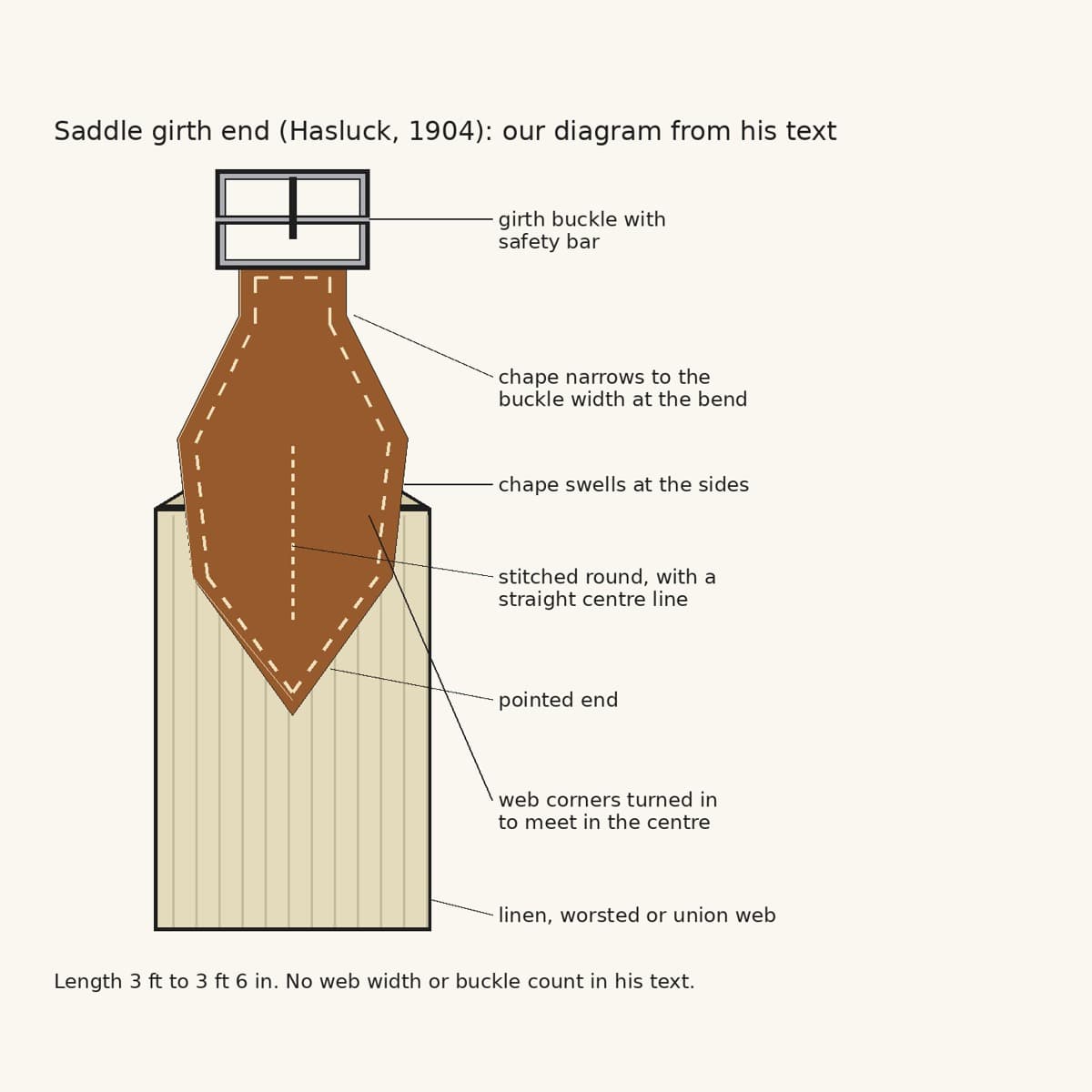
Make the thin brown leather girth, which a gentleman's saddle does not have: 3-1/2 ft long and 2 in wide, with a 1 in roller buckle at one end on a chape cut slanting from both sides to its width. Make a loop for it and another about 6 in lower for the overlap of the strap. Cut another piece 1 ft by 2 in with a strap 1 ft 6 in by 1 in stitched to one end; edge and rub the borders and make a narrow hot crease near the edge. Put two rows of cross-stitching on the near side of the girth and two on the off side. It buckles the reverse way to the usual, so it can be adjusted with the rider in the saddle.

Vật liệu cho bước này:

Da cừu basilDa cừu basil1 cái
Khóa có con lănKhóa có con lăn1 cái
Chỉ daChỉ da1 cái
Sáp thợ giàySáp thợ giày1 cái

Công cụ cần thiết:

Dao cắt daDao cắt da
Dụng cụ gấp nếpDụng cụ gấp nếp
Đèn khò propanĐèn khò propan
Khuôn làm quai daKhuôn làm quai da
DùiDùi
Hai kim khâu yênHai kim khâu yên
Đục lỗ daĐục lỗ da
Thước dây cuộnThước dây cuộn
13

Nails and panel

Place the tough nails as on a gentleman's saddle: one at each skirt point in front, one through each flap at the point, and one on each side at the narrow end of the skirts behind. Make the panel as in chapter II but slightly wider, to go under the safe in front, and fill the near side rather more.

Vật liệu cho bước này:

Đinh yênĐinh yên1 cái
Da cừu basilDa cừu basil1 cái
Vải serge lenVải serge len1 cái
Len nhồiLen nhồi1 cái
Chỉ lanhChỉ lanh1 cái

Công cụ cần thiết:

Búa nhổ đinhBúa nhổ đinh
DùiDùi
Hai kim khâu yênHai kim khâu yên
Sắt dàn chỗ ngồiSắt dàn chỗ ngồi
14

Troubleshooting

Side saddle troubleshooting.

Flow

Loading...
15

History and honest limits

From **Saddlery**, edited by Paul N. Hasluck, David McKay, 1904 (archive.org saddlery00hasl), chapter III, "Ladies' Side Saddles", pp. 26-35, Figs. 6-8; every fraction was read on the scan. He gives few sizes of his own here and refers to the gentleman's saddle (chapters I-II) for the web, seat, skirts and panel, as this blueprint does. The leaping head (Fig. 8), quilted skirts, glove pocket (about 4-1/2 by 3-1/2 in) and girth cross straps are not made here. The tools and metric figures are ours.

Vật liệu

19

Công cụ yêu cầu

14

CC0 Phạm vi công cộng

Bản thiết kế này được phát hành theo CC0. Bạn tự do sao chép, sửa đổi, phân phối và sử dụng cho bất kỳ mục đích nào mà không cần xin phép.

Hỗ trợ nhà sáng tạo bằng cách mua sản phẩm qua bản thiết kế, nơi họ nhận Hoa hồng nhà sáng tạo do nhà bán hàng đặt, hoặc tạo phiên bản mới và kết nối trong bản thiết kế riêng để chia sẻ doanh thu.

Thảo luận

(0)

Đăng nhập để tham gia thảo luận

Đang tải bình luận...