NGHỆ THUẬT
LÀM ĐẸP VÀ SỨC KHỎE
THỦ CÔNG
VĂN HÓA VÀ LỊCH SỬ
GIẢI TRÍ
MÔI TRƯỜNG
THỰC PHẨM VÀ ĐỒ UỐNG
KỸ THUẬT NGƯỢC
KHOA HỌC
THỂ THAO
CÔNG NGHỆ
THIẾT BỊ ĐEO
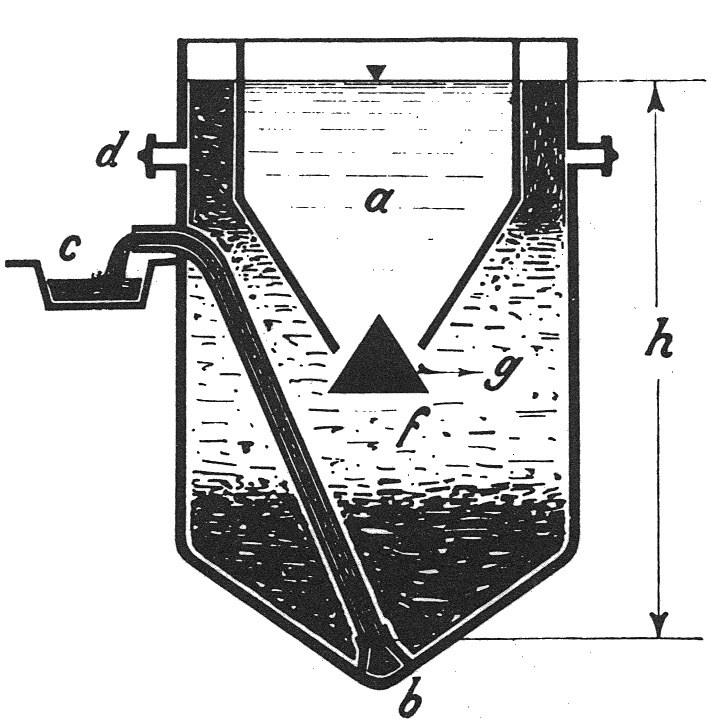


The Imhoff Tank
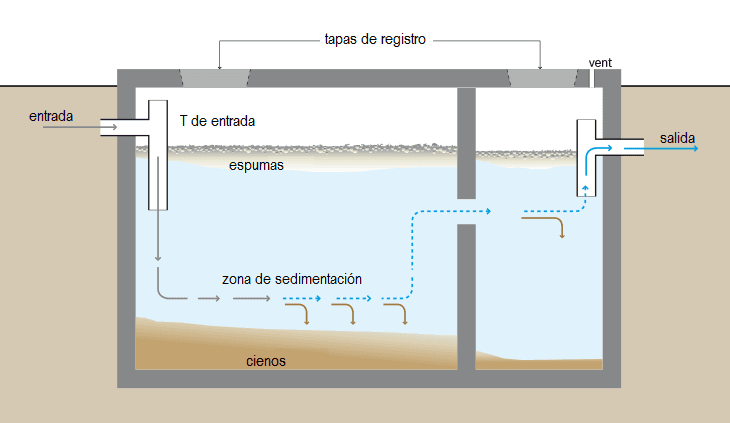
A septic tank does two jobs in one room and does them badly because they interfere. Solids settle to the floor, and on the floor they digest anaerobically and give off gas. The gas has to get out, and the only way out is up, through the settling water — dragging sludge particles with it, stirring the very layer that is supposed to be still. The tank fights itself.
Karl Imhoff's answer in 1906, built for the Emscher district in Germany, was to keep both jobs and put a wall between them. Build the tank in two storeys. The upper storey is a narrow flow-through channel where sewage settles for a couple of hours. Its floor slopes steeply to a slot. Solids slide down the slope, through the slot, and drop into the lower storey, which is a large chamber holding nothing but sludge, digesting quietly for months.
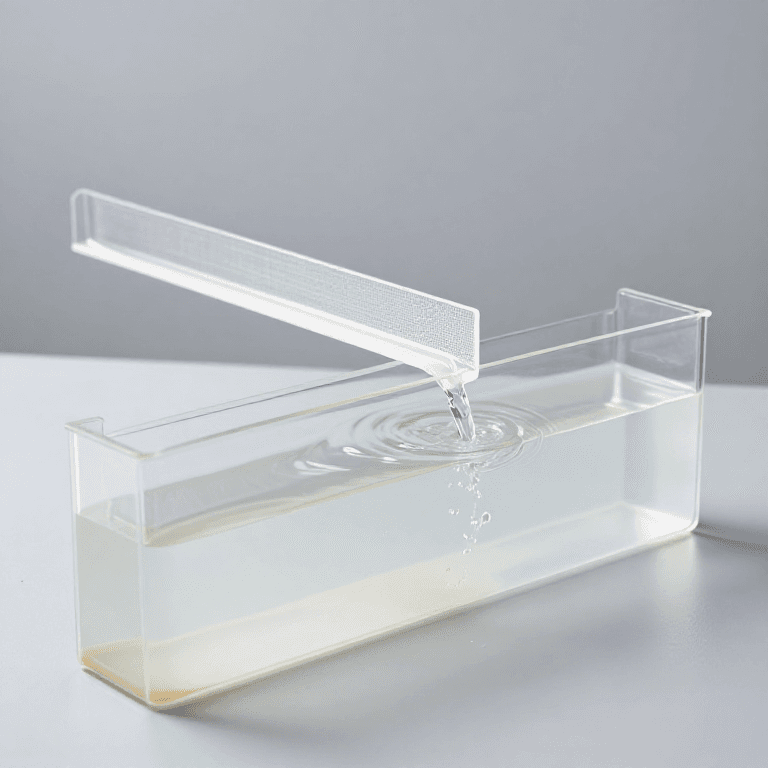
The whole invention is the slot. The two sloping floors do not meet: one overlaps the other by a couple of hundred millimetres, so the opening is offset rather than straight. Solids fall through it easily because they are falling. Gas rising from below hits the underside of the overlap and is deflected sideways to a separate vent, and cannot get back up into the settling channel. One-way traffic, achieved with no valve and no moving part, using nothing but the geometry of two overlapping plates.
What it buys is a works with no mechanical parts at all — no pumps, no scrapers, no power — which is exactly what a district needed in 1906 and exactly what makes it still relevant where maintenance is scarce. What it costs is depth: a full-scale Imhoff tank is seven to ten metres deep, because the digestion storey has to hold months of sludge. And it is unheated, so digestion runs at whatever temperature the ground gives it, which is why storage is measured in months rather than the weeks a heated digester needs.
You will build a transparent two-storey model, run it on synthetic wastewater, and watch the gas take the path the geometry gives it.
Trung cấp
10 hours to build, 3 months to reach steady state
Hướng dẫn
1
1
Cut and bond the two storeys
Cut and bond the two storeys
Cut the acrylic to the setting-out from step one. Six plain panels for the box, two sloping hopper plates, two vertical baffles to form the gas vents, and a small inlet baffle.
Cut acrylic slowly. It melts and re-welds behind a fast blade, and a rewelded kerf is a stressed edge that crazes later when solvent touches it. A fine-tooth blade at moderate speed, and let the offcut fall away freely.
Bond with acrylic solvent cement applied by capillary action: hold the joint together, touch a needle applicator to the seam, and let the solvent run into it. Do not butter the surfaces. The solvent softens both faces and they fuse; excess solvent leaves a cloudy, weak joint. Work in a ventilated space.
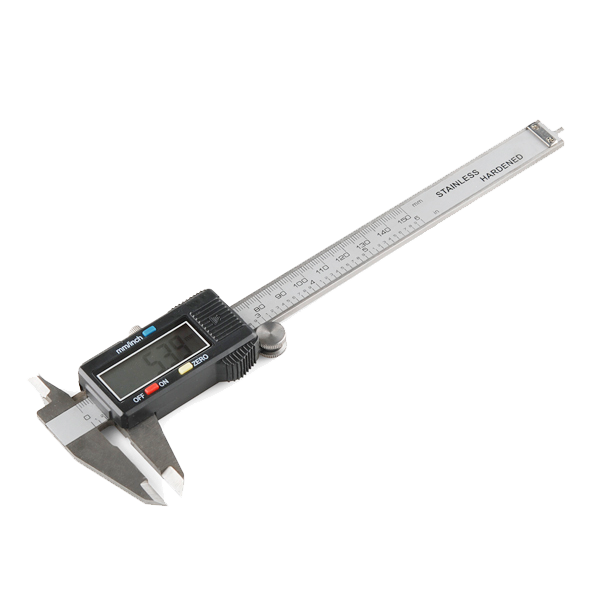
The order matters, because two of these joints are unreachable once the tank is closed. Build the base and the two long sides first. Fit the two sloping hopper plates next, checking the overlap dimension at the slot with calipers before the solvent sets — this is the one measurement that must be right, and it is the one you cannot correct afterwards. Fit the gas-vent baffles. Fit the ends last, and the second end last of all.
Cut the inlet as a 20 mm hole in one end, 60 mm below the intended water line, with a short baffle inside it so the incoming flow is directed downward and its momentum is broken before it reaches the settling zone. An unbaffled inlet jet short-circuits the channel and the tank settles nothing, which is a failure mode worth recognising because it looks identical to a tank that is simply too small.
Cut the outlet as a weir across the far end, a slot 20 mm deep with a hardboard or acrylic strip that can be adjusted for level. Fit a scum baffle 40 mm in front of it, dipping 50 mm below the water line, so floating material cannot leave over the weir.
Finally, fit a 15 mm drain with a valve at the bottom of the digestion hopper. That is how sludge comes out, and a tank without one has to be tipped up to empty, which destroys three months of stratification in ten seconds.
Vật liệu cho bước này:
 Tấm acrylic2 square metre
 Điclometan1 cái
 Ống PVC trong suốt1 metre
 Bộ phụ kiện ống PVC1 bộ
 Van bi1 cái
Công cụ cần thiết:
 Cưa sắt
 Máy khoan pin
 Bộ mũi khoan
 Digital Calipers - 152.4 mm
 Máy sấy dải để uốn acrylic
2
2
Settling in the upper storey — sizing by overflow rate, not by volume
Settling in the upper storey — sizing by overflow rate, not by volume
Đang tải sổ tay Jupyter…
Vật liệu cho bước này:
 Phẩm màu thực phẩm cô đặc1 cái
Công cụ cần thiết:
 Máy tính để bàn
 Đồng hồ bấm giờ
 Xô
Xô3
3
Commission it, and watch the gas take the path the geometry gives it
Commission it, and watch the gas take the path the geometry gives it
Fill the tank with clean water first and check the weir is level and the slot dimension is what you set out. Run clean water through for an hour and dye-test it: inject a slug of food colouring at the inlet and watch. You should see it move as a broad front along the channel. If it streaks straight from inlet to outlet along one wall or dives to the floor, the inlet baffle is not breaking the momentum and must be enlarged before you put anything organic in.
Seed the digestion chamber. Take two litres of sludge from an established anaerobic source — a septic tank, a farm digester, the bottom of a long-settled slurry pit — and introduce it into the lower storey through the sludge drain, not over the top. It must go in below the slot. This gives you the methanogenic organisms, which are slow-growing and which the tank will not otherwise acquire for months.
Feed the same defined synthetic wastewater used for the trickling filter — per 10 litres of tap water, 1.5 g glucose, 1.5 g peptone, 0.5 g ammonium chloride, 0.5 g sodium bicarbonate — dosed at whatever flow the notebook told you gives a three hour detention. Never real sewage in a transparent indoor tank.
Now the observation this whole build exists for. Within days to a couple of weeks, gas bubbles start rising from the digestion chamber. Watch where they go. They rise, meet the underside of the overlapping hopper plate, and run sideways along it until they reach the vent channel, where they break surface. Almost none come up through the slot. Put your eye level with the slot and watch for ten minutes: the traffic is downward, solids only.
Compare this directly with a septic tank, where gas rises through the settling layer and continuously lifts sludge back into suspension. That comparison is the point of the invention and you can see it with no instrument at all.
Two things to watch for as it matures. A scum blanket will form on the vents; that is normal, and it needs breaking with a rod weekly or it seals and drives gas back to the slot. And the sludge in the lower storey should stratify — actively digesting near the top, denser and more mineralised at the bottom. When you draw sludge, draw from the very bottom, slowly, and take only part of it: the resident sludge is your inoculum and emptying the chamber restarts the biology.
Vật liệu cho bước này:
 Glucose (dextrose)200 gram
 Pepton (dùng cho vi sinh)200 gram
 Amoni clorua (NH₄Cl)100 gram
 Natri bicacbonat200 gram
 Bùn giống kỵ khí2 lítPhẩm màu thực phẩm cô đặc1 cái
Công cụ cần thiết:
 Nhiệt kế phòng thí nghiệm
 Máy đo pH cầm tay dạng số
 Máy đo độ đụcĐồng hồ bấm giờXô
4
4
What it costs, what it cannot do, and when to choose it anyway
What it costs, what it cannot do, and when to choose it anyway
An Imhoff tank is a primary treatment device with digestion attached. It is not a complete works and it never was; Imhoff's own installations put trickling filters after them.
What it removes: 40 to 60 percent of suspended solids and 25 to 35 percent of biochemical oxygen demand. That is ordinary primary-settlement performance, and the effluent still needs biological treatment before it goes anywhere sensitive.
What it costs: depth, and therefore excavation. A works with a couple of hours of settling above months of sludge storage ends up seven to ten metres deep, and in high groundwater that is expensive or impossible.
What it cannot do: work fast. Digestion is unheated, so it runs at ground temperature, and in a cold climate that means the better part of a year of storage. It also cannot handle a shock of industrial waste, because there is no way to intervene — no mixing, no heating, no dosing. A poisoned digestion chamber recovers on its own schedule.
What it buys, and why it is still specified today: nothing moves. No pump, no scraper, no motor, no power supply, no operator who has to understand a control panel. Compare that with the activated-sludge process, which does far more and stops the moment the electricity does. For a small community with intermittent power and scarce maintenance, the Imhoff tank is not a historical curiosity but a live and often correct answer.
The diagram places it against the two neighbours in this chain — the septic tank it improves on, and the separate heated digester that took its digestion function and did it faster.
Flow
Loading...
Vật liệu
11- 2 square metreTạm thời
- 1 cáiTạm thời
- 1 metreTạm thời
- Tạm thời
- 1 cáiTạm thời
- Tạm thời
- 200 gramTạm thời
- 200 gramTạm thời
- 100 gramTạm thời
- 200 gramTạm thời
- 2 lítTạm thời
Công cụ yêu cầu
11- Tạm thời
- 1 vendor sell this, none ship to you yetTạm thời
- Tạm thời
- Digital Calipers - 152.4 mmHoa hồng 10%$14.10
- Tạm thời
- Tạm thời
- Tạm thời
- Tạm thời
- Tạm thời
- Tạm thời
- Tạm thời
Blueprint liên quan
Các blueprint này chia sẻ kiến thức — kỹ thuật, vật liệu hoặc nguyên tắc

CC0 Phạm vi công cộng
Bản thiết kế này được phát hành theo CC0. Bạn tự do sao chép, sửa đổi, phân phối và sử dụng cho bất kỳ mục đích nào mà không cần xin phép.
Hỗ trợ nhà sáng tạo bằng cách mua sản phẩm qua bản thiết kế, nơi họ nhận Hoa hồng nhà sáng tạo do nhà bán hàng đặt, hoặc tạo phiên bản mới và kết nối trong bản thiết kế riêng để chia sẻ doanh thu.