NGHỆ THUẬT
LÀM ĐẸP VÀ SỨC KHỎE
THỦ CÔNG
VĂN HÓA VÀ LỊCH SỬ
GIẢI TRÍ
MÔI TRƯỜNG
THỰC PHẨM VÀ ĐỒ UỐNG
KỸ THUẬT NGƯỢC
KHOA HỌC
THỂ THAO
CÔNG NGHỆ
THIẾT BỊ ĐEO
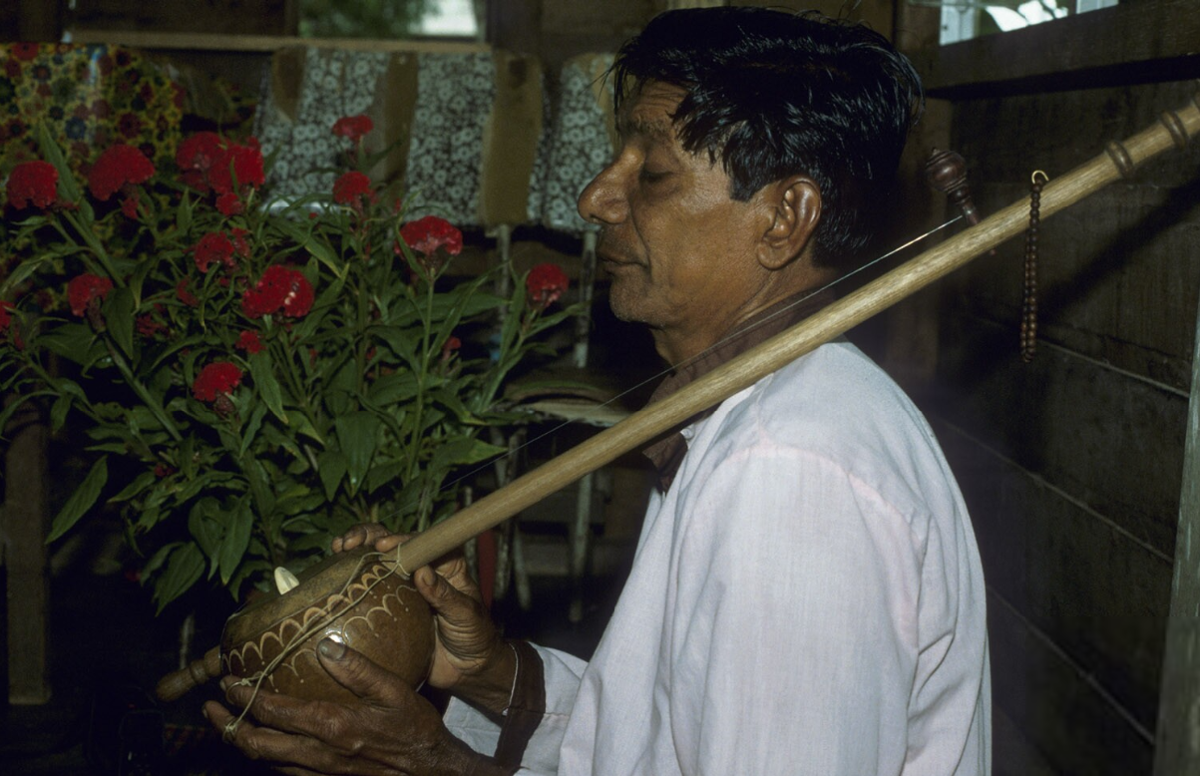
FAM Welman · CC BY-SA 4.0


Making an Ektara — India's One-String Drone You Bend by Squeezing
Build an ektara — literally 'one string': a gourd drum with a split-bamboo neck and a single string. Pluck it for a drone, then SQUEEZE the neck to slacken the string and bend the note down. A buildable school project that puts one of music's deepest facts — tension sets pitch — right in your hand.
Cơ bản
45 minutes
Hướng dẫn
1
1
One string, bent by hand
One string, bent by hand
The ektara — 'ek' one, 'tara' string — is the drone of India's wandering singers. You pluck its single string and SQUEEZE its springy neck to bend the note up and down.
2
2
Prepare the gourd resonator
Prepare the gourd resonator
Cut the top off a dried bottle gourd to make an open bowl. This gourd is the sound-body of the instrument.
Vật liệu cho bước này:
 Quả bầu khô già1 cái
Công cụ cần thiết:
 Dao khắc sloyd
3
3
Skin the opening
Skin the opening
Soak a piece of rawhide, stretch it drum-tight over the open mouth of the gourd, glue and lash it down, and let it dry hard. This skin will boom when the string is plucked.
Vật liệu cho bước này:
 Da sống1 cái
 Keo gỗ PVA1 cái
4
4
Split the neck
Split the neck
Take a length of bamboo and split it partway down into two long, springy arms — a forked neck that can flex when squeezed.
Vật liệu cho bước này:
 Tre1 cái
Công cụ cần thiết:
Dao khắc sloyd5
5
Fix the neck to the gourd
Fix the neck to the gourd
Fit the two arms of the neck onto opposite sides of the gourd, straddling the skin, and lash them on firmly so they stand up tall and springy.
Vật liệu cho bước này:
 Dây buộc sợi chuối abaca1 cái
6
6
Fit the tuning peg
Fit the tuning peg
Bore a hole near the top of the neck and fit a single tuning peg.
Vật liệu cho bước này:
 Trục lên dây1 cái
Công cụ cần thiết:
 Dùi
Dùi7
7
Attach the string
Attach the string
Tie the string to the very centre of the skin, run it straight up between the two neck arms, and wind it onto the peg.
Vật liệu cho bước này:
 Dây thép đàn hồi 0,032"1 cái
8
8
Tune the drone
Tune the drone
Turn the peg until the string gives a clear, ringing note. This single note is the drone the whole instrument is built around.
9
9
Pluck it
Pluck it
Pluck the string with one finger. The skin booms and the string rings out its steady drone, richer and louder than a bare string could ever be.
10
10
Squeeze to bend the note
Squeeze to bend the note
Now SQUEEZE the two neck arms together. They flex inward, slackening the string, and the note DROPS. Let go and it springs back up — the ektara's bouncing 'boing'.
11
11
Play with the beat
Play with the beat
Pluck in time and pulse your squeeze so the drone bends up and down under the rhythm — the hypnotic sound the Baul singers of Bengal carry through their songs.
12
12
Compendium — tension, pitch and the skin drum
Compendium — tension, pitch and the skin drum
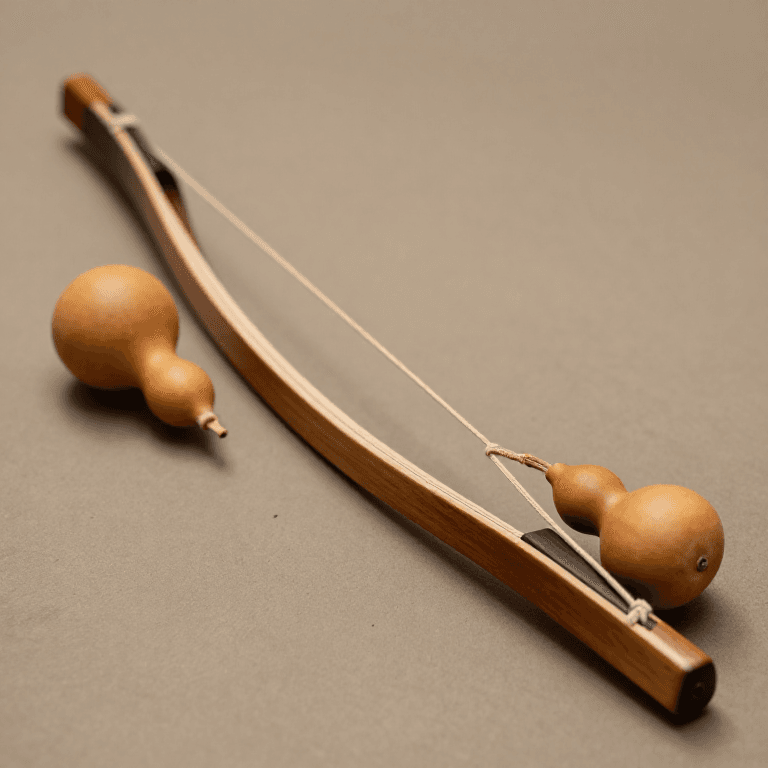
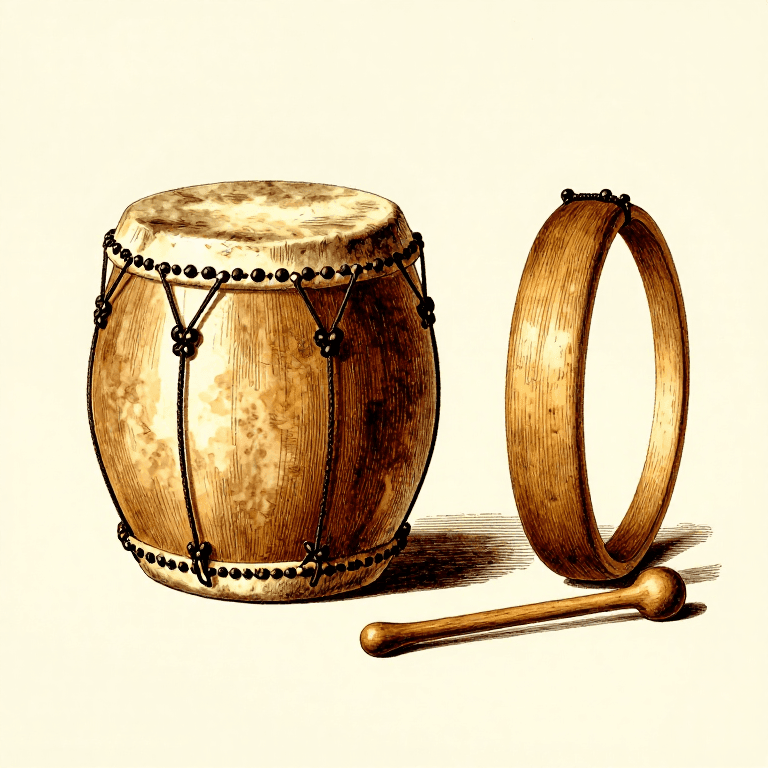
The ektara turns one of the deepest facts of music into something you feel in your hand: a string's pitch depends on its TENSION. Pull a string tighter and it rises; let it go slack and it falls. On most instruments the tension stays fixed while you play, and you change the note by shortening the string with frets or fingers — but the ektara does the opposite. Its one string never changes length; instead, squeezing the two springy arms of the split-bamboo neck bends them inward, which slackens the string and drops the pitch, and releasing them lets the arms spring back so the note rises. That living, sliding drone is the ektara's whole voice. It is the same physics as the musical bow, whose string tension bends the wooden stave into a bow — here the idea is simply turned around, with the player doing the bending by hand. And like the erhu and the banjo, the ektara sings through a skin: the string is tied to the middle of a stretched membrane over the gourd, and that membrane radiates the sound far more strongly than a bare string could. The ektara is the instrument of India's wandering singers, above all the Bauls of Bengal; add a second string and a longer neck and it grows toward the dotara and the wider family of Indian lutes.
Vật liệu
7- 1 cáiTạm thời
- 1 cáiTạm thời
- 1 cáiTạm thời
- 1 cáiTạm thời
- Tạm thời
- 1 cáiTạm thời
- Tạm thời
Bản thiết kế này làm ra
Blueprint liên quan
Các blueprint này chia sẻ kiến thức — kỹ thuật, vật liệu hoặc nguyên tắc

CC0 Phạm vi công cộng
Bản thiết kế này được phát hành theo CC0. Bạn tự do sao chép, sửa đổi, phân phối và sử dụng cho bất kỳ mục đích nào mà không cần xin phép.
Hỗ trợ nhà sáng tạo bằng cách mua sản phẩm qua bản thiết kế, nơi họ nhận Hoa hồng nhà sáng tạo do nhà bán hàng đặt, hoặc tạo phiên bản mới và kết nối trong bản thiết kế riêng để chia sẻ doanh thu.