
Kukusanya Udongo wa Mchwa — Nyenzo ya Ujenzi wa Jadi ya Afrika Mashariki
Hướng dẫn
Elewa kwa nini udongo wa mchwa ni bora
Elewa kwa nini udongo wa mchwa ni bora
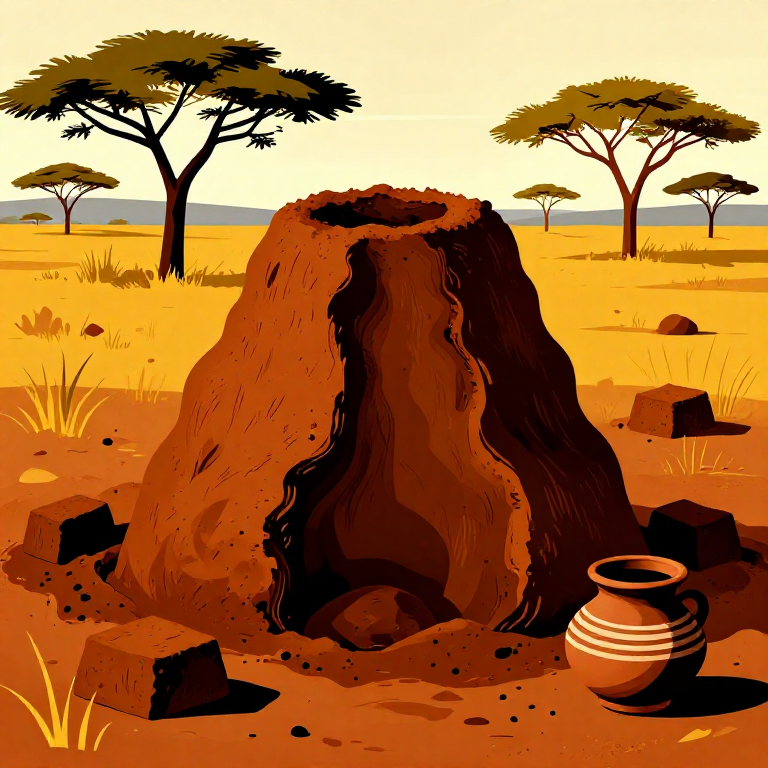
Mchwa (hasa spishi Macrotermes na Odontotermes) huchimba udongo kutoka kina cha mita 3-10 chini ya ardhi. Wanachagua chembe chembe ndogo sana (clay particles chini ya 0.002 mm) na kuzibeba juu kwa midomo yao. Mate ya mchwa yana polysaccharides na glycoproteins ambazo zinafanya kazi kama gundi ya asili, zikiunganisha chembe chembe za udongo pamoja. Matokeo yake ni udongo ambao una sifa bora kuliko udongo wa kawaida: nguvu ya kubana (compressive strength) mara 2-4 zaidi, upenyezaji wa maji mdogo sana, na uwezo wa kustahimili mmomonyoko. Ndiyo maana nyumba za udongo wa mchwa zinaweza kudumu miaka 50-100.
Tofautisha vilima hai na vilivyoachwa
Tofautisha vilima hai na vilivyoachwa
Ni muhimu sana kutofautisha kati ya vilima vya mchwa vilivyo hai na vilivyoachwa. Vilima hai: vina shughuli za mchwa zinazoonekana (mchwa wakitembea), vyenye unyevu ndani, mara nyingi vina udongo mpya laini juu. Vilima vilivyoachwa: vimekuwa vigumu na kavu, hakuna mchwa wanaoonekana, mimea inaweza kuwa imeanza kukua juu yake. TUMIA VILIMA VILIVYOACHWA TU — kuvunja vilima hai kunaharibu koloni ya mchwa na mfumo wa ikolojia wa eneo. Mchwa ni muhimu sana kwa afya ya udongo — wanasogeza na kuchanganya udongo, kuboresha mifereji ya maji, na kusaidia kuoza kwa mimea iliyokufa.
Chagua kilima kinachofaa
Chagua kilima kinachofaa
Tafuta vilima vilivyoachwa vya ukubwa wa wastani hadi kubwa (urefu wa mita 1-3). Vilima vikubwa vya Macrotermes vinaweza kufikia urefu wa mita 5-8 katika maeneo mengine ya Afrika. Angalia rangi ya udongo — udongo mwekundu au wa kahawia-mwekundu (wenye iron oxide) ni imara zaidi kuliko udongo wa kijivu. Epuka vilima vilivyo karibu sana na mito au maeneo yenye mafuriko — udongo wake unaweza kuwa na mchanga mwingi. Kilima kimoja cha wastani (mita 1.5 urefu) kinaweza kutoa kilo 200-500 za udongo bora wa ujenzi.
Tayarisha zana za kazi
Tayarisha zana za kazi
Zana zinazohitajika: jembe au sururu kubwa kwa kuvunja kilima, koleo kwa kuchimba, ndoo kwa kubeba udongo, nyundo nzito kwa kuvunja vipande vikubwa. Vilima vya mchwa vilivyokauka vinaweza kuwa vigumu sana — udongo umeshikamana na mate ya mchwa hadi kuwa kama zege laini. Unaweza kuhitajia patasi na nyundo kwa vipande vigumu zaidi. Vaa glavu za kazi na viatu imara — udongo wa mchwa unaweza kuwa na miiba ya mimea iliyokwama ndani yake.
Công cụ cần thiết:
 Cuốc bàn
 Cuốc chim
 Xẻng
Xẻng Búa nặng
 Đục nguội
 Găng tay da bảo hộ
 Ủng chắc chắn
Vunja kilima kwa hatua
Vunja kilima kwa hatua
Anza kuvunja kilima kutoka juu kwenda chini. Tumia jembe au sururu kupiga na kulegeza vipande vya udongo. Ondoa vipande vikubwa na kuviweka pembeni. Sehemu ya ndani ya kilima ina muundo wa vyumba na vifungu (chambers and tunnels) vilivyojengwa na mchwa — hii ni kawaida na haiathiri ubora wa udongo. Kwa kweli, muundo huu wa mashimo ndio unaofanya udongo kuwa mzuri kwa ujenzi baada ya kusagwa — unakuwa na hewa ndogo ndani ambayo inasaidia kukauka sawasawa. Kusanya kilo 100-200 kwa siku moja ya kazi.
Vật liệu cho bước này:
 Đất sét tổ mối (thô, lấy từ tổ bỏ hoang)200 kilogram
Công cụ cần thiết:
Cuốc bànCuốc chim Xô thu gom
Saga udongo kuwa vipande vidogo
Saga udongo kuwa vipande vidogo
Vunja vipande vikubwa vya udongo wa mchwa kuwa vipande vidogo vya sentimita 3-5 kwa kutumia nyundo. Weka udongo juu ya uso mgumu (jiwe tambarare au sehemu ya saruji). Vipande vidogo vitayeyuka kwa urahisi zaidi vinapomwagiliwa maji baadaye. Ondoa mizizi, mawe, na uchafu wowote unaoonekana. Udongo wa mchwa mzuri una rangi sawa na muundo mnene usio na chembe kubwa za mchanga.
Công cụ cần thiết:
Búa nặng Tảng đá phẳng lớn
Kausha udongo juani
Kausha udongo juani
Tandaza vipande vya udongo kwenye turubai au juu ya sehemu safi, sawa chini ya jua kali kwa siku 1-2. Udongo mkavu husagika kwa urahisi zaidi kuliko udongo wenye unyevu. Geuza udongo mara kwa mara ili ukauke sawasawa pande zote. Udongo umekauka vya kutosha unapovunjika kwa urahisi ukipigwa na nyundo na kuwa unga.
Công cụ cần thiết:
 Bạt trải nền
Saga na uchekecheshe udongo
Saga na uchekecheshe udongo
Ponda udongo mkavu kuwa unga kwa kutumia nyundo na kinu (au mchi). Kisha chekecheshe kupitia ungo wenye matundu ya milimita 5-10 ili kuondoa mawe, mizizi, na vipande vikubwa. Udongo uliochekecheshwa unapaswa kuwa unga laini na sawa. Kama unataka udongo bora zaidi wa kuplasta kuta, tumia ungo mwembamba zaidi (milimita 2-3). Hifadhi udongo uliochekecheshwa katika magunia au ndoo kavu.
Công cụ cần thiết:
 Cối và chày
 Sàng
Sàng Rây mịn
 Xô chứa đồ
Pima ubora wa udongo kwa mtihani wa mpira
Pima ubora wa udongo kwa mtihani wa mpira
Chukua konzi ya udongo uliochekecheshwa na uchanganye na maji kidogo kidogo hadi upate donge laini kama unga wa mkate (plastiki lakini halinati sana). Viringishe donge kuwa mpira wa kipenyo cha sentimita 3. Uache mpira uanguke kutoka urefu wa mita 1 hadi chini ya uso mgumu. Mpira mzuri wa udongo wa mchwa unapaswa kubonyea kidogo lakini usipasuke — hii inaonyesha uwiano mzuri wa clay na silt. Ikiwa mpira unavunjika kabisa, udongo una mchanga mwingi mno. Ikiwa mpira unabana sana bila kubonyea, udongo una clay nyingi mno na unahitaji mchanga kuongezwa.
Vật liệu cho bước này:
 Nước sạch (để xả)1 lít
Pima ubora kwa mtihani wa kamba
Pima ubora kwa mtihani wa kamba
Viringishe udongo wenye unyevu kuwa kamba ndefu ya milimita 3 unene kwa kubiringisha kati ya viganja na uso wa meza. Kama kamba inafikia urefu wa sentimita 10-15 bila kuvunjika, udongo una kiwango kizuri cha clay kwa ujenzi. Kamba inayovunjika chini ya sentimita 5 inaonyesha mchanga mwingi. Kamba inayofikia sentimita 20+ bila kuvunjika inaonyesha clay nyingi sana — unaweza kuhitaji kuchanganya na mchanga au nyasi kuupunguza. Uwiano bora kwa matofali ya udongo ni clay 20-30%, silt 40-50%, na mchanga 20-30%.
Changanya udongo na maji kwa matumizi
Changanya udongo na maji kwa matumizi
Kwa matumizi ya ujenzi, changanya udongo uliochekecheshwa na maji kidogo kidogo hadi upate msimamo unaofaa. Kwa matofali: udongo uwe mnene lakini unaoweza kuumbwa (kama unga wa chapati mgumu). Kwa plasta ya kuta: udongo uwe laini zaidi (kama uji mnene). Uwiano wa kawaida ni ndoo 1 ya maji kwa ndoo 3-4 za udongo mkavu, lakini hii inategemea aina ya udongo. Changanya kwa jembe au miguu (kukanyaga udongo ni njia ya jadi na yenye ufanisi) kwa dakika 15-20 hadi mchanganyiko uwe sawa kabisa bila mabonge.
Vật liệu cho bước này:
Nước sạch (để xả)30 lítCông cụ cần thiết:
 Cuốc trộn
 Máng trộn
Ongeza nyasi au makuti kama inavyohitajika
Ongeza nyasi au makuti kama inavyohitajika
Kwa matofali au kuta za udongo, ongeza nyasi kavu iliyokatwa (urefu wa sentimita 5-10) kwa uwiano wa takriban 5-10% ya uzito wa udongo. Nyasi inafanya kazi kama fiber reinforcement — inazuia nyufa wakati udongo unapokauka na kusinyaa. Mimea mbadala inayofaa ni pamoja na makuti ya nazi yaliyokatwa, majani ya mpunga, au makuti ya mtama. Changanya nyasi ndani ya udongo wenye unyevu kwa kukanyaga au kwa jembe hadi nyasi isambae sawasawa.
Vật liệu cho bước này:
 Rơm băm5 kilogram
Tengeneza tofali la majaribio
Tengeneza tofali la majaribio
Kabla ya kuanza ujenzi mkubwa, tengeneza matofali 2-3 ya majaribio. Jaza mold ya mbao (kawaida sentimita 30 x 15 x 10) na udongo uliochanganywa, bonyeza na kupiga ili kuondoa hewa iliyonaswa. Ondoa mold na acha tofali likauke juani kwa siku 7-14, likigeuza kila siku 2-3. Tofali lililokauka vizuri linapaswa kuwa: (1) gumu — halivunjiki ukiliangusha kutoka urefu wa mita 1, (2) halionyeshi nyufa kubwa (nyufa ndogo za uso ni za kawaida), (3) linatoa sauti ya metaliki ukipiga. Tofali la udongo wa mchwa lenye ubora mzuri lina nguvu ya kubana ya 1-3 MPa — linafaa kabisa kwa nyumba za ghorofa 1-2.
Công cụ cần thiết:
 Khuôn gạch bằng gỗ
Hifadhi udongo uliobaki kwa matumizi ya baadaye
Hifadhi udongo uliobaki kwa matumizi ya baadaye
Udongo wa mchwa uliochekecheshwa na mkavu unaweza kuhifadhiwa kwa miezi mingi katika magunia au ndoo zilizofungwa vizuri. Usiloweke udongo ambao unataka kuhifadhi — udongo mkavu haushambuliki na bakteria au ukungu. Weka katika sehemu kavu iliyoinuliwa kutoka ardhini. Wakati wa kutumia, loweka kwa maji masaa 12-24 kabla ya kuchanganya — hii inaruhusu chembe chembe za clay kunyonya maji sawasawa na kutoa udongo bora zaidi wa kazi. Udongo wa mchwa ni rasilimali inayoweza kurejeshwa — vilima vipya vya mchwa vinaendelea kujengwa na koloni mpya.
Công cụ cần thiết:
 Bao chứa (bịt kín)
 Sàn kho nâng cao
Vật liệu
4- 200 kilogramTạm thời
- 31 lítTạm thời
- 5 kilogramTạm thời
- 1 lítTạm thời
Công cụ yêu cầu
20- Tạm thời
- Tạm thời
- Tạm thời
- Tạm thời
- Tạm thời
- Tạm thời
- Tạm thời
- Tạm thời
- Tạm thời
- Tạm thời
- Tạm thời
- Tạm thời
- Tạm thời
- Tạm thời
- Tạm thời
- Tạm thời
- Tạm thời
- Tạm thời
- Tạm thời
- Tạm thời
Bản thiết kế này làm ra

CC0 Phạm vi công cộng
Bản thiết kế này được phát hành theo CC0. Bạn tự do sao chép, sửa đổi, phân phối và sử dụng cho bất kỳ mục đích nào mà không cần xin phép.
Hỗ trợ nhà sáng tạo bằng cách mua sản phẩm qua bản thiết kế, nơi họ nhận Hoa hồng nhà sáng tạo do nhà bán hàng đặt, hoặc tạo phiên bản mới và kết nối trong bản thiết kế riêng để chia sẻ doanh thu.