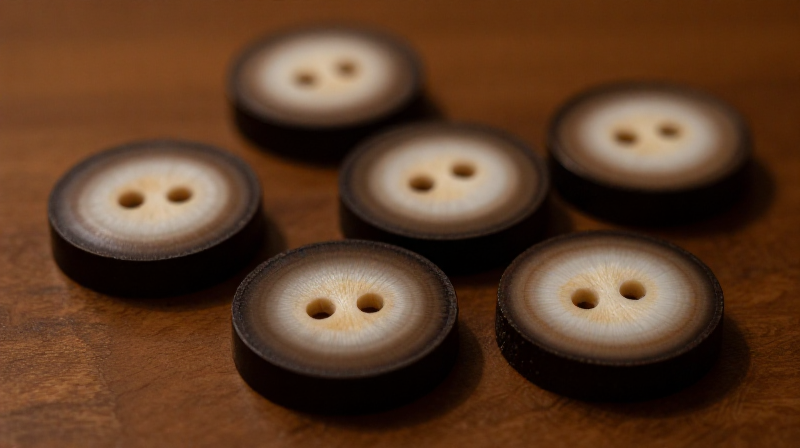


Making Deer Antler Buttons — Cross-Section Slices with Sewing Holes
Antler buttons were widely used from the Stone Age through the 19th century before plastic replaced them. Each cross-section slice is unique — the dark cortex ring, lighter spongy centre, and natural colour gradients make every button one of a kind. Deer antler is hard enough to hold up to daily wear and washing, and the material is completely renewable since male deer shed and regrow their antlers every year.
This blueprint covers making a set of two-hole or four-hole sewing buttons from a single deer antler section: sawing thin rounds, sanding flat, drilling sewing holes, and sealing with beeswax.
Hướng dẫn
Select a beam or thick tine section
Select a beam or thick tine section
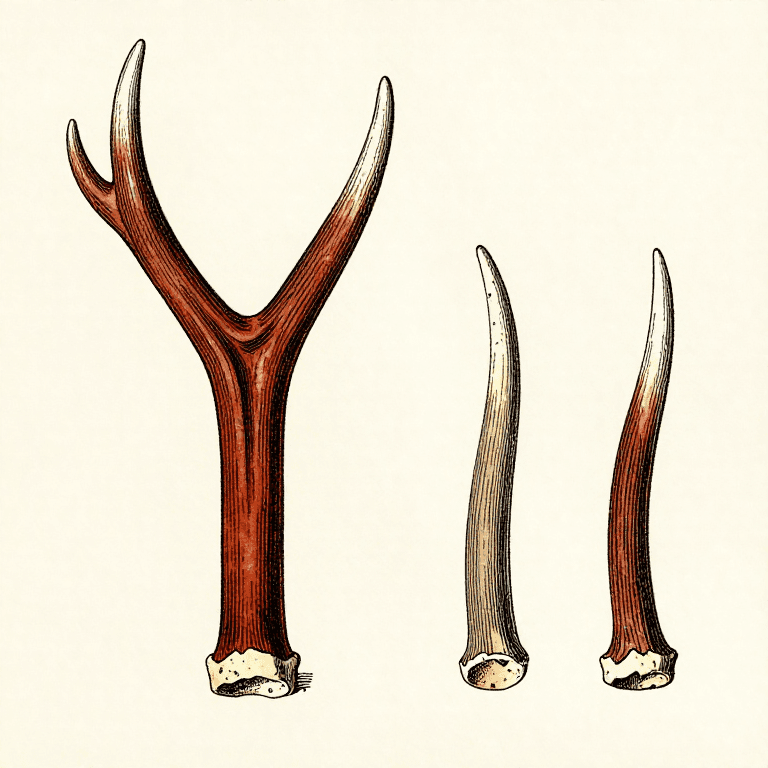
Choose a section of the main beam or a thick tine where the diameter matches the button size you want — typically 20-35 mm across. The lower beam produces larger buttons. The natural colour variation in cross-section (dark cortex ring, lighter spongy centre) gives each button a unique appearance.
Vật liệu cho bước này:
 Đoạn gạc hươu1 cái
 Hươu nai1 cái
Saw cross-section slices
Saw cross-section slices
Clamp the antler in a bench vise with protective jaw pads. Cut slices 4-5 mm thick using a fine-toothed hacksaw (32 TPI for the smoothest cut). Saw slowly and let the blade do the work — forcing it produces angled cuts. Mark each cut line with a pencil to keep slices uniform. One 15 cm beam section yields 20-25 buttons.
Công cụ cần thiết:
 Ê tô bàn nguội
 Cưa sắt
Sand both faces flat
Sand both faces flat
Lay sandpaper (120 grit) flat on a hard surface and sand each button face by rubbing it in small circles. This flattens the hacksaw marks and ensures both faces are parallel. Progress through 220, then 400 grit. The cortex ring becomes glossy and the spongy centre takes on a creamy texture.
Vật liệu cho bước này:
 Giấy nhám1 tờGiấy nhám1 tờGiấy nhám1 tờ
Drill sewing holes
Drill sewing holes
Mark two or four holes evenly spaced, 3-4 mm from the centre. Clamp the slice flat on a scrap board and drill through with a 1.5-2 mm bit at low speed. The slice is thin and can crack if forced, so use light pressure and let the bit cut at its own pace.
Công cụ cần thiết:
 Máy khoan pin
 Bộ mũi khoan
Seal with beeswax
Seal with beeswax
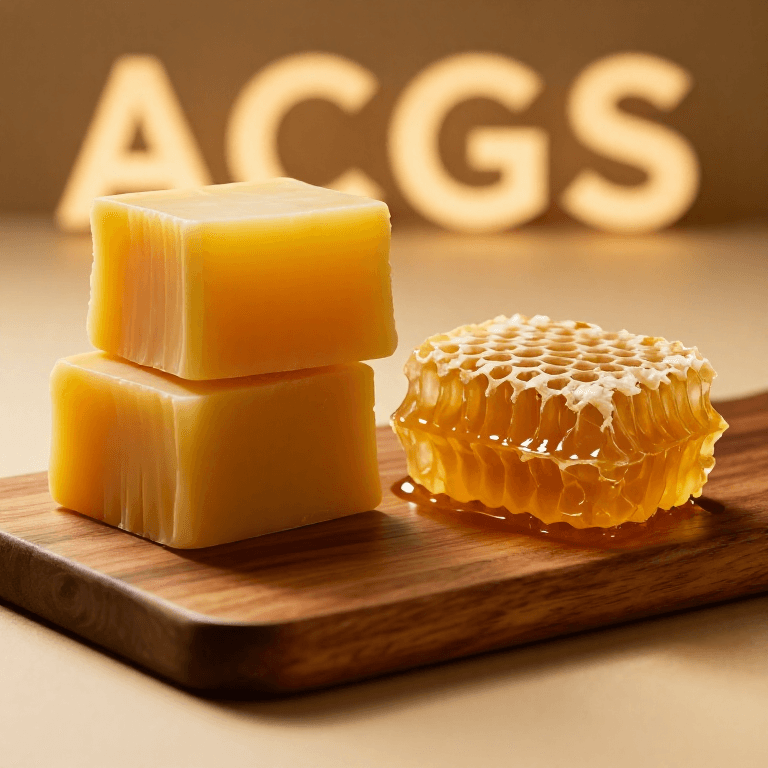
Rub a thin coat of melted beeswax over each button and buff with a soft cloth. This seals the porous spongy centre and adds a subtle sheen. Buttons sewn onto garments need no re-finishing — body oils keep them conditioned naturally over time.
Vật liệu cho bước này:
 Sáp ong dạng hạt20 g
Vật liệu
6- 1 cáiTạm thời
- 1 cáiTạm thời
- 1 tờTạm thời
- 1 tờTạm thời
- 1 tờTạm thời
- 20 gTạm thời
Công cụ yêu cầu
4- Tạm thời
- Tạm thời
- 1 vendor sell this, none ship to you yetTạm thời
- Tạm thời
Vật liệu bản thiết kế liên kết


Bản thiết kế này làm ra

Blueprint liên quan
Các blueprint này chia sẻ kiến thức — kỹ thuật, vật liệu hoặc nguyên tắc
CC0 Phạm vi công cộng
Bản thiết kế này được phát hành theo CC0. Bạn tự do sao chép, sửa đổi, phân phối và sử dụng cho bất kỳ mục đích nào mà không cần xin phép.
Hỗ trợ nhà sáng tạo bằng cách mua sản phẩm qua bản thiết kế, nơi họ nhận Hoa hồng nhà sáng tạo do nhà bán hàng đặt, hoặc tạo phiên bản mới và kết nối trong bản thiết kế riêng để chia sẻ doanh thu.