

Making Soda Ash by the Leblanc Process — The Chemical That Made Soap and Glass Affordable
Soda ash (sodium carbonate, Na₂CO₃) was for centuries one of the most expensive and scarce industrial chemicals. It was essential for making glass, soap, paper, and textiles — yet the only sources were the ashes of coastal plants (barilla in Spain, kelp in Scotland) or natural deposits like Egyptian natron. The price kept glass and soap as luxuries. In 1791, Nicolas Leblanc, a French surgeon turned chemist, patented an ingenious process to manufacture soda ash from common table salt — breaking the bottleneck that had constrained European industry for centuries.
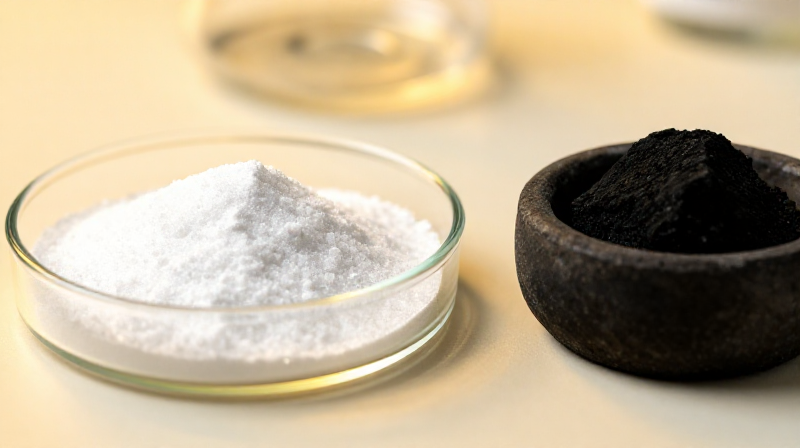
The Leblanc Process has three stages. First, salt is reacted with sulfuric acid to produce sodium sulfate ('salt cake') and hydrochloric acid gas. Second, the salt cake is mixed with charcoal (carbon) and crushed limestone (calcium carbonate) and heated to around 900 °C in a furnace. The carbon reduces the sodium sulfate to sodium sulfide, which immediately reacts with the limestone to form sodium carbonate and calcium sulfide. The resulting sintered mass — called 'black ash' — contains the soda ash mixed with insoluble calcium sulfide. Third, the black ash is leached with hot water: sodium carbonate dissolves while calcium sulfide remains behind. The solution is evaporated to crystallise pure soda ash.
Leblanc's process transformed the chemical industry but destroyed its inventor. The French Revolution seized his factory, and Leblanc died impoverished in 1806. His process, however, dominated world soda ash production for a century until the Solvay Process (1861) gradually displaced it. The Leblanc Process was also one of history's great polluters — the hydrochloric acid gas corroded everything downwind, and mountains of calcium sulfide waste (tank waste) poisoned the landscape around every alkali works.
SAFETY WARNING: Concentrated sulfuric acid causes severe burns on contact. Hydrochloric acid gas is acutely toxic and corrosive — it will corrode metal fittings, damage lungs, and etch glass. The furnace step requires temperatures above 900 °C. Work ONLY in a fume hood or outdoors with full PPE. Never add water to concentrated sulfuric acid — always add acid to salt.
Hướng dẫn
Prepare full protective equipment and fume hood
Set up inside a functioning fume hood — this process produces large volumes of hydrochloric acid gas, one of the most corrosive gases encountered in chemistry. Wear a respirator with acid gas cartridges, chemical splash goggles, heavy-duty nitrile gloves, and a full lab coat. Concentrated sulfuric acid causes immediate severe burns on skin contact. Have a large bucket of water available for acid spills. The furnace step later requires heat-resistant gloves. All three stages of the Leblanc Process involve serious hazards — maintain full PPE throughout.
Công cụ cần thiết:
P100/FFP3 Respirator with Acid Gas Cartridge
Chemical Splash Goggles
Nitrile Rubber Gloves (Thick)
Lab CoatWeigh and prepare the table salt
Weigh and prepare the table salt
Weigh 20 g of sodium chloride (table salt, NaCl). Use fine-grained salt, not rock salt — a larger surface area reacts faster with sulfuric acid. Transfer the salt to a round-bottom flask fitted with a side-arm adapter or a bent glass tube leading into a beaker of water. The tube will carry the hydrochloric acid gas away from you and absorb it in water (producing hydrochloric acid solution as a useful byproduct — exactly as Leblanc's successors learned to capture this former pollutant).
Vật liệu cho bước này:
Sodium Chloride (table salt)20 gCông cụ cần thiết:
Digital Precision Scale
Round-Bottom FlaskAdd concentrated sulfuric acid to the salt
Add concentrated sulfuric acid to the salt
Carefully pour 10 ml of concentrated sulfuric acid (96% H₂SO₄) onto the salt in the flask. The reaction begins immediately at room temperature with visible fizzing and white fumes of HCl gas: NaCl + H₂SO₄ → NaHSO₄ + HCl↑. At this stage, only one chloride is displaced, producing sodium bisulfate. The white, choking fumes are hydrochloric acid gas — in early Leblanc works, this gas was simply vented into the atmosphere, destroying crops and corroding buildings for miles downwind until the Alkali Act of 1863 forced its capture.
Vật liệu cho bước này:
Heat to complete the salt cake reaction
Heat the flask gently, raising the temperature gradually to 150–200 °C. At higher temperature, the second chloride is displaced: NaCl + NaHSO₄ → Na₂SO₄ + HCl↑. Vigorous white fumes pour from the flask as the remaining HCl is driven off. Continue heating until the fuming stops completely — this indicates all the hydrochloric acid has been expelled and only sodium sulfate remains. The process takes 30–45 minutes. The residue in the flask is 'salt cake' — a white, powdery mass of anhydrous sodium sulfate (Na₂SO₄).
Công cụ cần thiết:
Thermometer (Lab)
Alcohol Burner (Spirit Lamp)Cool and extract the salt cake
Cool and extract the salt cake
Allow the flask to cool to room temperature. The salt cake is a hard, white, crusty mass adhering to the flask walls. Scrape it out with a glass stirring rod or spatula. If it is firmly stuck, add a small amount of water to dissolve the surface layer and pour out — then dry the recovered salt cake at 100 °C. Expected yield from 20 g NaCl: approximately 22–24 g of sodium sulfate. The salt cake feels gritty and slightly chalky — quite different from the original table salt.
Công cụ cần thiết:
Glass Stirring Rod (25cm)Grind the salt cake to a fine powder
Grind the salt cake to a fine powder
Transfer the salt cake to a porcelain mortar and grind to a fine powder. Thorough grinding ensures intimate mixing with the charcoal and limestone in the next stage — the solid-state reaction at high temperature proceeds faster when particle sizes are small and contact between the three components is maximised. The powdered salt cake is white and odourless.
Công cụ cần thiết:
Mortar and Pestle (Porcelain)Weigh and crush the charcoal
Weigh and crush the charcoal
Weigh 5 g of hardwood lump charcoal and crush to small pieces (3–5 mm) in the mortar. The charcoal serves as the reducing agent — at high temperature, carbon reduces sodium sulfate to sodium sulfide: Na₂SO₄ + 2C → Na₂S + 2CO₂. This is the critical chemical transformation — converting the stable, unreactive sulfate into the reactive sulfide that can then exchange partners with limestone. Use hardwood charcoal, not activated charcoal — the latter is too finely divided and burns away before the reaction completes.
Vật liệu cho bước này:
Charcoal5 gWeigh the crushed limestone
Weigh the crushed limestone
Weigh 20 g of crushed limestone (calcium carbonate, CaCO₃). The limestone plays the decisive role in the final reaction: Na₂S + CaCO₃ → Na₂CO₃ + CaS. Sodium sulfide swaps its sulfur for the carbonate of the limestone — producing the desired sodium carbonate (soda ash) and calcium sulfide (the infamous 'tank waste' that plagued every Leblanc works). Use limestone crushed to pieces of 5–10 mm — finer if available.
Vật liệu cho bước này:
Calcium Carbonate (limestone, crushed)20 gMix salt cake, charcoal, and limestone thoroughly
Mix salt cake, charcoal, and limestone thoroughly
Combine the ground salt cake, crushed charcoal, and crushed limestone in a mortar or bowl. Mix thoroughly — every grain of salt cake should be in contact with both charcoal and limestone. This three-component mixture is the charge for the 'black ash furnace' — the heart of the Leblanc Process. In the industrial process, these ingredients were mixed in a reverberatory furnace and raked continuously by workers in brutal heat.
Transfer the charge to a clay crucible
Pack the mixture firmly into a deep clay crucible. Press down to ensure good contact between the components — the solid-state reactions require intimate mixing. The crucible must be refractory (fireclay or graphite-clay) rated to at least 1000 °C. Leave 1–2 cm of space at the top — the charge will sinter and fuse but does not expand significantly. Place a loose-fitting lid on the crucible to retain heat while allowing CO₂ to escape.
Công cụ cần thiết:
Clay Crucible (deep)Heat the crucible to 900 °C in a charcoal furnace
Heat the crucible to 900 °C in a charcoal furnace
Place the crucible in a charcoal furnace and bring to bright orange heat — approximately 900–1000 °C. At this temperature, two reactions proceed simultaneously: the carbon reduces sodium sulfate to sodium sulfide, releasing carbon dioxide (Na₂SO₄ + 2C → Na₂S + 2CO₂), and the sodium sulfide immediately reacts with the limestone to form sodium carbonate and calcium sulfide (Na₂S + CaCO₃ → Na₂CO₃ + CaS). Maintain full heat for at least one hour. The charge fuses into a dark, sintered mass — the 'black ash' that gives this stage its name.
Công cụ cần thiết:
Charcoal Furnace (small)
Crucible Tongs (long-handled)Cool the black ash
Cool the black ash
Remove the crucible from the furnace using long-handled tongs and set it on a heatproof surface to cool. The cooling takes 2–3 hours — do not quench with water, as thermal shock will crack the crucible. The black ash cools to a dark grey-black, hard, sintered mass with a characteristic sulfurous smell (from the calcium sulfide). This mass contains the sodium carbonate mixed with calcium sulfide — the task now is to separate them.
Crush the black ash
Crush the black ash
Break the black ash out of the crucible and crush to small pieces in the mortar. The material is hard and britite — it fractures rather than crumbles. Crush to pieces of 5–10 mm to maximise the surface area for leaching. The black colour comes from residual carbon; the grey from calcium sulfide and sodium carbonate. The smell of hydrogen sulfide (rotten eggs) may be noticeable — calcium sulfide reacts slowly with atmospheric moisture to release H₂S.
Công cụ cần thiết:
Mortar and Pestle (Porcelain)Leach the black ash with hot water
Leach the black ash with hot water
Transfer the crushed black ash to a glass beaker and add 200 ml of distilled water. Bring to a gentle boil and stir for 20 minutes. Sodium carbonate is highly soluble in hot water (about 450 g/L at 100 °C) and dissolves readily. Calcium sulfide is only sparingly soluble and remains as a grey-green sludge at the bottom — this is the 'tank waste' that the Leblanc alkali industry dumped in enormous heaps around their works, creating a characteristic stench of hydrogen sulfide that could be smelled for miles.
Vật liệu cho bước này:
Distilled Water (1 Liter)200 mlCông cụ cần thiết:
Glass Beaker (Borosilicate, 500ml)Filter the sodium carbonate solution
Filter the sodium carbonate solution
Filter the hot solution through filter paper in a glass funnel into a clean collection beaker. The pale yellow-green filtrate is a solution of sodium carbonate — crude soda liquor. The grey residue on the filter is calcium sulfide mixed with unreacted charcoal and limestone. Discard the residue carefully (it releases H₂S in contact with acids). The filtrate should be clear or only slightly coloured. If cloudy, filter a second time.
Công cụ cần thiết:
Filter Paper (fine pore)
Glass Funnel (Stemmed)
Glass Beaker (Borosilicate, 500ml)Evaporate to crystallise soda ash
Evaporate to crystallise soda ash
Pour the filtrate into a porcelain evaporating dish and heat gently to evaporate the water. Do not boil vigorously — gentle evaporation produces larger, purer crystals. As the volume reduces, white crystals of sodium carbonate decahydrate (washing soda, Na₂CO₃·10H₂O) begin to form around the edges. Continue until most of the water has evaporated and the dish is filled with a mass of white crystals. These can be heated further to 100 °C to drive off the water of crystallisation, converting them to the anhydrous soda ash (Na₂CO₃) — a white powder.
Công cụ cần thiết:
Evaporating Dish (Porcelain)Dry and test the soda ash
Dry and test the soda ash
Scrape the crystals from the evaporating dish and spread on a clean surface to dry at 100 °C for 2 hours. The finished product is a white, slightly gritty powder — soda ash. Test by dissolving a pinch in water: the solution should be strongly alkaline (pH 11–12 on indicator paper) and feel slippery between the fingers — the characteristic 'soapy' feel of sodium carbonate that made it essential for laundering and cleaning for centuries. Expected yield from 20 g salt: approximately 12–16 g of soda ash.
Công cụ cần thiết:
pH Indicator Paper (Universal, 200 Strips)Store the finished soda ash
Store the finished soda ash
Transfer the dried soda ash to a glass jar with a tight-fitting lid. Label with the product name (Sodium Carbonate / Soda Ash, Na₂CO₃), date, and source (Leblanc Process from NaCl + H₂SO₄). Store sealed — sodium carbonate absorbs moisture from the air and will cake if left open. The Leblanc Process made this essential chemical available in bulk for the first time, slashing the price of glass, soap, and paper — and in doing so launched the modern chemical industry. Its inventor Nicolas Leblanc saw none of the profit: the Revolution confiscated his factory in 1794, and he took his own life in 1806.
Công cụ cần thiết:
Glass Storage Jar with LidVật liệu
5- Tạm thời
- Tạm thời
- Tạm thời
Công cụ yêu cầu
19- Tạm thời
- Tạm thời
- Tạm thời
- Tạm thời
- Tạm thời
- Tạm thời
- Tạm thời
- Tạm thời
- Tạm thời
- Tạm thời
- Tạm thời
- Tạm thời
- Tạm thời
- Tạm thời
- Tạm thời
Vật liệu bản thiết kế liên kết

Making Sulfuric Acid by the Lead Chamber Process — The Acid That Built the Industrial Revolution
bởi Charlie
Công nghiệp

Making Charcoal from Hardwood — Pyrolysis in a Pit Kiln
bởi Charlie
Hóa học

Burning Lime from Limestone — The Oldest Chemical Industry on Earth
bởi Mary
Sản xuất trừ dần

Making Bleaching Powder — The Chlorine Chemistry That Made White Fabric Affordable
bởi Charlie
Công nghiệp
Blueprint liên quan
Các blueprint này chia sẻ kiến thức — kỹ thuật, vật liệu hoặc nguyên tắc

Making Soda-Lime Glass from Raw Materials — The Recipe That Has Not Changed in 5,000 Years
bởi Mary
Gia công thủy tinh

Burning Quicklime from Limestone — The Element That Built Civilization
bởi Peter
Cổ đại
Making Cold-Process Soap from Lye and Oils — Saponification Chemistry
bởi Nhà sáng tạo ẩn danh
Xà phòng
CC0 Phạm vi công cộng
Bản thiết kế này được phát hành theo CC0. Bạn tự do sao chép, sửa đổi, phân phối và sử dụng cho bất kỳ mục đích nào mà không cần xin phép.
Hỗ trợ nhà sáng tạo bằng cách mua sản phẩm qua bản thiết kế, nơi họ nhận Hoa hồng nhà sáng tạo do nhà bán hàng đặt, hoặc tạo phiên bản mới và kết nối trong bản thiết kế riêng để chia sẻ doanh thu.