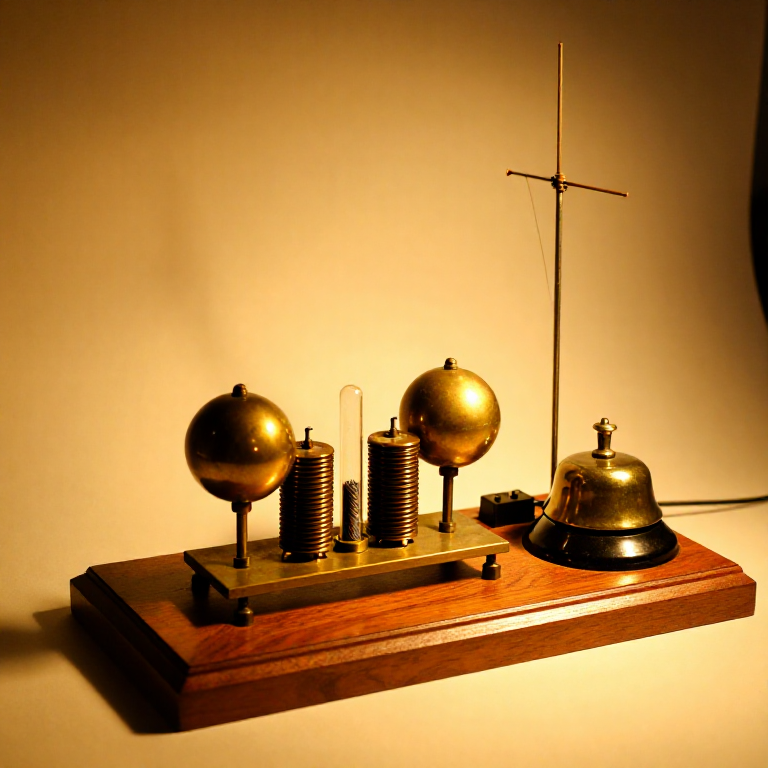


Telegrafo Senza Fili di Marconi
Hertz aveva già dimostrato nel 1887 che le onde elettromagnetiche esistono. Le produceva con una scintilla e le rivelava a pochi metri di distanza, e considerava la cosa una conferma della teoria di Maxwell: nessuna applicazione pratica.
Marconi non scoprì le onde. Le portò lontano. Due modifiche cambiarono tutto: un'antenna verticale elevata al posto delle piccole spire di Hertz, e soprattutto la messa a terra di un lato del trasmettitore e del ricevitore. Con questi due accorgimenti la portata passò da qualche metro a chilometri, poi a decine di chilometri.
Il brevetto si intitola «Transmitting Electrical Signals» — US 586.193, depositato il 7 dicembre 1896 e concesso il 13 luglio 1897. Marconi aveva ventitré anni e aveva cominciato nella soffitta di Villa Griffone, a Pontecchio vicino a Bologna.
Hướng dẫn
Un trasmettitore a scintilla è illegale quasi ovunque
Un trasmettitore a scintilla è illegale quasi ovunque
Un oscillatore a scintilla emette su tutto lo spettro e disturba i servizi radio. Costruirlo solo schermato, a potenza minima e senza antenna esterna, come dimostrazione da banco. Alta tensione: scaricare tutto prima di toccare.
Leggere il brevetto US 586.193
Leggere il brevetto US 586.193
Marconi rivendica la trasmissione di segnali attraverso aria, terra o acqua mediante oscillazioni ad alta frequenza. Cercare nel testo l'antenna elevata e il collegamento a terra: sono il vero contributo.
Ripetere prima l'esperimento di Hertz
Ripetere prima l'esperimento di Hertz
Due piccole spire con spinterometro: una scintilla nell'una produce una scintilla nell'altra a pochi centimetri. Funziona — e non serve a nulla a quella distanza.
Costruire il rocchetto di induzione
Costruire il rocchetto di induzione
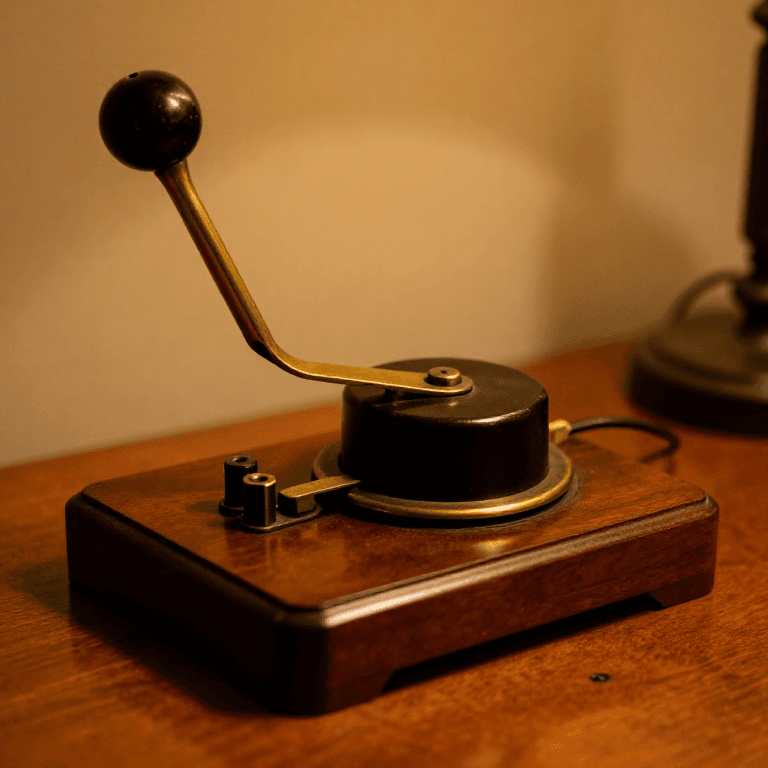
Avvolgere un primario di poche spire grosse e un secondario di molte spire sottili su un nucleo di ferro dolce. L'interruttore vibrante genera gli impulsi ad alta tensione.
Vật liệu cho bước này:
 Dây đồng tráng men100 mét
Regolare lo spinterometro
Regolare lo spinterometro
Due sfere metalliche affacciate con un piccolo traferro. Ogni scintilla è un impulso smorzato che contiene un'ampia banda di frequenze — non un'onda pura.
Vật liệu cho bước này:
 Thanh đồng thau tròn1 cái
Sollevare un'antenna verticale
Sollevare un'antenna verticale
Collegare un lato dello spinterometro a un filo verticale il più alto possibile. La portata cresce con l'altezza dell'antenna: è la scoperta empirica che Marconi fece per tentativi.
Vật liệu cho bước này:
 Dây đồng30 mét
Collegare l'altro lato a terra
Collegare l'altro lato a terra
Mettere a terra il secondo capo con una piastra interrata. Provare con e senza: la differenza di portata è enorme, e questo è il punto centrale del brevetto.
Capire perché la terra funziona
Capire perché la terra funziona
Il suolo fa da secondo elemento dell'antenna, come un'immagine speculare del filo verticale. Si ottiene un dipolo alto il doppio senza doverlo costruire.
Costruire il coherer
Costruire il coherer
Un tubetto di vetro con limatura metallica fra due elettrodi. A riposo ha resistenza altissima; investito da un'onda le particelle si saldano e conduce.
Vật liệu cho bước này:
 Ống mao dẫn thủy tinh1 cái
 Mạt sắt10 g
Aggiungere il martelletto che lo ripristina
Aggiungere il martelletto che lo ripristina
Il coherer resta conduttivo dopo il segnale: va scosso. Senza il decohereur automatico il ricevitore riceve un solo impulso e poi tace per sempre.
Mettere un relè fra coherer e suoneria
Mettere un relè fra coherer e suoneria
Il coherer commuta pochissima corrente. Un relè amplifica meccanicamente e comanda il campanello o il registratore Morse.
Dare la stessa antenna e terra al ricevitore
Dare la stessa antenna e terra al ricevitore
Anche il ricevitore vuole antenna elevata e messa a terra. La simmetria fra i due capi è ciò che moltiplica la portata utile.
Misurare la portata al variare dell'altezza
Misurare la portata al variare dell'altezza
Allontanare il ricevitore e annotare la distanza massima per tre altezze d'antenna. Il grafico che si ottiene è quello che Marconi tracciò nel 1895.
Công cụ cần thiết:
 Thước kẻ
Provare due trasmettitori insieme
Provare due trasmettitori insieme
Accenderne due contemporaneamente: il ricevitore non distingue nulla. La scintilla occupa tutto lo spettro, e la sintonia — brevetto n. 7777 del 1900 — nacque per questo.
Compendio — l'antenna e la terra
Compendio — l'antenna e la terra
Il brevetto. US 586.193, «Transmitting Electrical Signals», depositato il 7 dicembre 1896 e concesso il 13 luglio 1897 a Guglielmo Marconi; il corrispondente britannico è il n. 12.039 del 1896. Marconi iniziò gli esperimenti nel 1894 nella soffitta di Villa Griffone, presso Bologna. Il ministero delle Poste italiano non mostrò interesse, e Marconi si trasferì in Inghilterra, dove trovò finanziamenti e clientela — soprattutto marittima.
Cosa aggiunse davvero. Hertz aveva prodotto e rivelato onde elettromagnetiche già nel 1887, considerandole una verifica delle equazioni di Maxwell senza utilità pratica; Édouard Branly aveva inventato il coherer nel 1890 e Oliver Lodge lo aveva usato per ricevere segnali. Marconi non inventò nessuno di questi elementi. Il suo contributo fu ingegneristico e sperimentale: l'antenna verticale elevata e la messa a terra di trasmettitore e ricevitore, che insieme trasformarono una portata di metri in una di chilometri. È un caso limpido in cui l'invenzione non è un componente nuovo ma una configurazione nuova di componenti noti.
Perché la terra conta tanto. Il suolo conduttore si comporta da piano riflettente: crea un'immagine elettrica del filo verticale, sicché un'antenna alta h si comporta all'incirca come un dipolo di lunghezza doppia. Si ottiene metà dell'antenna gratis, e l'irradiazione a bassa incidenza — quella utile per coprire distanze sulla superficie terrestre — migliora nettamente. Le antenne verticali con piano di terra funzionano ancora oggi per questo motivo.
Il limite della scintilla, e come fu superato. Un oscillatore a scintilla emette un impulso smorzato che occupa un'enorme larghezza di banda: due stazioni vicine si disturbano irrimediabilmente e non esiste alcuna selettività. Marconi affrontò il problema con i circuiti accordati del brevetto britannico n. 7777 del 1900, che introducono la sintonia. La soluzione definitiva arrivò però con le onde continue generate da valvole termoioniche, dopo l'Audion di De Forest: solo allora divennero possibili la voce, la musica e la radiodiffusione. La trasmissione transatlantica del 12 dicembre 1901 fu annunciata come ricezione della lettera S in codice Morse; l'esperimento non fu documentato in modo rigoroso e alcuni storici ne discutono tuttora la validità, cosa che vale la pena riferire con onestà.
Vật liệu
5- 100 métTạm thời
- 1 cáiTạm thời
- 30 métTạm thời
- Tạm thời
- 10 gTạm thời
Blueprint liên quan
Các blueprint này chia sẻ kiến thức — kỹ thuật, vật liệu hoặc nguyên tắc


CC0 Phạm vi công cộng
Bản thiết kế này được phát hành theo CC0. Bạn tự do sao chép, sửa đổi, phân phối và sử dụng cho bất kỳ mục đích nào mà không cần xin phép.
Hỗ trợ nhà sáng tạo bằng cách mua sản phẩm qua bản thiết kế, nơi họ nhận Hoa hồng nhà sáng tạo do nhà bán hàng đặt, hoặc tạo phiên bản mới và kết nối trong bản thiết kế riêng để chia sẻ doanh thu.