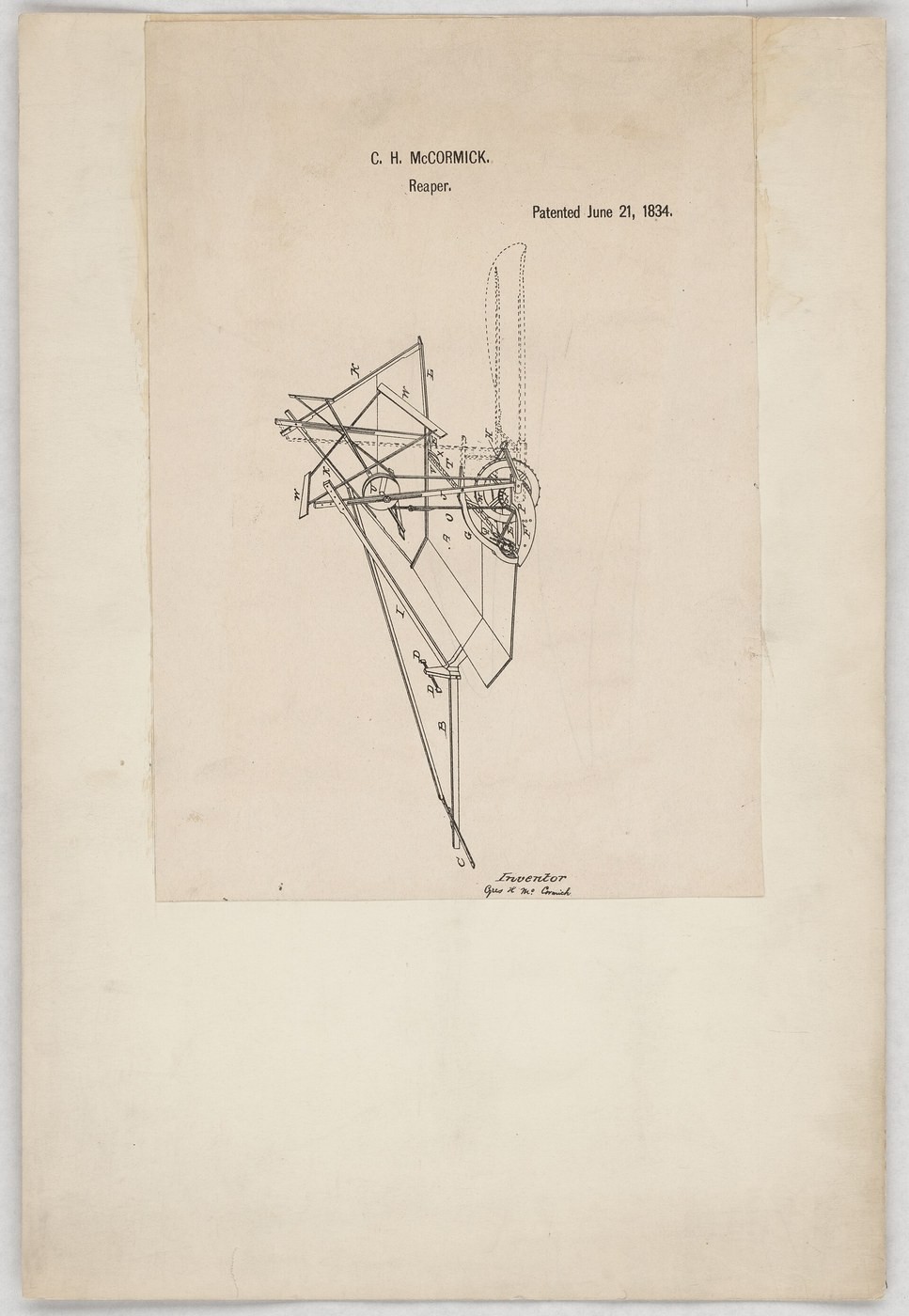


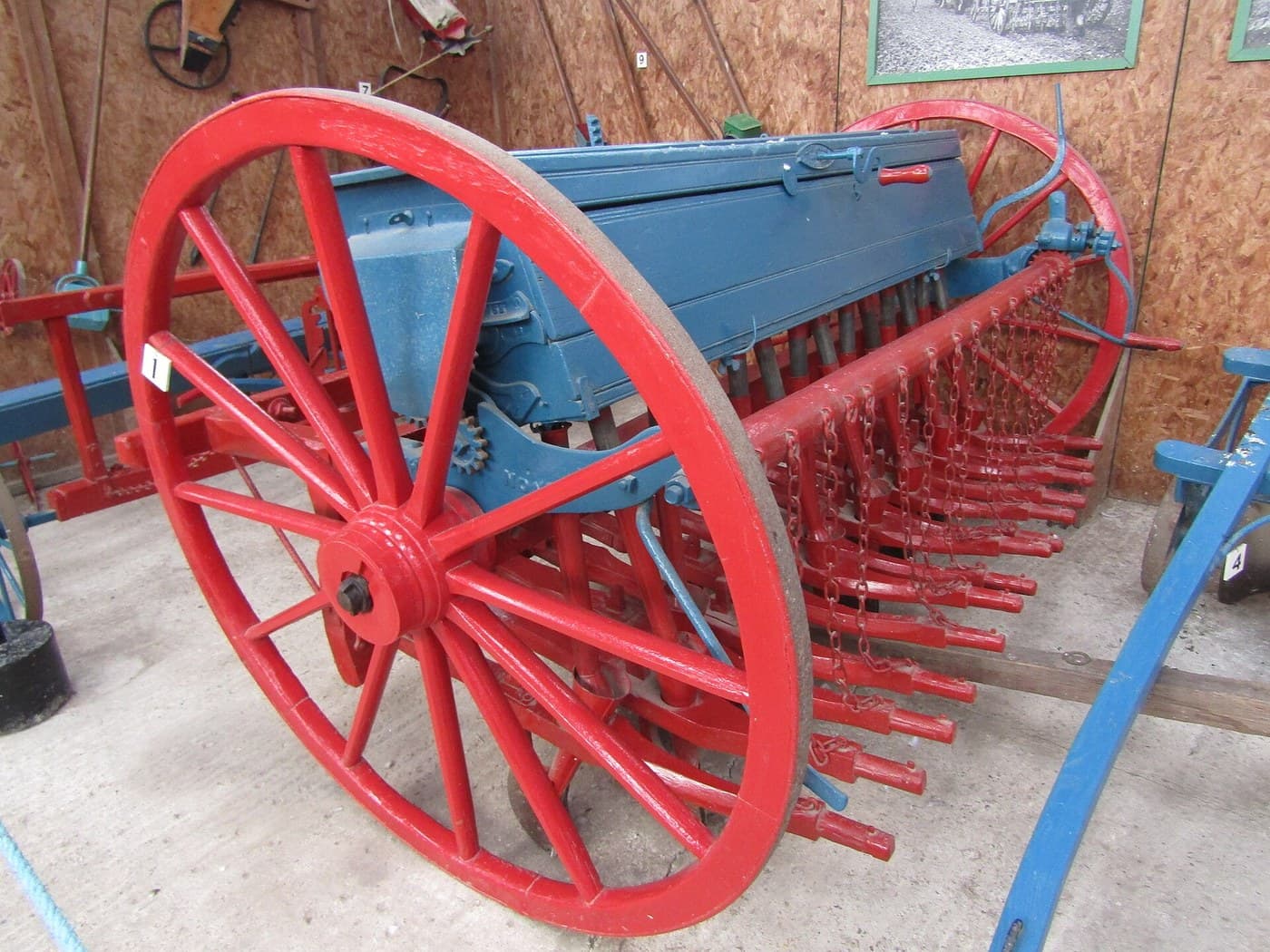
McCormick Reaper
Hướng dẫn
Cut by hand and time it
Cut by hand and time it
Establish the baseline the machine has to beat.
- Bundle dry stalks — straw, tall grass or reed — and stand them in a block.
- Cut them with a sickle, timing yourself.
- Record area cut per minute.
Vật liệu cho bước này:
 Liềm1 cái
Build the fingers and knife
Build the fingers and knife
A row of fixed fingers, and a blade that slides across behind them.
- Space a row of stiff pegs or metal fingers along a bar, a few centimetres apart.
- Fit a straight blade that slides side to side just behind the fingers.
- Give it a short stroke — roughly the finger spacing.
Vật liệu cho bước này:
 Liềm thép1 cái
 Bộ chốt gỗ thông1 bộ
Drive the knife from the wheel
Drive the knife from the wheel
The machine must power itself from its own motion — there is no engine.
- Fit a crank pin near the rim of a wheel.
- Connect it to the blade with a link, so wheel rotation becomes side-to-side motion.
- Roll the machine forward and watch the blade reciprocate.
Vật liệu cho bước này:
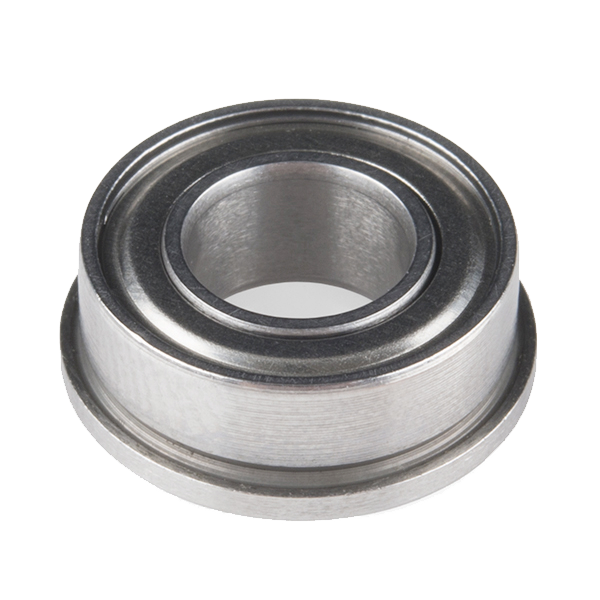 Ball Bearing - Flanged (6,35 mm Bore, 1,27 cm OD)2 cái
Add the reel
Add the reel
Something has to hold the crop against the knife, exactly as your hand did.
- Mount a light paddle reel above and ahead of the cutter bar.
- Drive it from the same wheel so it turns as the machine advances.
- Set it to sweep the standing stalks backward onto the knife.
Run it and compare
Run it and compare
Cut an equal block with the machine and time it as before.
- Push the reaper steadily through the standing stalks.
- Time the same area you cut by hand.
- Compare, and look at what is left standing or missed.
Vật liệu cho bước này:
 Đồng hồ bấm giờ1 cái
History and context
History and context
Cyrus Hall McCormick demonstrated a reaper at Steele's Tavern, Virginia, in 1831, and patented it on 21 June 1834 — the date printed on the patent drawing itself. He sold few machines for a decade, then moved to Chicago in 1847 — placing his factory at the edge of the prairie grain belt just as it opened up — and built the business that became International Harvester.
The priority dispute is real and should not be smoothed over. Obed Hussey patented a reaper in 1833, a year before McCormick, and Hussey's cutter bar was in several respects the better design; its open-guard knife is closer to what modern machines use. Patrick Bell in Scotland had a working reaper by 1828 and chose not to patent it, believing the machine should be freely available. The two Americans fought publicly for years, including in field trials and in the press. McCormick's decisive advantages were commercial rather than mechanical: he sold on instalment credit, guaranteed his machines, and advertised relentlessly.
What it changed: harvest labour per acre collapsed, and with it the constraint on how much grain one farm could grow. That fed the settlement of the American prairie and cheap grain exports that reshaped European agriculture. It also displaced enormous numbers of seasonal harvest labourers, whose work simply ceased to exist.
Where it went: the reaper gained a binder that tied sheaves automatically, then merged with the threshing machine to become the combine harvester, which cuts and threshes in one pass. The reciprocating knife-and-finger cutter bar on the front of a modern combine is still recognisably this mechanism.
Vật liệu
5- 1 cáiTạm thời
- 1 cáiTạm thời
- 1 bộTạm thời
- 2 cái$2.44
- 1 cáiTạm thời
Blueprint liên quan
Các blueprint này chia sẻ kiến thức — kỹ thuật, vật liệu hoặc nguyên tắc

CC0 Phạm vi công cộng
Bản thiết kế này được phát hành theo CC0. Bạn tự do sao chép, sửa đổi, phân phối và sử dụng cho bất kỳ mục đích nào mà không cần xin phép.
Hỗ trợ nhà sáng tạo bằng cách mua sản phẩm qua bản thiết kế, nơi họ nhận Hoa hồng nhà sáng tạo do nhà bán hàng đặt, hoặc tạo phiên bản mới và kết nối trong bản thiết kế riêng để chia sẻ doanh thu.