NGHỆ THUẬT
LÀM ĐẸP VÀ SỨC KHỎE
THỦ CÔNG
VĂN HÓA VÀ LỊCH SỬ
GIẢI TRÍ
MÔI TRƯỜNG
THỰC PHẨM VÀ ĐỒ UỐNG
KỸ THUẬT NGƯỢC
KHOA HỌC
THỂ THAO
CÔNG NGHỆ
THIẾT BỊ ĐEO
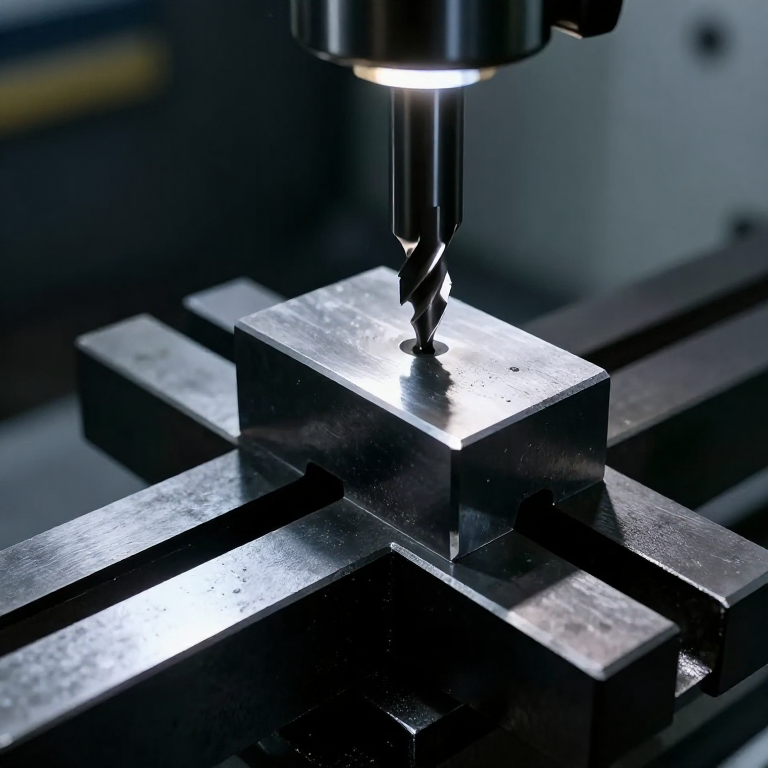


Milling a Block Square: The Six-Face Sequence
Squaring a block is the first job on a milling machine and the one everything else is built on. A vice, a fixture, a die set, an angle plate: all of them start as a lump of steel that has to be made into a rectangular prism with six flat faces, each square or parallel to the others.
It cannot be done by milling six faces in any order. Each face must be cut while referenced against a face that is ALREADY true, and there is one sequence that achieves that with the fewest settings. Deviate from it and the errors compound instead of cancelling.
The sequence is old, fixed and worth learning exactly, because it is the same logic as the three-plate method for flatness: accuracy is generated by careful reference, not by the machine being perfect.
Trung cấp
4 hours
Hướng dẫn
1
1
Get the vice true to the machine first
Get the vice true to the machine first
Bolt the machine vice to the table, put a dial indicator in the spindle and sweep it along the FIXED jaw as you traverse the table. Tap the vice round until the needle does not move.
Everything that follows references the fixed jaw, so an error in it is copied into every part made until somebody checks again. The fixed jaw is the reference; the moving jaw only applies force and is not straight, square or trustworthy.
Sweep the vice BED as well if the work will sit on it directly. A few hundredths of dirt or a raised burr under the work is a wedge, and the face you mill will be true to the machine but not to the rest of the block.
Công cụ cần thiết:
 Máy phay
 Ê tô máy
 Đồng hồ so
2
2
Face 1, and the two tricks that make it flat
Face 1, and the two tricks that make it flat
Sit the rough stock on a matched pair of parallels, put a short round bar between the work and the MOVING jaw, tighten, and tap the work down with a soft mallet until both parallels are gripped tight. Then mill the top face.
The round bar is the trick that matters. A moving jaw lifts very slightly as it tightens, and on a rough uneven casting it also contacts at one high point, tipping the work. A round bar contacts on a line at one height, so the force is applied where you want it and the work is free to seat down on the parallels instead of being tilted.
The parallels must be a MATCHED pair of identical height, which is what the head is: two bars ground together. A mismatched pair tilts the work by the difference and you mill a wedge.
Vật liệu cho bước này:
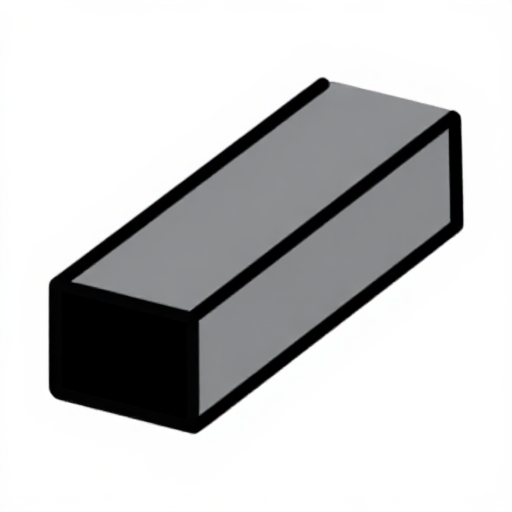 Thanh vuông thép mềm1 cái
Công cụ cần thiết:
Máy phayÊ tô máy Căn song song
 Búa cao su
 Bộ dao phay ngón thép gió
3
3
The sequence, and why it is that order
The sequence, and why it is that order
Put FACE 1 against the fixed jaw and mill the top: that is FACE 2, square to 1. Now face 1 against the fixed jaw and face 2 down on the parallels, mill the top: FACE 3, parallel to 1. Then face 3 down on the parallels with face 2 against the fixed jaw, mill to thickness: FACE 4.
The rule underneath is a single sentence: a MACHINED face always goes against the fixed jaw, and a MACHINED face always goes down on the parallels. Never reference against a rough face, and never against the moving jaw.
The last two faces are the ends. Stand the block on end in the vice with a machined face against the fixed jaw, check it with a square, and mill each end. Four settings for four faces and two for the ends — six faces, and every one cut while resting on something already true.
Vật liệu cho bước này:
Thanh vuông thép mềm1 cáiCông cụ cần thiết:
Máy phayÊ tô máyCăn song song Ke vuông thợ nguộiBộ dao phay ngón thép gió
4
4
Climb or conventional, and why it matters on a manual machine
Climb or conventional, and why it matters on a manual machine
Feed the work so the cutter's teeth enter the metal against the direction of feed — conventional, or up-milling. On a manual machine, do not climb mill a heavy cut.
In climb milling the cutter tries to drag the work along in its own direction of rotation. On a machine with backlash in the table screw, it takes up that backlash in one jump, pulling the work INTO the cutter — which breaks cutters and wrecks parts. Machines with ball screws or backlash eliminators climb mill happily, and get a better finish for it.
Conventional milling pushes the work back against the screw and stays loaded, so the backlash never gets a chance to close. It rubs slightly at the start of each tooth's cut, which is why the finish is a little worse — a trade worth making on a manual mill.
Vật liệu cho bước này:
Thanh vuông thép mềm1 cáiCông cụ cần thiết:
Máy phayBộ dao phay ngón thép gió Kính bảo hộ
5
5
Prove it, on the surface plate
Prove it, on the surface plate
Stand the block on the surface plate and try a machinist square against each adjacent pair of faces, looking for light under the blade. Then measure across each opposite pair with a micrometer at several places to check parallelism and constant thickness.
Do the diagonals too. A block can be square on every face you tried and still be a parallelogram in plan, and only comparing the diagonals or checking against the plate will catch it.
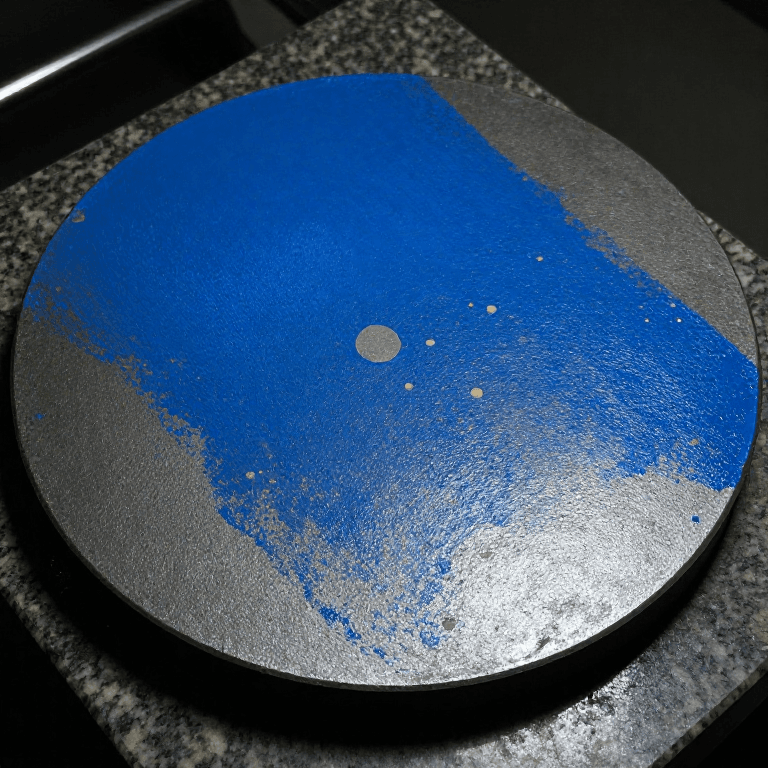
Where it matters, blue the plate and rub each face on it — the picture says whether the face is flat, hollow or crowned, which no micrometer reading can. That is the flatness rung's method applied to the part this rung made, and it is where the measuring ladder and the cutting ladder finally meet.
Công cụ cần thiết:
 Bàn mápKe vuông thợ nguội
 Panme
PanmeBlueprint liên quan
Các blueprint này chia sẻ kiến thức — kỹ thuật, vật liệu hoặc nguyên tắc


CC0 Phạm vi công cộng
Bản thiết kế này được phát hành theo CC0. Bạn tự do sao chép, sửa đổi, phân phối và sử dụng cho bất kỳ mục đích nào mà không cần xin phép.
Hỗ trợ nhà sáng tạo bằng cách mua sản phẩm qua bản thiết kế, nơi họ nhận Hoa hồng nhà sáng tạo do nhà bán hàng đặt, hoặc tạo phiên bản mới và kết nối trong bản thiết kế riêng để chia sẻ doanh thu.