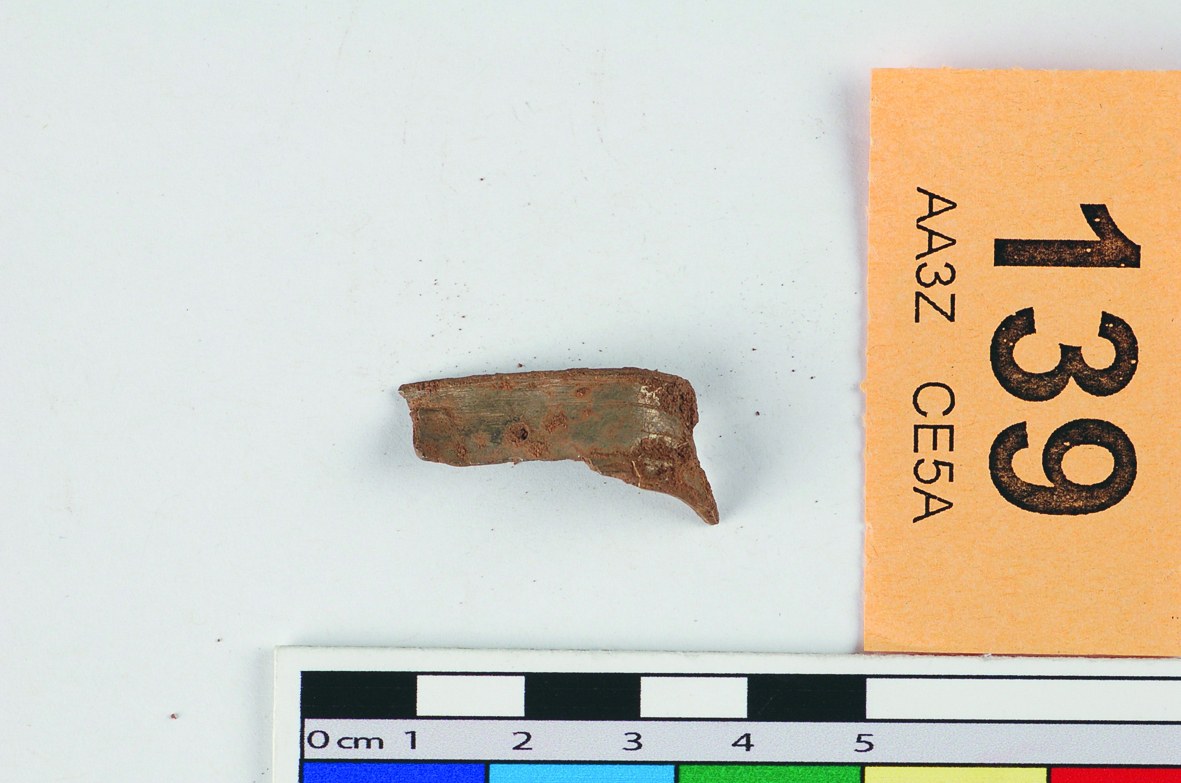


Niello
Hướng dẫn
See the problem engraving has
See the problem engraving has
Establish why anyone would fill a line with black.
- Engrave or scribe a design into polished silver or copper sheet.
- Polish the surface and look at it under a bright light from several angles.
- Note how the design vanishes and reappears as you move.
Vật liệu cho bước này:
 Tấm bạc nguyên chất 999 dày 0,8 mm1 tờ
 Đục nguội mũi nhọn1 cái
Make the niello
Make the niello
Metal plus sulphur, melted together. Outdoors or with proper extraction — this produces sulphur dioxide.
- Melt silver, and traditionally copper and lead, together.
- Add sulphur to the melt; it reacts vigorously and gives off choking fumes.
- Pour out, cool, and grind the brittle black product to a fine powder.
Vật liệu cho bước này:
 Bột lưu huỳnh100 g
 Hạt bạc nguyên chất 999 nặng 31 g1 oz
 Nồi nấu bằng đất, lòng sâu1 cái
Cut lines with undercut walls
Cut lines with undercut walls
The engraving must hold the niello mechanically as well as chemically.
- Cut the design with a graver, keeping the lines reasonably deep.
- Where possible, undercut the walls slightly so the channel is wider at the bottom.
- Clean every trace of grease from the cuts.
Charge, fuse, file and polish
Charge, fuse, file and polish
Overfill deliberately, then take everything back to the surface.
- Pack the powdered niello into the lines, heaped proud.
- Heat until it slumps and flows into the cuts — it melts well below the silver.
- File flush, then polish the whole surface together.
Vật liệu cho bước này:
 Bùi nhùi thép1 pad
History and context
History and context
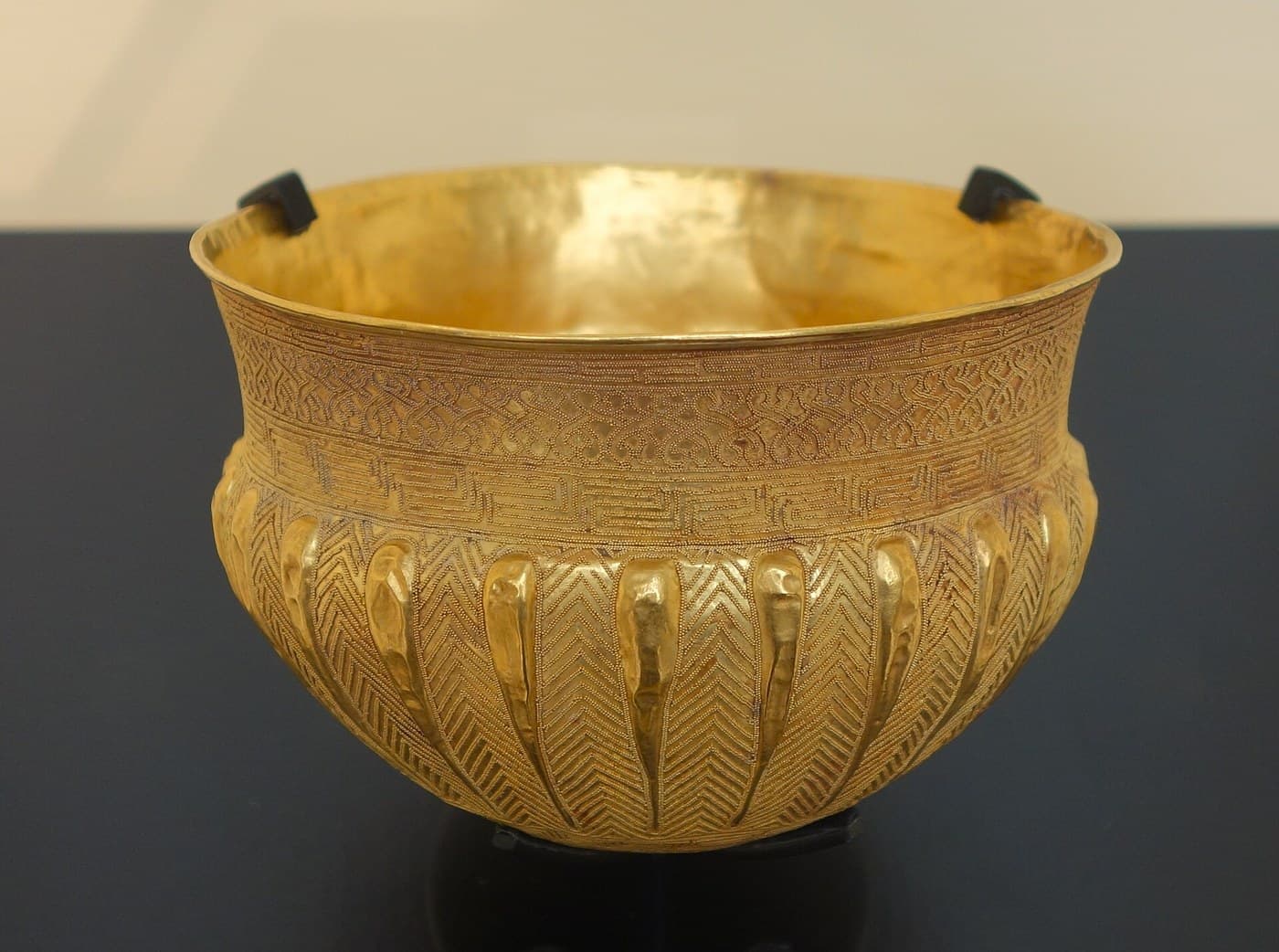
Niello is Roman and earlier, flourishes in Byzantine work, and is used right across medieval Europe, the Islamic world and Russia — where Tula in particular became famous for nielloed silver, so much so that the technique is often called Tula work. Anglo-Saxon and Viking metalwork uses it heavily; several Sutton Hoo pieces carry it.
Its accidental contribution to printmaking is the good story here. A goldsmith engraving a plate for niello would take an ink pull from the cut lines to check the design before committing — a proof. Those proofs, taken from engraved metal, are one of the plausible routes to intaglio printmaking in fifteenth-century Italy, and surviving examples are called niello prints. The engraving trade and the printing trade share an ancestor.
The safety facts are not optional. Making niello releases sulphur dioxide, which is acutely irritating to the airways, and traditional recipes contain lead, whose fumes and dust are cumulatively toxic with no safe level. This is a process to read about and to admire in museums; if it is ever attempted it belongs under proper extraction with lead-free formulations and full precautions.
Why it persists in museums but not in shops: it is slow, hazardous, and modern alternatives — oxidised silver, resin inlays, laser darkening — achieve much of the visual effect at a fraction of the risk. What they do not achieve is the depth: true niello is a metal compound fused into metal, and it does not fade, chip out or wash off after five hundred years.
Vật liệu
6- Tạm thời
- 1 cáiTạm thời
- 100 gTạm thời
- Tạm thời
- Tạm thời
- 1 padTạm thời
Blueprint liên quan
Các blueprint này chia sẻ kiến thức — kỹ thuật, vật liệu hoặc nguyên tắc
CC0 Phạm vi công cộng
Bản thiết kế này được phát hành theo CC0. Bạn tự do sao chép, sửa đổi, phân phối và sử dụng cho bất kỳ mục đích nào mà không cần xin phép.
Hỗ trợ nhà sáng tạo bằng cách mua sản phẩm qua bản thiết kế, nơi họ nhận Hoa hồng nhà sáng tạo do nhà bán hàng đặt, hoặc tạo phiên bản mới và kết nối trong bản thiết kế riêng để chia sẻ doanh thu.