NGHỆ THUẬT
LÀM ĐẸP VÀ SỨC KHỎE
THỦ CÔNG
VĂN HÓA VÀ LỊCH SỬ
GIẢI TRÍ
MÔI TRƯỜNG
THỰC PHẨM VÀ ĐỒ UỐNG
KỸ THUẬT NGƯỢC
KHOA HỌC
THỂ THAO
CÔNG NGHỆ
THIẾT BỊ ĐEO
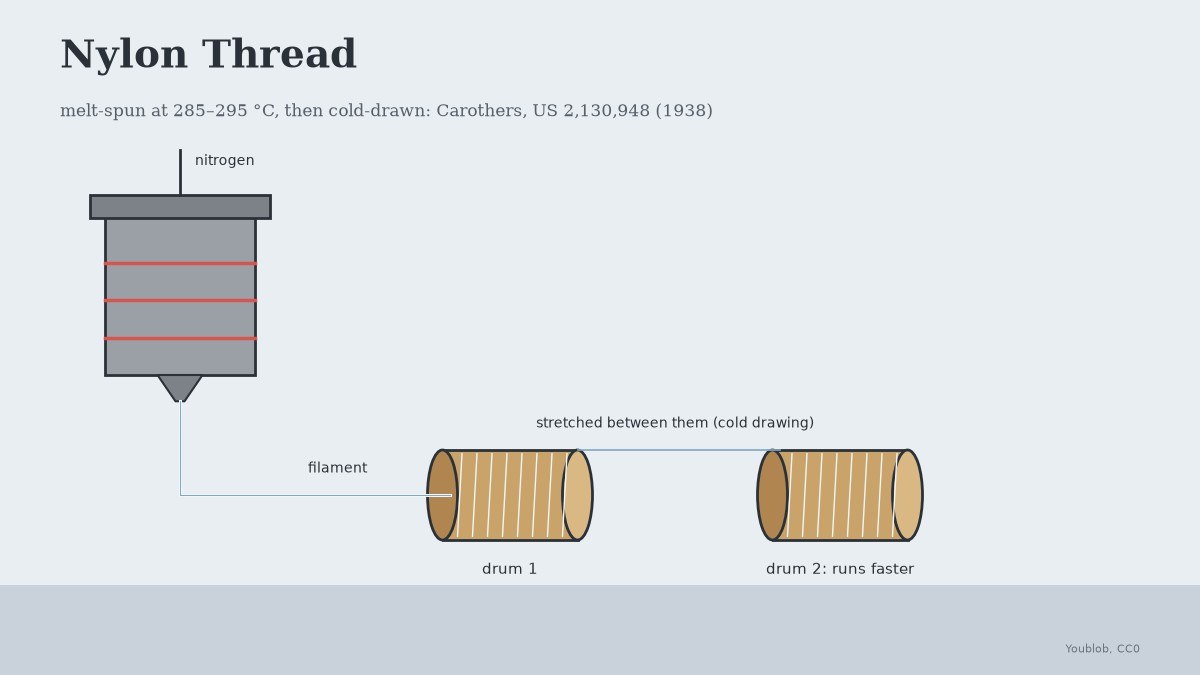


Nylon Thread: Melt-Spun Monofilament, Cold-Drawn Between Two Drums, Carothers
Nylon sewing thread is a single clear strand, a monofilament. Carothers' patent (1938) spins nylon 66 straight from the melt at 285–295 °C, with oxygen kept out, and catches the strand on a drum. A second, faster drum then stretches it (cold drawing), which makes it strong.
The picture: our own drawing.
Nâng cao
1 day
Hướng dẫn
1
1
Load the pot under nitrogen
Load the pot under nitrogen
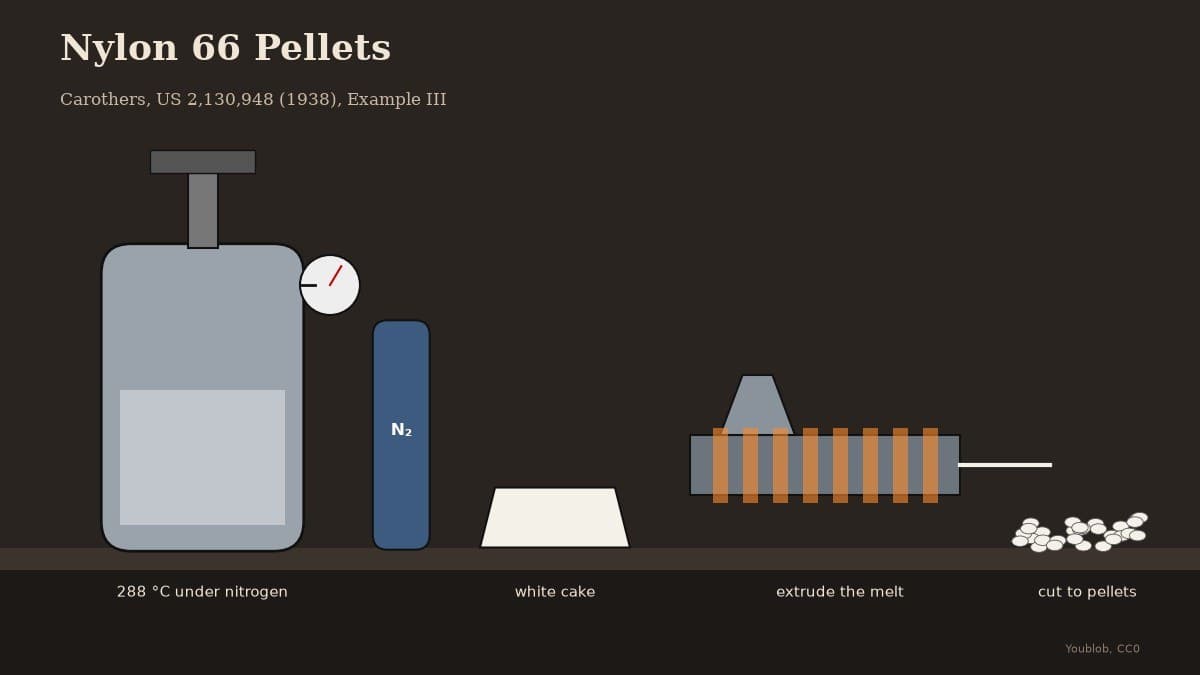
Fill the melt-spinning pot with dry nylon 66 pellets and close it. Flush it with nitrogen and keep it under nitrogen: oxygen must stay out of the molten polymer.
Vật liệu cho bước này:
 Hạt nhựa nylon500 g
Công cụ cần thiết:
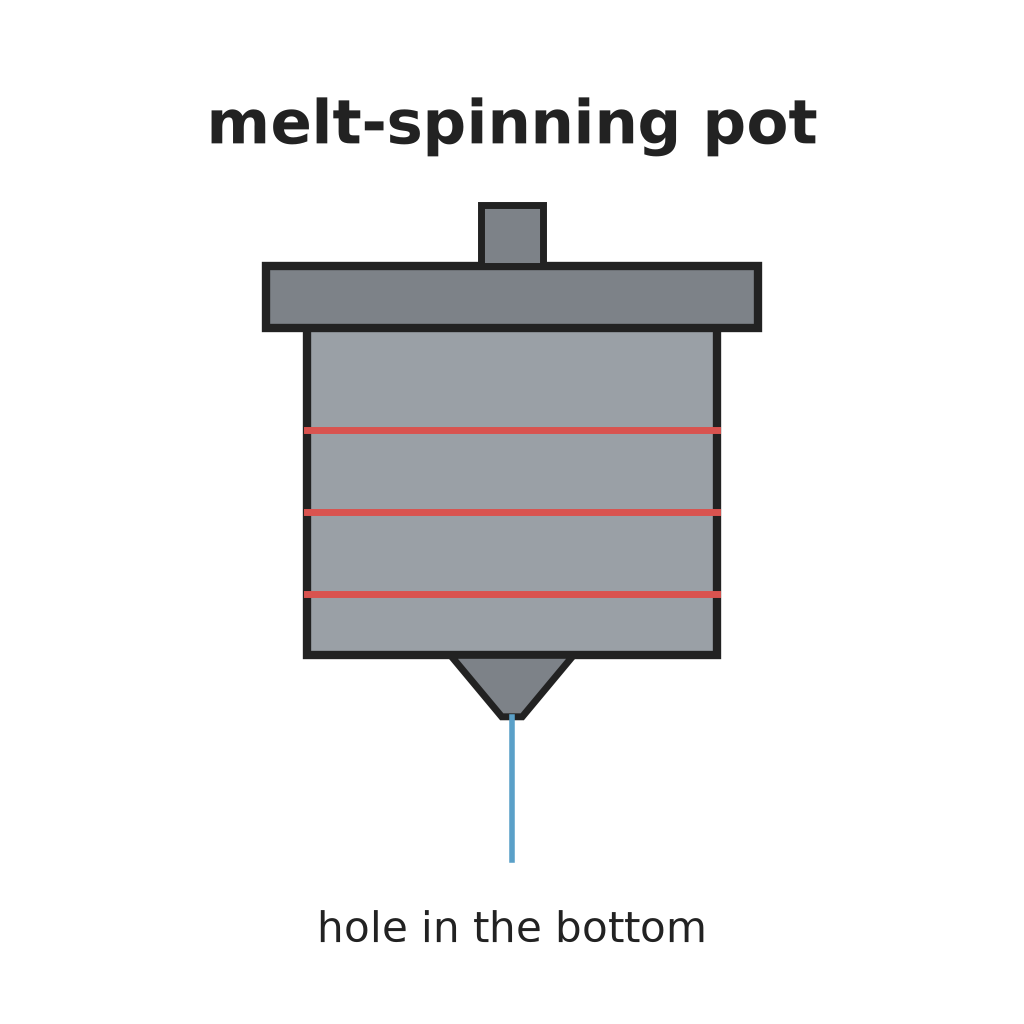 Nồi kéo sợi nóng chảy
 Nitơ
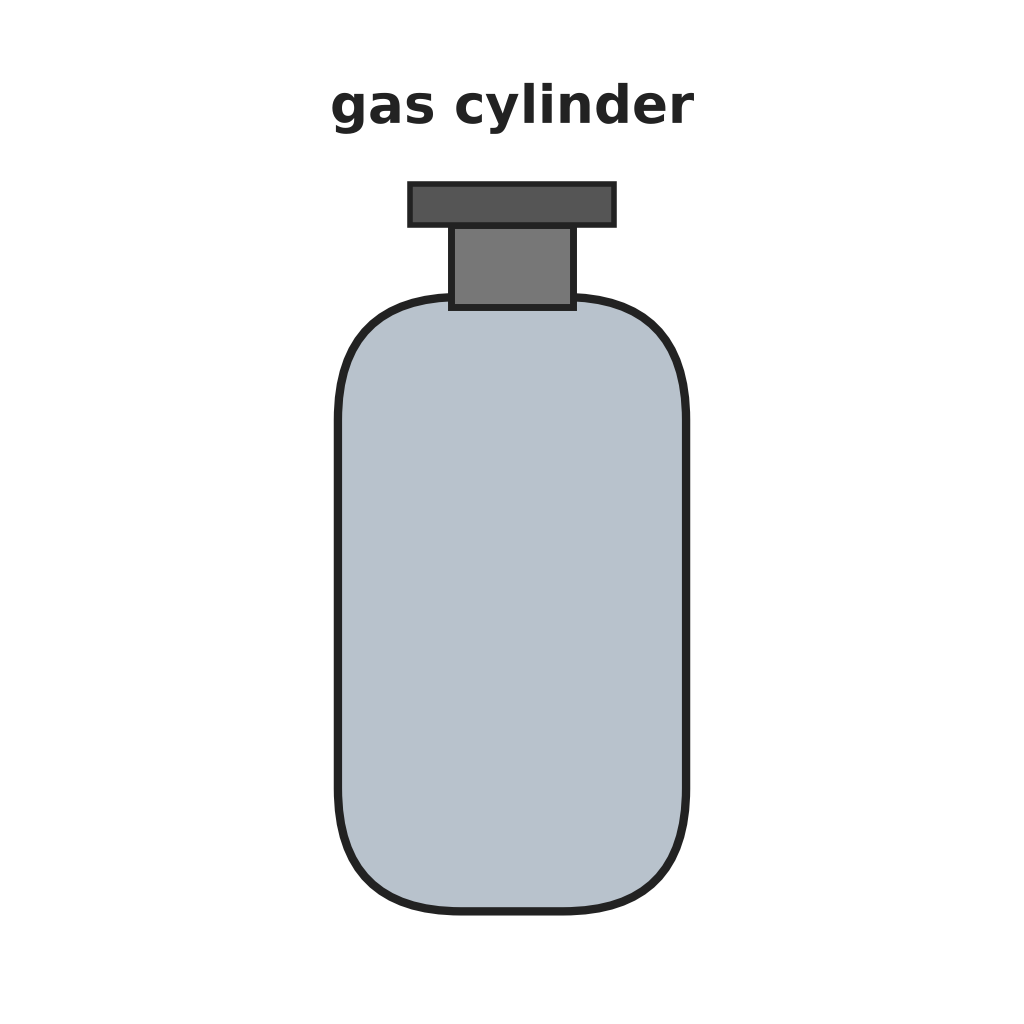 Bình khí chịu áp suất
2
2
Melt at 285–295 °C
Melt at 285–295 °C
Heat to 285–295 °C, the best spinning heat for nylon 66. Cooler gives poorer filament; hotter makes it too runny, and it may break down.
Công cụ cần thiết:
Nồi kéo sợi nóng chảy Cặp nhiệt điện có đồng hồ hiển thị
3
3
Extrude and catch it
Extrude and catch it
Press the melt out through the hole with nitrogen pressure (Carothers' example used 50 lb/in²). Catch the strand on a motor-driven drum. A larger hole gives a thicker strand; hotter melt and faster winding give a finer one.
Công cụ cần thiết:
NitơBình khí chịu áp suất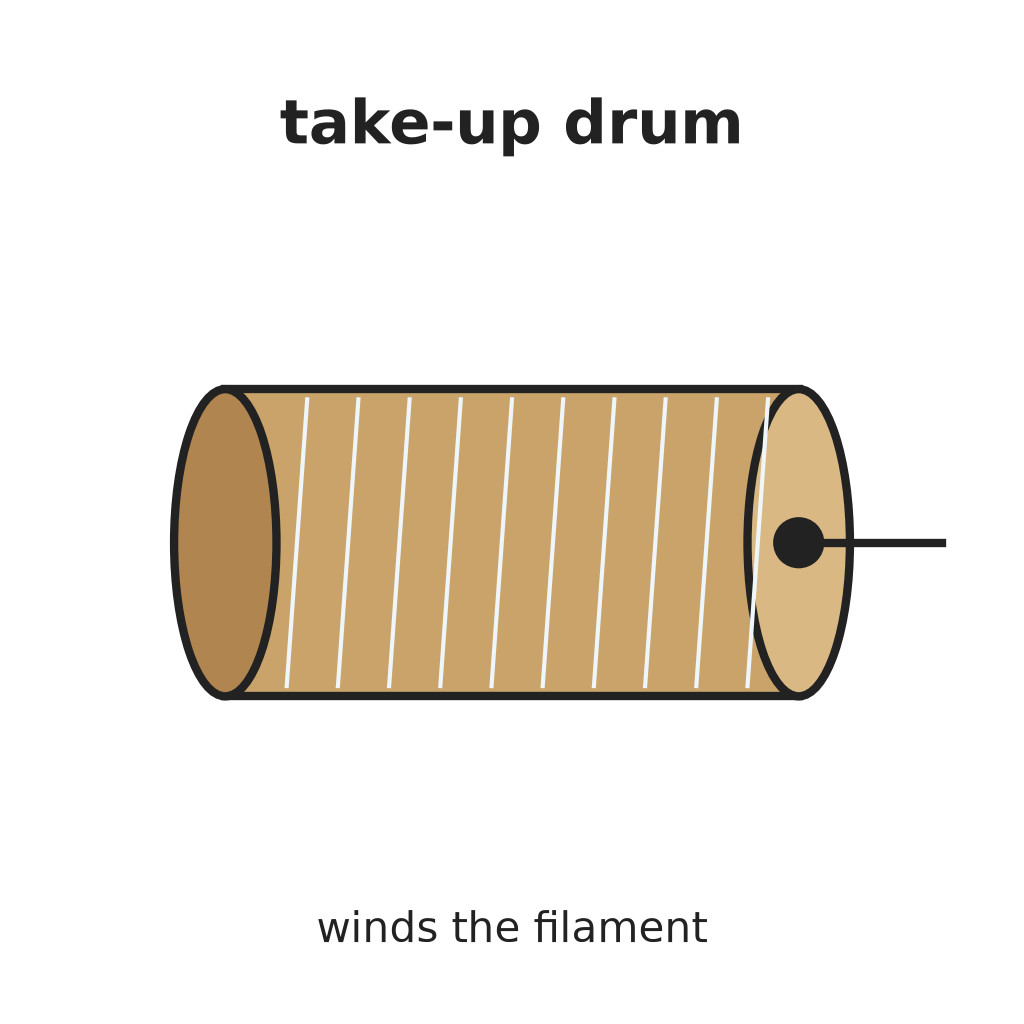 Trống thu sợi
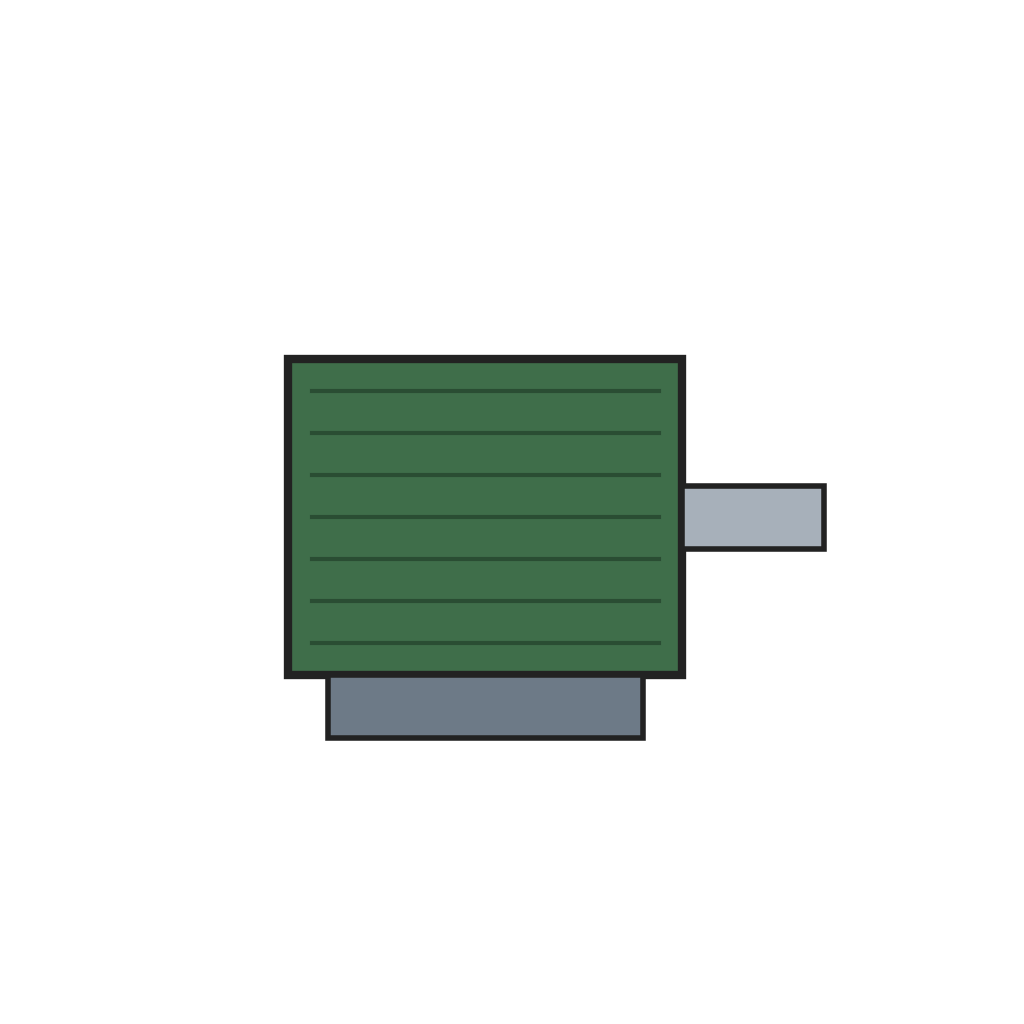 Động cơ điện
4
4
Cold-draw onto a faster drum
Cold-draw onto a faster drum
Run the strand from the first drum onto a second drum turning faster, which stretches it. In Carothers' example the drums ran at 300 and 1020 ft/min. Keep the strand wet: wet filament draws better and holds no static.
Công cụ cần thiết:
Trống thu sợiĐộng cơ điện Nước
5
5
Help a thick strand
Help a thick strand
Thick strands are harder to draw. Soak them in water, or warm them to about 100 °C, before drawing.
Công cụ cần thiết:
 Nồi quánh thành caoNước
Vật liệu
1- 500 gTạm thời
Bản thiết kế này làm ra

Blueprint liên quan
Các blueprint này chia sẻ kiến thức — kỹ thuật, vật liệu hoặc nguyên tắc

CC0 Phạm vi công cộng
Bản thiết kế này được phát hành theo CC0. Bạn tự do sao chép, sửa đổi, phân phối và sử dụng cho bất kỳ mục đích nào mà không cần xin phép.
Hỗ trợ nhà sáng tạo bằng cách mua sản phẩm qua bản thiết kế, nơi họ nhận Hoa hồng nhà sáng tạo do nhà bán hàng đặt, hoặc tạo phiên bản mới và kết nối trong bản thiết kế riêng để chia sẻ doanh thu.