NGHỆ THUẬT
LÀM ĐẸP VÀ SỨC KHỎE
THỦ CÔNG
VĂN HÓA VÀ LỊCH SỬ
GIẢI TRÍ
MÔI TRƯỜNG
THỰC PHẨM VÀ ĐỒ UỐNG
KỸ THUẬT NGƯỢC
KHOA HỌC
THỂ THAO
CÔNG NGHỆ
THIẾT BỊ ĐEO
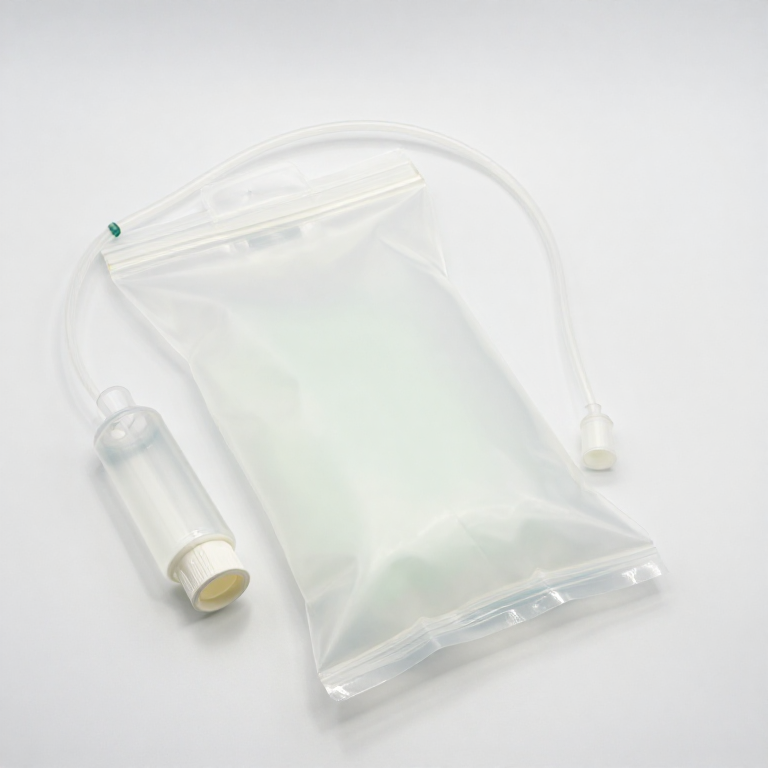


The Plastic Blood Bag
Blood was collected in glass bottles until 1950. Glass works — it holds blood, it can be sterilised, you can see the level. What glass cannot do is bend.
Carl Walter and W. P. Murphy's flexible plastic bag looks like a downgrade and was the opposite, for a reason that has nothing to do with the container and everything to do with what you can then do to it. A sealed flexible bag can be spun in a centrifuge and the layers that separate can be squeezed out through a tube into another bag, without ever opening the system to the air. A rigid bottle cannot: to get the plasma out you must open it, and the moment you do, the contents have a few hours of life.
So the bag did not improve blood storage. It created blood components. One donation became red cells for one patient, plasma for another and platelets for a third, and it created the entire modern transfusion service.
There is a second accident in the story worth keeping. The plasticiser that makes PVC flexible leaches slowly into the blood — and turned out to stabilise the red cell membrane, reducing breakdown in storage. A contaminant that improved the product. Nobody designed it.
You will build a closed multi-bag transfer system, separate a surrogate by centrifugation, and model the storage lesion. No human blood at any point.
Trung cấp
5 hours 30 minutes
Hướng dẫn
1
1
The closed system, and what breaks it
The closed system, and what breaks it
The whole value of the bag is that the fluid path is never opened. This flow shows the collection set as it is actually configured: a primary bag holding anticoagulant, integral tubing, and two satellite bags joined by sealed ports.
Follow the sequence. Collect into the primary. Spin the whole assembly. Express the plasma layer into satellite one by squeezing the primary in a plate press, the fluid travelling through tubing that was never disconnected. Seal the tubing between them and the two bags become independent while both remain closed.
The diagram marks the three places a closed system becomes an open one: any needle entry, any disconnection, any break in the tubing wall. The reason to mark them is that an opened system's contents expire in hours instead of weeks, and nothing about the bag looks different afterwards. The expiry is a bookkeeping fact, tracked by a label, and the label is therefore part of the device.
Flow
Loading...
Vật liệu cho bước này:
 Ống PVC (cấp y tế)3 metre
 Tấm PVC1 tờ
2
2
Weld the bags
Weld the bags
PVC film is joined by heat, not adhesive, and the join is stronger than glue because it is the same material fused through.
Cut two rectangles of flexible PVC film. Lay a strip of release paper where you want the ports, so the seal skips those zones. Weld the perimeter with a heat sealer or a temperature-controlled iron run against a straightedge over baking parchment, at a temperature that softens the film without charring it — find it on scrap first, because the window between a weak seal and a burnt hole is perhaps fifteen degrees.
Seal in the tubing stubs at the port zones by sandwiching the tube between the two films and welding around it. This is the join that fails, so make it wide and make three test samples before you make the real one. A weld that looks perfect can peel; test by inflating each sample with water until it bursts and check that the burst is in the film, not along the seam.
Leave one edge open, fill with your anticoagulant analogue, expel the air completely, then weld the last edge. Air in the bag is not just untidy — it makes the centrifuge separation unreliable, because the bubble migrates during the spin and disturbs the interface.
Vật liệu cho bước này:
Tấm PVC2 tờỐng PVC (cấp y tế)2 metre Giấy nến nướng bánh1 cuộn
Công cụ cần thiết:
 Máy hàn nhiệt xung
 Nhiệt kế phòng thí nghiệm
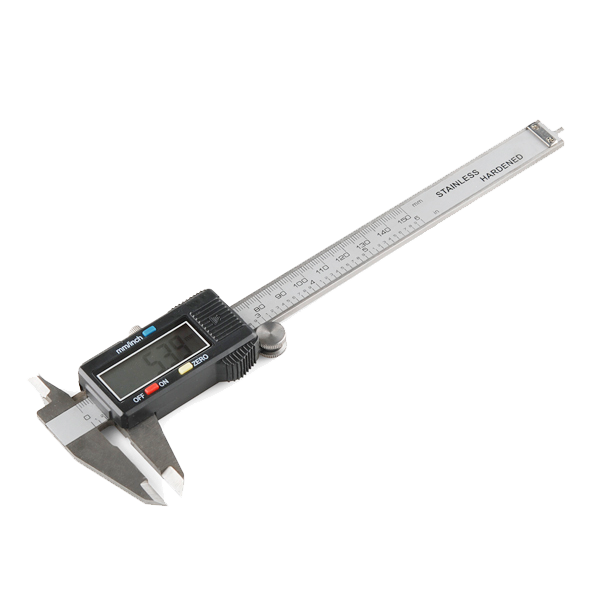 Digital Calipers - 152.4 mm
3
3
Separation by sedimentation, and the storage lesion
Separation by sedimentation, and the storage lesion
Đang tải sổ tay Jupyter…
Công cụ cần thiết:
 Máy tính để bàn
4
4
Spin and express a surrogate
Spin and express a surrogate
Make a surrogate that separates visibly. A suspension of fine dense particles in a viscous liquid works: sieved silt or ceramic powder in glycerol solution, tuned so it takes a few minutes to settle under gravity and seconds under spin. Aim for two clearly different particle sizes so you can hunt for the soft-spin and hard-spin behaviours the notebook predicted.
Fill your welded primary bag, expel all air, seal, and spin it in a balanced rotor. Balance matters — spin an unbalanced rotor and you will destroy the centrifuge and possibly yourself. Weigh the counterbalance to within a gram.
Express the top layer by laying the bag between two flat plates and squeezing evenly, watching the interface move up the tubing towards the satellite. Stop before the interface reaches the port. This is the skill in the whole process: stop too late and you contaminate the top fraction with the bottom one, and there is no way to undo it inside a closed system.
Seal the tubing between the bags by clamping and welding, then separate. Weigh each bag. Your recovery is the mass in each fraction against the mass you started with, and it will not be 100 percent because some volume stays in the tubing — the dead volume, which is why collection sets are designed with the shortest tubing that still lets the bags reach the centrifuge and the press.
Vật liệu cho bước này:
 Glyxerol (99 %)1 lít
 Bột gốm mịn (cao lanh)500 gram
 Nước cất5 lít
Công cụ cần thiết:
 Máy ly tâm để bàn
 Cân điện tử chính xácMáy hàn nhiệt xung
5
5
Test the welds cold, and read the limit
Test the welds cold, and read the limit
A blood bag spends its life at between one and six degrees, and PVC gets stiffer and more brittle as it cools. A weld that passes at room temperature can fail in the cold room, so test where it lives.
Fill three bags, chill them to four degrees overnight, and then drop each from waist height onto a hard floor while still cold. This is the actual industry drop test and it is not a joke — bags are dropped in real handling. Then flex a chilled bag repeatedly at the seam, fifty cycles, and inspect the weld under the microscope for crazing.
Compare against three identical bags tested warm. Any difference in failure rate is your material telling you about its glass transition, and it is the reason plasticiser content is specified rather than left to the supplier.
Where this stops, and it stops absolutely. You have made flexible welded containers, run a closed transfer, and separated a suspension by density. That is real packaging and separation engineering with uses far beyond medicine — it is how a great many sterile fluids are handled. It is not a blood collection system, and there is no maker path to one. Human blood carries transmissible infection, collection from a donor is a clinical procedure with real risks to that donor, the anticoagulant formulation and its ratio to volume are pharmaceutical specifications, every component is tracked from donor to recipient, and a transfusion given to the wrong person is among the most lethal errors in medicine. Handle no human or animal blood in this build. Use silt and glycerol, and take from it the closed-system principle, which is the genuinely portable idea.
Vật liệu cho bước này:
Tấm PVC1 tờNước cất3 lítCông cụ cần thiết:
 Kính hiển vi sốNhiệt kế phòng thí nghiệmCân điện tử chính xác
Vật liệu
6- 5 metreTạm thời
- 4 tờTạm thời
- 1 cuộnTạm thời
- 1 lítTạm thời
- 500 gramTạm thời
- 8 lítTạm thời
Công cụ yêu cầu
7- Tạm thời
- Tạm thời
- Digital Calipers - 152.4 mmHoa hồng 10%$14.00
- Tạm thời
- Tạm thời
- Tạm thời
- Tạm thời
Blueprint liên quan
Các blueprint này chia sẻ kiến thức — kỹ thuật, vật liệu hoặc nguyên tắc



CC0 Phạm vi công cộng
Bản thiết kế này được phát hành theo CC0. Bạn tự do sao chép, sửa đổi, phân phối và sử dụng cho bất kỳ mục đích nào mà không cần xin phép.
Hỗ trợ nhà sáng tạo bằng cách mua sản phẩm qua bản thiết kế, nơi họ nhận Hoa hồng nhà sáng tạo do nhà bán hàng đặt, hoặc tạo phiên bản mới và kết nối trong bản thiết kế riêng để chia sẻ doanh thu.