NGHỆ THUẬT
LÀM ĐẸP VÀ SỨC KHỎE
THỦ CÔNG
VĂN HÓA VÀ LỊCH SỬ
GIẢI TRÍ
MÔI TRƯỜNG
THỰC PHẨM VÀ ĐỒ UỐNG
KỸ THUẬT NGƯỢC
KHOA HỌC
THỂ THAO
CÔNG NGHỆ
THIẾT BỊ ĐEO
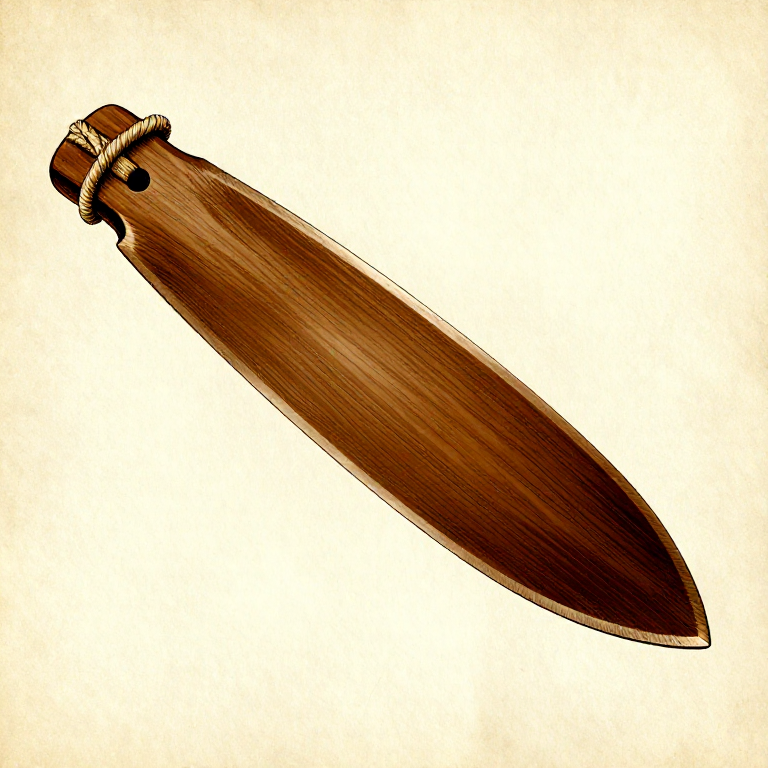


Making a Bull-Roarer — Whirling Sound Instrument
The bull-roarer (also called a rhombus or churinga) is one of the oldest known instruments, with examples dating to the Upper Palaeolithic over 18,000 years ago. It consists of a thin, flat piece of wood attached to a long cord — when swung in a circle overhead, the blade spins on its axis and vibrates the surrounding air to produce a deep, pulsing roar that can carry for kilometres. The sound frequency depends on the blade's size, thickness, and spinning speed. Bull-roarers served as signalling devices, ceremonial instruments, and hunting tools (the sound can drive game). Australian Aboriginal tjurunga, Maori purerehua, Greek rhombos, and Native American examples all share the same basic physics. The instrument was independently invented on every inhabited continent.
Cơ bản
1 hour
Hướng dẫn
1
1
Select a Flat Piece of Dense Hardwood
Select a Flat Piece of Dense Hardwood
Choose a flat piece of dense hardwood such as oak, ash, or eucalyptus. You can split a section from a plank or select a naturally flat branch section. The wood must be well seasoned and free of knots — green wood is too heavy and will not vibrate freely.
Vật liệu cho bước này:
 Hardwood Sapling1 cái
2
2
Shape the Blade into an Elongated Oval
Shape the Blade into an Elongated Oval
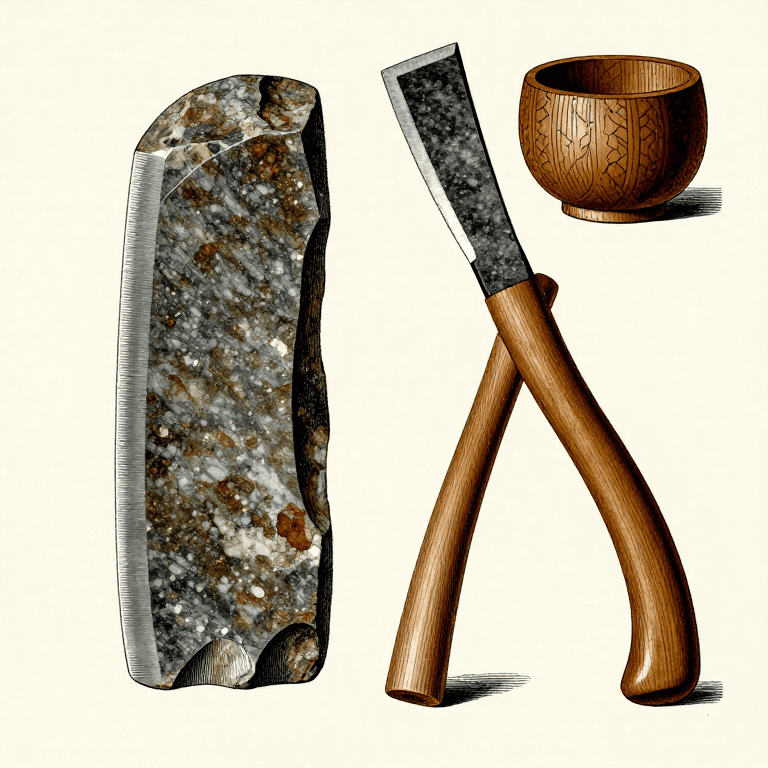
Carve the wood into a long oval or elongated leaf shape: 20 to 40 cm long, 4 to 6 cm wide, and 5 to 8 mm thick. Both ends should taper to a point or rounded tip. Use a flint blade or stone adze to rough out the shape, then refine the contours.
3
3
Taper Both Ends to Points
Taper Both Ends to Points
Ensure both ends of the blade taper symmetrically to a point or smooth rounded tip. Asymmetric ends cause the blade to wobble during flight rather than spinning evenly on its long axis. Check symmetry by holding the blade at its centre and sighting along the length.
4
4
Smooth Both Faces and Edges
Smooth Both Faces and Edges
Sand both flat faces and all edges smooth using a piece of sandstone. A rough surface creates uneven air turbulence that dampens the vibration and produces a weaker, less consistent sound. The faces should be flat and the edges rounded to a gentle profile.
Công cụ cần thiết:
 Sandstone (Abrasive)
5
5
Drill or Carve a Hole at One End
Drill or Carve a Hole at One End
Carve or drill a small hole at one end of the blade, positioned 1 to 2 cm from the tip. The hole should be just large enough to thread your cord through — approximately 5 to 6 mm in diameter. A bone awl or sharp flint point can bore through the thin wood.
6
6
Add a Slight Twist Along the Long Axis
Add a Slight Twist Along the Long Axis
Gently twist the blade along its long axis by 10 to 15 degrees. This slight twist acts like a propeller pitch — it causes the blade to spin consistently as it moves through the air rather than fluttering randomly. You can introduce the twist by soaking the wood briefly and twisting it while clamped, then letting it dry in the twisted position.
7
7
Thread the Cord Through the Hole
Thread the Cord Through the Hole
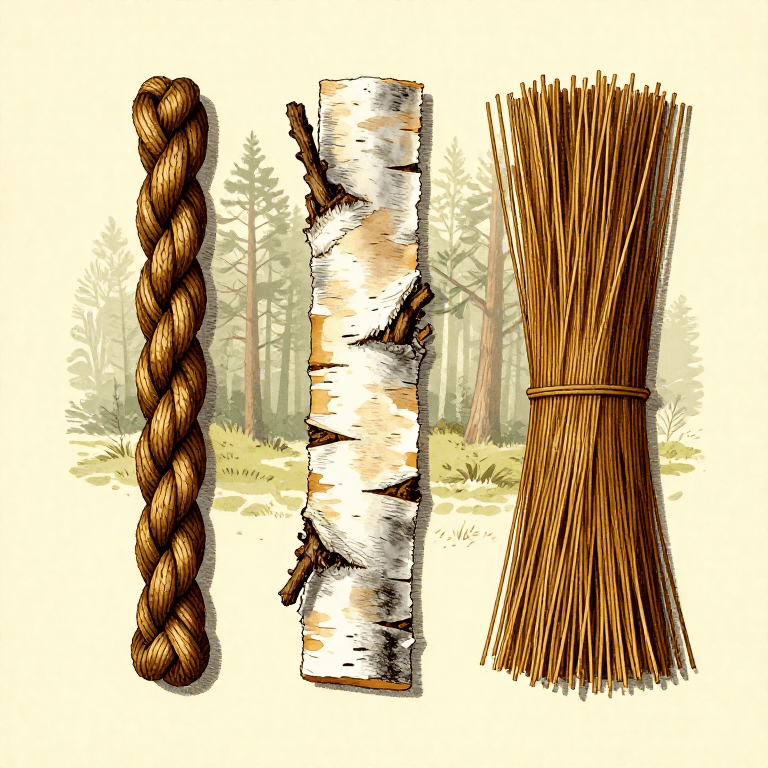
Thread a strong cord 1 to 2 metres long through the hole. Braided sinew, rawhide thong, or twisted plant fibre cord all work. The cord must be strong enough to withstand the centrifugal force of swinging without snapping — test by pulling sharply with both hands.
Vật liệu cho bước này:
 Cordage1 cái
8
8
Tie the Cord with a Swivel Knot
Tie the Cord with a Swivel Knot
Secure the cord to the blade with a knot that allows the cord to swivel freely — a simple loop through the hole works, or tie a small toggle knot. The cord must be able to twist and untwist as the blade spins. If the cord cannot swivel, it will wind up tight and stop the blade from rotating.
9
9
Swing the Bull-Roarer Overhead
Swing the Bull-Roarer Overhead
Hold the free end of the cord firmly and swing the bull-roarer in a large circle overhead, like a lasso. Start with slow, wide circles to get the blade airborne and spinning. As the blade catches the air and begins to rotate on its own axis, the characteristic deep pulsing roar will begin.
10
10
Vary the Speed to Change the Pitch
Vary the Speed to Change the Pitch
Increase the swinging speed to raise the pitch and intensity of the sound. Slow the swing for a deeper, more resonant roar. The pulsing quality comes from the blade alternately presenting its flat face and edge to the air as it spins. A well-made bull-roarer produces a sound audible over 1 to 2 kilometres in open terrain.
Công cụ yêu cầu
1- Tạm thời
Vật liệu bản thiết kế liên kết
Blueprint liên quan
Các blueprint này chia sẻ kiến thức — kỹ thuật, vật liệu hoặc nguyên tắc


CC0 Phạm vi công cộng
Bản thiết kế này được phát hành theo CC0. Bạn tự do sao chép, sửa đổi, phân phối và sử dụng cho bất kỳ mục đích nào mà không cần xin phép.
Hỗ trợ nhà sáng tạo bằng cách mua sản phẩm qua bản thiết kế, nơi họ nhận Hoa hồng nhà sáng tạo do nhà bán hàng đặt, hoặc tạo phiên bản mới và kết nối trong bản thiết kế riêng để chia sẻ doanh thu.